
Diseases
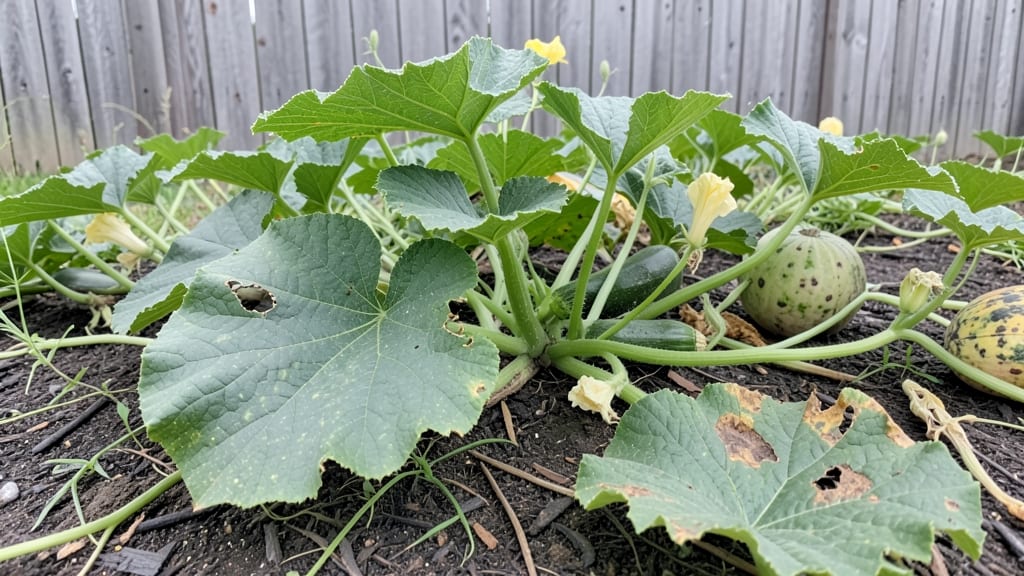
Squash plant diseases on leaves don’t just ruin harvests—they can wipe out entire vines if you don’t catch them early. I’ve lost more squash plants to mysterious leaf spots than I’d like to admit, but I’ve also learned how to spot the warning signs before they spread.
The key is knowing what to look for: powdery mildew’s white, flour-like coating, downy mildew’s yellowing undersides, or those nasty black bacterial spots that feel slimy when you touch them.
Most of these problems start with poor airflow or wet leaves—common mistakes when plants get crowded or watered from above. Spacing vines 3–4 feet apart and watering at the base cuts off their favorite conditions.
I also swear by resistant varieties like ‘Defender’ or ‘Early Prolific’ when powdery mildew is a recurring nightmare in my humid summers.
A copper spray or neem oil mix can stop early outbreaks, but once the disease takes hold, removing infected leaves fast is your best shot at saving the rest.
You’ll spot the difference in just days: healthy leaves stay glossy and green, while infected ones turn yellow, develop spots, or wilt at the edges. The goal is to act before the disease moves to the fruit—once it does, you’re fighting a losing battle.
With the right prevention, you can keep your squash patch thriving all season, not turning into a leaf-eating disaster zone.
This works for zucchini, pumpkins, and summer squash alike, whether you’re growing in raised beds or straight in the ground. The same rules apply no matter your setup—just adjust the spacing and watch for those first suspicious spots. Let’s get those vines healthy before the real trouble starts.
Root Causes Of Leaf Issues
Squash plants are resilient, but their leaves become battlegrounds when disease strikes. Understanding why these problems start is the first step to stopping them in their tracks. Below, we break down the most common culprits—from sneaky pathogens to environmental missteps—that turn your squash leaves into a sad, spotted mess.
Fungal diseases are the #1 cause of leaf discoloration, spots, and rot in squash. These microscopic troublemakers thrive in warm, humid conditions and spread like wildfire when moisture lingers on leaves. Here’s how they hijack your plants:
- Powdery Mildew (Erysiphe cichoracearum): This fungus coats leaves in a white, powdery film, blocking sunlight and stunting growth. It loves high humidity (75%+) and poor air circulation, often appearing when plants are crowded or stressed.
- Downy Mildew (Pseudoperonospora cubensis): Unlike its powdery cousin, this fungus strikes from below, leaving yellow spots on top and fuzzy purple-gray growth on the undersides of leaves. It spreads via water splashes and thrives in cool, wet nights (ideal for late summer squash).
- Alternaria Leaf Spot (Alternaria cucumerina): Dark, concentric-ringed lesions with yellow halos? That’s Alternaria. It overwinters in plant debris and explodes when leaves stay wet for 6+ hours (e.g., after rain or overhead watering).
💡 Pro Tip: Fungi need moisture to spread. Water at the base of plants in the morning so leaves dry by evening. Space plants for airflow—12–24 inches apart for bush types, 3–5 feet for vining squash.
Squash leaves aren’t just attacked by pathogens—they’re also collateral damage from extreme weather. Here’s how Mother Nature turns against your plants:
| Weather Factor | How It Damages Leaves | Actionable Fix |
|---|---|---|
| 🌞 Excessive Heat (>90°F) | Leaves scorch (brown, crispy edges) or develop sunburn spots from too much direct sunlight. Heat stress weakens plants, making them more susceptible to disease. | Use shade cloth (30–50%) during peak sun. Mulch with straw or grass clippings to keep roots cool. |
| 🌧️ Heavy Rain or Overwatering | Leaves yellow and wilt from root rot (Phytophthora) or waterlogged soil. Prolonged wetness drowns roots and invites fungal spores. | Ensure well-draining soil (amend with compost or perlite). Raise beds in clay-heavy areas. Water deeply but infrequently—aim for 1–1.5 inches per week. |
| ❄️ Cold Snaps (<50°F) | Leaves blacken or develop water-soaked patches from chilling injury. Cold stress disrupts cell membranes, making plants vulnerable to secondary infections. | Use row covers for young plants. Plant heat-tolerant varieties (e.g., ‘Black Beauty’ or ‘Straightneck’ squash). |
⚠️ Watch Out For: Sudden leaf collapse after rain? It might be bacterial leaf spot (Xanthomonas), which thrives in warm, wet conditions. Remove infected leaves immediately and sterilize pruners with rubbing alcohol.
When squash plants are nutrient-deficient, overcrowded, or planted in bad soil, their leaves send out distress signals—often mistaken for disease. Here’s how to decode them:
- Yellowing Between Veins (Chlorosis):
- Cause: Iron or magnesium deficiency (common in alkaline soil or over-fertilized plants).
- Fix: Test soil pH (ideal: 6.0–6.8). Add chelated iron or Epsom salt (1 tbsp/gallon water) every 2 weeks.
- Purple or Red Stems/Leaves:
- Cause: Phosphorus deficiency (often from too much nitrogen or cool soil).
- Fix: Side-dress with bone meal or composted manure. Avoid high-nitrogen fertilizers like blood meal.
- Stunted Growth + Crinkled Leaves:
- Cause: Overcrowding (competition for light, water, and nutrients) or root-bound plants.
- Fix: Thin seedlings to 1–2 plants per hill. For vining squash, train vines on trellises to save space.
🌱 Soil Checklist:
- ✅ Drainage: Stick a finger in the soil—if water pools after 24 hours, amend with sand or compost.
- ✅ Nutrients: Use a balanced fertilizer (10-10-10) at planting, then switch to low-nitrogen (5-10-10) when flowers appear.
- ✅ pH: Test yearly. Lime to raise pH; sulfur to lower it.
Some leaf problems start with tiny, unseen pests that create wounds—perfect entry points for fungi and bacteria. Don’t ignore these sneaky allies of disease:
- Squash Bugs (Anasa tristis):
- Damage: Piercing-sucking mouthparts leave silver-gray scars on leaves. Their honeydew attracts sooty mold (a black fungal film).
Quick Fixes for Squash Leaf Troubles
When your squash plants’ leaves start showing signs of disease—whether it’s yellowing, spots, or wilting—acting fast is key. Below, we’ve mapped out practical solutions tailored to the most common squash leaf diseases, along with prevention tips to keep your garden thriving. No fancy tools or chemicals required—just smart, garden-friendly fixes!
Cause: Fungal spores thrive in humid, shaded conditions, creating that telltale white, powdery coating on leaves. Fix It:
- 🔥 Prune the Problem: Snip off heavily infected leaves with clean scissors or pruners. Dispose of them in the trash (not compost)—this stops spores from spreading.
- 🍳 Homemade Spray: Mix 1 tbsp baking soda + 1 tbsp vegetable oil + 1 tsp dish soap + 1 gallon water. Spray leaves early in the morning (when humidity is lower) to avoid burning foliage. Reapply every 7–10 days or after rain.
- 🌡️ Boost Airflow: Space plants 2–3 feet apart and avoid overhead watering. If growing in containers, ensure pots have drainage holes.
- ✨ Prevent Relapse: Plant resistant varieties like ‘Butternut’ or ‘Delicata’ squash. In fall, clean up garden debris to remove overwintering spores.
Cause: This fungal disease creates yellow spots on top leaves and fuzzy purple-gray growth on undersides. It loves wet leaves and cool nights. Fix It:
- 👨🍳 Copper Fungicide: Use an organic copper spray (like copper sulfate) at the first sign of yellowing. Follow label instructions—overuse can harm plants.
- 🥘 Remove Infected Plants: If downy mildew hits more than 20% of leaves, pull the plant and destroy it. This aggressive disease spreads fast!
- ⏰ Water Wisely: Water at the base in the early morning so leaves dry by evening. Avoid watering late in the day.
- 🎯 Crop Rotation: Don’t plant squash, cucumbers, or melons in the same spot next year—fungi linger in soil.
Cause: Tiny, water-soaked spots that turn yellow or brown with dark edges? Bacterial leaf spot thrives in wet, warm conditions and spreads via splashing water or tools. Fix It:
- 🔪 Cut It Out: Prune infected leaves with sterilized pruners (wipe with rubbing alcohol between cuts). Remove all fallen leaves from the soil.
- 💡 Hydrogen Peroxide Spray: Mix 1 tbsp 3% hydrogen peroxide + 1 quart water. Spray leaves every 5–7 days to slow bacterial growth.
- 🌡️ Isolate Plants: Move affected squash at least 10 feet away from healthy plants to prevent spread.
- 🔥 Prevent Future Outbreaks: Rotate crops and sterilize tools between uses. Avoid overhead irrigation.
Cause: Dark, sunken spots with concentric rings? Anthracnose loves hot, humid weather and thrives in poorly ventilated gardens. Fix It:
- 🍳 Neem Oil Spray: Mix 1 tbsp neem oil + 1 tsp mild soap + 1 quart water. Spray every 10 days to disrupt fungal growth.
- 👨🍳 Mulch Strategically: Use straw or grass clippings (not wood chips) to keep soil moist but improve airflow around plants.
- 🔪 Remove Severely Infected Plants: If spots cover >30% of leaves, pull the plant to stop spores from spreading.
- ✨ Choose Resistant Varieties: Opt for ‘Waltham Butternut’ or ‘Tromboncino’ squash, which tolerate anthracnose better.
Cause: If leaves turn pale yellow without spots, it’s often overwatering, poor drainage, or lack of nutrients (like nitrogen or magnesium). Fix It:
- 💧 Check the Soil: Stick your finger 1 inch deep—if it’s soggy, reduce watering. Ensure pots/containers have drainage holes.
- 📊 Feed Your Plants: Use a balanced fertilizer (10-10-10) or compost tea every 2–3 weeks during growing season.
- 🌱 Fix Drainage: Amend heavy clay soil with compost or perlite to improve aeration.
- 🎯 Prevent Future Issues: Test soil pH (ideal: 6.0–6.8 for squash) and adjust with lime (to raise pH) or sulfur (to lower it).
- 🌡️ Morning Care: Water before 10 AM so leaves dry quickly—fungi hate dry foliage!
- 🔥 Tool Hygiene: Wipe pruners with rubbing alcohol between plants to avoid spreading disease.
- 🌱 Companion Planting: Grow marigolds or nasturtiums nearby—they repel pests and improve airflow.
- 🍃 Crop Watch: Inspect leaves weekly (especially undersides) for early signs of trouble.
By tackling diseases at the first sign and adjusting your care routine, your squash plants will bounce back stronger. And remember—prevention is easier than cure! 🌱💪
Frequently asked questions
How can I tell if my squash leaves have powdery mildew vs. downy mildew?
Powdery mildew appears as a white, powdery coating on leaf surfaces, while downy mildew shows yellow spots on top and fuzzy purple-gray growth on undersides. Check both sides of leaves—this helps distinguish them early.
Can I still harvest fruit from squash plants with diseased leaves?
Yes, but only if the disease hasn't reached the fruit yet. Remove all infected leaves immediately to prevent spread. If the disease is severe (like downy mildew), harvest fruits early and destroy infected plants to stop spores from spreading.
What’s the best time of day to water squash to prevent leaf diseases?
Water early morning (before 10 AM) so leaves dry quickly. Avoid evening watering—wet leaves overnight create perfect conditions for fungal spores to thrive. Aim for 1–1.5 inches of water per week.
Will neem oil or baking soda really work for treating squash leaf diseases?
A baking soda spray (1 tbsp baking soda + 1 tbsp oil + 1 tsp soap per gallon water) works well for powdery mildew, while neem oil (1 tbsp per quart water) disrupts fungal growth. Reapply every 7–10 days for best results. Just test on a small leaf first!
How do I know if my squash leaves are diseased or just nutrient-deficient?
Diseased leaves often show spots, discoloration, or unusual growths, while deficiencies cause uniform yellowing (chlorosis) or purple stems. Check soil pH (6.0–6.8) and test for nutrients—if it’s a deficiency, fertilize with compost or Epsom salt.