
Pests and Diseases
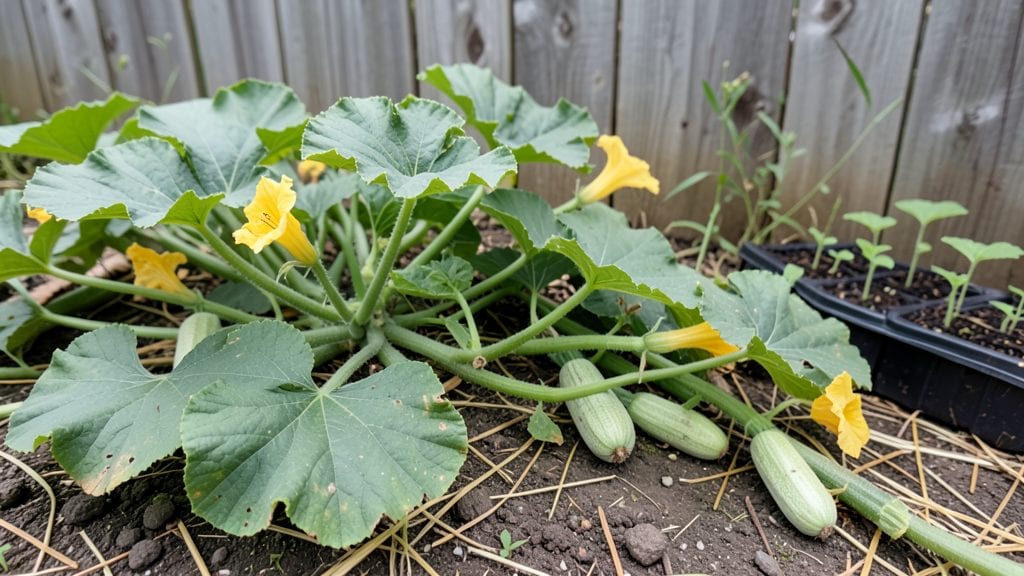
You can plant squash and zucchini together, as they thrive under identical growing conditions and naturally repel pests like squash bugs when grown side by side. However, space them generously—these vining plants need ample room to sprawl without competing for nutrients.
These summer squash varieties actually benefit from each other's presence, creating a built-in pest defense system. 🌱 The strong aroma of zucchini leaves confuses squash vine borers, while their sprawling vines provide shade that preserves soil moisture.
I’ve found that pairing them with nasturtiums or marigolds further boosts pest control, making this a smart combo for small gardens where space is limited.
When planning your layout, think beyond just the squash and zucchini—consider their growth habits. While they share many needs, their sprawling nature means you’ll need to allocate at least 3–4 feet between plants to prevent overcrowding. This spacing also reduces disease risks by improving airflow around the foliage.
💡 In This Article
- Why Squash and Zucchini Thrive as Garden Companions
- Optimal Spacing and Layout for Squash-Zucchini Pairings
Why squash and zucchini thrive as garden companions
Both squash and zucchini belong to the Cucurbita family, meaning they share identical soil preferences and thrive in well-draining, nutrient-rich earth with a pH between 6.0 and 7.0.
Their root systems spread horizontally rather than deeply, typically reaching only 12-18 inches down—ideal for companion planting since they won't compete for water or nutrients at deeper soil levels.
This shallow root structure also makes them perfect candidates for mulching, which conserves moisture and suppresses weeds while keeping the soil temperature stable at 70-85°F, their optimal growing range. 🌱
The real magic happens in their pest-deterrent synergy. Zucchini leaves emit a strong scent that confuses squash vine borers, while squash plants naturally repel cucumber beetles—a shared enemy. Studies show that interplanting these cousins reduces squash bug populations by up to 40% compared to planting them alone.
Their sprawling vines also create a living mulch effect, shading the soil and preventing fungal diseases like powdery mildew from taking hold in hot, humid conditions. The key is their complementary growth habits: squash tends to spread wider, while zucchini grows bushier, creating an ideal microclimate for both.
However, their heavy feeding habits demand attention. Both plants require high nitrogen levels early in the season and phosphorus and potassium as they fruit. Without proper fertilization, you'll see stunted growth or poor yields—especially in the first 6-8 weeks of growth.
I recommend side-dressing with compost or a balanced 10-10-10 fertilizer every 3-4 weeks to prevent nutrient depletion. Their sprawling nature also means they'll compete for sunlight, so maintaining proper spacing is crucial to avoid shading that can lead to blossom-end rot in squash or bitter zucchini.
Disease cross-contamination is another consideration. Both are susceptible to powdery mildew and cucumber mosaic virus, so rotating crops annually and removing diseased foliage immediately is essential. The good news? Their companion planting benefits extend to other plants too.
Adding marigolds between rows deters nematodes, while basil planted nearby improves flavor and repels thrips. This creates a self-sustaining ecosystem where each plant plays a protective role for its neighbors. 🌿
What most gardeners don't realize is how their growth patterns complement each other over time. Early in the season, zucchini's bushier growth provides shade for squash seedlings, while later in the season, squash's sprawling vines create a living canopy that protects zucchini fruits from sunscald.
This natural progression makes them one of the most efficient summer vegetable pairings for small gardens, where space is often limited. The secret lies in their ability to work together while maintaining their individual growth characteristics.
For maximum success, plant zucchini slightly earlier than squash—about 2-3 weeks ahead—so their foliage can establish while squash seedlings get a head start. This staggered approach ensures both plants have enough energy to produce abundant harvests without competing for resources.
The result? A thriving garden section where pests are deterred, diseases are minimized, and your harvest table stays full all summer long. 💫