
Diseases
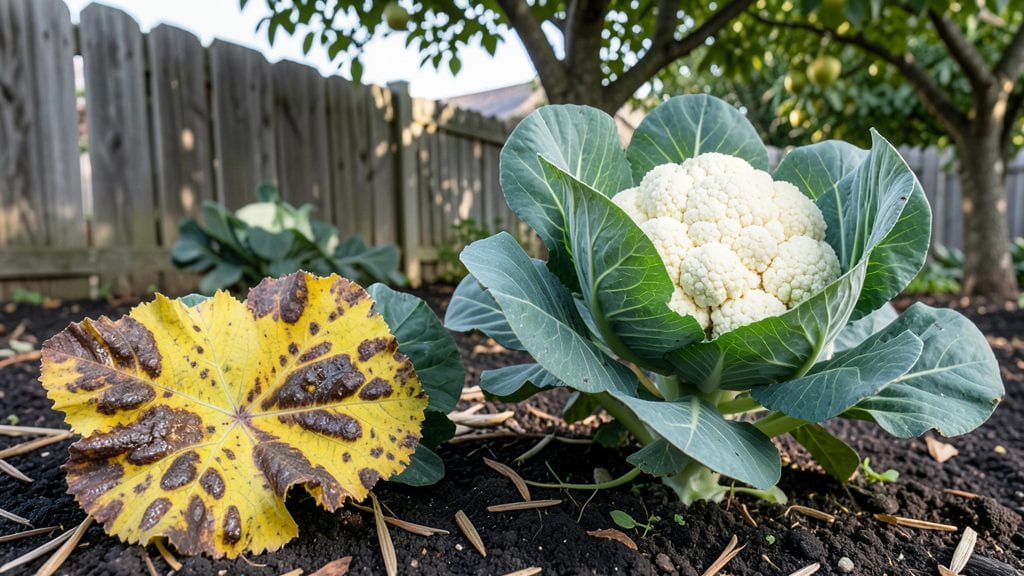
Cauliflower plant diseases can turn your crisp white heads into a sad, yellowed mess—unless you catch the signs early. 🌿 I’ve lost entire harvests to clubroot and black rot, but now I spot the warning signs before they spiral: stunted growth, yellowing leaves, or that telltale black vein pattern.
The key is acting fast with organic fixes that actually work.
The worst offenders—clubroot, black rot, and downy mildew—love damp soil and crowded plants. My biggest mistake? Ignoring the early leaf spots until the roots were already rotting. Now I rotate crops every year, space plants properly, and use a 3-inch layer of straw mulch to keep soil dry.
Prevention saves more than any spray ever will.
Once you spot trouble, hydrogen peroxide sprays (3%) or neem oil can stop fungal spread in its tracks. For clubroot, I’ve had luck with solarizing soil in summer—just cover it with clear plastic for 4–6 weeks to kill pathogens.
The payoff? Healthy, tight curds instead of limp, diseased heads by harvest time.
This works for home gardens, raised beds, or even container growing—just adjust spacing and watering. The goal isn’t perfection; it’s catching problems before they ruin your crop. Let’s get those cauliflowers thriving again.
Root Causes Behind Plant Troubles
Cauliflower plants, like all crops, are vulnerable to diseases due to a mix of biological, environmental, and agricultural factors. Understanding these root causes helps gardeners and farmers take proactive steps to prevent outbreaks.
Below, we break down the key reasons why cauliflower plants succumb to diseases—so you can tackle them head-on.
Disease-causing pathogens thrive when environmental conditions create the perfect storm for infection. For cauliflower, these stressors often include:
- 💦 Excess Moisture & Poor Drainage
- Why it happens: Cauliflower roots need well-draining soil to avoid waterlogging, which creates anaerobic conditions. When soil stays soggy, fungal spores like Phytophthora and Pythium multiply rapidly, rotting roots and stems. High humidity (above 75%) also encourages downy mildew and black rot by extending the window for spores to germinate.
- Actionable fix: Plant cauliflower in raised beds or mounds with sandy loam soil. Avoid overhead watering—use drip irrigation or soaker hoses to keep foliage dry.
- 🌡️ Extreme Temperature Swings
- Why it happens: Cauliflower prefers cool weather (60–75°F). Heat stress weakens plants, making them susceptible to bacterial soft rot or white mold. Conversely, cold snaps can trigger clubroot (Plasmodiophora brassicae), a soil-borne pathogen that thrives in chilly, wet conditions.
- Actionable fix: Use row covers for frost protection and mulch with straw to moderate soil temps. Choose heat-tolerant varieties like ‘Snowball Y Improved’ if your climate runs hot.
Soil isn’t just a growing medium—it’s a battleground for plant health. Imbalances here directly invite diseases:
- 🧪 Nutrient Deficiencies or Toxicities
- Why it happens: Low calcium or magnesium levels weaken cell walls, making plants vulnerable to blackleg (Leptosphaeria maculans) or alternaria leaf spot. Over-fertilization with nitrogen (without potassium) can also stress roots, inviting fusarium wilt.
- Actionable fix: Test soil pH (aim for 6.0–7.0) and amend with lime (for acidity) or compost (for organic matter). Side-dress with potassium-rich fertilizers like greensand.
- 🪰 Soil-Borne Pathogens
- Why it happens: Pathogens like clubroot or verticillium wilt persist in contaminated soil for years. Crop rotation fails if you replant brassicas (cabbage family) too soon, as they share the same pathogens.
- Actionable fix: Rotate crops with non-hosts like beans or grasses for 3+ years. Solarize soil in summer (cover with clear plastic for 4–6 weeks) to kill pathogens.
Diseases don’t just appear—they exploit weaknesses. Here’s how pathogens sneak in:
- 🍃 Physical Damage from Pests or Tools
- Why it happens: Caterpillars, flea beetles, or even pruning shears create wounds where bacterial spot (Xanthomonas campestris) or powdery mildew can enter. Sap-sucking pests (like aphids) also spread viral diseases like cauliflower mosaic virus.
- Actionable fix: Use row covers to block pests early. Sterilize tools with 70% isopropyl alcohol between uses. Remove infected leaves immediately.
- 🌬️ Wind & Waterborne Spread
- Why it happens: Fungal spores (downy mildew, white rust) hitch rides on wind or splashing water. Overhead irrigation turns leaves into spore launchpads, accelerating outbreaks.
- Actionable fix: Space plants for airflow (18–24 inches apart). Water at soil level and avoid late-day irrigation to let foliage dry.
💡 Pro Tip: Healthy cauliflower starts with prevention. Rotate crops, monitor soil, and choose disease-resistant varieties (e.g., ‘Purple of Sicily’ for black rot resistance). When diseases strike, act fast—early intervention is your best defense!
Fixing Cauliflower Plant Diseases Naturally
Cauliflower plants are resilient, but when diseases strike, quick action can save your crop. The good news? Most issues have organic, easy-to-follow solutions—no harsh chemicals required.
Below, we map common problems to their fixes, along with prevention tips to keep your plants thriving. Let’s get your cauliflower back to its healthy, head-forming best!
Signs: Yellowing leaves, stunted growth, wilting, and a rotten root system (literally—roots look like tiny cauliflower heads).
How to Fix It: 🔥 Remove infected plants immediately – Don’t compost them! Bag and dispose to prevent spread. 🍳 Boost soil pH – Club root thrives in acidic soil. Test your soil and add lime (calcium carbonate) to raise pH to 6.5–7.0. 👨🍳 Rotate crops – Avoid planting brassicas (cauliflower, broccoli, cabbage) in the same spot for 3–4 years. 🥘 Use resistant varieties – Try ‘Snowball’ or ‘Snowball Y Improved’; they tolerate club root better. 🔪 Solarize soil (for severe cases) – Cover infected beds with clear plastic for 4–6 weeks in hot sun to kill pathogens.
Prevention Tip: 💡 Add composted manure or compost tea before planting to improve soil structure and suppress pathogens.
Signs: Yellow patches on leaves (top side), purple-gray fuzzy growth on undersides, and leaves curling or dying.
How to Fix It: 🔥 Prune infected leaves – Snip off and dispose of (don’t compost) affected foliage to stop spores from spreading. 🍳 Improve airflow – Space plants 18–24 inches apart and avoid overhead watering. 👨🍳 Apply copper fungicide – Use baking soda spray (1 tsp baking soda + 1 quart water + few drops of soap) or a copper-based fungicide every 7–10 days. 🥘 Water in the morning – Wet leaves at night invite mildew. Use drip irrigation or soaker hoses instead. 🔪 Remove debris – Clear old plant material from the garden bed after harvest.
Prevention Tip: 🌡️ Plant mildew-resistant varieties like ‘Purple of Sicily’ or ‘Romanesco’ for better defense.
Signs: V-shaped yellow patches on leaves, black veins, and stunted heads that fail to form properly.
How to Fix It: 🔥 Destroy infected plants – Burn or trash them do not compost—this disease survives in plant debris. 🍳 Rotate crops aggressively – Avoid planting brassicas in the same spot for at least 5 years. 👨🍳 Use organic bactericides – Spray with serpentine bacillus (Bacillus subtilis) or neem oil as a preventative. 🥘 Sterilize tools – Clean pruners and shovels with rubbing alcohol between uses. 🔪 Plant early or late – Black rot spreads in warm, humid weather. Spring or fall plantings reduce risk.
Prevention Tip: ✨ Intercrop with marigolds—they repel pests that may introduce the bacteria.
Signs: White, powdery spots on leaves (like flour dust), leaves yellowing, and plants looking "dusted" with sugar.
How to Fix It: 🔥 Spray with homemade remedy – Mix 1 tsp neem oil + 1 tsp baking soda + 1 quart water + a drop of soap. Spray every 5–7 days. 🍳 Encourage shade – Use shade cloth (30–50%) if growing in hot climates. 👨🍳 Trim crowded foliage – Thin plants and remove lower leaves to improve airflow. 🥘 Apply sulfur dust – Lightly dust plants with organic sulfur (follow package rates) for prevention. 🔪 Avoid wetting leaves – Water at the base only, especially in the evening.
Prevention Tip: 🎯 Plant garlic or chives nearby—their scent deters mildew spores.
No matter the issue, proactive care keeps cauliflower healthy:
- Test soil every 2–3 years (pH, nutrients).
- Use raised beds for better drainage (diseases love soggy soil).
- Plant disease-resistant varieties (check seed packets).
- Rotate crops—never plant the same family in the same spot two years in a row.
- Mulch with straw to keep soil moist but prevent splashing spores.
Final Thought: 💪 Most cauliflower diseases are manageable with organic methods—the key is early action. Once you spot trouble, act fast, adjust care, and your plants will bounce back stronger than ever. Happy gardening!
Frequently asked questions
What are the first signs of clubroot in my cauliflower plants?
Look for yellowing leaves and stunted growth—these often appear before you see the characteristic root galls (lumpy, cauliflower-like growths) when you dig up the plant. Early detection is key, so check roots if leaves start wilting unexpectedly, especially in cool, wet soil.
Can I still harvest cauliflower if it has black rot?
No, you should remove and destroy infected plants immediately—black rot spreads quickly and ruins entire crops. The V-shaped yellow patches and black veins mean the plant is already compromised, and the bacteria can survive in plant debris for years. Always burn or trash infected material.
How often should I spray neem oil for downy mildew prevention?
Apply neem oil every 7–10 days during humid conditions or after heavy rain. Mix 1 tablespoon per gallon of water with a drop of soap as a spreader. Start spraying at the first sign of purple-gray fuzz on leaf undersides to stop the spread. Preventative sprays work best in the morning.
Will crop rotation really help with cauliflower diseases?
Rotating crops—especially avoiding brassicas (like cabbage family plants) in the same spot for 3–5 years—breaks the disease cycle. Soil-borne pathogens like clubroot and black rot can persist for years, but non-host plants (beans, grasses) disrupt their life cycle. This is one of the most effective organic prevention methods.
Can I save my cauliflower plants if they already have powdery mildew?
Yes, but act fast! Prune infected leaves and spray with a baking soda solution (1 tsp baking soda + 1 quart water + soap). Improve airflow by spacing plants 18–24 inches apart and avoid overhead watering. For severe cases, use organic sulfur dust (follow package rates). With prompt care, plants often recover fully.