
Diseases
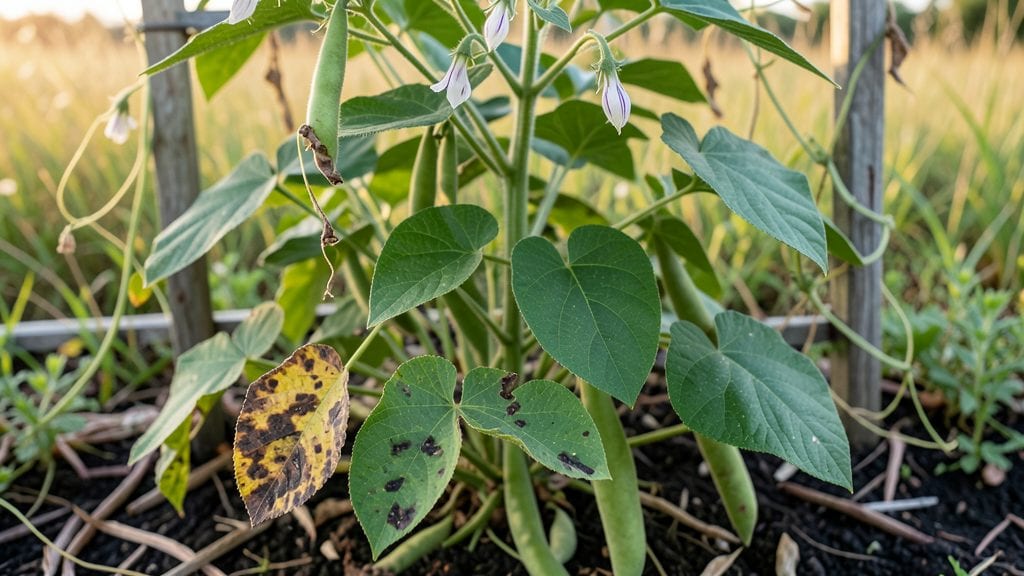
Green bean plant diseases can turn a promising harvest into a sad pile of wilted vines in just a few weeks. I’ve seen rust-colored spots spread like wildfire across my bush beans, and the key to saving your crop is catching those early warning signs before they take hold.
The moment you spot yellowing leaves or strange growths, you’re already in a race against time—but with the right moves, you can turn things around.
Most of these diseases thrive in warm, humid conditions, which means your green beans are at risk during late summer when the air feels thick and the soil stays damp. Powdery mildew leaves a white, dusty coating, while bacterial blight causes dark, water-soaked spots that spread fast.
The good news? Prevention is simpler than you think—rotating crops, spacing plants properly, and watering at the base (not overhead) cuts down on trouble before it starts.
Once you spot trouble, act fast with organic fixes like neem oil sprays, copper fungicides, or even a baking soda mix for mildew. I’ve revived plants that looked done for by cutting off infected leaves and improving airflow around the vines.
Within a week, new growth often pushes through, and the plant bounces back stronger than before.
This works for both bush and pole beans, no matter your garden size. The secret isn’t fancy tools—it’s knowing what to watch for and acting before the disease gets a foothold. Let’s get your beans back on track.
Root Causes Of Bean Fungal Foes
Green bean plants are resilient, but they’re not invincible—especially when it comes to fungal infections. Understanding why these diseases strike is the first step to stopping them in their tracks.
Below, we break down the key triggers behind the most common green bean diseases, from soil-borne villains to weather-related weak spots.
Fungal diseases like root rot and white mold thrive when soil conditions are perfect for their growth. Here’s why:
- Poor drainage: Fungi spread like wildfire in soggy soil. Compacted or heavy clay soils trap excess moisture, creating a fungal paradise. Actionable fix: Amend soil with compost or sand to improve aeration before planting.
- Overwatering: Green beans need consistent moisture, but too much turns roots into a fungus buffet. Actionable fix: Water at the base (not overhead) and let the top inch of soil dry between waterings.
- Old or infected soil: Fungal spores can linger for years in garden beds. If you’ve grown beans (or other legumes) in the same spot repeatedly, pathogens build up. Actionable fix: Practice crop rotation—wait 3 years before replanting beans in the same area.
- High organic matter without balance: While compost is great, too much can deplete soil nitrogen and stress plants, making them vulnerable to infection. Actionable fix: Test soil pH (aim for 6.0–7.0) and add a balanced fertilizer (like 10-10-10) at planting.
💡 Pro Tip: If your garden has a history of fungal issues, solarize the soil in late summer by covering it with clear plastic for 4–6 weeks to kill off spores before planting.
Fungi don’t just appear—they hitch a ride on humidity and temperature. Here’s how weather sets the stage:
| Disease | Weather Trigger | Why It’s a Problem |
|---|---|---|
| Anthracnose | Warm, humid nights (75–85°F) + frequent rain | Spores splash onto leaves from soil, creating perfect conditions for spread. |
| Powdery Mildew | Cool (60–75°F), dry days + high humidity at night | Fungus thrives on leaf surfaces when airflow is poor and moisture lingers. |
| Rust | Cool, wet springs + overcast skies | Spores germinate faster in low light and moisture, turning leaves into rust-colored colonies. |
🌡️ Actionable Fix: Choose disease-resistant varieties (like ‘Blue Lake’ or ‘Contender’) and space plants 4–6 inches apart for airflow. If rain is forecasted, water in the morning so foliage dries quickly.
Fungal diseases often move in after pests have already compromised your plants. Here’s how:
- Japanese beetles & aphids: These pests chew leaves and stems, creating entry points for fungi like bacterial blight.
- Wireworms & cutworms: They munch on roots, stressing plants and making them susceptible to root rot.
- Thrips: Their feeding scars disrupt plant cell walls, making leaves prime targets for powdery mildew.
🔥 Actionable Fix: Use row covers early in the season to block pests, or introduce beneficial nematodes (like Steinernema carpocapsae) to control soil-dwelling larvae orgically.
Stressed beans are fungal magnets. Common stressors include:
- Nutrient deficiencies: Lack of magnesium (Mg) or calcium (Ca) weakens cell walls, making plants easier targets.
- Over-fertilizing with nitrogen: Too much N leads to soft, lush growth that’s highly susceptible to mildew.
- Transplant shock: Moving seedlings without hardening off or acclimating roots stresses plants, lowering their resistance.
✨ Actionable Fix: Use a balanced fertilizer (like fish emulsion or worm castings) and side-dress with compost mid-season. For transplants, water deeply before moving and avoid direct sun for the first 3–5 days.
Fixing Common Bean Blights Naturally
Once you’ve identified what’s ailing your green bean plants, acting fast with the right organic fixes can save your harvest—and your sanity. Below, we’ve matched each disease to a step-by-step solution, plus prevention tips to keep your garden thriving.
Think of this as your emergency repair kit for leafy greens!
**🔥 Cause: Fungal spores (Colletotrichum spp.) 🍳 Fix It: 1. Remove infected plants immediately – Snip off (or pull) any stems with dark lesions or wilting leaves. Do not compost them! Toss in a sealed trash bag to prevent spore spread.
- Apply a copper fungicide spray – Mix 1 tsp baking soda + 1 quart water + a few drops of dish soap (as a sticker). Spray every 7–10 days during wet weather. For a stronger organic option, use copper fungicide (like Bonide Copper Fungicide).
- Improve airflow – Thin out crowded plants and space them 12–18 inches apart. Use trellises to elevate vines if needed.
- Sterilize tools and soil – Clean pruners with rubbing alcohol between cuts.
Solarize soil in late summer by covering it with clear plastic for 4–6 weeks to kill fungal spores.
💡 Prevention Tip: Rotate crops—don’t plant beans in the same spot for 3+ years.
🔪 Cause: Xanthomonas campestris bacteria ⏰ Fix It Fast (Before It Spreads!):
- Quarantine infected plants – Move them 10+ feet away from healthy beans. Cover with a tarp to suffocate them (or burn if local laws allow).
- Flood the soil (seriously!) – Water the area deeply for 3 days straight to dilute bacteria in the soil. Drain well afterward.
- Use a bacterial spray – Mix 1 tsp neem oil + 1 tsp baking soda + 1 quart water. Spray every 5 days until new growth appears. Avoid copper—it can worsen bacterial issues.
- Disinfect everything – Scrub pots, trellises, and tools with 10% bleach solution (1 part bleach to 9 parts water).
**🌡️ Pro Tip: Plant resistant varieties like ‘Blue Lake’ or ‘Kentucky Wonder’ next season.
🎯 Cause: Erysiphe polygoni fungus (loves humidity!) ✨ Fix It with a Simple Spray:
- Wipe leaves with a damp cloth – Gently remove white powder from undersides of leaves (where spores hide).
- DIY baking soda spray – Stir 1 tbsp baking soda + 1 tsp horticultural oil + 1 quart water. Add a drop of soap. Spray every 7–10 days at dawn or dusk (avoid direct sun).
- Boost airflow – Prune nearby plants to reduce shade and humidity. Use a fan on low for 10 mins/day if growing indoors.
- Reflective mulch hack – Lay white plastic or aluminum foil under plants to reflect light and deter fungal growth.
**💡 Prevention Tip: Space plants widely and water at the base (never overhead).
🌡️ Cause: Overwatering + Pythium/Phytophthora fungi 🔥 Fix It Now:
- Stop watering immediately – Let soil dry out completely (check with your finger—top 2 inches should feel dry).
- Improve drainage – Mix compost or perlite into heavy soil. Elevate containers with gravel or bricks.
- Apply hydrogen peroxide – Soak roots in 3% hydrogen peroxide (1:10 ratio with water) for 10 mins to kill fungi. Replant in fresh, sterile potting mix.
- Use beneficial fungi – Sprinkle mycorrhizal inoculant (like MycoApply) around roots to outcompete bad fungi.
**🌱 Pro Tip: Plant beans in raised beds or containers for better drainage.
Even after treating, prevent recurrence with these habits:
- Rotate crops – Never plant beans, peas, or tomatoes in the same spot two years in a row.
- Test your soil – Aim for a pH of 6.0–7.0 (use lime to raise pH or sulfur to lower it).
- Plant disease-resistant varieties – Look for labels like “anthracnose-resistant” or “bacterial blight-tolerant.”
- Water wisely – Morning watering only, and use drip irrigation to avoid wetting leaves.
- Clean up debris – Remove old plant matter before winter to starve fungal spores.
🚨 Remember: The key to saving your green beans is speed + prevention. Once a disease takes hold, organic fixes work best as a team—prune, spray, and adjust your garden’s environment. Happy (and healthy) growing!**
Frequently asked questions
What are the first signs of fungal infections in green beans?
Look for yellowing leaves, white powdery coatings (powdery mildew), or dark, water-soaked spots on stems and leaves. Rust-colored patches or wilting vines are also red flags. Check undersides of leaves first—fungi love hiding there.
Can I still harvest green beans if they show early disease signs?
Yes, but only if the pods are healthy and disease-free. Remove any infected leaves or stems immediately to prevent spread. Harvest frequently to reduce plant stress, which helps them fight off pathogens.
How do I know if my green beans have bacterial blight vs. fungal disease?
Bacterial blight causes dark, greasy spots that ooze when wet, while fungal diseases create dry, powdery, or rust-colored patches. Bacterial issues also spread faster in warm, wet conditions—check for yellow halos around spots.
Will neem oil work for all green bean diseases?
Neem oil is great for fungal diseases (like powdery mildew) and some bacterial issues, but it’s not a cure-all. For bacterial blight, combine it with copper fungicide or baking soda sprays. Always test on a small area first!
How long does it take to see results after treating a diseased plant?
With organic fixes, you’ll often see improvement in 5–7 days if caught early. For severe cases, it may take 2–3 weeks to fully recover. Consistency is key—keep spraying and improving airflow until new growth appears.