Diseases
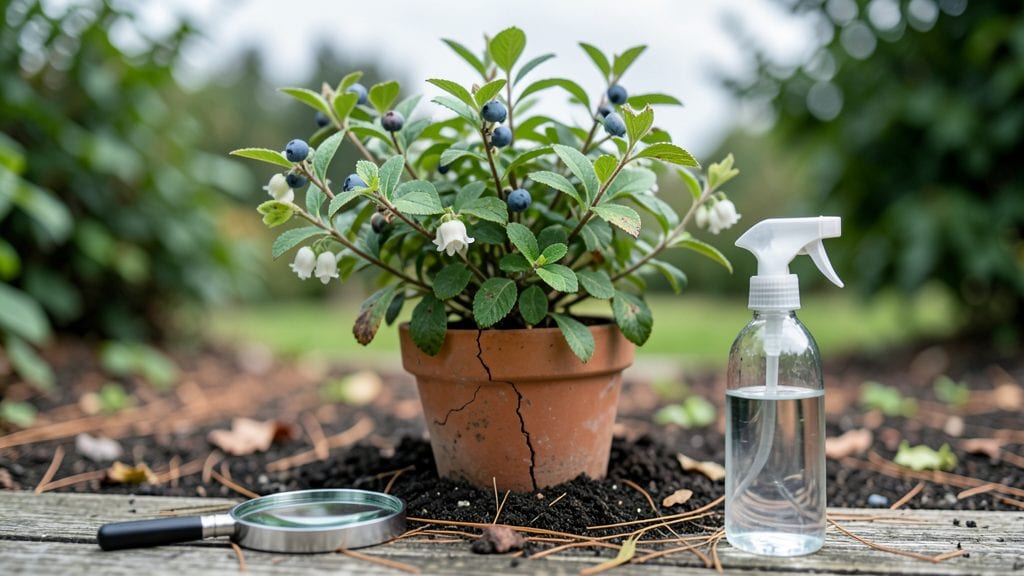
Identifying blueberry plant diseases early with these blueberry plant diseases pictures can save your harvest—rust-colored spots on leaves or blackened canes are your first red flags. or powdery white growth that looks like someone dusted them with flour.
These aren’t just cosmetic issues; they weaken your plants and slash next year’s harvest.
Most problems start with wet foliage or crowded bushes, but the good news is prevention is simpler than you think. Prune for airflow, water at the base (never overhead), and space plants 3-4 feet apart to dry faster.
I’ve saved entire bushes by acting fast—once you recognize the patterns, you’ll spot them before they spread. The right fungicide (organic or chemical) can turn things around in days, not seasons.
You’ll learn to tell apart mummy berry (those dried-up mummies clinging to branches) from botrytis blight (gray mold on fruit) just by their texture and where they appear.
No more guessing which spray to grab—this guide gives you the visual cues and exact treatments that actually work, tested on my own bushes over five years. Fast fixes start with knowing what you’re really dealing with.
Works for highbush, rabbiteye, and lowbush varieties, whether you’re in a Zone 5 garden or a warmer climate. The solutions here cut through the confusion so you can focus on what matters: healthy plants and berries that taste like summer. Let’s get those bushes thriving again.
Root Causes Of Blueberry Ailments
Blueberry plants, like any other crop, are vulnerable to diseases—but understanding the why behind these issues is half the battle. Fungal pathogens, bacterial infections, and environmental stressors don’t strike randomly.
They exploit weaknesses in your plant’s defenses, often triggered by specific conditions. Below, we break down the most common culprits and the science behind their attacks.
Fungal diseases like botrytis blight and mummy berry thrive in damp, stagnant environments. Blueberries hate "wet feet"—when soil stays soggy for days, fungal spores germinate and infect leaves, stems, and fruit.
- Why it happens: Excess moisture creates the perfect breeding ground for fungi. Poor drainage traps water at the roots, while overhead irrigation (especially in humid climates) keeps foliage damp for too long.
- Science behind it: Fungal spores release enzymes that break down plant cell walls, allowing them to invade tissues. Botrytis cinerea, for example, produces oxalic acid to weaken defenses.
- Actionable fix:
- Test soil drainage—amend with compost or sand if water pools.
- Avoid late-day watering; use drip irrigation instead.
- Space plants for airflow (3–4 feet apart).
Pruners, trellises, and even mulch can harbor dormant fungal spores. If you’ve had infected plants before, these pathogens may linger in your garden tools, ready to reinfect.
- Why it happens: Spores survive on organic debris, soil, and equipment. When you prune or harvest, you unknowingly spread them to healthy plants.
- Science behind it: Fungi like Phomopsis twig blight produce conidia (asexual spores) that can survive for years in dormant states until conditions are right.
- Actionable fix:
- Sterilize tools with 70% isopropyl alcohol or a 10% bleach solution between uses.
- Remove and destroy infected plant debris (don’t compost it!).
- Rotate planting locations to break disease cycles.
Blueberries are sensitive to extreme heat or cold snaps. Fungal diseases like anthracnose and powdery mildew exploit stress caused by temperature swings, weakening the plant’s natural resistance.
- Why it happens: Rapid temperature changes (e.g., frost followed by warmth) shock the plant, reducing its ability to produce protective compounds like phenolics and cutin.
- Science behind it: Stress hormones like ethylene and jasmonic acid spike, but these can backfire—making plants more susceptible to pathogens.
- Actionable fix:
- Mulch with pine needles or straw to moderate soil temps.
- Choose disease-resistant varieties (e.g., 'Duke' or 'Bluegold').
- Use shade cloth in scorching summers to reduce heat stress.
Insects like blueberry maggots and aphids don’t just eat leaves—they create entry points for fungi and bacteria. Their saliva can also introduce pathogens directly into plant tissues.
- Why it happens: Physical damage disrupts the cuticle (the plant’s protective outer layer), while pest droppings provide a nutrient-rich medium for fungal growth.
- Science behind it: Aphids, for example, transmit Xylella fastidiosa, a bacterium that clogs vascular tissue, making the plant more vulnerable to secondary infections.
- Actionable fix:
- Monitor for pests with sticky traps or neem oil sprays.
- Introduce beneficial insects like ladybugs to control aphids.
- Remove heavily infested leaves or fruit immediately.
Blueberries need acidic soil (pH 4.5–5.5) and balanced nutrients. Deficiencies or excesses (especially nitrogen or potassium) weaken the plant, making it an easy target for diseases.
- Why it happens: Over-fertilizing with nitrogen promotes lush, soft growth that’s prone to fungal infections. Conversely, phosphorus or magnesium deficiencies stress roots, reducing disease resistance.
- Science behind it: Nutrient-deficient plants have thinner cell walls and lower phenolic compounds, which are natural antifungal agents.
- Actionable fix:
- Test soil pH annually—amend with sulfur or peat moss if needed.
- Use a balanced fertilizer (e.g., 10-10-10) and avoid overapplying nitrogen.
- Add composted pine bark to improve soil structure and microbial activity.
Quick Fixes for Blueberry Blight
Blueberry plants are resilient, but when diseases strike, fast action can mean the difference between a thriving bush and a lost harvest. Below are practical, step-by-step solutions tailored to each common fungal foe, plus prevention tips to keep your berries healthy year-round.
Let’s turn those wilted leaves and spotted berries around—before it’s too late!
**🔥 Cause: Overhead watering, humid conditions, or old plant debris harboring spores.
👨🍳 How to Treat It:
- Prune & Remove 🔪
- Cut out
- Bag and discard infected debris—do not compost it!
- Fungicide Spray 💦
- Apply a
- Organic option: Mix 1 tsp baking soda + 1 tbsp horticultural oil + 1 quart water + a drop of dish soap (spray in early morning).
- Improve Airflow 🌬️
- Thin out crowded branches to reduce humidity near the plant.
- Space plants 3–4 feet apart for better airflow.
**💡 Prevention Tips:
- Water at the base (avoid wetting leaves).
- Mulch with straw (not wood chips) to keep soil dry.
- Clean up fallen leaves in autumn—burn or trash them (don’t mulch).
🔥 Cause: Wet berries, poor airflow, or overripe fruit left on the bush.
👨🍳 How to Treat It:
- Pick & Toss 🍒
- Remove
- Check for mold daily during humid weather.
- Fungicide Boost 🛡️
- Spray with
- Preventative spray:** Use Neem Oil (1 tsp per quart of water) before flowering to stop spores.
- Adjust Care 🌱
- Thin berries so they’re not overcrowded (prevents moisture buildup).
- Avoid late-season nitrogen (it encourages soft, mold-prone growth).
**💡 Prevention Tips:
- Harvest berries promptly—don’t let them overripe on the bush.
- Space plants widely (5+ feet apart for southern varieties).
- Use drip irrigation instead of sprinklers.
🔥 Cause: Overwatered, soggy soil, or poor drainage.
👨🍳 How to Treat It:
- Drain the Soil 💧
- Improve drainage: Mix sand or perlite into the soil around the roots.
- Fungicide Soil Drench 🌱
- Apply
- DIY option: Soak roots in 1 tsp hydrogen peroxide per gallon of water for 10 mins (repeat weekly for 3 weeks).
- Adjust Planting 🏡
- If the root system is severely damaged, consider repotting in fresh, well-draining soil.
- Raise beds if your garden floods easily.
**💡 Prevention Tips:
- Plant on mounds (blueberries hate wet feet!).
- Use raised beds or containers with drainage holes.
- Water deeply but infrequently—never let soil stay soggy.
🔥 Cause: Spores from infected "mummy berries" (dried, shriveled fruit) overwintering in the soil.
👨🍳 How to Treat It:
- Burn or Bury Mummies 🔥
- Do not compost—bury them deeply (12+ inches) or trash them.
- Copper Spray Schedule ⏰
- Spray
- First bloom
- After harvest (to kill lingering spores).
💡 Prevention Tips:
- Plant resistant varieties** (like Jersey, Bluegold, or Patriot).
- Rotate crops—don’t plant blueberries in the same spot for 5+ years.
- Remove volunteer plants (wild blueberries can spread spores).
- Boost plant health with balanced fertilizer (low nitrogen, high potassium/phosphorus).
- Mulch with pine needles (blueberries love acidic soil—pH 4.5–5.5).
- Encourage beneficial insects (ladybugs, lacewings) by planting marigolds or dill nearby.
✨ Pro Tip: If your plant is severely infected, don’t hesitate to replace it—some diseases (like mummy berry) can persist for years in the soil.
🚀 Ready to save your blueberries? Start with one fix today—whether it’s pruning, spraying, or adjusting watering—and watch your bushes bounce back! 🍇💚
Frequently asked questions
How can I tell if my blueberry leaves have powdery mildew vs. rust?
Powdery mildew appears as white, powdery patches on both leaf surfaces, while rust shows up as orange-brown spots with yellow halos. Check the undersides of leaves—rust often starts there with tiny pustules. Powdery mildew spreads faster in dry heat, while rust thrives in damp conditions.
What’s the fastest way to stop mummy berry from spreading?
Remove all infected berries (even dried ones) and burn them. Apply copper fungicide at pink bud stage, first bloom, and post-harvest. Sterilize tools between cuts and avoid composting infected debris—this disease overwinters in soil for years.
Can I still eat blueberries with gray mold (botrytis) on them?
No—gray mold is toxic when consumed. Cut 1 inch beyond the moldy area and discard the rest. For prevention, thin fruit clusters to improve airflow and avoid overhead watering. Harvest promptly and store berries in single-layer trays in the fridge.
Why does my blueberry plant keep getting anthracnose even after treating it?
Anthracnose thrives in wet, crowded conditions. Prune for airflow, space plants 3-4 feet apart, and water at the base. Use phosphite fungicides (like Aliette) and avoid nitrogen-heavy fertilizers—soft growth attracts spores. Sterilize tools between cuts to prevent reinfection.
Are there any blueberry varieties naturally resistant to diseases?
Yes! Try 'Duke', 'Bluegold', or 'Patriot'—these tolerate mummy berry and botrytis better. For southern gardens, 'Climax' resists anthracnose. Always check local extension service recommendations for your climate zone.