Diseases
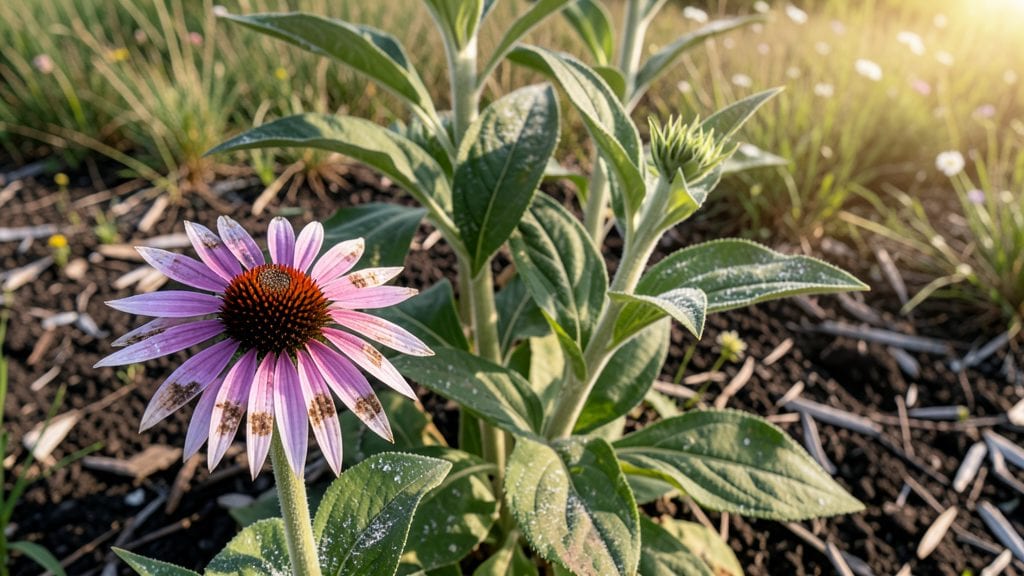
Echinacea plant diseases often include powdery mildew, rust fungus, and bacterial leaf spot, which weaken stems and discolor foliage. Early detection—yellowing leaves, black spots, or white powder—helps prevent spread and save your garden.
Echinacea plants are tough but not invincible—these diseases thrive in damp, crowded conditions where airflow is poor. 🌱 Powdery mildew coats leaves with a chalky white layer, while rust fungus creates orange pustules that weaken the plant's ability to photosynthesize.
Bacterial leaf spot appears as dark, water-soaked patches that can spread rapidly if humidity stays high. The key to saving your echinacea lies in proper spacing between plants and avoiding overhead watering, which keeps foliage dry and less susceptible to infection.
These issues aren't just cosmetic—they can stunt growth or even kill your echinacea if left unchecked. For instance, rust fungus often appears after wet springs, while bacterial leaf spot thrives in hot, humid summers.
Regular inspections during these peak seasons let you catch problems early, when they're still manageable with simple remedies like neem oil sprays or copper fungicides.
💡 In This Article
- How Fungal and Bacterial Pathogens Attack Echinacea
- Preventing and Treating Echinacea Plant Diseases
How fungal and bacterial pathogens attack echinacea
Fungal pathogens like powdery mildew and rust fungus attack echinacea primarily through airborne spores that land on leaf surfaces. Powdery mildew thrives in 70-80% humidity and forms a white, powdery coating that blocks sunlight, reducing photosynthesis by up to 40%.
Meanwhile, rust fungus creates orange pustules on undersides of leaves, releasing spores that spread via wind or splashing water. These fungi exploit weak spots—often where leaves overlap or in crowded plantings where airflow is restricted.
The key difference lies in their infection mechanisms. Powdery mildew spores germinate within 4-6 hours of landing on damp leaves, forming thread-like structures called hyphae that penetrate leaf cells.
Rust fungus, however, requires two hosts (echinacea and often grasses) to complete its life cycle, making it harder to eradicate once established. Bacterial leaf spot, caused by Xanthomonas bacteria, enters through tiny wounds or natural openings like stomata, multiplying rapidly in warm, wet conditions (above 75°F).
Environmental triggers accelerate these attacks. Poor drainage creates waterlogged soil, promoting root rot fungi like Phytophthora, while overhead watering splashes spores onto leaves. High nighttime humidity (above 65%) is particularly dangerous, as it keeps leaf surfaces wet for extended periods—ideal for bacterial growth.
The combination of these factors explains why diseases often flare up in late summer, when temperatures peak and rainfall increases.
Each pathogen targets specific plant parts with devastating precision. Powdery mildew clogs leaf pores, causing yellowing and premature leaf drop. Rust fungus weakens stems by diverting nutrients to infected leaves, leading to stunted flower production.
Bacterial leaf spot creates dark, circular lesions that merge and kill entire leaf sections, exposing stems to secondary infections. The result? A plant struggling to support its own weight, with flowers that fail to open or drop before blooming.
What most gardeners don't realize is how quickly these pathogens can spread. A single infected echinacea plant can release thousands of spores per day, contaminating nearby plants within 7-10 days under ideal conditions.
The spores can even survive winter in plant debris, ready to reinfect in spring. This persistence is why proper cleanup—removing all infected foliage and sterilizing tools—is critical during dormancy periods.
Understanding these attack patterns helps you predict and prevent outbreaks. For example, spacing echinacea plants 18-24 inches apart improves airflow, reducing humidity at leaf level. Watering at soil level instead of overhead cuts spore splash by 90%.
These simple adjustments disrupt the pathogens' life cycles before they gain a foothold, giving your echinacea the best chance to thrive.