
Pruning
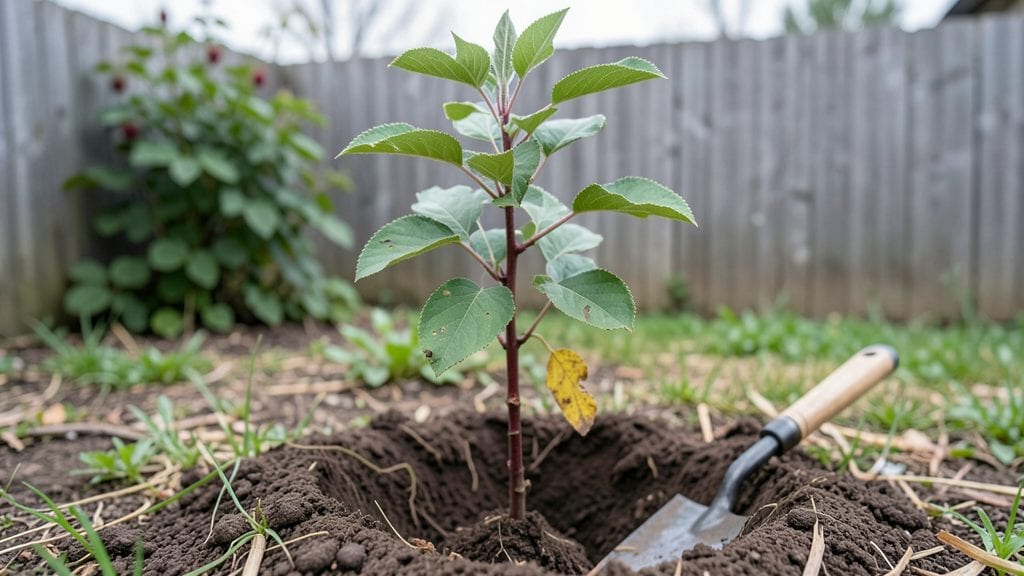
Planting apple tree seedlings at the right time and depth sets the stage for decades of harvests—here’s how to do it right from day one.
I learned the hard way that skipping soil prep or planting too deep can stall growth for years, but the right technique turns seedlings into sturdy trees within months. The key is matching the season, soil, and care to what young roots actually need.
Start with loose, well-draining soil mixed with compost—no heavy clay or soggy spots. Dig a hole just wide enough for the roots to spread naturally, then plant the seedling so the graft union sits 2-3 inches above ground (this prevents rot).
Water deeply right after planting to eliminate air pockets, and mulch with straw to lock in moisture while keeping weeds at bay.
You’ll see new shoots emerge within 4-6 weeks, signaling strong root establishment. Keep the soil consistently moist but never soggy—apple seedlings hate wet feet. Prune any broken branches early to encourage a sturdy framework, and avoid fertilizing for the first year unless the soil is truly poor.
This method works for both bare-root and container-grown seedlings, and the same principles apply whether you’re planting in a backyard orchard or a large pot. The payoff? Trees that bear fruit reliably and resist disease better than those planted haphazardly. Let’s get those roots settled in for good.
📚 In This Guide
- What you need
- Instructions
- Tips and common mistakes
- Wrapping up and next steps
What you need
- ● Apple tree seedlings: 1–3 healthy, disease-free seedlings (choose varieties suited to your climate, like Honeycrisp or Granny Smith).
- ● Shovel or trowel: A sturdy digging tool (18–24" shovel for mature soil, smaller trowel for precision).
- ● Garden gloves: A pair to protect your hands from thorns and rough soil.
- ● Compost or well-aged manure: 5–10 gallons (mix with soil for nutrient-rich planting holes).
- ● Mulch (wood chips, straw, or pine needles): 2–3 inches to retain moisture and suppress weeds.
- ● Watering can or hose with a gentle spray nozzle: For hydration without disturbing the soil.
- ○ Stakes (optional but recommended): 3–4 wooden or metal stakes (6–8 ft tall) + soft ties (e.g., old T-shirts or tree ties).
- ● Fertilizer (balanced 10-10-10 or organic options): 1–2 cups mixed into the planting hole.
- ● Sunlight: A location with at least 6–8 hours of full sun daily (apple trees are sun-worshippers!).
- ● Well-draining soil: Test your soil’s pH (ideal range: 6.0–7.0); amend with lime if too acidic.
- ● Space: Plant seedlings 15–20 feet apart (dwarf varieties can be closer, ~8–10 ft).
- ● Timing: Plant in early spring (after last frost) or fall (4–6 weeks before first frost).
- ● 🔥 Inspect seedlings: Check for pests (aphids, mites) or signs of disease (black spots, wilting) before planting.
- ● 🌡️ Soil prep: Loosen soil to a depth of 12–18 inches for better root penetration.
- ○ ✨ Root stimulator (optional): Dip roots in a mycorrhizal fungi solution to boost early growth.
Step-by-Step instructions for planting apple tree seedlings
Here's how to establish strong roots and set your young apple trees up for decades of harvests.
Choose the Right Location and Prepare the Soil
Apple trees need full sun—at least 6-8 hours daily—and well-draining soil. I always pick a spot with at least 6 inches of loose, fertile soil and avoid low areas where water pools. Before planting, loosen the soil to a depth of 12-18 inches using a shovel or tiller. This breaks up compacted layers and encourages root growth.
Mix in 2-3 inches of compost or well-rotted manure into the top 6 inches of soil. This improves drainage and provides nutrients without overwhelming young roots. Avoid fresh manure—it can burn tender seedlings. Test the soil pH; apple trees thrive in slightly acidic soil (6.0-6.5). If your soil is too alkaline, amend it with sulfur or peat moss.
Dig the Planting Hole and Position the Seedling
Dig a hole twice as wide as the root ball but no deeper. The top of the root ball should sit 1-2 inches above ground level—this prevents water from pooling around the stem. Gently remove the seedling from its container and tease out any circling roots with your fingers. If the roots are tightly bound, make 2-3 vertical cuts around the edges to encourage outward growth.
Place the seedling in the hole so the graft union (the swollen area near the base) is 2-3 inches above the soil line. This protects the tree from potential rot and future frost damage. Fill the hole with soil, pressing lightly around the roots to eliminate air pockets. Water deeply to settle the soil and remove any air gaps.
Water and Mulch for Moisture Retention
After planting, water the seedling deeply—about 1-2 gallons—to encourage roots to spread into the surrounding soil. Let the water soak in completely, then repeat if the top 2 inches of soil feel dry. Over the next 2-3 weeks, water 2-3 times per week to keep the soil consistently moist but not soggy. Apple tree roots need consistent moisture to establish, especially in their first growing season.
Apply 2-3 inches of mulch around the base, keeping it 6 inches away from the trunk to prevent rot. Use wood chips, straw, or shredded bark. Mulch helps retain moisture, regulate soil temperature, and suppress weeds. Replenish mulch as it breaks down, but avoid piling it against the trunk—this can trap moisture and invite disease.
Stake and Prune for Strong Growth
If your seedling is top-heavy or in a windy area, install a 4-5 foot stake and tie the trunk loosely with soft tree ties or strips of old T-shirt fabric. Avoid wire or anything that can girdle the trunk as it grows. The stake should support the tree without restricting movement—think of it as a training wheel, not a crutch.
Prune the seedling immediately after planting to remove any broken, crossing, or diseased branches. Cut just above an outward-facing bud or branch to encourage an open growth habit. Leave 3-5 strong branches on the main stem. This early pruning reduces stress on the tree and sets the stage for a well-shaped canopy. Avoid heavy pruning—you’re shaping, not reshaping.
Monitor and Protect Through the First Year
Keep an eye out for aphids, spider mites, or borers—common pests for young apple trees. I inspect the leaves and bark weekly, especially on the undersides of leaves where pests hide. If you spot trouble, treat with neem oil or insecticidal soap early. Prevention is easier than recovery, and young trees are especially vulnerable.
In late winter or early spring of the following year, apply a balanced fertilizer (10-10-10) around the drip line (the edge of the tree’s canopy). Use 1-2 pounds per year of tree age—so a 1-year-old tree gets 1 pound. Fertilize in early spring when new growth begins, not in fall. This gives the tree nutrients to fuel root and shoot growth without encouraging late-season vulnerability.
Tips & tricks for planting apple tree seedlings
A few key strategies will help you avoid common pitfalls and give your apple tree seedlings the best possible start. These insights come from years of watching trees thrive—and sometimes struggle—after planting.
Soil Preparation Secret: When loosening soil to that 12-18 inch depth in Step 1, focus on breaking up compacted layers rather than turning the soil like a cake. Use a broadfork or digging fork instead of a shovel—this preserves soil structure while improving drainage. I've seen roots grow twice as vigorously when planted in properly aerated soil. The goal is to mimic natural soil conditions where roots can spread freely.
Root Ball Handling: In Step 2, those 2-3 vertical cuts around tightly bound roots are crucial for outward growth. I learned this the hard way after watching seedlings struggle with circling roots that never expanded. Make the cuts just deep enough to loosen the root ball without damaging the main roots. This simple step can mean the difference between a tree that stays stunted and one that grows strong.
Watering Wisdom: The 2-3 gallons of water in Step 3 should soak down until it reaches those loosened layers we created in Step 1. To check, stick your finger about 6 inches deep—if it's dry, water again. Overwatering is just as harmful as underwatering, so let the top 2 inches dry between waterings. A moisture meter helps, but even a simple finger test works if you're consistent.
Pruning Precision: When pruning in Step 4, look for branches that grow inward or cross each other—they'll compete for sunlight and nutrients. Always cut just above an outward-facing bud, and make clean cuts at a 45-degree angle. I've found that leaving 3-5 strong branches creates the perfect balance between sunlight exposure and energy distribution for young trees.
Pro Tips for Planting Apple Tree Seedlings
- A few key strategies will help you avoid common pitfalls and give your apple tree seedlings the best possible start.
- Soil Preparation Secret: When loosening soil to that 12-18 inch depth in Step 1, focus on breaking up compacted layers rather than turning the soil like a cake.
- Root Ball Handling: In Step 2, those 2-3 vertical cuts around tightly bound roots are crucial for outward growth.
Frequently asked questions
Got questions about planting apple tree seedlings? You’re not alone! Here are some of the most common queries—and their straightforward answers—to help you grow with confidence.
How deep should I plant apple tree seedlings?
Plant the seedling so the graft union (the bulge near the base) sits 1–2 inches above the soil line. This prevents root rot while protecting the tree from frost. If the soil is sandy, bury it slightly deeper (up to 3 inches) to stabilize it.
What’s the best time of year to plant apple tree seedlings?
For most regions, early spring (after last frost) or early fall (6 weeks before first frost) are ideal. Avoid extreme heat or cold—seedlings need time to establish roots. If planting in winter, use mulch to insulate the soil.
Can I plant apple tree seedlings in containers instead of the ground?
Yes! Use a 5-gallon pot minimum with drainage holes and well-draining soil. Containers work well for dwarf varieties or urban gardens, but move them outdoors in spring/summer and bring them inside if temps drop below 20°F (-6°C).
Why are my apple tree seedlings wilting after planting?
Wilting often signals overwatering, underwatering, or root damage. Check soil moisture (top 1–2 inches should be dry); water deeply but infrequently. If roots were disturbed during transplanting, trim any broken roots with clean pruners and re-water gently.
Do apple tree seedlings need special soil?
They thrive in loamy, well-draining soil with a pH of 6.0–7.0. Amend heavy clay with compost or sand, and avoid soggy spots. A balanced fertilizer (10-10-10) at planting time gives them a nutrient boost for early growth.
Wrapping up and next steps
Planting apple tree seedlings is a rewarding journey that blends patience with the promise of future harvests. By selecting the right variety, preparing your soil, and following proper planting techniques, you’re setting the stage for a thriving orchard.
Remember, the key to success lies in consistent care—watering, pruning, and protecting your young trees will ensure they grow strong and fruitful.
Now that you’re ready to take the first step, why not start today? Grab your gloves, pick a sunny spot, and let your green thumb work its magic. Your future apple pies—and the joy of watching your trees grow—are waiting! 🍏🌱