Transplanting
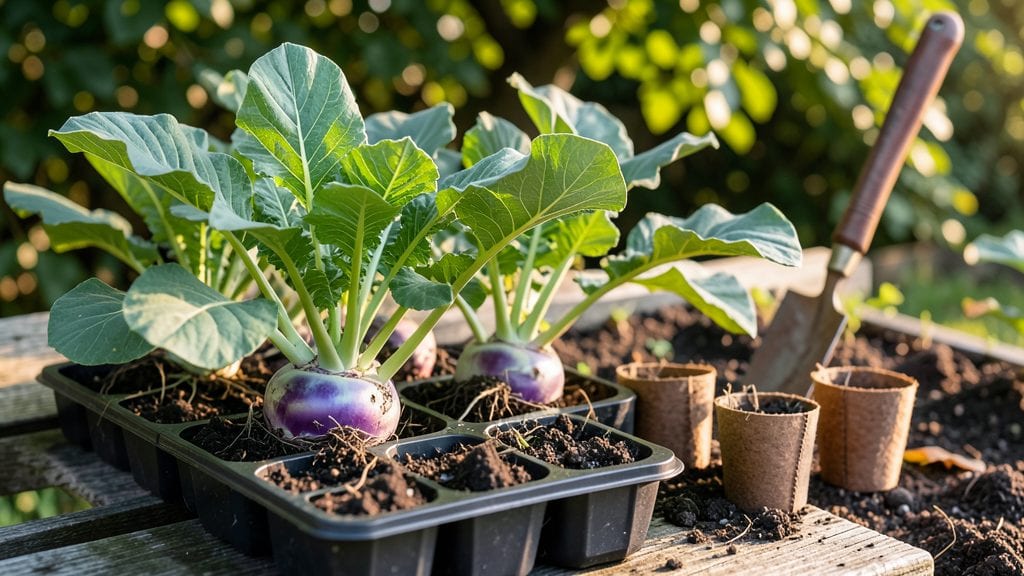
Planting kohlrabi seedlings delivers a fast-germinating harvest in just 30 days—no waiting months for roots to mature. I’ve grown this quirky, bulbous veggie for years, and the secret to success starts with the right soil prep and spacing.
Too close, and they’ll fight for space; too far apart, and you’ll waste garden real estate. The goal? Plump, tender stems ready to harvest in under a month.
You’ll need loose, well-draining soil mixed with compost, seedlings spaced 12-18 inches apart in rows 18-24 inches wide, and a sunny spot getting at least 6 hours of light daily. Kohlrabi hates soggy roots, so raised beds or mounded soil work best if your yard drains poorly.
Water gently after planting to settle the soil without disturbing delicate roots—think of it like tucking them into a cozy nest.
Within 10-14 days, you’ll see those first true leaves push through the soil, signaling healthy growth. Keep the soil consistently moist (not soggy) and watch for pests like flea beetles, which love to chew young leaves.
A row cover or neem oil spray early on prevents them from turning your seedlings into Swiss cheese. By day 30, you’ll be harvesting those bulbous stems at their sweetest.
This method works for spring and fall plantings in most climates, though cooler weather (50-70°F) suits kohlrabi best. If your summers run hot, opt for early spring or late summer starts to avoid bolting.
The payoff? A crop that’s shockingly productive in tight spaces and ready to eat fresh, roasted, or shredded into salads.
📚 In This Guide
- What you need
- Instructions
- Tips and common mistakes
- Wrapping up and next steps
What you need
- ● Kohlrabi seedlings: 6–12 healthy, 4–6 week-old transplants (check for sturdy stems and vibrant leaves).
- ● Well-draining soil: 10–12 cubic feet of loamy, fertile soil with a pH of 6.0–7.0 (amend with compost if needed).
- ● Garden space: Full sun (6+ hours/day) or partial shade (4–6 hours). Space seedlings 12–18 inches apart in rows 24–30 inches apart.
- ● Watering can or hose: With a gentle spray nozzle (avoid soaking seedlings).
- ● Organic fertilizer: Balanced 10-10-10 or compost (1–2 cups per 10 sq ft at planting).
- ● Garden trowel or transplanting spade (for digging holes).
- ● Mulch (straw or shredded leaves) (1–2 inches thick to retain moisture).
- ○ Row cover or frost cloth (optional, for early/late planting).
- ● Garden gloves (to protect hands from soil and prickly stems).
- ● Plant labels (to track varieties and harvest times).
Step-by-Step instructions for planting kohlrabi seedlings
Here’s how to get your kohlrabi growing strong in just a few simple steps—no fuss, no waiting.
Prepare the Planting Site
Kohlrabi thrives in loose, well-draining soil with plenty of organic matter. Work the first 12 inches of soil with a garden fork or tiller to break up any compaction. If your soil feels dense or heavy, mix in 2-3 inches of compost from your materials list to improve drainage and fertility. Kohlrabi hates soggy roots, so avoid planting in low spots where water pools.
Choose a location that gets full sun—at least 6 hours of direct sunlight daily. Kohlrabi grows quickly but needs consistent warmth to form those plump, tender bulbs. Test the soil temperature with your finger: it should feel warm to the touch, around 50-60°F, before planting. If your spring is still chilly, wait until nighttime temperatures stay above 45°F to avoid stunted growth.
Space Seedlings Properly
Dig small holes just deep enough to cover the seedlings’ roots but no deeper than where the soil line was on the original pot. Space seedlings 12-18 inches apart in rows that are 2 feet apart. This gives their bulbs room to swell without crowding, which leads to tough, stringy growth. If you’re planting in a raised bed, ensure the bed is at least 6 inches deep—kohlrabi’s roots need space to stretch.
Gently remove each seedling from its container, teasing apart the roots if they’re tangled. Place it in the hole and firm the soil around the base with your fingers. Avoid pressing too hard—you want the soil snug but not compacted. Water lightly right after planting to settle the soil and remove any air pockets around the roots.
Water and Mulch for Fast Growth
Kohlrabi grows best with consistent moisture, but it’s not a water hog. Water deeply once a week, aiming for 1 inch of water per week. Let the top 2 inches of soil dry out between waterings to prevent rot, but never let the plants wilt. You’ll know you’ve got the right balance when the soil feels slightly damp 1 inch below the surface.
Spread 2-3 inches of mulch around each plant, keeping it 2 inches away from the stems to prevent rot. Use straw or shredded leaves—whatever you have on hand. Mulch keeps the soil cool, retains moisture, and suppresses weeds, so you’re not constantly pulling them. Replenish the mulch every 2-3 weeks as it breaks down.
Monitor and Thin for Bulb Formation
Watch for true leaves—the second set of leaves that appear after the initial seed leaves. Once they’re fully unfurled, thin your seedlings if you overcrowded them. Snip the thinnest stems at soil level with clean scissors, leaving the strongest plant in each spot. This ensures the remaining plants get all the nutrients and space they need to form smooth, tender bulbs.
Kohlrabi bulbs form quickly, so keep an eye on them. When the bulbs reach 2-3 inches in diameter, they’re ready to harvest. If you wait too long, the bulbs turn woody and tough. Harvest on a dry day to prevent dirt from clinging, and use them fresh or store in the fridge for up to 2 weeks.
Tips & tricks for planting kohlrabi seedlings
The secret to fast, thriving kohlrabi starts with these simple but critical steps that save time and frustration.
Soil Preparation is Key: In Step 1, don't just loosen the top 12 inches of soil—also check for underground compaction by pressing your foot down. If it feels firm below 6 inches, add another inch of compost to break up any hidden layers. Kohlrabi roots need that deep, airy environment to grow quickly. I've found that amending with compost not only improves drainage but also gives the seedlings a nutrient boost right from the start.
Timing is Everything for Warmth: The 50-60°F soil temperature range mentioned in Step 1 is crucial for germination speed. Use a soil thermometer for accuracy, especially if your spring weather fluctuates. If your mornings are still chilly with nighttime temps below 45°F, consider using a cold frame or row cover to create a microclimate. This little extra effort can shave days off your growing time and prevent stunted seedlings.
Spacing Saves Future Work: When planting in Step 2, I recommend marking your 12-18 inch spacing with small stakes before digging holes. This prevents overcrowding as you get excited and want to plant more. The extra space might seem excessive now, but it's what transforms those tough, stringy bulbs into the tender, plump harvests we all want in just 30 days. Trust me on this—future you will thank present you.
Watering Wisdom: The once-weekly watering guideline in Step 3 works perfectly if you're using a rain gauge. Without one, I suggest checking soil moisture by hand: stick your finger 1 inch down—if it feels dry, water. If it's damp, wait another day. Overwatering is the fastest way to turn your fast-growing kohlrabi into a soggy mess. Remember, kohlrabi is a water hog in terms of need, but not in terms of excess.
Pro Tips for Planting Kohlrabi Seedlings
- The secret to fast, thriving kohlrabi starts with these simple but critical steps that save time and frustration.
- Soil Preparation is Key: In Step 1, don't just loosen the top 12 inches of soil—also check for underground compaction by pressing your foot down.
- Timing is Everything for Warmth: The 50-60°F soil temperature range mentioned in Step 1 is crucial for germination speed.
Frequently asked questions
Got questions about planting kohlrabi seedlings?
You’re not alone! Here are answers to the most common concerns—from timing tricks to troubleshooting tips—to help you grow a thriving crop.
When is the best time to plant kohlrabi seedlings?
Plant seedlings 2–3 weeks after your last frost date when soil reaches at least 45°F (7°C). For cooler climates, start in early spring or late summer for a fall harvest. Kohlrabi thrives in 50–70°F (10–21°C) soil—avoid planting when temps exceed 80°F (27°C), as it can bolt.
How far apart should I space kohlrabi seedlings?
Space seedlings 12–18 inches apart in rows 18–24 inches apart. Kohlrabi bulbs swell underground, so give them room to grow without crowding. If growing in containers, use 5–7 gallon pots per plant for adequate space.
Why are my kohlrabi seedlings wilting or turning yellow?
Wilting or yellowing can signal underwatering, overwatering, or pests. Check soil moisture—it should stay consistently damp but not soggy. Yellow leaves may also indicate clubroot disease (common in brassicas) or aphids. Rotate crops yearly and use row covers to deter pests.
Can I plant kohlrabi seedlings in containers?
Kohlrabi grows well in containers with at least 12 inches of depth and good drainage. Use a high-quality potting mix and fertilize every 3–4 weeks with a balanced 10-10-10 or organic compost. Just ensure pots get 6+ hours of sunlight daily.
What can I plant with kohlrabi to improve growth?
Kohlrabi loves companion planting! Pair it with:
- Lettuce or spinach (shade-tolerant, uses vertical space)
- Cucumbers or beans (fix nitrogen in the soil)
- Avoid planting near tomatoes or cabbage family pests (they share diseases).
Wrapping up and next steps
Planting kohlrabi seedlings is a rewarding way to enjoy a fast, crunchy harvest in just 30 days! With the right soil, spacing, and care, you’ll soon be savoring this versatile veggie in salads, soups, or roasted dishes.
Now that you’re ready to transplant, watch your garden thrive—and don’t forget to share your bountiful results with fellow gardeners! 🌱
Ready to take the next step? Mark your calendar for thinning or harvesting in weeks, and explore our guide on post-transplant care to keep your kohlrabi flourishing.