Watering
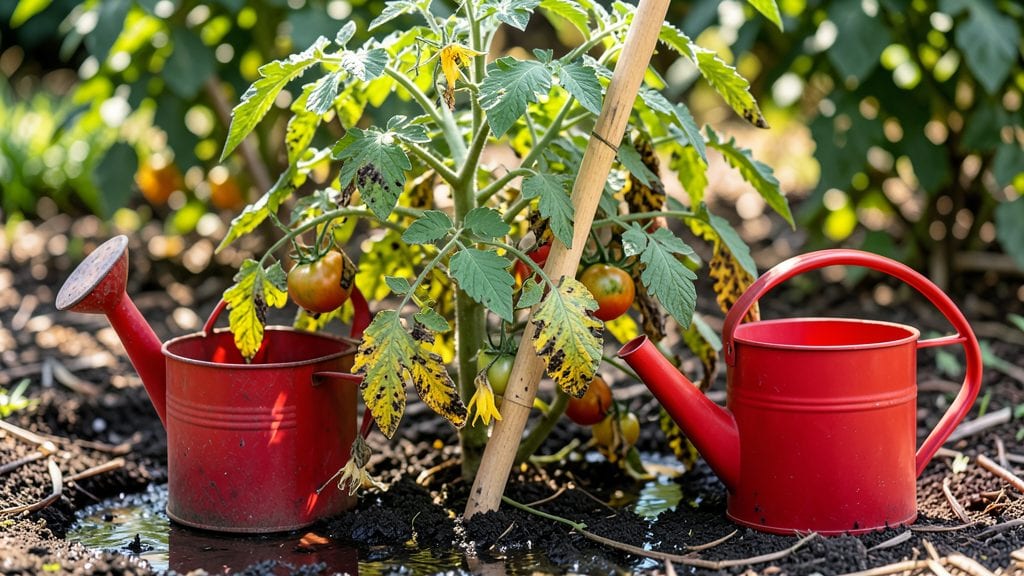
These pictures of overwatered tomato plants—yellowing leaves, mushy stems, and that foul smell—are a gardener’s worst nightmare, but spotting them early can save your season. The key is understanding what "too much water" really looks like in your garden.
Most gardeners overwater because they assume tomatoes need constant moisture, but soggy soil suffocates roots and invites fungus. You’ll spot the damage first on lower leaves—yellowing, curling, or covered in black spots.
The soil might smell like wet socks, and plants wilt even when thirsty. This isn’t wilting from heat; it’s drowning in their own pot.
Here’s the good news: recovery is possible in just 3 simple steps—stop watering immediately, improve drainage, and prune damaged foliage. Within a week, you’ll see new growth pushing through, and the plant will bounce back stronger than before.
The secret is matching water to what the plant actually needs, not what you think it wants.
This works for both container-grown and in-ground tomatoes, and the same principles apply to peppers and eggplants too. Let’s turn those sad stems into productive vines again—no guesswork, just results.
Root Causes of Overwatered Tomatoes
Overwatering your tomato plants may seem like a harmless mistake, but it can quickly turn into a recipe for disaster—🍅💦wilting leaves, yellowing foliage, and even root rot.
Understanding why this happens is the first step to fixing it. Below, we break down the science behind the problem and what triggers it in your garden.
Tomato roots need oxygen to thrive, but soggy soil suffocates them. When water pools around roots instead of draining away, it displaces air pockets in the soil. This creates an anaerobic environment, where harmful bacteria and fungi (like Pythium or Phytophthora) multiply rapidly.
What’s happening in your soil?
- Clay-heavy soils hold water like a sponge, slowing drainage.
- Compacted soil (from foot traffic or machinery) reduces pore space for air.
- Over-mulching (especially with thick organic layers) can trap moisture against the stem.
Actionable fix: Test your soil’s drainage by digging a 6-inch hole, filling it with water, and timing how long it takes to drain. If it takes more than 4 hours, amend with perlite, coarse sand, or compost to improve aeration.
Tomatoes hate moisture swings—alternating between drought and excess water confuses their root systems. When soil stays damp for days, roots struggle to absorb nutrients efficiently, leading to nutrient deficiencies (like potassium or magnesium) that mimic overwatering symptoms.
Red flags of inconsistent watering:
- Upper leaves yellowing (early sign of stress).
- Blossom end rot (calcium uptake fails in fluctuating moisture).
- Stunted growth despite "plenty of water."
Actionable fix: Stick to a deep watering schedule (1–2 inches per week, depending on climate) rather than light, frequent sprinkles. Use a soaker hose or drip irrigation to deliver water directly to the roots.
Young tomato plants or those recovering from transplant shock have underdeveloped root systems that can’t regulate water uptake. When overwatered, their roots rot quickly (within 24–48 hours in extreme cases), cutting off the plant’s ability to absorb water and nutrients.
Signs of root damage:
- Mushy, black roots when gently pulled from the soil.
- Top-heavy plants that topple easily (roots can’t anchor).
- Sudden wilting despite wet soil.
Actionable fix: If you suspect root rot, prune affected roots with sterilized scissors, repot in fresh, sterilized potting mix, and hold off on watering for 3–5 days to let roots recover.
Potted tomatoes are high-risk for overwatering because containers dry out unevenly. Without proper drainage holes, water pools at the bottom, drowning roots while the topsoil stays dry—a condition called "dry rot" in containers.
Common container mistakes:
- No drainage holes (a must-have!).
- Overpotting (too much soil holds excess water).
- Using water-retentive mixes (like pure peat) without amendments.
Actionable fix: Always use containers with drainage holes and elevate pots to prevent waterlogging. Mix cactus/succulent soil (20%) with garden soil (80%) to improve drainage.
Humidity, rain, and temperature play a sneaky role. In hot, humid climates, evaporation slows, keeping soil damp longer. Meanwhile, cool nights reduce transpiration (water loss through leaves), making plants retain moisture they don’t need.
When nature overdoes it:
- Heavy rainfall (3+ inches in 24 hours) can drown roots overnight.
- Foggy mornings delay soil drying, extending moisture stress.
- Shady spots (like under trees) stay wet longer than sunny areas.
Actionable fix: Move potted tomatoes to dry, sunny spots during rain. If your garden floods often, raise beds or install French drains to redirect excess water.
Too much nitrogen (common in synthetic fertilizers) boosts leafy growth but weakens roots, making them more susceptible to rot. When combined with overwatering, the roots can’t process nutrients, leading to burnt tips and yellowing.
Fertilizer red flags:
- Dark green, lush leaves but small, weak tomatoes.
- White crust on soil surface (excess salts from fertilizers).
- Slow recovery after "fixing" watering habits.
Actionable fix: Switch to a balanced fertilizer (like 5-5-5) and flush soil every 4–6 weeks with water to prevent salt buildup. Compost tea is a gentler alternative for root health.
Fungal diseases like early blight or septoria leaf spot thrive in wet conditions. When leaves stay damp for more than 4–6 hours, spores spread, causing yellow halos around spots—often mistaken for overwatering.
Pest-related clues:
- Slime trails (snails/slugs) on stems.
- Holes in leaves (cutworms or aphids) disrupting water regulation.
- Sticky residue (aphid honeydew) promoting fungal growth.
Actionable fix: Prune infected leaves, apply copper fungicide, and water at the base (not overhead) to keep foliage dry. Introduce beneficial nematodes to combat soil-dwelling pests.
💡 Pro Tip: If your tomatoes show multiple symptoms (wilting and spots and yellowing), overwatering is likely the root cause—literally. The key is to act fast: adjust watering, improve drainage, and monitor for 2–3 weeks before assuming it’s a disease.
Fix Overwatered Tomatoes Fast
Overwatering your tomato plants can feel like a slow-motion disaster—wilting leaves, yellowing stems, and fruit that never quite ripens. But don’t panic! With the right fixes, you can revive your plants and prevent future mishaps.
Below, we’ve mapped out practical solutions for the most common causes of overwatering, along with prevention tips to keep your tomatoes thriving.
Signs: Soggy soil, yellow lower leaves, slow growth, or moldy stems. Fix:
- 🔥 Stop watering immediately for 2–3 days to let excess moisture evaporate.
- 🍳 Check soil moisture before watering: Stick your finger 1–2 inches deep—if it’s damp, wait.
- ⏰ Water deeply but less often: Aim for 1–1.5 inches per week (adjust for rain). Use a soaker hose or drip irrigation to deliver water directly to roots.
- 🌱 Improve drainage: Amend heavy clay soil with compost or perlite to help water move through faster.
💡 Pro Tip: Water in the early morning (before 10 AM) to reduce evaporation and fungal risks.
Signs: Water pooling around the base, root rot (black, mushy roots), or stunted growth. Fix:
- 🔪 Repot or transplant if using containers: Choose pots with drainage holes and refresh the soil with a well-draining mix (50% potting soil + 30% compost + 20% perlite/sand).
- 👨🍳 Raise garden beds if growing in-ground: Add gravel or broken pottery at the bottom to create a drainage layer.
- 🌡️ Test your soil: If it’s compacted, mix in organic matter like coconut coir or leaf mold to loosen it up.
✨ Prevention: Avoid watering until the top 1–2 inches of soil are dry—this keeps roots healthy and prevents waterlogging.
Signs: White mold (powdery mildew), dark spots (early blight), or leaf drop. Fix:
- 🍳 Prune affected leaves with sterilized scissors and dispose of them (don’t compost).
- 🔥 Apply fungicide: Use neem oil, copper spray, or baking soda solution (1 tsp baking soda + 1 quart water + a drop of dish soap) to prevent spread.
- 🌱 Space plants properly: Overcrowding traps moisture—aim for 18–24 inches between plants for airflow.
- 🌡️ Water at the base (not overhead) to keep foliage dry.
🎯 Prevention: Mulch around plants with straw or wood chips to regulate soil moisture and reduce fungal spores.
Signs: Black, smelly roots, wilting despite wet soil, or plants falling over. Fix:
- ⏰ Act fast! Gently remove the plant, trim mushy roots with clean shears, and dust with cinnamon or hydrogen peroxide (3%) to disinfect.
- 🍳 Repot in fresh, sterile soil (avoid garden soil if contaminated). Use a smaller pot temporarily to encourage root regrowth.
- 🌱 Reduce watering to every 3–4 days until new roots form (check by tugging gently—if resistance, roots are growing back).
- 🌡️ Boost recovery with a balanced fertilizer (10-10-10) once roots regrow.
💡 Pro Tip: If root rot is severe, start over with a new plant—some varieties (like cherry tomatoes) recover better than others.
- 📊 Monitor soil moisture with a moisture meter or the finger test.
- 💪 Use self-watering systems (like Olla pots or wicking beds) for consistent hydration.
- 🥗 Avoid wetting leaves—water at the soil line to prevent disease.
- 🍎 Rotate crops yearly to prevent soil-borne pathogens from building up.
Final Thought: Overwatering is reversible—act quickly, adjust your approach, and your tomato plants will bounce back stronger than ever! 🍅💚
Frequently asked questions
What do overwatered tomato plants look like compared to underwatered ones?
Overwatered tomatoes show yellowing lower leaves, mushy stems, and black, foul-smelling roots. The soil stays soggy, and plants wilt despite damp conditions. Underwatered plants have brown, crispy leaf edges, dry soil, and often droop during the day but recover at night. The key difference? Overwatered plants smell bad—like wet socks—while underwatered ones feel dry and brittle.
Can I save a tomato plant with root rot from overwatering?
Yes, but act fast! Trim black, mushy roots with sterilized scissors, repot in fresh, well-draining soil, and withhold water for 3–5 days. Reduce watering to every 3–4 days until new roots grow (test by gently tugging the plant—resistance means roots are recovering). For severe cases, start fresh with a new plant. Some varieties like cherry tomatoes recover better than heirlooms.
How often should I water tomato plants to avoid overwatering?
Aim for 1–1.5 inches of water per week, adjusting for rain. Water deeply but infrequently—soak the soil 6–8 inches down and let the top 1–2 inches dry between waterings. Use a soaker hose or drip irrigation to deliver water directly to roots. Morning watering (before 10 AM) minimizes evaporation and fungal risks. Containers dry faster than in-ground plants—check soil moisture daily.
Why do my tomato leaves turn yellow after watering?
Yellowing leaves after watering usually signal overwatering, but check for these clues:
- Lower leaves yellow first? Likely root stress from soggy soil.
- Yellow with brown edges? Could be nutrient deficiency (like nitrogen) or blossom end rot.
- Yellow spots with black centers? Fungal disease (e.g., early blight) thriving in wet conditions. Stop watering immediately, improve drainage, and prune affected leaves to diagnose faster.
What’s the best soil mix to prevent overwatering in containers?
Use a fast-draining blend like:
- 50% potting soil (for nutrients)
- 30% compost (for organic matter)
- 20% perlite or coarse sand (for aeration) Avoid heavy garden soil or peat-only mixes—they trap moisture. Add gravel at the pot’s bottom for extra drainage. Elevate containers to prevent water pooling. For potted tomatoes, choose pots with multiple drainage holes and upgrade to larger containers as plants grow.