Watering
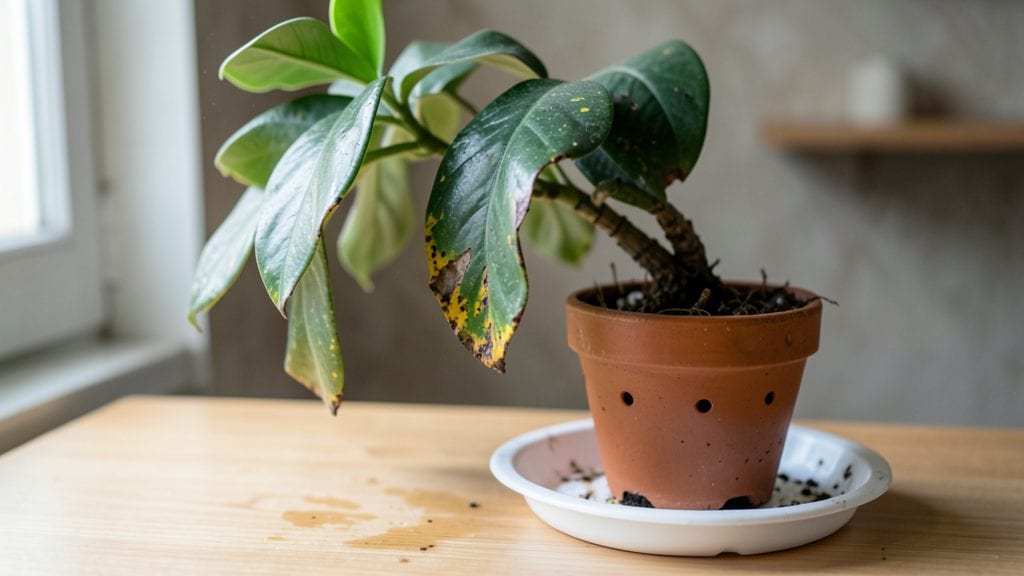
You can fix overwatered plant disasters before they’re permanent—here’s how I’ve rescued drooping favorites with just a few quick steps. 🌱 The moment you spot yellow leaves or mushy stems, your plant’s roots are already gasping for air.
What saves them isn’t guessing—it’s a 3-step drainage fix that restores balance in hours, not days.
First, stop watering entirely and let the soil dry out completely. Then, check the roots: healthy ones are firm and white, while overwatered roots turn black and mushy. If the roots are salvageable, repot into fresh, well-draining soil with perlite or sand mixed in.
For severe cases, trim the damaged roots and let the plant recover in a bright spot without water for 24–48 hours.
You’ll see new growth within a week if you act quickly. The key is prevention—water only when the top inch of soil feels dry, and always use pots with drainage holes.
Even my black thumb plants bounce back when I follow these steps. Let’s turn those wilting leaves into lush foliage again.
This method works for houseplants, herbs, and garden vegetables alike. The faster you intervene, the better the recovery. Next time, I’ll show you how to adjust your watering routine so this never happens again.
The Hidden Triggers Behind Soggy Roots
Overwatering isn’t just a gardening mistake—it’s a cascade of small missteps that quietly strangle your plants. Understanding the why behind soggy soil is the first step to saving your leafy friends. Let’s break down the science and habits that turn your pot into a swamp.
Most overwatering disasters start with containers or soil that can’t shed excess water. Here’s how it happens:
- Clogged drainage holes: Potting mix, roots, or even mineral buildup (like calcium deposits) can block holes, trapping water. Science note: Without escape routes, oxygen can’t reach roots, leading to anaerobic conditions—a death sentence for most plants.
- Compacted or heavy soil: Clay-heavy or poorly amended potting mixes hold water like a sponge. Example: A bag of generic "garden soil" might have 30%+ sand, but if it’s not fluffy, water pools instead of draining.
- No reservoir space: Shallow pots fill up faster, leaving no room for water to seep out. Rule of thumb: A pot should be at least 2–3 inches deeper than the root ball to allow drainage.
💡 Pro Tip: Test your drainage! Fill a pot with water, then tip it upside down. If water drips within 10 seconds, you’re golden. If it trickles or stops, your holes are clogged.
Even with great pots, how you water can drown plants faster than a monsoon. Common mistakes include:
- Watering on a schedule: Plants don’t need water every 2 days—they need it when the top 1–2 inches of soil are dry. Overwatering assumes all plants have the same thirst (they don’t). Example: Succulents wilt in soggy soil in 48 hours, while ferns thrive in dampness.
- Ignoring weather: Rainy days + indoor humidity = extra moisture your plant didn’t ask for. Science note: High humidity slows evaporation, keeping soil wet longer.
- Using ice cubes or "light" watering: These methods create micro-pools around roots, mimicking a rainstorm instead of a gentle drink. Better approach: Water deeply until it runs out the bottom, then stop.
✨ Quick Fix: Stick your finger in the soil. If it’s damp past the first knuckle, wait. Use a moisture meter for precision.
Not all plants are created equal—and neither are their water needs. Mismatching plants to their ideal conditions is a fast track to root rot. Here’s how it backfires:
| Plant Type | Ideal Soil Moisture | Overwatering Risk |
|---|---|---|
| Succulents/Sedum | Dry to slightly moist | Roots rot in 24–48 hours if soggy |
| Tropicals (Monstera, Ferns) | Consistently moist | Yellow leaves from too much water or poor airflow |
| Bulbs (Amaryllis, Dahlias) | Dry between waterings | Bulbs rot if left in wet soil |
🔥 Red Flag: If your plant’s leaves yellow and feel mushy, overwatering is likely. Brown, crispy leaves? Probably underwatering.
Heat and humidity amplify overwatering problems by altering how soil behaves:
- High heat: Water evaporates faster, but if you’re compensating by watering more, you’re just giving roots less oxygen. Science note: Warm soil microbes consume oxygen faster, making roots suffocate.
- Low light + high humidity: Plants photosynthesize less, so they don’t transpire (release water) efficiently. Result? Soil stays wet longer.
- Cold drafts: Roots slow down in chilly temps, reducing their ability to absorb water—leading to waterlogged cells.
🌡️ Adjust for Climate:
- In dry heat? Water less frequently but deeply.
- In humid basements? Use terracotta pots (they wick moisture) or reduce water by 30%.
🎯 Key Takeaway: Overwatering is rarely just about "too much water"—it’s about drainage, habits, and plant biology colliding. Fix the root cause (literally), and your plants will bounce back faster.
Revive Your Plant Fast
Now that you know the signs and causes of overwatering, it’s time to take action! The good news? With the right steps, you can nurse your plant back to health—even if it looks like it’s on its last leaves.
Below, we’ll break down practical, step-by-step solutions tailored to the root causes of overwatering, plus tips to keep your plant thriving long-term.
The first rule of fixing an overwatered plant? Cut off the water. Keep your hands off the hose or watering can until you’ve assessed the damage. Overwatering is often a domino effect—too much moisture leads to root rot, which then starves the plant of oxygen.
Let the soil dry out completely before watering again.
⚠️ Pro Tip: If your plant is in a pot, lift it—if it feels heavy, it’s still too wet. Wait until the top 1–2 inches of soil are dry to the touch.
Poor drainage is the #1 culprit behind overwatered plants. Here’s how to fix it permanently:
🔧 For Potted Plants: The Drainage Overhaul
- Check the pot’s drainage holes. If they’re clogged or missing, your plant is in trouble. Use a wooden skewer or ice pick to clear blockages.
- Repot if needed. If the soil is compacted or lacks aeration, transfer your plant to a new pot with fresh, well-draining soil.
Mix in: - Perlite or pumice (20–30%) for air pockets. - Orchid bark or coconut coir (for moisture control). - A handful of sand (if your plant loves grit, like succulents). 3. Elevate the pot. Place it on feet or a saucer to prevent water from pooling at the bottom.
🏡 For Garden Plants: The Soil Fix
- Aerate the soil with a garden fork to break up compacted earth.
- Amend the soil with compost or organic matter to improve structure.
- Consider raised beds if your yard has heavy clay or poor drainage.
If your plant’s roots look mushy, black, or smell foul, root rot has set in. Don’t panic—you can still save it!
- Remove the plant from its pot and rinse the roots gently with water to wash away excess soil.
- Trim the damaged roots with sterilized scissors—cut away any that are soft, slimy, or discolored.
- Dip healthy roots in a fungicide solution (or a mix of 1 part hydrogen peroxide to 4 parts water) to prevent further infection.
- Repot in fresh, sterile soil (or a mix of cactus/succulent soil + perlite for better drainage).
- Hold off on watering for 5–7 days to let the roots recover.
💡 Pro Tip: If your plant is severely rotten, try propagating healthy stems or leaves—sometimes it’s easier to grow a new plant than revive a dying one!
Now that your plant is back on track, prevent future overwatering with these smart strategies:
- Water deeply but infrequently. Instead of light, frequent watering, soak the soil until water drains out the bottom, then wait until it’s dry. - Use the finger test. Stick your finger 1–2 inches into the soil—if it’s damp, wait.
If it’s dry, it’s time to water. - Water in the morning. This gives plants time to dry out during the day, reducing rot risk. - Group plants by needs. Succulents and herbs hate wet feet, while ferns and calatheas love humidity. Keep water-lovers together and succulents separate. - Upgrade your pots. Terracotta dries faster than plastic, and self-watering pots can be a double-edged sword—use them sparingly.
Recovery takes time! Here’s how to keep your plant healthy after the fix:
| Sign | What It Means | Your Next Move |
|---|---|---|
| Yellowing leaves | Overwatering or nutrient loss | Trim yellow leaves, adjust watering. |
| Wilted but dry soil | Root damage or shock | Mist leaves, keep in bright (indirect) light. |
| Slow growth | Stressed roots | Fertilize lightly (half-strength) after 2 weeks. |
| New growth | You’re doing it right! | Keep up the good work! |
✨ Pro Tip: If your plant is a houseplant, consider a humidity tray (pebbles + water) to mimic its natural environment without overdoing it.
- ✅ Always use pots with drainage holes (yes, even for ferns!).
- ✅ Never let plants sit in saucers of water—empty excess after 10 minutes.
- ✅ Rotate pots occasionally so all sides get light (and avoid uneven watering).
- ✅ Seasonal adjustments: Water less in winter (plants grow slower).
- ✅ Know your plant’s needs—check its care tag or do a quick online search!
By following these steps, your overwatered plant should bounce back in 2–4 weeks—or even faster if you catch it early! The key is patience, proper drainage, and smart watering. Once you’ve mastered the fix, you’ll be the plant whisperer your green-thumb friends admire. 🌿💚
Frequently asked questions
How do I know if my plant is overwatered instead of underwatered?
Check the soil and leaves: Overwatered plants have yellow, mushy leaves that feel soft to the touch, while underwatered plants have brown, crispy edges. Also, lift the pot—if it feels heavy with damp soil, you’re overwatering. Healthy roots should be firm and white, while overwatered roots turn black and smelly.
Can I save a plant with root rot?
Yes! First, remove the plant and rinse the roots gently. Trim away any black, mushy roots with sterilized scissors, then repot in fresh, well-draining soil mixed with perlite. Hold off on watering for 5–7 days to let roots recover. For severe cases, try propagating healthy stems instead.
Why does my plant keep getting overwatered even after fixing it?
Common triggers include clogged drainage holes, using heavy soil without amendments, or ignoring seasonal changes (like reduced watering in winter). Test your pot’s drainage by filling it with water—if it doesn’t drain within 10 seconds, clear the holes. Also, group plants by water needs to avoid confusion.
Is it better to underwater than overwater plants?
Most plants handle underwatering better than overwatering because they can recover from dryness faster. Overwatering causes root rot, which spreads quickly and is harder to reverse. Always check soil moisture before watering—stick your finger 1–2 inches deep. If it’s damp, wait.
How long does it take for an overwatered plant to recover?
With proper care, you’ll see improvement in 2–4 weeks. Focus on dry soil, good drainage, and bright (but indirect) light. New growth is the best sign of recovery! If no progress after a month, the plant may be too far gone—try propagating healthy parts to start fresh.