
Watering
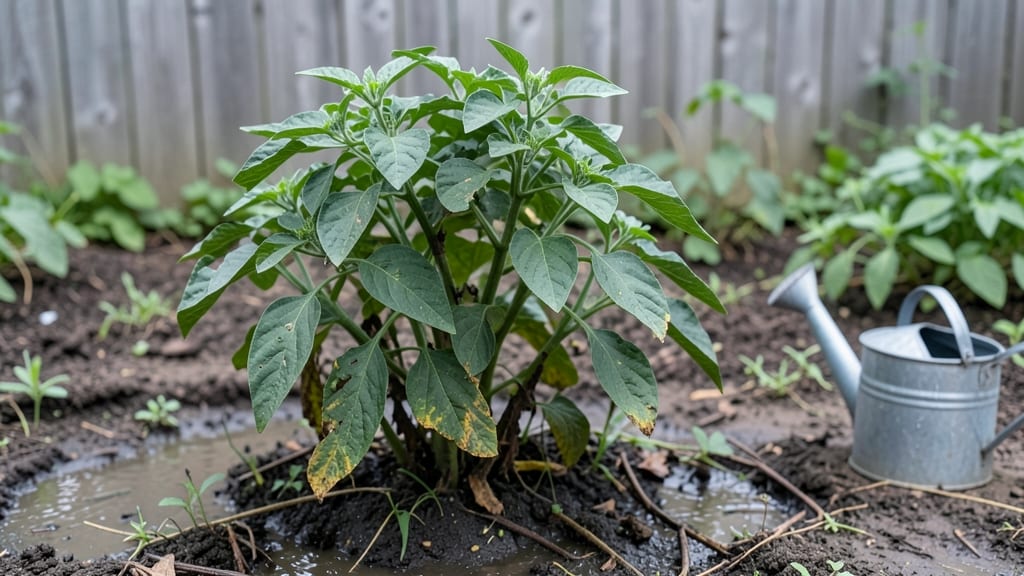
Overwatered pepper plants show up in sad, droopy pictures that make even experienced gardeners cringe. 🌱 I’ve seen the telltale signs—yellowing leaves, mushy stems, and roots that look like overcooked pasta—and I’m here to help you turn things around before it’s too late.
The problem starts when roots suffocate from too much water, cutting off oxygen and inviting rot. You’ll spot it first in the leaves: they turn yellow or black, and the plant feels heavy, almost limp, when you touch it.
The soil might smell sour or like wet socks, a dead giveaway that something’s wrong.
Here’s the good news: with just three simple adjustments—less water, better drainage, and a little fresh air for those roots—your peppers can bounce back in 2-3 weeks. I’ll walk you through the exact steps to diagnose the damage and revive your plants before they’re lost for good.
This works for all pepper varieties, from sweet bell peppers to spicy jalapeños, and the same fixes apply whether you’re growing in pots or garden beds. Let’s get those roots breathing again!
Root Causes of Overwatering
Overwatering your pepper plants can turn your garden into a soggy swamp—even when you think you’re giving them the perfect amount of hydration. 🌧️🌱 But why does this happen? The issue usually stems from a mix of human habits, environmental factors, and the unique needs of pepper plants.
Let’s break down the real culprits behind those sad, droopy, or even rotting leaves.
Pepper plants are not thirsty all the time—contrary to what some well-meaning gardeners believe. 💦 Overwatering often happens when gardeners:
- Follow a rigid schedule (e.g., watering every day without checking soil moisture).
- Assume "more is better"—especially in humid climates where plants don’t need frequent drinks.
- Use emotional triggers (e.g., watering when the plant looks "wilted" without confirming the cause).
The science behind it: Pepper plants (Capsicum spp.) have shallow but extensive root systems that spread horizontally. When soil stays soggy, roots suffocate from a lack of oxygen—a condition called anoxia. This triggers:
- Root rot (fungal/bacterial infections like Phytophthora or Pythium).
- Nutrient leaching (excess water washes away essential minerals like nitrogen and potassium).
- Weakened cell walls (plants can’t absorb water efficiently, leading to wilting despite "wet" soil).
Pro tip: 💡 Stick your finger 1–2 inches into the soil before watering. If it’s damp, wait. If it’s bone-dry, water deeply but only until the top 6 inches are moist.
Not all soil is created equal—and some holds onto water like a sponge. 🏊♂️ If your pepper plants are sitting in:
- Clay-heavy soil (common in cooler climates).
- Pots without drainage holes (water pools at the bottom).
- Over-packed or waterlogged beds (common after heavy rain).
The science behind it:
- Clay soil has tiny particles that trap water, preventing oxygen from reaching roots.
- Poor drainage creates anaerobic conditions, where harmful microbes thrive.
- Salt buildup occurs as minerals dissolve in excess water, further stressing roots.
Fix it fast: ✅ Amend soil with compost or perlite to improve aeration. ✅ Raise pots on feet or use saucers to catch excess water. ✅ Test drainage by filling a pot with water—if it doesn’t drain in 30 minutes, add sand or vermiculite.
Pepper plants love warmth and moderate humidity, but some gardeners unknowingly drown them in environments where they don’t need extra water. 🌡️🌬️ For example:
- Greenhouse or indoor growing (humidity traps moisture near leaves and soil).
- Rainy seasons (overwatering on top of natural rainfall).
- Cooler temperatures (plants metabolize slower and need less water).
The science behind it:
- High humidity reduces transpiration (the plant’s natural water release process), so it appears thirsty when it’s not.
- Cooler roots (below 60°F/15°C) slow water absorption, making plants more susceptible to rot.
- Fungal spores (like Botrytis) thrive in damp, humid conditions, attacking weak plants.
Adjust your approach: 🌡️ Monitor humidity—aim for 40–60% for peppers. 💨 Improve airflow with fans or pruning to prevent fungal growth. 🌧️ Skip watering if rain is forecasted (soil already gets a drink).
Even with good intentions, how you water matters as much as how much. Common mistakes include:
- Light, frequent sprinkles (keeps soil surface wet but starves roots).
- Watering leaves (encourages fungal diseases like powdery mildew).
- Using icy or chlorinated water (shocks roots and disrupts nutrient uptake).
The science behind it:
- Surface watering creates a hydrophobic layer (water repels soil), preventing deep root penetration.
- Leaf wetness extends fungal infection windows by up to 48 hours.
- Cold water (below 50°F/10°C) can damage root cells, reducing absorption efficiency.
Do this instead: 💧 Water at the base (early morning is best to reduce evaporation). 🌊 Use room-temperature water (let tap water sit for 24 hours if chlorinated). 🔄 Deep watering (1–2 times per week is often enough; let soil dry slightly between sessions).
Pepper plants communicate their needs—but many gardeners misread the cues. 📢 Common misinterpretations:
- Drooping leaves = thirsty (could mean overwatering or root rot).
- Yellow lower leaves = nutrient deficiency (often root damage from excess water).
- Slow growth = needs fertilizer (could be root suffocation).
The science behind it:
- Overwatered peppers show yellowing between veins (chlorosis) due to iron/manganese deficiency from poor oxygen.
- Black, mushy stems indicate bacterial soft rot (Erwinia spp.), spread by excess moisture.
- Stunted growth can signal root-bound stress (roots can’t access oxygen in waterlogged soil).
How to tell the difference: 🔍 Pull a plant gently—if it slides out easily, roots are rotting. 👃 Smell the soil—sour or rotten odors mean anaerobic conditions. 🌱 Check leaf texture—crispy edges = underwatered; mushy = overwatered.
Revive Your Pepper Plants Now
Overwatered pepper plants can feel like a lost cause, but with the right steps, you can nurse them back to health—even if they look sad and soggy. The key is acting fast, diagnosing the root cause (literally and figuratively), and applying targeted fixes.
Below, we’ll break down solutions by the most common symptoms of overwatering, along with prevention tips to keep your peppers thriving long-term.
If your pepper plant’s leaves are turning yellow (especially the older ones) or feel mushy to the touch, root rot or waterlogged soil is likely the culprit. Here’s how to turn things around:
🔥 Step 1: Pause Watering Immediately
Stop adding water until the soil dries out. Overwatering creates anaerobic conditions that suffocate roots. Let the top 1–2 inches of soil become dry before watering again.
🍳 Step 2: Improve Drainage
- Repot if needed: If your plant is in a container, check the drainage holes.
If they’re clogged or missing, repot into a pot with holes at the bottom. - Amend the soil: Mix in perlite, vermiculite, or coarse sand (20–30%) to improve aeration.
Avoid heavy, clay-like soils that hold too much moisture. - Raise the pot: If repotting isn’t an option, place the container on a saucer with pebbles or elevate it on pot feet to encourage airflow.
👨🍳 Step 3: Trim Damaged Roots (If Severe)
If the roots smell foul or look black/mushy when you gently dig around them:
- Remove the plant from its pot.
- Rinse the roots under lukewarm water to wash away excess soil.
- Use sterilized scissors to snip off any black, mushy roots.
- Dust the remaining roots with fungicide (like copper fungicide or cinnamon powder) to prevent further rot.
🥘 Step 4: Water Smartly Moving Forward
- Bottom-water: Place the pot in a tray of water for 10–15 minutes, then drain. This encourages roots to grow downward and reduces surface evaporation.
- Check moisture: Stick your finger 1–2 inches into the soil.
Water only when it feels dry. - Use a moisture meter: For peace of mind, invest in a cheap meter to avoid guesswork.
💡 Pro Tip: If your plant is severely stressed, trim back some foliage to reduce its water demands while it recovers.
Wilting despite wet soil? This is a classic sign of overwatering, where roots can’t absorb nutrients or oxygen. Act fast to revive them:
⏰ Step 1: Let the Soil Dry Out Completely
Place the pot in a shady, well-ventilated spot (like a covered porch or under a tree) for 2–3 days. Avoid direct sunlight, which can stress the plant further.
🔪 Step 2: Prune Affected Leaves
Snip off any leaves that feel limp or discolored. This helps the plant redirect energy to healthy growth.
🌡️ Step 3: Adjust Your Watering Routine
- Morning watering: Water in the early morning so excess moisture evaporates during the day.
- Avoid wetting leaves: Use a drip irrigation system or water at the base to prevent fungal diseases like powdery mildew.
- Group plants wisely: If growing in a garden bed, space peppers 18–24 inches apart to improve airflow.
✨ Prevention Tip: Mulch around the base of your plants with straw or wood chips to regulate soil moisture and reduce evaporation.
If you spot fuzzy white mold (powdery mildew) or black spots (root rot or leaf spot), overwatering is often the trigger. Here’s how to clean up:
💡 Step 1: Isolate the Plant
Move the infected plant away from others to prevent spores from spreading.
🧼 Step 2: Clean the Affected Areas
- For powdery mildew: Wipe leaves with a mix of 1 tsp baking soda + 1 quart water + a drop of dish soap.
Spray every 7–10 days. - For black spots: Remove infected leaves and spray with neem oil (1 tbsp per quart of water) or a copper fungicide.
🌿 Step 3: Sterilize Your Tools & Pot
- Wash pruners with rubbing alcohol between cuts.
- Replace old soil or sterilize it by baking at 200°F (93°C) for 30 minutes.
🎯 Long-Term Fix: Space plants for better airflow and water only when the top inch of soil is dry.
Use this table to track your pepper plant’s progress as it recovers:
| Symptom | Fix Applied | Expected Recovery Time | Prevention Tip |
|---|---|---|---|
| Yellow leaves | Improved drainage + pruning | 1–2 weeks | Use well-draining soil |
| Wilting | Drying out + shade | 3–5 days | Water only in the morning |
| Fungal spots | Neem oil + isolation | 7–10 days | Mulch to reduce humidity |
Remember: Pepper plants are resilient! With consistent care, most overwatered plants bounce back within a few weeks. Stay patient, monitor soil moisture, and soon you’ll be harvesting juicy peppers instead of soggy leaves. 🌶️💦
Frequently asked questions
What do yellow leaves on pepper plants mean?
Yellow leaves between the veins (chlorosis) are a classic sign of overwatering. The excess moisture blocks oxygen, preventing roots from absorbing nutrients like iron and manganese. Check if the soil smells sour or the leaves feel mushy—these indicate root rot from too much water.
How often should I water pepper plants?
Pepper plants need water only when the top 1–2 inches of soil are dry. In warm climates, this might be every 2–3 days, while cooler weather may require watering just once a week. Always check soil moisture before watering—don’t rely on a schedule.
Can overwatered pepper plants recover?
Yes! With immediate action, most overwatered pepper plants bounce back in 2–3 weeks. Start by stopping water, improving drainage, and trimming damaged roots. If caught early, the plant can regrow healthy foliage and even produce peppers again.
What’s the best soil mix for pepper plants?
Use a well-draining mix with 50% potting soil, 30% perlite or vermiculite, and 20% compost. Avoid heavy clay soil—it traps moisture and suffocates roots. For containers, add a handful of coarse sand to improve aeration.
Why do my pepper plants wilt even when the soil is wet?
This happens when roots can’t absorb water due to root rot or compacted soil. The plant wilts because it’s starved for oxygen, not hydration. Let the soil dry out completely, then repot with fresh, airy soil to revive the roots.