Pruning
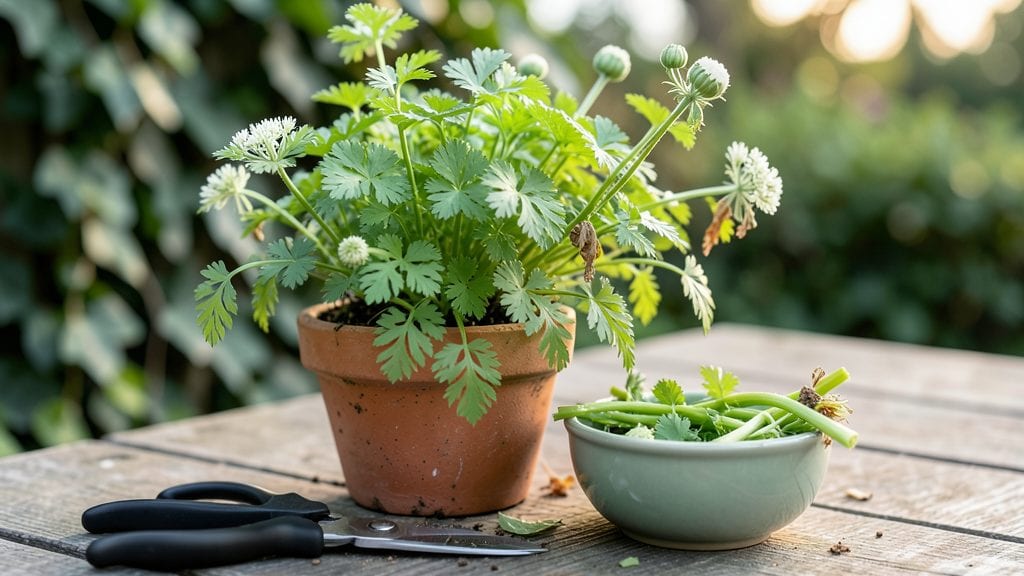
Trimming cilantro plants is the secret to keeping them lush and productive all season long. ✨ I used to let mine bolt and go to seed within weeks, but learning how to cut back just the right way changed everything—now I harvest fresh leaves for months.
The key is timing: pinch off the top leaves when the plant reaches about 6 inches tall, and always leave at least 2-3 inches of stem.
You only need a pair of clean scissors or sharp pruning shears for this—no fancy tools required. The process takes just a few minutes, and it encourages the plant to branch out, giving you more leaves to harvest.
Think of it like giving cilantro a haircut: too short, and it gets stressed; just right, and it grows back bushier than ever.
What you’ll end up with is a cilantro plant that stays tender and flavorful instead of bitter and woody. The more you trim, the more leaves you’ll get—some plants even produce enough for pesto, garnishes, or salads without ever needing to buy more.
Plus, you delay bolting, the cilantro killer that turns your herbs into seed stalks overnight.
Works for both container-grown cilantro and in-ground plants, and the same method applies to other herbs like dill or parsley. Here’s how to do it without killing your plants—and how to spot the mistakes that ruin the harvest.
📚 In This Guide
- What you need
- Instructions
- Tips and common mistakes
- Wrapping up and next steps
What you need
- ● Sharp pruning shears or scissors: A clean, sharp pair (sterilized with rubbing alcohol) to avoid crushing stems. Size: Small-handled (4–6 inches) for precision.
- ○ Gloves (optional but recommended): Nitrile or garden gloves to protect your hands from sap and dirt.
- ● Water spray bottle: A 16–32 oz. bottle to mist leaves post-trimming (helps reduce stress).
- ● Compost bin or bag: For clippings—cilantro trimmings are 100% compostable!
- ● Healthy cilantro plant: Trim only if leaves are at least 3–4 inches tall (avoid over-trimming young plants).
- ● Sunlight: Full sun (6+ hours/day) or partial shade (4–6 hours). No trimming if plants are wilting from heat stress.
- ● Watering schedule: Soil should be lightly moist (not soggy) 1–2 days before trimming.
- ● Time of day: Trim in the morning (cooler temps = less stress for the plant).
- ● Plant food (balanced fertilizer): A diluted 10-10-10 solution to nourish regrowth after trimming.
- ● Pruning saw (for woody stems): If your cilantro has thickened stems, a small bypass saw (like a Felco #2) works for stubborn cuts.
- ● Label markers: To tag trimmed plants if you’re experimenting with different care methods.
Step-by-Step instructions for trimming cilantro plants
Here's how to keep your cilantro thriving and producing fresh leaves all season long.
✂️ Step 1: Identify and Remove Flowering Stems
Cilantro bolts (sends up flower stalks) when stressed by heat or long days. The moment you see a tall, thin stem with tiny buds forming, snip it off at the base with clean scissors. This prevents seed production and redirects energy back into leaf growth.
Check your plant every 2-3 days during warm weather. You'll notice the flowering stems first as they shoot up faster than the leaves. Removing them early keeps your plant focused on producing tender, flavorful leaves instead of bitter seeds.
🌿 Step 2: Harvest Outer Leaves Regularly
Use sharp scissors to cut the outer leaves just above a pair of lower leaves. This encourages bushier growth while keeping the plant compact. Aim to harvest 1/3 of the plant at a time—never take more than that in one sitting.
Look for leaves that are 3-4 inches long—these are mature enough to harvest but still tender. Avoid cutting into the center of the plant where new growth emerges. You'll see fresh, vibrant leaves filling in within 5-7 days after a proper trim.
💧 Step 3: Provide Ideal Growing Conditions After Trimming
After trimming, give your cilantro consistent moisture by watering at the base when the top inch of soil feels dry. Cilantro hates drying out—wilting stresses the plant and can trigger bolting. Keep the soil evenly moist but not soggy.
Move your plant to a spot with partial shade (4-6 hours of morning sun) if temperatures rise above 75°F. Too much heat causes cilantro to bolt quickly. You'll know conditions are right when new leaves emerge with a bright green color and crisp texture within 1-2 weeks.
☀️ Step 4: Maintain Light Exposure for Continuous Growth
Cilantro needs 4-6 hours of sunlight daily to thrive. If your plant starts looking leggy (stems stretching toward light), it's getting too little. Rotate the pot a quarter turn weekly so growth stays even.
Watch for signs of light stress: leaves turning yellow or growing pale. If this happens, move the plant to a brighter spot immediately. With proper light, you'll see steady regrowth and can harvest every 2-3 weeks all season long.
⏰ Step 5: Time Your Trims for Maximum Yield
Trim your cilantro every 2-3 weeks during active growth. This prevents overcrowding and ensures you always have fresh leaves. Avoid cutting into the center growth point—this is where new leaves emerge.
In cooler weather, cilantro grows slower, so you can extend harvests between trims. If your plant starts flowering, trim aggressively to remove all stems and try growing it again from seed. With consistent care, you'll enjoy a steady supply of fresh cilantro for months.
Tips & tricks for perfect cilantro regrowth
Keeping your cilantro thriving between harvests makes all the difference in flavor and yield. Here's what I've learned after watching my plants go from sad to lush.
Timing is Everything: In Step 1, those 2-3 day checks during warm weather are non-negotiable. I learned this the hard way—when I skipped checking for 5 days, my cilantro bolted completely before I noticed. Set a phone reminder if needed! The moment you spot that first flower stalk, snip it immediately. That tiny bud will turn into a bitter seed head if left unchecked.
The 1/3 Rule for Harvesting: When harvesting in Step 2, never take more than 1/3 of the plant at once. I used to grab big handfuls, thinking more leaves meant more flavor, but this actually stresses the plant. After a few over-harvests, my cilantro would wilt and take weeks to recover. That crisp texture you want comes from healthy regrowth, not aggressive harvesting.
Heat Management: The 75°F threshold in Step 3 is your warning sign. When temperatures climb above this, move your cilantro to partial shade immediately. I keep mine on my kitchen windowsill where it gets morning sun but afternoon shade—this simple adjustment has kept my plants producing for months longer than before. The key is that 4-6 hours of morning light while protecting from afternoon heat.
Soil Moisture Secret: Cilantro's soil should feel like a wrung-out sponge—not bone dry, not soggy. I test by sticking my finger an inch deep—if it feels dry, water thoroughly. The worst mistake I made was letting the soil dry out completely between waterings. Once that happens, even with perfect light and temperature, your plant will bolt from stress. Consistency is everything with cilantro.
Pro Tips for Trimming Cilantro Plant
- Keeping your cilantro thriving between harvests makes all the difference in flavor and yield.
- Timing is Everything: In Step 1, those 2-3 day checks during warm weather are non-negotiable.
- The 1/3 Rule for Harvesting: When harvesting in Step 2, never take more than 1/3 of the plant at once.
Frequently asked questions
Got questions about trimming your cilantro plants? You’re not alone! Here are answers to the most common concerns—so you can keep your herb thriving and flavorful.
When is the best time to trim cilantro for regrowth?
Trim cilantro when it reaches about 6–8 inches tall (or when it starts flowering). This encourages bushier growth and prevents bolting. Early morning trims work best—cilantro’s oils are most potent then! Avoid cutting more than ⅓ of the plant at once to stress it.
How do I trim cilantro without killing the plant?
Use clean, sharp scissors or pruning shears to cut just above a leaf node (where leaves meet the stem). Never rip leaves—this damages the plant. Focus on the outer leaves first, leaving the center intact. Over-trimming weakens cilantro, so be gentle!
Why does my cilantro bolt after trimming?
Bolting (sending up flower stalks) happens when cilantro senses stress, like heat, drought, or too much sunlight. To prevent it:
- Harvest frequently (every 2–3 weeks).
- Keep soil consistently moist (but not soggy).
- Plant in partial shade if summers are hot.
- Choose slow-bolting varieties like ‘Santo’ or ‘Calypso.’
Can I regrow cilantro from cuttings?
Yes! Place 3–4 inch stem cuttings in water or moist soil (like a small pot). Keep them in bright, indirect light and change the water every 2 days. Roots should form in 1–2 weeks. Transplant once established—just be patient!
What should I do with cilantro trimmings?
Don’t waste those clippings! Use them in:
- Cooking: Toss into salsas, soups, or guacamole.
- Infused oils: Steep in olive oil for 1–2 weeks.
- Pesto: Blend with garlic, nuts, and Parmesan.
- Compost: If wilted, chop and add to your compost pile.
Wrapping up and next steps
Trimming your cilantro plant isn’t just about tidying up—it’s a game-changer for flavor and yield! 🌱 By mastering the right techniques, you’ll enjoy a steady supply of fresh, vibrant leaves while preventing bolting. Whether you’re a seasoned gardener or just starting, every snip brings you closer to a bountiful harvest.
Ready to take the next step? Experiment with your timing and methods, and don’t forget to share your progress with fellow gardening enthusiasts. Happy trimming—and may your kitchen always be filled with the bright, zesty magic of homegrown cilantro! 🌿✨