
Watering
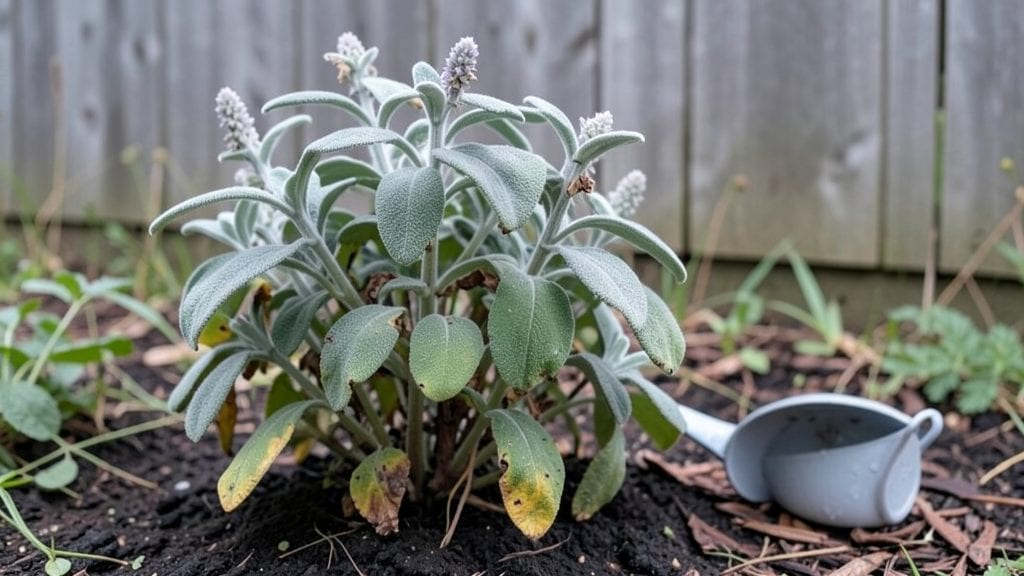
Even an overwatered sage plant can bounce back with the right care—just pause, drain the roots, and let it breathe before it’s too late. 🌿 I’ve revived more soggy sage than I’d like to admit, and the fix is simpler than you’d think: stop drowning it and start listening to its thirst. going on below those droopy leaves.
Most people assume wilting means "give it more water," but sage hates wet feet—it’s a drought-tolerant herb that throws a fit when its roots suffocate.
The first step is simple: stop watering until the soil feels dry to the touch, about 1-2 inches down. Sage thrives in well-draining soil and can bounce back faster than you’d expect once you let it dry out completely between waterings.
If the pot lacks drainage holes, now’s the time to repot—this one change often saves the plant. For stubborn cases, snip off any mushy, blackened roots and trim back the foliage to help it focus on recovery.
Within 7-10 days, you’ll see new signs of life: firmer stems, perky leaves, and that familiar sage aroma when you brush past it.
The key is patience—sage grows slowly but steadily, and once it’s back on track, it’ll reward you with fragrant, silvery-green foliage that’s perfect for cooking or drying. The real magic happens when you adjust your watering routine to match sage’s desert-like roots.
This method works for both potted sage and in-ground plants, though containers need more frequent checks. If your plant still looks sad after two weeks, it might be time to start fresh with a cutting—sometimes the best solution is a new beginning.
Trust me, your kitchen (and your sage) will thank you.
Common Causes of Overwatering Sage
Sage plants (Salvia officinalis) are hardy, drought-tolerant herbs that thrive in well-draining soil—but their resilience can backfire if you’re not careful. Overwatering is a sneaky issue that often stems from well-meaning gardening habits.
Let’s break down the science and real-world reasons why your sage might be drowning in excess moisture.
Sage roots need oxygen to breathe, and waterlogged soil suffocates them. If your pot lacks drainage holes or your garden bed has compacted, heavy clay soil, water pools at the roots instead of draining away.
Over time, this creates an anaerobic (oxygen-free) environment, where harmful bacteria and fungi thrive, leading to root rot.
Why it happens:
- Clay soil holds water like a sponge, preventing excess moisture from escaping.
- No drainage holes in pots trap water, especially if you’re watering on a schedule without checking soil moisture.
- Over-potting with dense, water-retentive mixes (like peat-heavy soils) keeps roots soggy longer.
Actionable fix: Amend clay soil with coarse sand, perlite, or grit to improve drainage. For containers, always use pots with drainage holes and a well-draining potting mix (like a 50/50 blend of potting soil and perlite).
Many gardeners assume sage needs frequent watering—especially in hot climates—but this Mediterranean herb evolved to survive dry spells. Watering by a fixed schedule (e.g., every 3 days) ignores critical factors like humidity, temperature, and soil type, leading to chronic overwatering.
Why it happens:
- Ignoring soil moisture: Sticking to a routine means you’re not checking if the top 1–2 inches of soil are dry before watering.
- Overestimating evaporation: Cool, cloudy days mean less water evaporates, so the soil stays wet longer than expected.
- Using the "finger test" incorrectly: Poking your finger too shallowly (just ½ inch deep) can miss deeper moisture buildup.
Actionable fix: Water only when the top 2 inches of soil are bone-dry. Use the squeeze test: Grab a handful of soil—if it crumbles easily, it’s time to water. If it stays clumpy, wait.
Sage doesn’t need rich, fertile soil—it prefers lean, fast-draining conditions. If you plant it in a pot that’s too large or use a heavy, moisture-retentive potting mix, the excess soil volume stays wet for days, inviting root issues.
Why it happens:
- Big pots = more soil = slower drying: A 12-inch pot holds way more water than a 6-inch one, even if the plant is small.
- Peat-heavy or compost-rich mixes retain moisture longer than sage’s native rocky, sandy soil.
- No amendments: Pure garden soil compacts easily, trapping water.
Actionable fix:
- Use pots only 1–2 inches larger than the root ball.
- Mix 50% potting soil + 50% perlite, pumice, or coarse sand for optimal drainage.
- Avoid "moisture-control" mixes—they’re designed for thirsty plants, not sage!
Sage hails from Mediterranean climates, where dry, warm air helps soil dry out quickly. But if you’re growing it in a humid environment (like a greenhouse or bathroom) or during cool, rainy seasons, the soil stays damp for far longer than sage can tolerate.
Why it happens:
- High humidity slows evaporation: Moist air reduces the rate at which soil dries, keeping roots wet.
- Rainy seasons overwhelm even well-draining soil, leading to waterlogging.
- Indoor growing without airflow: Stagnant air (e.g., in a closed terrarium or near a humidifier) traps moisture.
Actionable fix:
- Move potted sage to a bright, dry spot (like a sunny windowsill away from bathrooms).
- Use a fan on low to improve airflow around the plant.
- In rainy seasons, water only when the soil is completely dry—sometimes this means waiting weeks between waterings.
Pro tip: 💡 Yellowing leaves with mushy stems? That’s a classic sign of overwatering. Snap off a leaf—if it’s soft and squishy (not crisp), your sage is drowning. Act fast by adjusting your care routine!
Reviving Your Plant Step by Step
Now that you know the signs and causes of an overwatered sage plant, it’s time to take action! The good news is that sage is resilient—with the right steps, you can nurse it back to health and prevent future issues.
Below are practical, step-by-step solutions tailored to the most common causes of overwatering, along with tips to keep your sage thriving long-term.
Overwatering often leaves soil waterlogged, cutting off oxygen to the roots and inviting rot. Here’s how to fix it:
- 🌱 Stop Watering Immediately Let the soil dry out completely before watering again. Sage prefers dry, well-draining soil, so resist the urge to "check on it" every day.
- 🧽 Remove the Plant and Refresh the Soil
- Gently take the sage out of its pot.
- Inspect the roots: Healthy roots are firm and white; rotten roots are mushy, brown, or black.
- Trim away any mushy roots with sterilized scissors (dip in rubbing alcohol).
- Replace the old soil with a fast-draining mix (like cactus or succulent soil + perlite or sand).
- ⚡ Repot in a Larger Container (If Needed) If the roots are severely damaged, upgrade to a slightly larger pot with drainage holes. This helps prevent future waterlogging.
- ☀️ Place in Bright, Indirect Light Move your sage to a sunny spot (at least 6 hours of sunlight daily) to speed up recovery.
💡 Pro Tip: After repotting, wait 3–5 days before watering again to let the roots adjust.
Overwatering can lead to salt buildup in the soil, which stresses the plant. Here’s how to cleanse it:
- 💦 Water Thoroughly with Room-Temperature Water Run water through the soil until it drains completely from the bottom. This helps rinse away accumulated salts.
- 🧼 Use a Mild Vinegar Solution (Optional) Mix 1 tbsp white vinegar per gallon of water and water the plant. Vinegar helps neutralize salt buildup without harming the plant.
- 🌿 Trim Damaged Foliage Snip off yellow or mushy leaves with clean scissors to redirect the plant’s energy to new growth.
- 🌡️ Monitor Soil Moisture Stick your finger 1–2 inches into the soil—if it’s damp, wait before watering again.
✨ Prevention Tip: Use rainwater or filtered water instead of tap water to reduce salt/mineral buildup over time.
Root rot is the most critical issue, but early intervention can still save your sage:
- 🔪 Prune the Roots Aggressively
- Remove the plant from the pot.
- Wash off the soil gently to expose the roots.
- Cut away all black, mushy, or foul-smelling roots—only keep firm, white roots.
- 🌿 Treat with Fungicide (If Needed) If the rot is severe, spray the remaining roots with a fungicide (like neem oil or hydrogen peroxide solution: 1 tbsp per cup of water).
- 🏺 Repot in Sterilized, Dry Soil
- Use a clean pot (wash with soap and water).
- Fill with sterile, fast-draining soil (avoid garden soil—it retains too much moisture).
- Water lightly only after 2–3 days.
- 🌱 Give It Time to Recover Place the plant in bright, indirect light and avoid watering for 5–7 days. New growth is a good sign!
🎯 Prevention Tip: Always use pots with drainage holes and terracotta pots (they dry out faster than plastic).
Once your sage is back on track, follow these maintenance tips to avoid overwatering again:
| Do This | Avoid This |
|---|---|
| ✅ Water only when the top 1–2 inches of soil are dry | ❌ Water on a schedule (sage hates consistency!) |
| ✅ Use well-draining soil (cactus mix + perlite) | ❌ Use heavy, clay-based soil |
| ✅ Place in full sun (6+ hours daily) | ❌ Keep in low light or shade |
| ✅ Trim yellow or leggy growth regularly | ❌ Let the plant get too crowded |
| ✅ Fertilize lightly (once in spring) | ❌ Over-fertilize (sage doesn’t need much) |
🌿 Final Encouragement: Sage is a hardy herb—even if it looks sad now, it can bounce back with the right care. Patience is key—don’t rush the recovery process.
Within a few weeks, you’ll see fresh, fragrant leaves, and your kitchen (or garden) will smell like a cozy Italian restaurant again! 🍝🌿
Frequently asked questions
How do I know if my sage plant is overwatered?
Check for yellowing leaves, mushy stems, or leaves that feel soft when touched. If the soil stays damp for days or smells foul, your sage is drowning. Also look for wilting despite moist soil—this is a classic sign of root stress from too much water.
Can I save a sage plant with root rot?
Yes! First remove the plant from its pot and trim away all black, mushy roots with sterilized scissors. Repot in fresh, fast-draining soil and avoid watering for 5-7 days to let roots recover. Place it in bright light and monitor closely for new growth.
Why does my potted sage keep getting overwatered?
Most likely your pot lacks drainage holes or you're using soil that retains too much moisture. Sage thrives in well-draining mixes—try a blend of 50% potting soil + 50% perlite or coarse sand. Also check soil moisture with your finger before watering.
How often should I water my sage plant?
Water only when the top 1-2 inches of soil are completely dry. In summer, this might be every 7-10 days, while winter watering could be monthly. Sage is drought-tolerant—better to underwater slightly than overdo it!
What's the best way to prevent overwatering?
Use pots with drainage holes, place your sage in full sun (6+ hours daily), and check soil moisture before watering. For containers, terracotta pots dry out faster than plastic. In humid climates, water even less frequently to prevent moisture buildup.