Watering
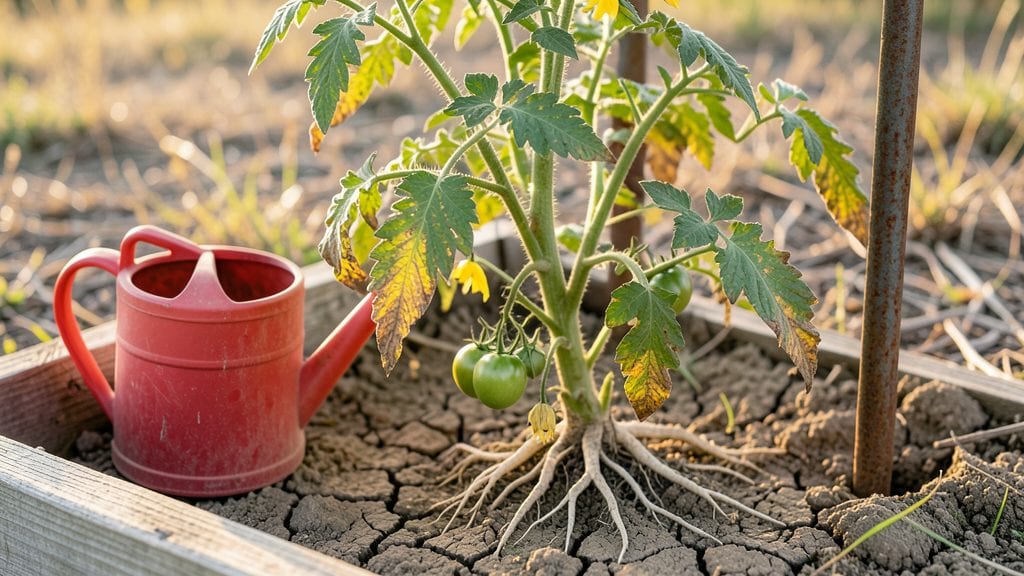
An underwatered tomato plant can look like it’s giving up—but it’s often just thirsty. 🌱 I’ve nursed back plants that looked done for with a few simple fixes, and you can too. The key is acting fast, checking the soil, and giving those roots the drink they need.
Wilting leaves, dry soil, and crispy edges are classic signs your tomato isn’t getting enough water. Most gardeners overlook how fast soil dries, especially in heat or containers. A quick finger test—stick your hand in the soil—tells you everything. If it’s bone-dry past your first knuckle, it’s time to water.
Within 24 hours, you’ll see leaves perk up if you water deeply at the base, not just a quick sprinkle. Mulch helps too—it locks in moisture so you’re not constantly checking the soil. The goal is steady hydration, not soggy roots or drought cycles.
If the plant still looks sad after a day, the damage might be deeper. But don’t give up—sometimes it just needs a little extra TLC. Let’s get those tomatoes back on track with a foolproof plan.
Root Causes Of Thirsty Tomatoes
When your tomato plants start drooping like they’re auditioning for a sad emoji, the most likely culprit is underwatering. But why does this happen? It’s not just about forgetting to water—there are specific reasons your plants might be crying out for hydration.
Let’s break down the science behind the suffering and uncover what’s really going on below (and above) the soil.
Tomatoes are thirsty plants, and their roots need consistent moisture to absorb water and nutrients efficiently.
When the soil dries out too much, the roots struggle to pull up water through osmosis—a natural process where water moves from areas of high concentration (wet soil) to low concentration (dry root cells). Here’s what happens when the soil becomes a desert:
- Root Shrinkage: Without enough water, root cells lose turgor pressure (the rigid structure that keeps them plump). This slows nutrient uptake, causing leaves to wilt as they can’t get the hydration they need.
- Stomatal Closure: Tiny pores on leaves called stomata close to conserve water when the plant is stressed. While this prevents wilting temporarily, it also stops photosynthesis, leaving your tomato starving for energy.
- Nutrient Lockout: Water acts as a solvent, dissolving nutrients in the soil so roots can absorb them. Dry soil? Nutrients become inaccessible, even if they’re right there in the dirt.
💡 Pro Tip: Stick your finger 1-2 inches into the soil. If it feels dry, it’s time to water—don’t wait for the plant to scream (literally, some plants emit distress signals!).
Not all watering is equal. Even if you’re giving your tomatoes water, how you do it can leave them parched. Common mistakes include:
- Shallow Watering: A quick sprinkle on top doesn’t penetrate deep enough to reach the taproot (the main root that grows downward). Tomatoes need water to soak 6-12 inches deep to thrive.
- Infrequent Deep Watering: Light, frequent watering encourages shallow roots, which dry out faster. Tomatoes prefer deep, infrequent watering (1-2 times per week, depending on climate) to build strong, drought-resistant roots.
- Watering at the Wrong Time: Morning watering is ideal because it allows foliage to dry before nightfall, reducing fungal risks. Evening watering can lead to overnight evaporation and stressed roots.
🌡️ Watch Out: If your soil is sandy or fast-draining, water can disappear in minutes. Test your soil’s drainage—if water pools on top after 30 minutes, you’ve got a runoff problem.
Your tomato plants aren’t just fighting for water—they’re battling their environment too. Heat, wind, and even your backyard’s microclimate can accelerate moisture loss:
| Stressor | How It Causes Underwatering | Solution |
|---|---|---|
| High Temperatures 🌞 | Heat increases transpiration (water loss through leaves). On a 90°F day, a tomato plant can lose up to a gallon of water! | Water deeply in the early morning, use mulch to retain moisture, and provide afternoon shade if possible. |
| Strong Winds 💨 | Wind strips moisture from leaves faster than the roots can replenish it, leading to rapid wilting. | Plant tomatoes in a sheltered spot or use windbreaks like burlap screens. |
| Low Humidity 🏜️ | Dry air forces stomata to close, slowing growth and nutrient uptake. | Group plants together to create a microclimate or use a humidifier nearby for container tomatoes. |
✨ Bonus Hack: If you’re dealing with extreme heat, try drip irrigation or soaker hoses. They deliver water directly to the roots, reducing waste and stress.
Sometimes, the problem isn’t just lack of water—it’s a damaged or stunted root system that can’t absorb what’s available. Common offenders:
- Overcrowded Roots: If your tomato is root-bound (common in containers), roots circle the pot and can’t spread to access moisture efficiently.
- Root Rot or Disease: Too much water (yes, it’s a thing!) can suffocate roots, while pests like nematodes chew through them, reducing their ability to uptake water.
- Compacted Soil: Heavy or clay soil prevents water from penetrating deeply, leaving surface roots high and dry.
🔥 Fix It: Loosen soil around the base of the plant (gently!) to encourage root growth. For containers, repot into a larger planter with fresh, well-draining soil if roots are circling.
Tomatoes aren’t one-size-fits-all when it comes to water. Their needs change as they grow:
- Seedlings: Light, frequent watering keeps them from drying out, but overwatering can drown tender roots. Aim for consistent moisture, not soggy soil.
- Flowering Stage: This is when water needs peak. Flowers and fruit require massive hydration—underwatering here leads to blossom drop (those pretty flowers just fall off!).
- Fruiting Stage: A mature tomato plant can drink up to 2 gallons of water per day in hot weather. Skimp here, and your tomatoes turn mealy or crack.
📊 Remember: A general rule is 1 inch of water per week (including rainfall), but double that during fruiting if temps are high.
Quick Fixes to Revive Your Stressed Tomato Plant
Your tomato plant is thirsty, and the good news? You can often turn things around with a little TLC. Whether it’s dry soil, root damage, or poor drainage, here’s how to diagnose and fix the issue—fast.
If your plant is simply underwatered, the first step is to give it a deep, slow drink. Shallow watering only wets the topsoil, leaving roots desperate for moisture.
- 🔥 Step 1: Water the plant at the base (not the leaves) until water flows out of the drainage hole at the bottom of the pot.
- 🍳 Step 2: Let the soil absorb moisture for 10–15 minutes, then water again if needed.
- 👨🍳 Step 3: Repeat until the soil feels moist 2–3 inches down (use your finger to check).
- ⏰ Step 4: After watering, mulch the soil surface with straw or shredded leaves to lock in moisture and prevent evaporation.
💡 Pro Tip: If your plant is in a container, soak the pot in a tray of water for 10–15 minutes to ensure roots get fully hydrated.
If your tomato plant has crispy, brown edges or drooping leaves that don’t perk up after watering, roots may be damaged from prolonged drought or compacted soil.
- 🔪 Step 1: Gently remove the plant from its pot and inspect the roots.
Healthy roots are white or light tan; black or mushy roots are dead. - 🌡️ Step 2: If roots are dry but not rotted, trim any dead sections with sterilized scissors, then soak the roots in water for 10 minutes to rehydrate. - 🎯 Step 3: Repot in fresh, well-draining soil (mix in perlite or vermiculite for aeration) and water thoroughly. - ✨ Step 4: Place the plant in a shady spot for 2–3 days to reduce stress before moving it back to sunlight.
💡 Pro Tip: Add a root stimulator (like seaweed extract) to the water when repotting to encourage regrowth.
Poor drainage is a silent killer—waterlogged roots can’t absorb moisture, even if the soil looks wet. If your plant keeps struggling, it’s time to upgrade its home.
| Problem | Solution |
|---|---|
| Clay pot with no holes | Transfer to a pot with drainage holes or drill holes in the bottom. |
| Compacted soil | Mix in perlite, coconut coir, or sand (20% of the soil mix). |
| No mulch | Cover soil with straw, wood chips, or grass clippings. |
| Overpotting | Move to a slightly larger pot (just 1–2 inches bigger in diameter). |
💡 Pro Tip: Use a moisture meter to check soil hydration—aim for 60–70% moisture for tomatoes.
Once your plant recovers, follow these habits to avoid future drought stress:
- 📊 Water deeply 2–3 times per week (adjust for climate—more in heat, less in rain).
- 💪 Use drip irrigation or soaker hoses to deliver water directly to roots.
- 🥗 Monitor soil moisture—stick your finger in the soil daily if it’s unusually hot.
- 🍎 Prune lower leaves to improve airflow and reduce evaporation from leaf surfaces.
- 🌡️ Mulch heavily** in summer to retain moisture and cool roots.
With these fixes, your tomato plant should bounce back in 24–48 hours. Keep an eye on it, and soon you’ll be harvesting juicy, plump tomatoes instead of wilting leaves! 🍅🌟
Frequently asked questions
How do I tell if my tomato plant is truly underwatered vs. just wilting from heat?
Check the soil first—stick your finger 1-2 inches deep. If it feels dry, that’s underwatering. For heat stress, leaves often feel hot to the touch and may have sunburned edges. Move the plant to shade and water deeply if both issues are present.
Can I save a tomato plant with completely dry, crispy leaves?
It depends! If only the older leaves are crispy but new growth is still green, trim the dead leaves and water deeply. If all leaves are brown and brittle, the roots may be permanently damaged. Try soaking the pot in water for 15 minutes—if nothing revives after 48 hours, the plant likely won’t recover.
Why does my tomato plant wilt even after I water it?
This usually means the roots can’t absorb water efficiently. Check for root rot (black, mushy roots) or compacted soil. If roots are healthy but soil drains too fast, add organic matter (like compost) to improve moisture retention. For containers, ensure drainage holes aren’t clogged.
What’s the best time of day to water tomato plants?
Water in the early morning (before 9 AM) to give roots time to absorb moisture while reducing evaporation. Avoid evening watering—wet foliage overnight invites fungal diseases like blight. For container tomatoes, water when the top 1 inch of soil feels dry, typically every 1-2 days in hot weather.
How much water does a mature tomato plant really need?
A fully grown tomato plant needs 1-2 gallons per day in hot weather (90°F+). Aim for 1-2 inches of water per week (including rainfall), delivered deeply at the base. Use a soaker hose or drip irrigation to avoid wetting leaves, which can cause disease.