Watering
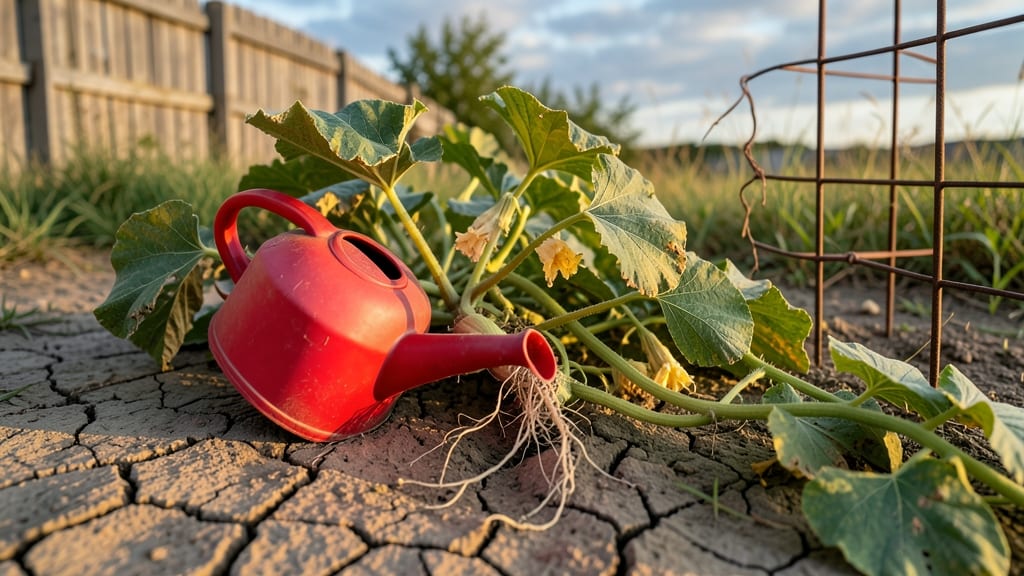
This underwatered pumpkin plant is begging for a drink—not just a sip, but a deep, satisfying soak—so let’s revive those brittle vines and yellowing leaves before it’s too late. 🌱 I’ve seen these signs too, and the good news is, you can turn this around faster than you think with just three targeted fixes.
The first clue is always the soil: stick your finger in 2 inches deep—if it feels drier than a summer sidewalk, that’s your answer. Pumpkins need 1-2 inches of water per week, but they hate soggy roots just as much as thirst.
A drip irrigation system or soaker hose keeps moisture steady without drowning them, and mulch locks in what you give.
Within 48 hours of proper watering, you’ll see leaves perk up and new growth pushing out. The key is consistency—check soil moisture every morning, and adjust based on heat waves or dry spells. Think of it like giving your pumpkin a daily shower, not a sprinkle.
This works for both young plants and mature vines, and the same rules apply whether you’re growing in ground or containers. The only difference? Containers dry out faster, so check them twice daily in extreme heat. Let’s get those vines thriving again!
Root Causes Of Wilting Pumpkins
When your pumpkin vines start drooping like a sad balloon animal, the culprit is almost always water stress. But why does this happen? Let’s dig into the science—and uncover the sneaky reasons your plants are crying out for hydration. 🌱💦
Pumpkins thrive on deep, consistent moisture—not sporadic sprinkles. Their sprawling vines and heavy fruits demand a steady water supply to transport nutrients from roots to leaves. When you water only when you remember, the soil dries out unevenly, causing:
- Shallow root systems: If the topsoil dries frequently, roots stay near the surface, unable to reach deeper moisture reserves.
- Osmotic stress: Roots struggle to absorb water when soil moisture fluctuates, leading to wilting even if water is nearby.
- Transpiration overload: On hot days, leaves lose water faster than roots can replenish it, causing midday droop.
Actionable fix: Water at the base of the plant (not the leaves) for 1–2 inches of soil depth every 2–3 days. Use a soaker hose or drip irrigation to avoid surface evaporation.
If your pumpkin patch sits in clay-heavy or compacted soil, water pools at the surface instead of soaking in. This creates a waterlogged top layer while roots below stay dry—a classic case of "thirsty roots in a swamp." Signs include:
- Water pooling after rain or watering.
- Soil that feels hard when squeezed (like a brick).
- Yellowing leaves (from oxygen deprivation) plus wilting (from dehydration).
Actionable fix:
- Test drainage: Dig a 6-inch hole, fill it with water, and time how long it takes to drain. If it’s slower than 4 hours, amend the soil.
- Add organic matter: Mix in compost or coconut coir to improve aeration and water retention.
- Raise beds: For clay soil, grow pumpkins in raised beds with sandy loam.
Pumpkins hate baking in the sun—especially when their mulch is missing or soil is bare. Heat causes:
- Rapid moisture loss: Sun beats down, evaporating water before roots can absorb it.
- Root burn: Overly hot soil can cook delicate root tips, reducing their ability to uptake water.
- Fungal stress: Dry, hot soil weakens plants, making them susceptible to Fusarium wilt (a fungal disease that clogs xylem vessels, blocking water flow).
Actionable fix:
- Mulch heavily: Use straw, wood chips, or grass clippings (3–4 inches deep) to insulate soil and retain moisture.
- Water early morning (before 9 AM) to reduce evaporation.
- Avoid tilling: Disturbed soil loses structure and dries out faster.
If roots are physically damaged (from digging, pests, or disease), they can’t absorb water efficiently—even if the soil is wet. Look for:
- Wilting that persists after watering (a sign roots aren’t functioning).
- Black, mushy roots (from root rot in overwatered soil).
- Gnawed roots (squirrels, voles, or cutworms love pumpkin roots!).
Actionable fix:
- Inspect roots: Gently dig around the base to check for damage or pests.
- Prune dead roots: Trim any black/mushy sections with sterilized shears.
- Apply mycorrhizal fungi (a soil additive) to help roots absorb water better.
Pro Tip: 💡 Morning wilting that recovers by evening usually means underwatering. If wilting happens all day, check for root issues or disease.
Reviving Your Pumpkin Patch
If your pumpkin plant is wilting like a forgotten sponge, don’t panic—it’s often just a cry for hydration! The good news? Most underwatered pumpkin plants bounce back with the right care.
Below, we’ll break down practical fixes based on the root cause of your plant’s thirst, plus tips to keep it thriving long-term.
Cause: Shallow watering or infrequent soaking leaves roots parched and struggling to absorb moisture. Solution:
- 🔥 Step 1: Soak the Soil – Use a garden hose or watering can to deliver 1–2 inches of water directly to the base of the plant. Let it seep in slowly (15–20 minutes).
- 🍳 Step 2: Check Drainage – If water pools on the surface, your soil may be compacted. Loosen the top 2–3 inches with a fork to help roots breathe.
- 👨🍳 Step 3: Mulch to Retain Moisture – Spread 2–3 inches of straw or shredded leaves around the base (avoid touching the stem). This locks in moisture and regulates temperature.
- ⏰ Frequency: Water deeply every 2–3 days (adjust for heat/wind). Morning watering is best to reduce evaporation.
💡 Pro Tip: Stick your finger 2 inches into the soil—if it’s dry, it’s time to water. If damp, wait another day.
Cause: Heatwaves, strong winds, or sandy soil drain moisture too fast, leaving plants dehydrated. Solution:
- 🔥 For Heatwaves: Water early in the morning or late evening to minimize evaporation. Use drip irrigation or soaker hoses for slow, deep hydration.
- 🌡️ For Windy Days: Create a windbreak with burlap or plant wind-resistant companions (like sunflowers) to shield leaves.
- 🎯 For Sandy Soil: Mix compost or coconut coir into the top 6 inches of soil to improve water retention. Aim for clay-heavy or loamy soil for better moisture storage.
✨ Prevention: Install a rain gauge to track natural watering. If it’s dry for 3+ days, supplement with manual watering.
Cause: Severe underwatering causes yellowing leaves, brittle vines, or wilted blossoms—but pruning can redirect energy to recovery. Solution:
- 🔪 Trim Dead Leaves – Use sterilized scissors to snip yellow/brown leaves at the base. This prevents disease and lets the plant focus on healthy growth.
- 🌱 Preserve Healthy Vines – Keep 3–5 strong vines (if it’s a trailing variety) to maximize energy for fruit production.
- 🥗 Avoid Over-Pruning – Never cut more than 20% of the foliage at once. Pumpkins rely on leaves for photosynthesis!
💡 Pro Tip: After pruning, fertilize lightly with a balanced 10-10-10 or compost tea to boost recovery.
Cause: Compacted, rocky, or poor-quality soil prevents roots from accessing water efficiently. Solution:
- 🔥 Test Your Soil – Dig a 6-inch hole. If it’s hard or crumbly, amend it with:
- 50% topsoil
- 30% compost
- 20% perlite or vermiculite (for drainage)
- 🍳 Raise Planting Beds (Optional) – If your soil is consistently poor, grow pumpkins in raised beds or large containers with well-draining mix.
- 👨🍳 Avoid Over-Fertilizing – Too much nitrogen = lush leaves but weak roots. Stick to low-nitrogen, high-potassium fertilizers (like 5-10-10) during recovery.
💡 Pro Tip: Mulch heavily (4+ inches) in raised beds to conserve moisture and cool roots.
Keep your pumpkin plant hydrated and happy with these habits: ✅ Water at the base (avoid wetting leaves to prevent disease). ✅ Monitor soil moisture (stick your finger in—don’t guess!). ✅ Use drip irrigation for consistent, deep watering. ✅ Rotate crops to avoid soil depletion (pumpkins are heavy feeders). ✅ Plant in full sun (6+ hours daily) for optimal photosynthesis.
Remember: Pumpkin plants are resilient! With consistent deep watering, proper soil, and a little TLC, your vines will perk up in 3–7 days. 🎃💦 If the plant stays limp after a week, check for root rot (mushy stems) or pests—but 90% of wilting is just thirst.
Now go hydrate that patch!
Frequently asked questions about pumpkin plant watering
How often should I water my pumpkin plant to prevent wilting?
Pumpkins need 1-2 inches of water per week, but they prefer deep, infrequent watering. Check soil moisture by sticking your finger 2 inches deep—if it's dry, water thoroughly at the base. In hot weather or sandy soil, water every 2-3 days; in cooler climates, 3-4 days may suffice.
Why do my pumpkin leaves wilt in the afternoon but recover at night?
This classic sign means your plant is underwatered and struggling with transpiration overload. Pumpkins lose water faster than roots can absorb it during peak heat. Water deeply in the morning (before 9 AM) and use mulch to retain moisture. If wilting persists all day, check for root damage or disease.
Can I use a sprinkler for my pumpkin plants, or should I water at the base?
Sprinklers waste water and can spread disease by wetting leaves. Always water directly at the soil base using a soaker hose or drip irrigation. This delivers moisture where roots need it most while preventing fungal issues. For established plants, aim for 15-20 minutes per session to ensure deep saturation.
What's the difference between underwatering and overwatering pumpkin plants?
Underwatered pumpkins show wilting leaves, dry soil, and brittle stems that recover after watering. Overwatered plants have yellowing leaves, mushy stems, and waterlogged soil that stays soggy. Test drainage: If water pools after 4+ hours, your soil may be too compacted. Amend with compost or use raised beds.
Will my pumpkin plant recover if it's been underwatered for a week?
Most pumpkins bounce back in 3-7 days with proper care! Start by giving a deep soak (1-2 inches of water) and mulching heavily. If leaves are severely damaged, trim dead foliage but leave healthy vines. Avoid fertilizing until new growth appears. For best results, combine watering with morning shade cloth during recovery.