
Pruning
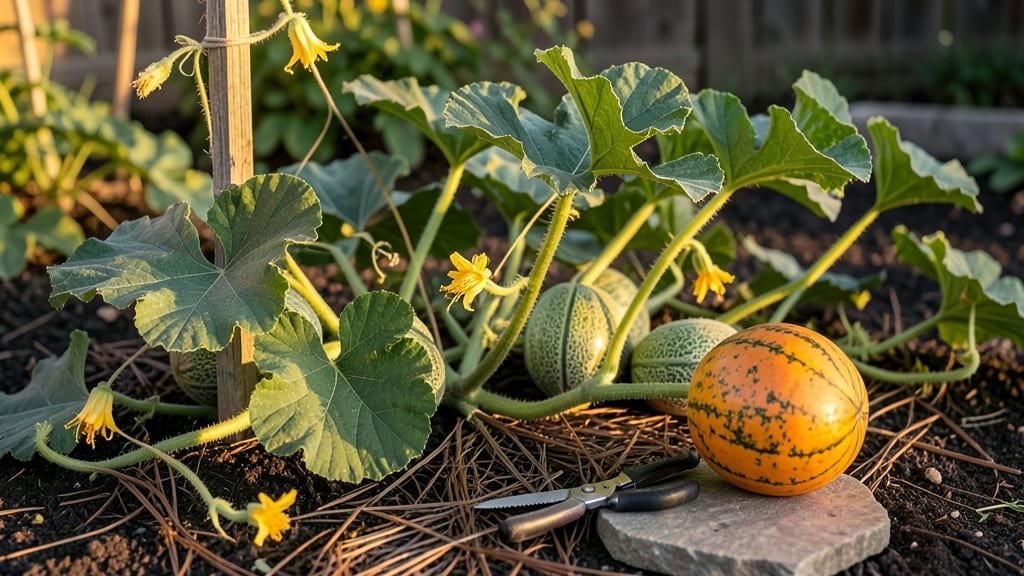
Pruning cantaloupe plants might sound tricky, but three simple cuts can double your harvest. 🌿 I learned this the hard way after watching my vines sprawl everywhere last summer, producing fewer melons than expected. The secret isn’t complicated—it’s about directing energy where it matters most: the fruit.
You’ll need just a few tools: sharp pruning shears, gloves, and a sunny day. First, identify the main vine—the thick, healthy stem growing directly from the plant. Remove any side shoots (suckers) that form in the leaf axils, keeping only the top two leaves for each main branch.
This focuses the plant’s energy on growing bigger, sweeter melons instead of extra foliage.
After pruning, your cantaloupe plants will reward you with stronger vines and more uniform fruit. The melons themselves grow larger and sweeter because the plant isn’t wasting energy on unnecessary growth. Within a few weeks, you’ll notice new leaves emerging and the vines becoming sturdier—signs your plant is thriving.
This method works for both trellised and ground-grown cantaloupes, though trellising makes pruning easier. Just avoid cutting into the main stem, and always prune in the morning when the plants are hydrated. The payoff? A bumper crop of melons that’ll make your neighbors jealous.
📚 In This Guide
- What you need
- Instructions
- Tips and common mistakes
- Wrapping up and next steps
What you need
- ● Pruning shears or sharp bypass pruners – Choose sterilized, sharp tools (avoid dull blades to prevent tearing plant tissue). A 5-inch bypass pruner is ideal for most cantaloupe vines.
- ○ Gloves (optional but recommended) – Wear gardening gloves to protect your hands from thorns (some varieties have them!) and dirt.
- ● Disinfectant (70% isopropyl alcohol or bleach solution) – Clean tools before and after pruning to prevent disease spread. Mix 1 part bleach to 9 parts water for a DIY solution.
- ● Garden twine or plant ties – A 10–15-foot roll of 3mm–5mm twine helps support vines after pruning (if needed).
- ● Sharp knife or scissors – For smaller cuts (e.g., removing suckers near the stem). Use a clean, sharp blade to avoid damage.
- ● Watering can or hose (with gentle nozzle) – Keep a water source handy to hydrate plants post-pruning (especially in hot climates).
- ● Timing – Prune during the cool hours of morning or late afternoon to reduce stress on the plant. Avoid pruning in peak sun or extreme heat.
- ● Plant maturity – Wait until vines are 4–6 weeks old and have 3–5 true leaves before pruning.
- ● Weather check – Prune only on dry days (wet conditions can spread disease through open cuts).
- ● Healthy plants only – Skip pruning if your cantaloupe shows signs of pests, disease, or severe stress (e.g., yellowing leaves, wilting).
- ● Root stimulator or compost tea – Apply after pruning to boost recovery (follow product instructions).
- ● Plant food (balanced fertilizer, 10-10-10) – A light feeding post-pruning can encourage new growth.
- ● Plant markers or labels – Useful if you’re pruning multiple varieties to track progress.
- ● Sun hat and sunscreen – Because you’re the most important tool of all! 😎
Step-by-Step instructions for pruning cantaloupe plants
Here's how I prune cantaloupe to boost fruit size and sweetness—no fancy tools needed.
🌿 Step 1: Remove Suckers for Stronger Vines
Cantaloupe vines produce small shoots called suckers at the base of leaves. These compete with fruit production, so I remove them early. Use clean, sharp pruners or your fingers to pinch them off at the base—don't leave stubs. Focus on suckers growing below the first flower cluster, as these drain energy from fruit development.
Watch for new suckers forming every 5-7 days. A well-pruned vine will have only 2-3 main stems running along the ground, each with its own fruit clusters. If you see a sucker larger than your thumb, it's already stealing nutrients—remove it immediately.
✂️ Step 2: Trim Excess Leaves Near Fruit
Once fruit forms, thin out leaves directly below each melon to improve air circulation and sunlight exposure. Aim to leave about 6-8 inches of space between the vine and the melon's stem. This prevents rot and helps the fruit ripen faster. Use pruners to cut leaves at their base, not mid-stem, to avoid damaging the vine.
I stop pruning leaves once the melon reaches golf-ball size—after that, the plant needs all its foliage to support fruit growth. If you see yellowing leaves, they're already dead and can be removed entirely to redirect energy to healthy growth.
🌱 Step 3: Cut Back Damaged or Diseased Growth
Inspect the vine weekly for signs of disease (yellow spots, blackened patches) or physical damage (broken stems, chewed leaves). Cut back affected areas at least 2 inches below the damage using sterilized pruners. This prevents pathogens from spreading to healthy parts of the plant.
If a main vine stem breaks, prune it back to a healthy leaf node (a small bump where leaves grow). The plant will regrow from there, but avoid cutting into woody stems—they won't regenerate. Always sterilize your tools with rubbing alcohol between cuts to prevent contamination.
💧 Step 4: Thin Overcrowded Fruit Clusters
Cantaloupe vines often produce multiple small melons in one cluster. To maximize size and sweetness, leave only 1-2 of the largest, healthiest melons per cluster. Gently twist off the smaller ones at their base—don't cut, as this can damage the vine. This redirection of energy results in fewer but sweeter, larger fruits.
Watch for fruit that's misshapen or shows signs of poor development (soft spots, uneven growth). Remove these immediately, as they'll never ripen properly and waste the plant's resources. A well-thinned vine will produce 4-6 high-quality melons instead of a dozen small, underdeveloped ones.
⏰ Step 5: Time Your Final Pruning for Harvest
Stop all pruning 3-4 weeks before your first frost date or when melons are within 2 weeks of ripeness. At this stage, the plant needs all its energy focused on fruit maturation, not new growth. Look for melons that develop a creamy yellow underside and a slight softness when pressed near the stem—these are ready to harvest.
Leave vines intact until after harvest, as the plant may still produce a few late-season melons. Once all fruit is picked, cut the vines back to the ground and compost the healthy material. This clears space for next year's planting and reduces disease carryover in the soil.
Tips & tricks for perfect cantaloupe pruning
These simple techniques will help you maximize your cantaloupe harvest with minimal effort.
Timing Secret: In Step 1, don't wait until suckers get large—remove them when they're pencil-sized. I learned this the hard way after watching a sucker grow to my thumb size and steal energy from my main fruit. Those 5-7 day intervals are critical because new suckers appear quickly during warm weather. Check your vines twice a week for best results.
Leaf Space Strategy: When you're creating that 6-8 inch space in Step 2, think of it as creating a mini greenhouse for each melon. I like to visualize a donut shape around each fruit—open in the center for sunlight, but with leaves forming a protective ring. This airflow prevents rot while still allowing sunlight to reach the fruit's skin, which is essential for developing that signature cantaloupe color.
Disease Prevention: The 2-inch cut-back rule in Step 3 isn't just about removing damage—it's about creating a healthy buffer zone. I always sterilize my pruners between cuts (even between healthy and diseased plants) because cantaloupe is particularly susceptible to fungal diseases. Keep a small bottle of rubbing alcohol handy and wipe your tools after every 3-4 cuts. This simple habit can mean the difference between a healthy harvest and a lost crop.
Harvest Readiness: For Step 5, use the "finger test" when checking ripeness: press gently near the stem. If the melon gives slightly (like pressing your cheek), it's ready. I've found that cantaloupes ripen fastest when left on the vine—don't be tempted to harvest early just because they look big. The final 2 weeks of vine maturation develop the most intense sweetness and aroma.
Pro Tips for Prune Cantaloupe Plants
- These simple techniques will help you maximize your cantaloupe harvest with minimal effort.
- Timing Secret: In Step 1, don't wait until suckers get large—remove them when they're pencil-sized.
- Leaf Space Strategy: When you're creating that 6-8 inch space in Step 2, think of it as creating a mini greenhouse for each melon.
Frequently asked questions
Got questions about pruning cantaloupe plants? You’re not alone! Here are some of the most common concerns—and straightforward answers—to help you prune like a pro.
When is the best time to prune cantaloupe plants?
Prune your cantaloupe plants early in their growth cycle—typically when they’re 4–6 inches tall. Focus on removing the first few leaves near the base to encourage stronger vine development. Avoid heavy pruning once flowers appear, as this can reduce fruit production.
Do I really need to prune cantaloupe plants? Can’t I just let them grow wild?
While cantaloupes can thrive without pruning, strategic cuts improve air circulation, reduce disease risk, and direct energy toward fruit production. Skipping pruning may lead to overcrowded vines, smaller melons, or weaker plants—especially in hot climates.
What if I accidentally prune too much? Can I fix it?
No need to panic! If you’ve over-pruned, your plant may look stressed, but cantaloupes are resilient. Water deeply, fertilize lightly (with compost or balanced fertilizer), and monitor for new growth. Avoid pruning again until the plant recovers—usually within 1–2 weeks.
Should I prune cantaloupe leaves with yellow spots?
Yes! Yellow or diseased leaves should be removed immediately to prevent fungal or bacterial spread. Snip them off at the base with clean pruners, and dispose of them far from your garden. Healthy leaves = healthier vines and sweeter melons.
How do I know if my cantaloupe plant is ready for harvest after pruning?
Pruning doesn’t directly affect harvest timing, but well-pruned plants produce fruit faster. Check for readiness by gently lifting the melon—it should feel heavy for its size and have a creamy color near the stem. The stem should also slip easily when twisted.
Wrapping up and next steps
Pruning your cantaloupe plants might seem like a small task, but it’s the secret to bigger, sweeter, and healthier fruits! 🌱 By focusing on removing suckers, thinning vines, and trimming runners, you’re giving your plants the energy they need to thrive.
Now that you’re armed with the right techniques, there’s no better time to roll up your sleeves and get pruning—your taste buds will thank you later!
Ready to take it further? Monitor your plants weekly and adjust your pruning as they grow. Happy harvesting ahead! 🍉✨