
Diseases
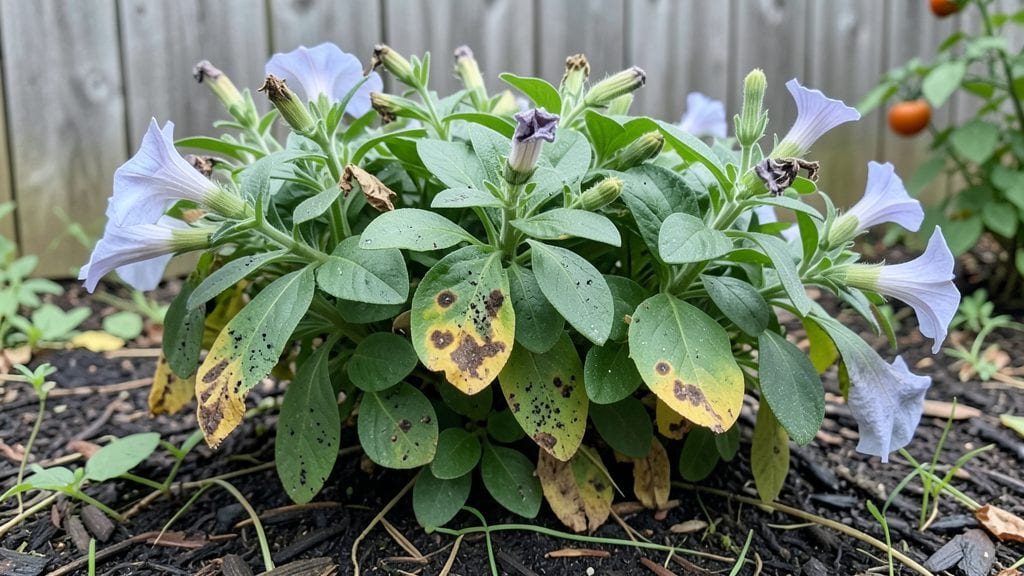
Petunia plant diseases can turn vibrant blooms into sad, spotted messes if you don’t catch them early. 🌿 I’ve lost entire pots to fungal infections before—until I learned the telltale signs of powdery mildew, leaf spot, and botrytis.
The good news? Most issues respond to simple fixes once you know what to look for.
These fungal problems thrive in warm, humid conditions, which is why petunias—loved for their trailing beauty—often become magnets for trouble. The key is acting fast: prune infected leaves immediately, improve airflow between plants, and avoid overhead watering. My petunias now bounce back in days instead of weeks.
You’ll spot the difference in just a few treatments: crisp edges return to leaves, stems stop wilting, and blooms stay bright instead of fading to brown. The right mix of prevention and quick action keeps your petunias thriving all season long.
Whether you’re dealing with a single plant or a whole bed, these solutions work for both containers and garden beds. Let’s get those petunias back to their best—and keep them that way.
Root Causes Of Petunia Problems
Petunias are stunning, low-maintenance flowers that brighten up gardens—but when diseases strike, they can wilt faster than you’d expect. Understanding why these issues arise is the first step to prevention and treatment. Below, we break down the key culprits behind petunia plant diseases, from environmental triggers to biological invaders.
Petunias thrive in well-draining soil, but too much moisture creates the perfect breeding ground for fungal pathogens like Botrytis cinerea (gray mold) and Phytophthora (root rot).
- Why it happens:
- Soggy soil cuts off oxygen to roots, weakening the plant’s defenses.
- Stagnant water in containers or compacted garden beds promotes fungal spores.
- High humidity (especially at night) slows evaporation, keeping leaves damp longer.
- Actionable fix:
- Use pots with drainage holes and elevate them to prevent waterlogging.
- Water early in the day so foliage dries before evening.
- Amend soil with perlite or sand to improve aeration.
Petunias are susceptible to airborne fungal diseases like powdery mildew (Erysiphe cichoracearum) and rust (Uromyces). These pathogens spread via wind, splashing water, or contaminated tools.
- Why it happens:
- Close planting reduces airflow, trapping spores on leaves.
- Weakened plants (from stress, poor nutrition, or pests) are easier targets.
- Previous infections in the same garden spot leave behind dormant spores.
- Actionable fix:
- Space plants 12–18 inches apart for better circulation.
- Sterilize pruners with rubbing alcohol between cuts.
- Remove infected leaves immediately to stop spore spread.
Petunias prefer moderate climates (60–75°F), but sudden temperature drops or heatwaves stress them, making them vulnerable to diseases like early blight (Alternaria solani).
- Why it happens:
- Cold nights + warm days create condensation, keeping leaves wet.
- Heat stress weakens cell walls, making plants more susceptible to pathogens.
- Frost damage opens wounds where bacteria (Pseudomonas) can enter.
- Actionable fix:
- Mulch heavily to regulate soil temperature.
- Avoid evening watering in hot climates to prevent fungal growth.
- Use row covers in early spring to protect from frost.
Insects like aphids, spider mites, and whiteflies feed on petunia sap, creating entry points for diseases. Their sticky residue (honeydew) also attracts sooty mold.
- Why it happens:
- Pests create wounds where bacteria (Xanthomonas) or fungi can invade.
- Honeydew buildup provides a food source for secondary pathogens.
- Stressed plants (due to pest attacks) produce fewer defensive compounds.
- Actionable fix:
- Inspect leaves weekly for pests—use neem oil or insecticidal soap if needed.
- Encourage beneficial insects (ladybugs, lacewings) to control pests naturally.
- Prune damaged foliage to remove pest hotspots.
Petunias need balanced nutrients (especially phosphorus and potassium) to fight disease. Deficiencies or excess salts weaken their immune response.
- Why it happens:
- Nitrogen-heavy fertilizers promote lush growth but reduce disease resistance.
- Compacted or acidic soil (pH <6.0) hinders root function.
- Over-fertilizing burns roots, making plants more susceptible to rot.
- Actionable fix:
- Test soil pH (aim for 6.0–7.0) and amend with lime if needed.
- Use a balanced fertilizer (10-10-10) and avoid overfeeding.
- Compost or aged manure improves soil structure and microbial activity.
Some petunia varieties are more prone to diseases due to their genetics. Hybrid petunias (like Petunia × hybrida) are often hardier than heirloom types.
- Why it happens:
- Susceptible cultivars (e.g., Petunia axillaris) lack natural resistance to fungal spores.
- Grafted petunias (common in containers) can fail if the rootstock is compromised.
- Actionable fix:
- Choose disease-resistant varieties (e.g., ‘Wave’ or ‘Supertunia’ series).
- Rotate crops annually to prevent soil-borne pathogen buildup.
- Start with healthy nursery stock—avoid plants with yellowing or spots.
Reusing unsterilized pruners, gloves, or pots can transfer pathogens from one plant to another.
- Why it happens:
- Spores linger on tools between cuts, spreading diseases like bacterial wilt.
- Reusing infected pots without cleaning can reintroduce pathogens.
- Actionable fix:
- Sanitize tools with 70% isopropyl alcohol or a bleach solution (1:10).
- Disinfect containers with a 10% bleach spray before replanting.
- Avoid walking through beds to prevent soil compaction and spore spread.
Pro Tip: 💡 Most petunia diseases thrive in wet, warm, and crowded conditions. Break the cycle by watering at the base, pruning for airflow, and removing debris—this cuts off the fungal food chain!
Quick Fixes for Petunia Fungal Woes
When your petunias start showing signs of distress—whether it’s powdery white spots, blackened stems, or yellowing leaves—acting fast is key. Fungal diseases thrive in damp, warm conditions, but with the right approach, you can nurse your plants back to health (or even prevent future outbreaks).
Below, we’ve mapped out practical solutions for each common fungal issue, complete with step-by-step fixes and prevention tips to keep your petunias blooming beautifully.
Cause: White, powdery coating on leaves (often from poor airflow or high humidity).
How to Fix It: 🔥 Remove infected leaves – Snip off heavily affected foliage with clean scissors to stop the spread. 🍳 Mix a baking soda spray – Combine 1 tsp baking soda + 1 tbsp vegetable oil + 1 tsp mild soap in 1 quart of water. Spray both sides of leaves in the morning for best results. 👨🍳 Apply neem oil – A natural fungicide! Mix 1 tbsp neem oil + 1 tsp mild soap in 1 quart of water. Spray every 5–7 days until mildew disappears. ⏰ Improve airflow – Space plants 12–18 inches apart and prune crowded branches.
💡 Prevention Tip: Water at the base of the plant in the early morning so leaves dry quickly.
Cause: Dark, circular spots with yellow halos (from wet foliage or overhead watering).
How to Fix It: 🔥 Prune infected leaves – Cut off spots ½ inch below the lesion to prevent spores from spreading. 🍳 Use copper fungicide – Apply a store-bought copper-based spray (like Bonide Copper Fungicide) every 7–10 days for 3–4 weeks. 👨🍳 Try hydrogen peroxide spray – Mix 1 tbsp 3% hydrogen peroxide per quart of water. Spray leaves (test on a small area first). ⏰ Water wisely – Avoid overhead watering; use a drip irrigation system or watering can with a rose attachment.
💡 Prevention Tip: Space plants properly (6–12 inches apart) and remove fallen leaves that can harbor spores.
Cause: Soft, mushy stems (from overwatering or poor drainage).
How to Fix It: 🔥 Trim affected stems – Cut back to healthy green tissue with sterilized pruners (wipe with rubbing alcohol). 🍳 Repot in fresh soil – Use a well-draining potting mix (add perlite or sand) and a pot with drainage holes. 👨🍳 Apply fungicidal soil drench – Use Mycorrhizal fungi or beneficial bacteria (like Bacillus subtilis) to outcompete harmful pathogens. ⏰ Adjust watering – Let the top 1–2 inches of soil dry out between waterings.
💡 Prevention Tip: Never let petunias sit in soggy soil—group pots on elevated trays or use saucers with drainage.
Cause: Small, water-soaked spots that enlarge (from splashing water or humidity).
How to Fix It: 🔥 Remove all spotted leaves – Don’t leave them on the plant or in the soil. 🍳 Spray with potassium bicarbonate – Mix 1 tbsp baking soda + 1 tsp liquid soap + 1 gallon of water. Spray every 5 days. 👨🍳 Use a fungicide labeled for leaf spot – Products with chlorothalonil (like Daconil) work well. ⏰ Isolate infected plants – Keep them away from healthy petunias until fully recovered.
💡 Prevention Tip: Water at the base and avoid mulching too close to stems (keep 2–3 inches away).
Cause: Yellow upper leaves with purple-gray fuzz on undersides (from cool, wet conditions).
How to Fix It: 🔥 Prune heavily infected leaves – Focus on undersides where spores hide. 🍳 Apply a fungicide with phosphite – Products like Phostrol or Subdue stop fungal growth. 👨🍳 Improve airflow – Thin out crowded plants and stake tall varieties to prevent humidity buildup. ⏰ Avoid overhead watering – Use a soaker hose instead.
💡 Prevention Tip: Rotate petunias yearly—don’t plant in the same spot where downy mildew occurred last season.
To keep fungal diseases at bay, follow these proactive steps: ✅ Plant in full sun (6+ hours/day) – Fungi love shade and dampness. ✅ Choose disease-resistant varieties – Look for petunias labeled “mildew-resistant” (e.g., ‘Wave’ or ‘Supertunia’ series). ✅ Sterilize tools – Wipe pruners and pots with rubbing alcohol between uses. ✅ Rotate crops – Don’t plant petunias in the same spot year after year. ✅ Test your soil – Aim for a pH of 6.0–7.0; fungi thrive in acidic or alkaline extremes.
Remember: The faster you act, the better your petunias’ chances of recovery! With these fixes, your blooms should bounce back in 2–4 weeks. 🌸 For stubborn cases, consider replacing severely infected plants to protect your garden’s health.
Frequently asked questions
What are the most common signs of petunia fungal infections?
Look for white powdery coatings (powdery mildew), dark circular spots with yellow halos (leaf spot), or gray fuzzy patches (botrytis). Early symptoms include yellowing leaves, wilting stems, or brown spots on petals. Act fast—remove infected parts immediately to prevent spread.
Can I save my petunias if they already have fungal diseases?
Yes! Prune infected leaves, improve airflow, and apply fungicides like neem oil or copper-based sprays. For severe cases, repot in fresh soil and adjust watering habits. Most petunias recover within 2–4 weeks if treated early.
How do I prevent fungal diseases in my petunias?
Water at the base in the morning, space plants 12–18 inches apart, and avoid overhead watering. Use disease-resistant varieties (like ‘Wave’ series) and sterilize tools between uses. Mulch lightly but keep it 2–3 inches away from stems.
Are homemade remedies effective for treating petunia diseases?
A baking soda spray (1 tsp baking soda + 1 tbsp oil + 1 tsp soap per quart of water) works for mildew, while hydrogen peroxide (1 tbsp per quart) helps with leaf spots. For stubborn cases, combine with store-bought fungicides for best results.
Why do my petunias get diseases more often in humid weather?
High humidity slows leaf drying, creating ideal conditions for fungal spores to thrive. Fungi like Botrytis and powdery mildew spread faster in damp air. Improve airflow, water early in the day, and avoid mulching too close to stems to reduce risks.