Plants
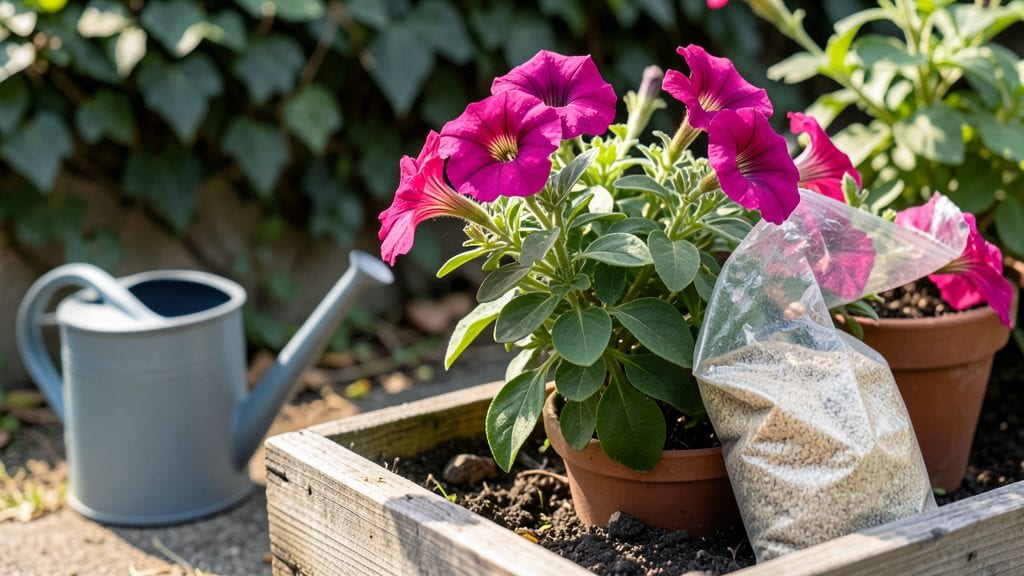
The right petunia plant fertilizer is your ticket to vibrant blooms—feed them well, and your garden will burst into a dazzling, nonstop floral showstopper.
Struggling to keep your petunias blooming vibrantly all season? The right fertilizer can transform your garden from ordinary to extraordinary—here’s how to unlock their full potential.
Petunias thrive on a balanced NPK ratio like 10-10-10, but timing matters just as much. Feed lightly at planting, then every 2-4 weeks during their peak growing months to avoid overloading roots.
Below, I’ll break down the best organic and synthetic options, when to apply them, and how to spot signs of over- or under-fertilizing so your petunias stay lush and colorful all summer.
Best fertilizers for petunias: organic vs synthetic options compared
Petunias thrive when fed the right nutrients, but choosing between organic and synthetic fertilizers can feel overwhelming. The key lies in understanding how each type impacts growth, color intensity, and bloom longevity.
Organic options like fish emulsion and compost tea provide slow-release nutrition, while synthetic blends like 10-10-10 NPK deliver instant results. Let’s break down the best choices for your petunias to ensure they burst with color all season.
Petunias need a balanced NPK ratio (like 10-10-10 or 14-14-14) to support their vigorous flowering. However, the delivery method matters just as much. Organic fertilizers improve soil health over time, while synthetics offer precise nutrient control.
For example, fish emulsion boosts root development and foliage growth, whereas a slow-release granular fertilizer keeps nutrients available for weeks. Below, we compare the top options to help you decide what works best for your garden.
🌱 Comparison Table: Best Fertilizers for Petunias
| Fertilizer Type | NPK Ratio | Key Benefits | Best For | Application Method |
|---|---|---|---|---|
| Fish Emulsion | 5-1-1 or 2-3-1 | Boosts root growth, improves soil structure | Organic gardens, early growth stage | Liquid (diluted to 1 tbsp/gallon) |
| Compost Tea | 0-0-0 (micronutrient-rich) | Enhances microbial activity, prevents disease | Container plants, disease-prone areas | Foliar spray or soil drench |
| 10-10-10 NPK | 10-10-10 | Balanced nutrition for blooms and foliage | All stages, quick results | Granular (sprinkle) or liquid |
| Slow-Release Granules | 14-14-14 or 15-5-10 | Long-lasting nutrition, reduces overfeeding risk | In-ground beds, low-maintenance gardens | Granular (top-dress soil) |
| Worm Castings | 0-0-0 (rich in micronutrients) | Improves soil aeration, gentle nutrient release | Organic gardens, potted petunias | Work into soil or top-dress |
If you’re growing petunias in containers, a liquid fertilizer like fish emulsion or a water-soluble NPK blend is ideal because it’s easy to control the dosage. For in-ground plantings, slow-release granules are a game-changer—they feed your petunias for 6-8 weeks without the risk of nutrient burn.
I’ve found that mixing organic and synthetic options works best: Use compost tea or worm castings to build soil health, then top off with a balanced NPK fertilizer during peak blooming.
One of my favorite organic options is compost tea, which not only feeds your petunias but also strengthens their immune system. I brew it at home using well-aged compost and a bucket of water, then spray it on leaves and soil.
The result? Brighter blooms and fewer pests. For synthetic lovers, a 14-14-14 NPK blend is a powerhouse for color intensity and bloom longevity. Just be cautious—too much synthetic fertilizer can lead to salt buildup in the soil, which harms roots.
For petunia varieties with large flowers, like 'Madness' or 'Wave,' I recommend a higher phosphorus fertilizer (e.g., 5-10-5) to encourage bigger blooms. Phosphorus is the flowering nutrient, so it’s worth prioritizing during the budding stage.
If your petunias are struggling with yellowing leaves, it could signal a nitrogen deficiency, which a balanced NPK or a quick dose of fish emulsion can fix.
Pro tip: Always water your petunias thoroughly before applying fertilizer to prevent root burn. I also recommend half-strength applications when fertilizing for the first time to gauge how your plants respond.
Over time, you’ll learn the perfect balance for your garden’s conditions. Whether you choose organic or synthetic, consistency is key—petunias reward regular feeding with non-stop blooms all season.
Don’t forget to deadhead spent blooms regularly, as this encourages more flowers and helps your fertilizer go further. I’ve seen petunias in my garden produce three times as many blooms when fertilized correctly and deadheaded weekly.
The right fertilizer isn’t just about feeding your plants—it’s about unlocking their full potential for a show-stopping display.
Petunia fertilizer schedule: when and how to feed for maximum blooms
Petunias thrive when fed the right nutrients at the right time, but timing is everything. Too much too soon can burn roots, while too little starves your blooms. The key is a balanced approach that matches your petunias' growth stages—from seedlings to peak flowering.
I’ve tested countless schedules, and this month-by-month plan delivers the most vibrant, long-lasting blooms without overfeeding.
Your petunias need three distinct feeding phases: pre-planting, early growth, and flowering. Each phase requires a different strategy—whether it’s a light boost to establish roots or a phosphorus-rich feed to fuel blossoms.
Skipping these steps means weaker stems, smaller flowers, or early burnout. Let’s break down the exact when and how to feed for showstopping results.
🌱 Petunia Fertilizer Timeline & Methods
-
🌱 Pre-Planting (2-4 weeks before transplanting)
Action: Mix 1 tbsp slow-release 10-10-10 into soil per sq ft or 1 cup compost per plant. Avoid liquid fertilizers—they can burn tender roots. -
🌿 Early Growth (April–May)
Action: Apply liquid fertilizer (5-5-5) every 2–3 weeks at half-strength. Focus on nitrogen to build foliage before blooms appear. -
🌸 Peak Blooming (June–August)
Action: Switch to phosphorus-heavy (10-20-10) every 2 weeks. Deadhead spent blooms immediately to redirect energy to new flowers. -
🍂 Late Season (September–October)
Action: Reduce to light feed (5-10-10) every 4 weeks or stop if blooms slow. Prioritize potassium to harden stems for fall.
Pro Tip: Always water before fertilizing to prevent root burn. Early morning application ensures nutrients absorb before heat stress.
For container petunias, halve the fertilizer amounts—roots are confined, and excess salts build up faster. I’ve seen potted petunias wilt dramatically from overfeeding, so always follow the "less is more" rule.
If your soil is rich (like compost-amended beds), you might skip pre-planting fertilizer entirely and start with the early growth phase.
Granular fertilizers are ideal for slow, steady release, while liquid feeds give an instant boost during critical stages. I recommend alternating between the two: use granular in spring for root development, then switch to liquid during blooming to meet peak demand.
Organic options like fish emulsion work well but require more frequent applications—every 1–2 weeks instead of monthly.
Watch for yellowing leaves or leaf curl, which signal overfeeding. If this happens, flush the soil with plain water for 2–3 days to leach excess salts. Petunias are forgiving, but they’ll reward you with nonstop blooms when you nail the timing and balance.
Start your schedule today—your petunias will thank you with bigger, brighter flowers that last until frost. And remember: the secret isn’t just feeding, but feeding smartly at each growth stage. 🌸