
Watering
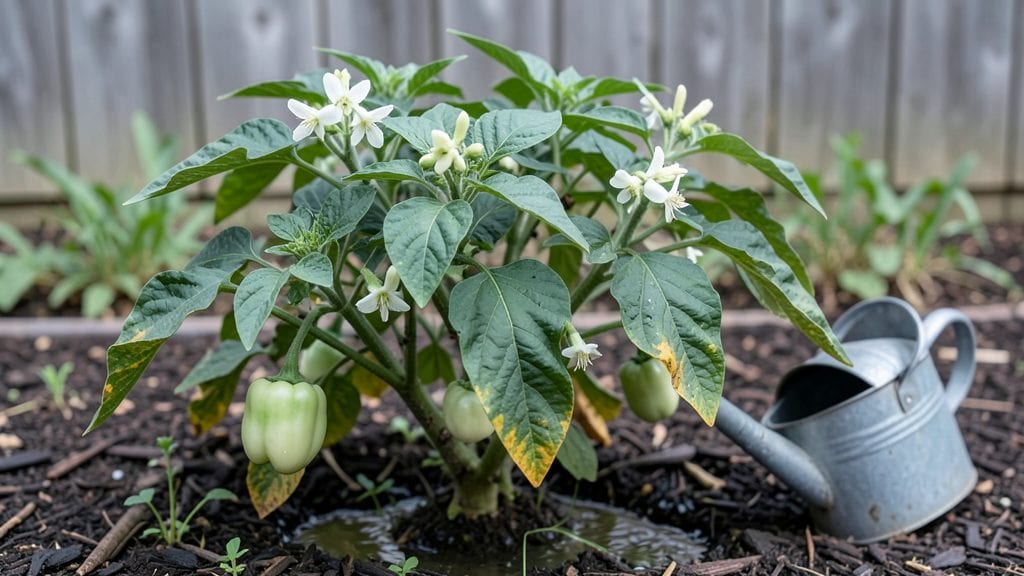
When pepper plants get too much water, their leaves turn yellow and droop like a sad umbrella—but there’s a quick fix that saves your harvest. 🌱 I’ve watched overwatered peppers go from limp to lush in just a week by adjusting the soil and watering routine.
The key? Drainage, timing, and knowing when the roots have had enough.
Most gardeners water on a schedule, but peppers hate soggy roots. Check the top inch of soil—if it’s damp, wait. If your containers lack drainage holes, repot immediately.
Even raised beds need well-amended soil with perlite or sand to prevent waterlogging. I’ve seen plants bounce back within days once the roots get a chance to breathe.
What you’ll achieve is healthy green foliage and firm stems that support heavy fruit. The first sign of recovery is new growth at the base, followed by perky leaves within a week.
Prune any blackened stems to redirect energy, and soon your plants will be thriving like they never left the nursery.
This works for backyard gardens, containers, or raised beds—just adapt the soil mix to your setup. The same principles apply whether you’re growing bell peppers, jalapeños, or habaneros. Let’s turn those sad plants into productive powerhouses again.
Root Causes of Overwatered Peppers
Overwatering pepper plants is a common but avoidable mistake that can quickly turn your thriving garden into a soggy disaster. Understanding the why behind this issue is the first step to preventing it.
Below, we break down the key factors that lead to oversaturated soil—and how they affect your pepper plants’ health.
🌱 The Problem: If your pepper plants sit in soil or containers that don’t drain excess water efficiently, roots suffocate from lack of oxygen.
Why It Happens:
- Compacted or Clay Soil: Heavy soils hold water like a sponge, preventing it from draining away. Pepper plants, native to well-draining volcanic soil, struggle in these conditions.
- Small or Shallow Pots: Containers without drainage holes trap water, while shallow pots dry out unevenly, leading to inconsistent moisture.
- Mulch Overload: Too much mulch (especially thick layers) can smother the soil, blocking airflow and trapping moisture against the roots.
Science Behind It: Roots need oxygen to respire and absorb nutrients. When soil stays waterlogged, oxygen levels drop, causing root rot (a fungal infection that kills roots). Over time, this weakens the plant, stunting growth and reducing yield.
💧 The Problem: Skipping watering one day and drowning the plants the next creates extreme moisture fluctuations.
Why It Happens:
- Emotional Watering: Some gardeners water when they think the plant needs it, not based on soil conditions. Peppers hate guesswork—they thrive on consistency.
- Ignoring Weather: Rainy days followed by dry spells throw off your watering schedule. If you don’t adjust, you might overcompensate with heavy watering after rain.
- Automatic Timers Gone Wrong: Drip irrigation or timers set on a fixed schedule can lead to overwatering if the system runs longer than needed, especially in humid climates.
Science Behind It: Peppers prefer 1–1.5 inches of water per week (including rain). Too much at once causes leaching—nutrients wash away, and roots drown. Too little stresses the plant, making it more susceptible to rot when you finally water heavily.
⏰ The Problem: Watering at the wrong time increases evaporation loss and encourages fungal growth.
Why It Happens:
- Late Afternoon/Evening Watering: When you water after sunset, moisture lingers on leaves overnight, creating a perfect breeding ground for diseases like Phytophthora (a water mold).
- Morning Watering Without Sun: If you water early but the sun doesn’t evaporate excess moisture quickly, soil stays damp for too long.
- High Humidity + Watering: In humid climates, water doesn’t absorb into the soil fast enough, leading to surface puddling and root suffocation.
Science Behind It: Peppers need 6–8 hours of sunlight to dry foliage. Watering in the early morning (6–9 AM) gives leaves time to dry, reducing fungal risks while ensuring roots absorb moisture efficiently.
🪴 The Problem: Heavy, nutrient-poor, or improperly amended soil retains too much water.
Why It Happens:
- Garden Soil Without Amendments: Native soil is often clay-heavy, compacting easily and slowing drainage.
- Peat-Moss Overuse: While peat holds moisture, it breaks down quickly, leaving soil waterlogged and nutrient-deficient.
- Lack of Perlite/Vermiculite: These additives improve aeration, but skipping them means soil stays dense and soggy.
Science Behind It: Peppers need loamy, well-aerated soil with a pH of 6.0–7.0. Poor soil structure leads to anaerobic conditions (no oxygen), where harmful bacteria thrive and beneficial microbes die off.
🌿 The Problem: When pepper plants are too close together, airflow is restricted, and water evaporates unevenly.
Why It Happens:
- Small Spacing in Gardens: Planting peppers too close (12–18 inches apart) shades lower leaves, slowing evaporation and trapping moisture.
- Container Overcrowding: Too many plants in one pot compete for water, leading to uneven absorption—some roots drown while others dry out.
- Poor Pruning: Overgrown foliage blocks sunlight, keeping soil damp longer than ideal.
Science Behind It: Good airflow reduces humidity around leaves, preventing fungal infections. Overcrowding also increases competition for nutrients, weakening plants and making them more susceptible to rot.
🚨 The Problem: Many gardeners miss early signs of overwatering until it’s too late.
Why It Happens:
- Yellowing Leaves (Not Just Nutrient Deficiency): While nitrogen deficiency causes yellowing, overwatering also leads to chlorosis (yellowing between veins) due to poor nutrient uptake.
- Wilting Despite Moist Soil: If the soil is soggy but leaves droop, root rot has likely set in, cutting off water transport.
- Mushy Stems or Black Spots: Fungal infections like Phytophthora thrive in wet conditions, causing stems to soften or develop dark lesions.
Science Behind It: Peppers wilt when roots can’t absorb water—either from drought or rot. The key difference? Dry soil = crispy roots; soggy soil = mushy, brown roots.
Overwatering isn’t just about "too much water"—it’s about how, when, and where that water sits. By fixing drainage, adjusting your watering routine, and paying attention to your plants’ needs, you can prevent root rot and keep your peppers thriving for a bountiful harvest. 🌶️💦
Quick Fixes for Overwatered Peppers
Overwatering can feel like a silent killer for your pepper plants—one day they’re thriving, the next, their roots are drowning in soggy soil. But don’t panic! With the right steps, you can revive your plants and prevent future waterlogging.
Below, we’ve mapped out practical fixes based on the most common causes of overwatering, plus prevention tips to keep your peppers happy and productive.
Cause: Root rot or oxygen deprivation from constantly wet soil. Solution:
- Stop watering immediately—let the soil dry out for 24–48 hours to prevent further rot.
- Gently loosen the soil around the base (but avoid digging too deep to protect roots). This helps air circulate and speeds up drying.
- Repot if needed (for container plants): If the soil smells foul or feels mushy, transfer the plant to fresh, well-draining potting mix. Trim any black, mushy roots with sterilized scissors.
- Boost drainage: Add perlite, vermiculite, or coarse sand to the soil to improve aeration.
💡 Pro Tip: If your plant is severely wilted, give it a light trim—snip off yellow or brown leaves to redirect energy to healthy growth.
Cause: Overwatering + nutrient leaching or fungal stress. Solution:
- Flush the soil with water to remove excess salts or chemicals that may have built up from overwatering.
- Apply a balanced fertilizer (like 10-10-10) to replenish lost nutrients. Dilute it to half-strength to avoid shocking the roots.
- Mulch properly: Spread 1–2 inches of organic mulch (straw or shredded leaves) around the base to regulate moisture and prevent evaporation.
- Check humidity: If your peppers are in a damp environment, improve airflow with a small fan or open windows to reduce fungal risks.
✨ Prevention Hack: Water early in the day so leaves dry quickly, cutting down on fungal spores.
Cause: Stress from waterlogged roots diverts energy away from flowering and fruiting. Solution:
- Adjust your watering schedule: Peppers hate soggy feet! Water only when the top 1–2 inches of soil are dry (stick your finger in to check).
- Use the "drip method" instead of overhead watering. Direct water to the base, not the leaves, to avoid fungal issues.
- Add compost or worm castings to the soil to improve structure and microbial activity, which helps roots recover faster.
- Encourage blooms: If your plant is past the flowering stage, a phosphorus-rich fertilizer (like bone meal) can kickstart fruit production.
🎯 Growth Tip: If your peppers are slow to recover, try pruning to focus energy on new growth—remove any leggy or weak stems.
Once your peppers are back on track, keep these habits to avoid future overwatering disasters:
- Choose the right pot: Ensure containers have drainage holes—no exceptions!
- Monitor soil moisture: Use a moisture meter or the finger test (insert your finger 1–2 inches deep; if dry, water).
- Group plants wisely: Avoid planting peppers too close together, which traps moisture and encourages rot.
- Rotate crops: If you’re growing in the same spot yearly, rotate families (e.g., peppers after tomatoes) to prevent soil-borne diseases.
🔥 Final Reminder: Peppers are drought-tolerant once established—better to underwater slightly than drown them. With these fixes, your plants should bounce back in 1–2 weeks, and you’ll be back to harvesting spicy, sweet, or smoky peppers in no time!
Frequently asked questions
How do I tell if my pepper plants have too much water?
Check for yellowing leaves (especially between veins), mushy stems, or leaves that droop even when soil feels damp. If the soil smells foul or feels cold and soggy, your plants are drowning. Root rot often causes black, mushy roots—gently check if possible.
Can I save my pepper plants if they’ve been overwatered for weeks?
Yes, but act fast! Stop watering immediately, repot into fresh, well-draining soil, and trim any blackened roots. For severe cases, prune yellow leaves to redirect energy. With proper care, peppers can recover in 1-2 weeks, though heavy damage may reduce yield.
What’s the best soil mix to prevent overwatering?
Use a blend of 50% potting soil, 30% perlite or vermiculite, and 20% compost. This improves drainage while retaining moisture. For containers, ensure they have drainage holes—no exceptions! Raised beds should be amended with sand or coconut coir for extra airflow.
How often should I water pepper plants to avoid overdoing it?
Water when the top 1-2 inches of soil are dry—stick your finger in to check. In hot climates, this might be every 2-3 days; in cooler weather, every 5-7 days. Early morning watering (6-9 AM) prevents fungal growth by letting leaves dry quickly.
Will mulch help or hurt overwatered pepper plants?
Mulch can help if used correctly—spread 1-2 inches of organic mulch (straw or shredded leaves) around the base, but keep it away from the stem. Too much mulch traps moisture, worsening rot. For recovery, remove excess mulch and improve airflow with pruning.