Watering
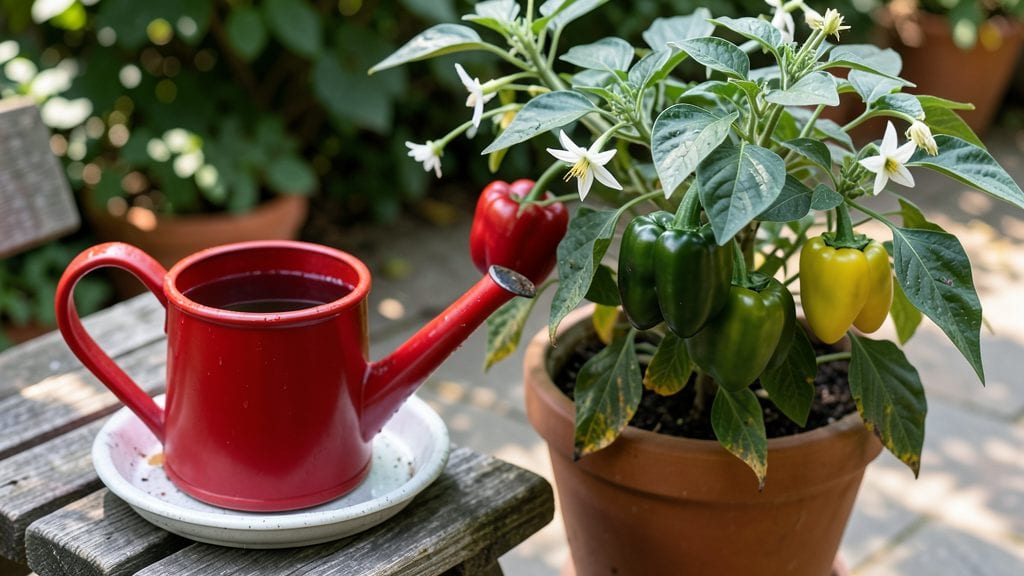
Overwatering pepper plants turns vibrant green leaves into sad yellow patches and stalls your harvest before it even starts. 🌱 I’ve watched my own peppers go from thriving to struggling in just a week because of soggy soil—here’s how to spot the damage and bring them back.
The first clue is yellowing leaves, especially on older growth, paired with soft stems that feel mushy when pressed. Root rot sets in when water crowds out oxygen, smothering roots and cutting off nutrients.
My plants also wilt in the morning despite fresh water, because the roots can’t absorb what they need through compacted, waterlogged soil.
You can still save them by cutting back on water immediately and improving drainage—amend soil with perlite or sand, and move pots to a shadier spot if possible. Within days, you’ll see new green growth as roots recover, and your peppers will bounce back with a vengeance.
Prevention is simpler: stick your finger in the soil before watering—if the top 2 inches are damp, wait another day. Mulch helps too, keeping moisture steady without drowning roots. Trust me, your future harvests will thank you.
Common Causes Of Overwatering
Overwatering pepper plants—whether from well-meaning enthusiasm or simple oversight—can quickly turn your thriving garden into a soggy mess. Understanding the root causes helps you avoid this pitfall and keep your peppers healthy. Here’s why it happens, broken down into key triggers.
Pepper plants despise waterlogged soil, yet many gardeners unknowingly create the perfect swamp for their peppers. Soil that doesn’t drain well—whether due to clay composition, compacted earth, or a lack of organic matter—traps excess moisture around roots. When water can’t escape, roots suffocate from anaerobic conditions (low oxygen), leading to:
- Root rot: Fungal pathogens like Phytophthora or Pythium thrive in soggy soil, attacking roots and cutting off nutrient uptake.
- Yellowing leaves: Chlorosis (yellowing) occurs when roots can’t absorb iron or other nutrients due to oxygen deprivation.
- Stunted growth: Peppers divert energy to surviving water stress instead of producing flowers or fruit.
Actionable fix: Amend heavy clay soil with compost, perlite, or coarse sand to improve drainage. Test your soil’s moisture retention—if water pools after 24 hours, it’s time to act.
Consistency is key, but many gardeners fall into the trap of watering on a rigid schedule rather than checking soil conditions. Rain, humidity, and temperature fluctuations mean your pepper plants’ thirst changes daily. Overwatering often stems from:
- Assuming “more is better”:” Peppers need 1–1.5 inches of water per week (including rain), but some gardeners double or triple that, thinking it’s necessary.
- Morning watering habits: Watering in the evening or without accounting for rainfall leads to prolonged soil saturation.
- Container quirks: Pots dry out faster, but if you water them every day without checking moisture levels, roots drown.
Actionable fix: Use the finger test: Stick your index finger 1–2 inches into the soil. If it’s damp, wait. If dry, water deeply until it drains from the bottom. For containers, lift them—if they’re soggy, hold off.
Pepper plants in containers are high-risk for overwatering because pots trap moisture differently than garden beds. Common container-related causes include:
- No drainage holes: Water pools at the bottom, creating a root prison where roots rot.
- Small pot size: Roots outgrow the container, leading to circling roots that can’t access oxygen or water efficiently.
- Using water-retentive soils: Mixes heavy on peat or coconut coir hold moisture for weeks, suffocating roots.
- Frequent top-ups: Light misting keeps the topsoil wet but doesn’t address deeper moisture levels, tricking growers into thinking plants need more.
Actionable fix:
- Ensure pots have 3+ drainage holes and use a tray to catch excess water.
- Upgrade to larger containers (5+ gallons for mature peppers) with a 50/50 soil mix of potting soil and perlite/pumice.
- Water only when the top 1–2 inches are dry, and empty saucers after 10 minutes to prevent root suffocation.
Humidity and temperature play a sneaky role in overwatering. High humidity slows evaporation, making soil stay wet longer, while cool weather reduces transpiration (the plant’s natural water release). Key triggers:
- Afternoon rain: A downpour can deliver 1+ inches of water in hours, drowning roots if you water again the next day.
- Shady spots: Peppers need 6–8 hours of sun; shade reduces their ability to dry out, increasing rot risk.
- Cold snaps: Below 50°F (10°C), peppers slow growth and absorb less water—but if you keep watering as usual, soil stays saturated.
Actionable fix:
- Use a rain gauge to track weekly rainfall and adjust watering accordingly.
- Move containers to sunnier spots or use reflective mulch to boost evaporation.
- Reduce watering by 30–50% in high humidity (>70%) or cool weather.
Pepper plants can’t tell you they’re overwatered, but they do send subtle clues—if you know what to look for. Common missteps:
- Confusing thirst with wilting: Droopy leaves can mean underwatering… or overwatering. Check soil moisture first!
- Ignoring leaf texture: Dark, mushy leaves or yellowing between veins (not just edges) signal root stress.
- Over-relying on apps: Smart watering tools are helpful, but they can’t account for your specific soil type or microclimate.
Actionable fix:
- Learn the 3-second squeeze test: Gently press a leaf. If it springs back, it’s hydrated; if it stays limp, check soil moisture.
- Observe root health when repotting: Healthy roots are white/firm; rotten roots are black/mushy.
- Keep a watering journal to track patterns and adjust based on plant responses.
How to solve it
If your pepper plants are struggling from too much water, don’t panic—there’s still hope! 🌱 The key is to act quickly and adjust your care routine to restore balance.
Below, we’ve mapped out practical solutions based on the root causes of overwatering, from soggy soil to poor drainage, along with prevention tips to keep your plants thriving.
🔥 1. Drain Excess Water Immediately
If your pepper plants are sitting in waterlogged soil, the first step is to stop the flood. Overwatering creates anaerobic conditions that suffocate roots and invite fungal diseases like root rot. Here’s how to fix it:
- 🍳 Check soil moisture: Stick your finger 1–2 inches into the soil. If it’s damp or sticky, hold off on watering. Pepper plants prefer soil that’s moist but not soggy—think of a wrung-out sponge.
- 👨🍳 Drain the pots or beds:
- For container-grown peppers, lift the pot and tilt it to let excess water pour out. Place it in a saucer or tray to catch runoff, but never let plants sit in standing water.
- For in-ground plants, create shallow trenches around the base to redirect water away from the roots. Use a hose or watering can to gently flush out saturated soil.
- ⏰ Wait before watering again: Give the soil 24–48 hours to dry out before checking moisture levels again. Pepper plants are drought-tolerant once established!
💡 Pro Tip: If your pots lack drainage holes, consider repotting into containers with holes or adding a layer of perlite or coarse sand to the bottom to improve airflow.
🌡️ 2. Improve Soil Drainage
Poor drainage is often the hidden culprit behind overwatering. Amend your soil to ensure water flows freely while retaining enough moisture for roots. Here’s how:
| Problem | Solution |
|---|---|
| Compacted or clay-heavy soil | Mix in organic matter like compost, aged manure, or coconut coir to loosen the soil and improve aeration. |
| Pots without drainage | Drill holes in the bottom of containers (if possible) or place pots on elevated trays to prevent water pooling. |
| No mulch layer | Add a 1–2 inch layer of straw, wood chips, or shredded leaves around the base of plants (keep mulch away from the stem) to regulate moisture and temperature. |
✨ Prevention Tip: Test your soil’s drainage by filling a container with water and timing how long it takes to drain. Ideal drainage should take 10–30 minutes. If it’s slower, amend the soil immediately.
🎯 3. Adjust Your Watering Schedule
Overwatering often stems from routine, not intention. Pepper plants need consistency, but their watering needs change with the seasons and growth stage. Follow these guidelines:
- 📊 Water deeply but infrequently:
- Water when the top 1–2 inches of soil are dry (use a moisture meter for accuracy).
- Aim for 1–1.5 inches of water per week, delivered in one long session (e.g., 10–15 minutes) rather than daily light sprinkles.
- 🌱 Adjust for growth stages:
- Seedlings: Keep soil lightly moist but not wet.
- Mature plants: Reduce frequency—peppers are drought-resistant once established!
- Fruiting stage: Increase water slightly to support pepper development, but avoid soggy soil.
- ⏰ Time it right: Water in the early morning (before 10 AM) to allow foliage to dry quickly, reducing fungal risks.
💡 Pro Tip: Use the "finger test" instead of a schedule. Stick your finger into the soil—if it feels dry, water; if it’s damp, wait. This beats guesswork!
🔪 4. Trim Damaged Foliage
Yellow or mushy leaves are a sign of stress from overwatering. Prune affected leaves to redirect energy to healthy growth and prevent disease spread. Here’s how:
- 🍅 Identify unhealthy leaves: Look for:
- Yellowing (chlorosis)
- Wilted or limp leaves
- Black or brown spots (fungal infection)
- Mushy stems (root rot)
- 🔪 Prune with care:
- Use sterilized scissors or pruners to cut just above a leaf node (the bump where leaves grow).
- Remove only the damaged parts—don’t over-prune, as peppers need foliage for photosynthesis.
- Dispose of pruned leaves away from the garden to avoid spreading disease.
- 🌿 Encourage new growth: After pruning, place the plant in bright, indirect light and resume proper watering. New leaves should emerge within 1–2 weeks.
🎯 Prevention Tip: If root rot is severe (smelly, black roots), you may need to repot the plant into fresh, sterile soil. Trim all infected roots before replanting.
🌱 5. Boost Recovery with Proper Care
Once you’ve addressed the overwatering, give your pepper plants the support they need to bounce back:
- 📊 Fertilize lightly: Wait until new growth appears, then feed with a balanced, water-soluble fertilizer (e.g., 10-10-10) diluted to half strength. Over-fertilizing can burn stressed roots.
- 🌡️ Monitor temperature: Pepper plants thrive in 70–85°F soil temps. If your garden is too cool, use black plastic mulch or a cloche to warm the roots.
- 🍅 Support fruiting: Once peppers start forming, ensure they get 6+ hours of sunlight daily and stake tall varieties to prevent stress.
✨ Long-Term Prevention: Invest in a self-watering system with a moisture sensor or use drip irrigation to deliver water directly to the roots without excess.
Frequently asked questions
Why do my pepper plant leaves turn yellow when I water them regularly?
Yellowing leaves often signal root stress from overwatering. When soil stays too wet, roots suffocate and can't absorb nutrients like iron, causing chlorosis (yellowing between veins). Check if the soil feels soggy—peppers prefer "moist but not soggy" soil. Let the top 1-2 inches dry out between waterings.
How do I know if my pepper plant has root rot from overwatering?
Look for mushy, black roots that smell foul when pulled from the soil. Above ground, you'll see yellow leaves, wilting stems, and possible leaf drop. If caught early, trim the rotten roots and repot in fresh, well-draining soil mix with 50% perlite to improve aeration.
Can I save an overwatered pepper plant if it's already wilting?
Yes, but act fast! Stop watering immediately and let the soil dry completely. Move potted plants to a shadier spot and improve drainage by adding coarse sand or perlite to the soil. Within 3-5 days, you should see new green growth as roots recover.
What's the best way to water pepper plants to prevent overwatering?
Use the "finger test"—stick your index finger 1-2 inches deep into the soil. Water only when it feels dry. For containers, water until it drains from the bottom, then empty saucers after 10 minutes. Morning watering prevents evening moisture buildup that fuels fungal growth.
Will mulch help prevent overwatering in my pepper plants?
Yes! Mulch like straw or wood chips helps regulate soil moisture by reducing evaporation while keeping roots cool. Apply a 1-2 inch layer around plants (but keep it 2 inches away from stems to prevent rot). It also discourages weeds that compete for water.