
Watering
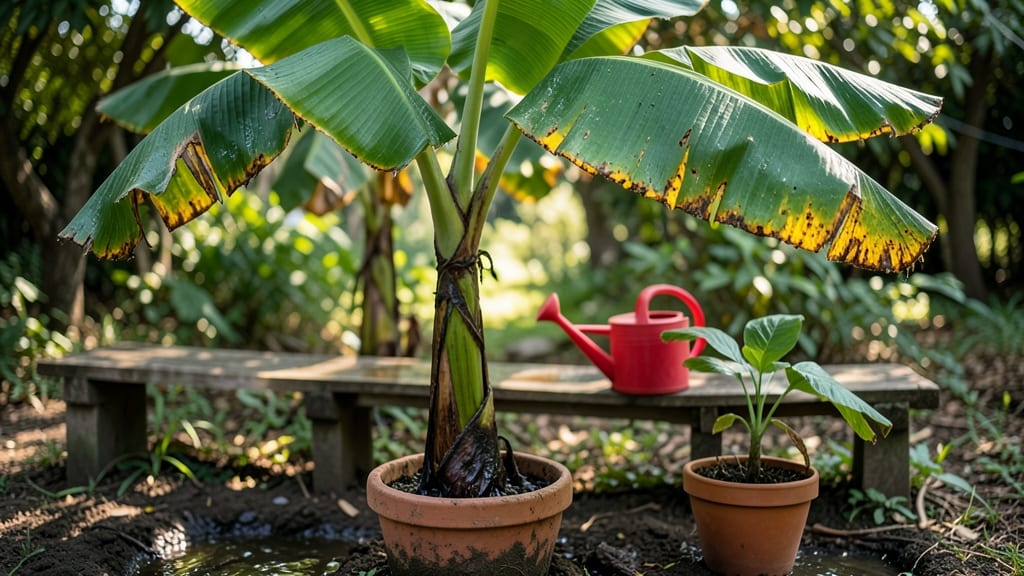
Overwatering banana plants turns their roots into a soggy mess that chokes growth and invites root rot. 🌱 I’ve seen healthy banana plants wilt into sad, yellowing husks from too much water—until I learned the three fixes that bring them back.
The key isn’t just cutting back water; it’s fixing the soil and airflow around those roots.
Banana plants love moisture but hate soggy feet. Most people overwater because they think tropical plants need constant dampness, but banana roots need air too. Poor drainage or heavy clay soil traps water, suffocating roots in weeks.
My first fix? Amending the soil with perlite or coconut coir to create air pockets—it’s like giving roots a breath of fresh air.
Once you adjust watering, you’ll see new leaves unfurling in just 2-3 weeks. The plant won’t just survive—it’ll bounce back with glossy, deep-green fronds and even produce fruit again.
The secret is patience: let the top 6 inches of soil dry out between waterings, and watch your banana plant rebound.
This works for both potted and in-ground banana plants, whether you’re in a warm climate or growing in containers. The same fixes apply whether your plant is a dwarf Cavendish or a towering Lady Finger—just scale the soil adjustments to the pot size. Let’s get those roots healthy again.
Root Rot’s Silent Triggers
Banana plants may look tropical and resilient, but they’re surprisingly delicate when it comes to water—especially when it’s too much. Overwatering isn’t just about soggy soil; it’s a chain reaction that starts with poor drainage and ends with a plant struggling to breathe.
Let’s break down the real culprits behind this common (and costly) mistake.
Banana plants thrive in well-draining soil because their roots need oxygen to function. When soil stays waterlogged, oxygen gets locked out, and roots suffocate—leading to Pythium or Phytophthora fungi, which cause root rot. Here’s why it happens:
- Clay-heavy soil: Holds water like a sponge, preventing excess moisture from escaping.
- Compacted soil: Reduces pore space, trapping water around roots instead of letting it flow downward.
- No raised beds or containers: Flat ground or shallow pots with drainage holes that get clogged turn into water reservoirs.
Pro tip: 💡 Mix in perlite, coconut coir, or orchid bark (20-30%) to improve aeration. If your banana is in the ground, consider a swale (a shallow trench) to redirect excess water.
Banana plants love consistency—but drenching them once a week (or worse, letting them sit in standing water) is a fast track to rot. Here’s the science:
- Osmotic stress: Roots can’t absorb water efficiently when the soil is already saturated, leading to nutrient deficiencies (even if you’re fertilizing).
- Anaerobic bacteria: Without oxygen, harmful microbes thrive, breaking down root cells and releasing toxins.
- Fungal spores activate: Pathogens like Fusarium lie dormant in dry soil but explode in wet conditions.
Fix it: 🌡️ Water deeply 2-3 times per week (adjust for climate) and always let the top 2-3 inches of soil dry out between sessions. Use a moisture meter to avoid guesswork!
Potted banana plants are at high risk because containers often lack proper drainage—or worse, have drainage holes that get blocked by roots or debris. Here’s what goes wrong:
| Problem | Why It Matters |
|---|---|
| No drainage holes | Water pools at the bottom, creating a perfect rot environment. |
| Clogged holes | Roots grow into holes, sealing them shut over time. |
| Small pots | Roots fill the space quickly, leaving no room for water to evaporate. |
Solution: ✨ Upgrade to a minimum 15-gallon pot with multiple drainage holes. Elevate pots on feet to prevent saucer water from seeping back in. Pro move: Line the bottom with a layer of gravel or broken pottery to boost drainage.
Next up: How to spot the signs of overwatering before it’s too late—and the 3-step rescue plan to save your banana plant.
Revive Your Banana Plant Now
Overwatering can feel like a death sentence for your banana plant, but with the right steps, you can nurse it back to health—even if roots are already suffering. The key is acting fast, adjusting your care routine, and giving your plant the space it needs to recover.
Below are practical, step-by-step solutions tailored to the most common causes of overwatering damage, plus prevention tips to keep your banana thriving long-term.
If your banana plant’s leaves are turning yellow or brown at the base, root rot may already be setting in. Here’s how to tackle it:
1️⃣ Stop Watering Immediately
🔥 Why? Wet soil suffocates roots, accelerating rot. 👨🍳 What to do:
- Pause all watering for 3–5 days to let the soil dry out.
- If the pot has drainage holes, lift it to check moisture—if the top 2–3 inches are soggy, wait longer.
- Pro tip: 💡 Use a moisture meter or stick your finger 2 inches deep; if it’s damp, hold off.
2️⃣ Remove the Plant & Inspect Roots
🔪 What to do:
- Gently remove the plant from its pot and shake off excess soil to assess root health.
- Healthy roots are firm and white; rotten roots are mushy, black, or smell foul.
- Trim away all blackened or mushy roots with sterilized scissors (rubbing alcohol works).
3️⃣ Repot in Fresh, Well-Draining Soil
🥘 What to do:
- Choose a clean pot (preferably terracotta) with drainage holes—plastic traps moisture longer.
- Use a lightweight, fast-draining mix like:
- 50% cactus/succulent soil
- 30% perlite or pumice
- 20% compost or worm castings (for nutrients)
- Repot carefully, ensuring the crown (where the stem meets the soil) stays above soil level to prevent rot.
4️⃣ Adjust Watering for Recovery
⏰ What to do:
- First 2 weeks: Water only when the top 3–4 inches of soil are bone-dry (test with your finger).
- After 2 weeks: Gradually return to a weekly watering schedule, but never let soil stay wet.
- Pro tip: 🌡️ In humid climates, water only in the morning so excess moisture evaporates.
If your banana plant’s soil stays damp for days after watering, poor drainage or overpotting is the culprit.
1️⃣ Improve Drainage in the Pot
🔧 What to do:
- Add a drainage layer: Fill the bottom 1–2 inches of the pot with gravel, broken pottery, or lava rocks before adding soil.
- Upgrade your pot: If using a cachepot (decorative outer pot), ensure the inner pot has holes and is only 1–2 inches smaller than the outer pot.
- Pro tip: ✨ For heavy clay pots, drill extra drainage holes if needed—bananas hate soggy feet!
2️⃣ Choose the Right Soil Mix 📊 What to do:
Banana plants hate compacted or clay-heavy soil.
Switch to a chunky, airy mix like: - 60% coconut coir or peat moss - 20% perlite - 20% orchid bark or rice hulls - Avoid garden soil—it compacts and retains too much moisture.
3️⃣ Water Less Frequently but Deeply
💧 What to do:
- Water deeply (until it runs out the drainage holes) once a week in warm weather, every 10–14 days in winter.
- Check soil moisture before watering—stick your finger in:
- Top 1 inch dry? Water lightly.
- Top 2–3 inches dry? Deep water.
- Still damp? Wait 2 more days.
Once your banana plant is on the mend, keep these habits to avoid repeating the mistake:
💡 Use the "Finger Test" Daily
- Stick your finger 2–3 inches into the soil—if it’s dry, water; if damp, wait.
- Morning watering is best—evaporation happens faster in daylight.
🌡️ Adjust for Season & Climate
- Summer: Water every 5–7 days (more if in full sun).
- Winter: Water every 2–3 weeks (growth slows, so less water is needed).
- Humid areas? Reduce watering by 30%—humidity = slower evaporation.
🏺 Pick the Right Pot & Location
- Pot size: Use a container only 1–2 inches wider than the plant’s root ball. Oversized pots = more soil = more moisture retention.
- Location: Place in bright, indirect light (no harsh afternoon sun).
A south- or west-facing window is ideal. - Pro tip: 🎯 If your banana is outdoors, group it with other plants—mulch retains moisture, but keep mulch 2–3 inches away from the stem.
Final Note: 🌟 Banana plants are forgiving if you catch overwatering early. With these fixes, you’ll see new growth in 4–6 weeks—just stay patient and consistent! For severe cases, don’t hesitate to propagate healthy pseudostems (the false stems) to grow new plants.
Frequently asked questions
How do I know if my banana plant has root rot from overwatering?
Check for yellowing or blackened leaves at the base, a foul smell from the soil, and roots that are mushy or black rather than firm and white. If the plant feels unstable when pulled gently, that’s another red flag—root rot weakens the root structure.
Can I save a banana plant if the roots are already rotting?
Yes! First, stop watering completely for 3-5 days to dry the soil. Remove the plant, trim away all blackened roots with sterilized scissors, and repot in fresh, fast-draining soil with perlite or coconut coir. With proper care, new roots can form within 4-6 weeks.
Why does my banana plant wilt even when the soil feels dry?
This often means compaction or poor drainage—water may be pooling below the surface. Test by sticking your finger 3 inches deep; if it’s damp, your soil isn’t drying properly. Try adding perlite or repotting in a chunkier mix to improve airflow.
How often should I water a banana plant in a pot vs. in the ground?
Potted bananas need water every 5-7 days (adjust for humidity), while in-ground plants may only need once a week in warm climates. Always let the top 2-3 inches of soil dry out between waterings—use a moisture meter for accuracy!
Will fertilizing help a banana plant recovering from overwatering?
Wait until new growth appears before fertilizing—stressed roots can’t absorb nutrients well. Once recovered, use a balanced 10-10-10 fertilizer lightly every 4-6 weeks during growing season. Over-fertilizing soggy soil just adds to the problem!