
Watering
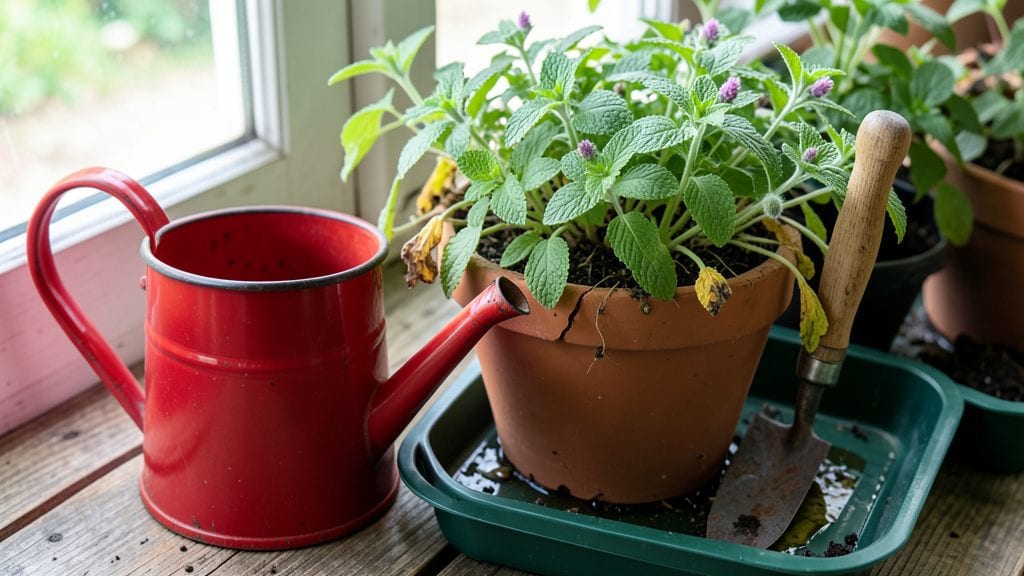
Your mint plant’s sad, droopy leaves aren’t a death sentence—overwatered mint can absolutely bounce back with the right care. 🌿 I’ve nursed more than my share of soggy mint back to life, and the secret isn’t complicated: it’s about giving roots room to breathe again.
The moment you notice yellowing leaves or mushy stems, you’ve got a window to fix it before rot sets in.
First, stop watering completely for 3-5 days to let the soil dry out. Then, check the roots—if they’re black and smelly, trim the affected parts and repot in fresh, well-draining soil mixed with perlite.
Mint thrives in pots with drainage holes, so if yours doesn’t have them, it’s time to upgrade. The goal? A root system that stays moist but never soggy.
Within 2 weeks, you’ll see new growth pushing through as the plant recovers. Prune any remaining yellow or mushy stems to redirect energy, and keep future waterings light—only when the top inch of soil feels dry.
With this reset, your mint will come back stronger, producing fresh leaves faster than before.
This works for both potted mint and container gardens, though larger plants might need a bigger pot. The key is patience—mint’s resilient, but it can’t outgrow poor drainage. Once you’ve mastered this, you’ll spot overwatering early and keep your plants thriving all season.
Root Rot’s Silent Invaders
When your mint plant starts wilting despite a soggy soil bed, the culprit is often overwatering—but it’s rarely just about the water itself. Root rot thrives in a perfect storm of poor drainage, excess moisture, and environmental factors that create the ideal conditions for fungal and bacterial growth.
Let’s break down the real reasons your mint plant is drowning in its own pot.
Mint plants love moisture, but their roots hate being waterlogged. Without proper drainage, excess water pools at the bottom of the pot, cutting off oxygen to the roots. Here’s why it happens:
- Compacted or clay-heavy soil: Dense soil repels water instead of absorbing it, leaving roots suffocating in a wet, anaerobic environment. Fun fact: Clay holds 10-15% more water than sandy soil, making it a root rot magnet.
- No drainage holes: Pots without holes act like water traps. Even "self-watering" containers can backfire if they’re not designed for airflow.
- Overpotting: A pot that’s too large for your mint plant holds more water than the roots can process, leading to stagnation.
Pro tip: 💡 Test your soil’s drainage by filling a pot with water, then timing how long it takes to drain. If it takes more than 30 minutes, your soil is too dense.
Mint plants are resilient, but they don’t need constant hydration. Common watering mistakes that lead to root rot include:
- Watering on a schedule: Mint thrives in consistently moist (not soggy) soil. If you water every day without checking moisture levels, you’re risking root suffocation.
- Ignoring weather conditions: Rainy days + humid climates = extra moisture your plant doesn’t need. Mint roots can rot in as little as 48 hours of continuous wetness.
- Using cold water: Chilly water shocks the roots, slowing their ability to absorb oxygen. Stick to room-temperature water to avoid stress.
Actionable fix: 🌡️ Stick your finger 1-2 inches into the soil before watering. If it’s damp, wait. If it’s dry, water thoroughly but only until the top inch is moist.
Root rot isn’t just about water—it’s often a fungal or bacterial infection triggered by excess moisture. The most common culprits:
| Pathogen | How It Starts | Signs to Watch For |
|---|---|---|
| Phytophthora (Water Mold) | Spreads in stagnant, oxygen-deprived water. Thrives in pots without drainage. | Black, mushy roots; yellowing leaves that don’t wilt (they stay limp but green). |
| Pythium (Oomycete) | Loves cool, wet conditions. Common in overpotted mint with poor airflow. | White, cottony growth on roots; leaves turn brown and crispy at the edges. |
| Erwinia (Bacterial Soft Rot) | Enters through wounds (like overhandling) in soggy soil. | Roots smell putrid; stems ooze when cut; plant collapses suddenly. |
Prevention tip: ✨ Sterilize tools with 70% isopropyl alcohol before pruning, and avoid "bottom-watering" (placing the pot in a tray of water) unless the soil is bone-dry.
Heat and humidity don’t just wilting leaves—they speed up root rot. Here’s how:
- High humidity (70%+): Traps moisture around leaves and soil, creating a fungal paradise. Mint leaves act like sponges, absorbing water and blocking airflow to the roots.
- Extreme heat: Soil heats up faster than roots can process moisture, leading to thermal shock and weakened defenses against pathogens.
- Cold roots: If your mint is in a drafty spot (like near an AC vent), roots struggle to absorb oxygen, making them twice as vulnerable to rot.
Quick fix: 🔥 Move your mint to a spot with indirect light and moderate humidity (40-60%). Use a small fan on low to improve airflow without stressing the plant.
Reviving Your Drowning Mint
If your mint plant is looking sad and soggy, don’t panic—it’s time to roll up your sleeves and give it some TLC! Overwatering can lead to root rot, yellowing leaves, and a generally unhappy herb, but with the right steps, you can nurse it back to health.
Below, we’ll break down the cause-specific fixes to rescue your mint and keep it thriving. Plus, we’ll share some prevention tips to avoid future water woes.
The first and most critical move? Cut off the water supply until the soil has a chance to dry out. Mint plants are hardy but not water-loving—they prefer their roots to dry slightly between waterings.
- Check the soil: Stick your finger about an inch deep into the soil. If it’s damp or sticky, wait another day before checking again. - Skip the schedule: Even if you water every few days, resist the urge.
Overwatering is the enemy here. - Drainage check: If your pot has no drainage holes, transfer the plant to a new container with holes ASAP. Without proper drainage, water pools at the roots, creating a rot-friendly environment.
> 💡 Pro Tip: If your mint is in a saucer or tray, empty it after watering to prevent the plant from sitting in standing water.
Once the soil is slightly dry (but not bone-dry), it’s time to inspect the roots and prune any damaged foliage.
👨🍳 Check the Roots
- Gently remove the plant from its pot and shake off excess soil.
- Look for black, mushy, or foul-smelling roots—these are signs of rot.
Healthy roots should be firm and white or light tan. 3. Snip the bad roots with clean scissors or pruning shears, leaving only the firm, white roots attached.
🥘 Trim the Leaves
- Remove any yellow, brown, or wilted leaves—these won’t recover and can attract pests or fungus.
- Cut back about one-third of the healthy growth to help the plant redirect energy to root recovery.
> ✨ Quick Fix: If the roots are severely rotted (less than 20% healthy), consider propagating from the remaining healthy stems in fresh soil.
Now that you’ve trimmed the damage, it’s time to give your mint a fresh start in soil that won’t suffocate its roots.
🌱 Choose the Right Pot and Soil
- Pot: Opt for a container with drainage holes (if repotting). Terracotta pots are great because they allow moisture to evaporate faster.
- Soil: Use a lightweight, well-draining potting mix designed for herbs or vegetables.
Avoid garden soil or heavy mixes that retain too much moisture. - Add perlite or sand: Mix in 10-20% perlite, sand, or vermiculite to improve drainage.
🌿 Repotting Steps
- Fill the new pot one-third full with fresh soil.
- Place the trimmed plant in the pot, ensuring the base of the stem sits just above the soil line.
- Fill in around the roots with soil, pressing gently to secure the plant.
- Water lightly—just enough to moisten the soil, not soak it.
> 🎯 Prevention Tip: Elevate your pot on a saucer or tray with pebbles underneath to improve airflow and prevent waterlogging.
Now that your mint is back in dry soil, it’s time to rewrite your watering routine.
- Water only when the top inch of soil is dry. Stick your finger in to test—if it’s dry, it’s time to water. - Water deeply but infrequently.
When you do water, soak the soil until it drains from the bottom, then empty the saucer. - Morning watering is best. Watering in the morning gives leaves time to dry, reducing the risk of fungal issues. - Avoid misting. Mint doesn’t need humidity—stick to watering the soil.
> 🌡️ Climate Note: If you live in a humid area, your mint may need even less water. Err on the side of underwatering rather than overwatering.
Once your mint is on the mend, keep these habits to avoid future overwatering disasters:
- Know your mint’s thirst: Mint typically needs water every 5-7 days in warm weather, but adjust based on your climate and pot size.
- Monitor the weather: Skip watering if rain is in the forecast.
- Use a moisture meter: These inexpensive tools tell you exactly when the soil is dry enough to water.
- Group plants with similar needs: Keep your mint with other herbs that like dry soil (like rosemary or thyme) to avoid mixed-up watering schedules.
- Harvest regularly: Pruning encourages new growth and prevents the plant from becoming overcrowded, which can lead to poor air circulation and moisture retention.
Your mint plant is tough—with these steps, it’ll bounce back in no time! 🌿💚 Just remember: when in doubt, wait another day before watering. Your herb garden will thank you.
Frequently asked questions about soggy mint plants
How do I know if my mint plant is overwatered vs. underwatered?
Check the soil first—if it’s constantly damp or has a sour smell, you’re overwatering. Overwatered mint shows yellowing leaves, drooping stems, and black/mushy roots, while underwatered mint has crispy brown edges and dry soil pulling away from pot sides. The key difference? Overwatered plants wilt despite wet soil.
Can I save mint with root rot?
Yes! Trim away all black/mushy roots and repot in fresh, well-draining soil with perlite. Water lightly for 3-5 days to let roots recover. If only 20% of roots are healthy, propagate the healthy stems in new pots instead. Most mint recovers within 2 weeks with proper care.
Why does my mint plant wilt even when the soil is wet?
This is classic root rot—waterlogged soil cuts off oxygen to roots, causing them to suffocate. The plant can’t absorb water even when it’s present. Check for black roots and improve drainage immediately by repotting in a container with holes and lighter soil.
How often should I water mint to prevent overwatering?
Water mint only when the top 1 inch of soil feels dry. In warm weather, this is typically every 5-7 days, but adjust for humidity—skip watering if rain is forecasted. Always use pots with drainage holes and empty saucers after watering to prevent soggy roots.
Will my mint grow back after overwatering damage?
Mint is one of the hardiest herbs and often recovers fully if you catch root rot early. Prune damaged leaves, improve drainage, and resume normal care. New growth will appear within 1-2 weeks as the plant focuses energy on healthy roots. Harvest regularly to encourage bushier regrowth.