
Plants
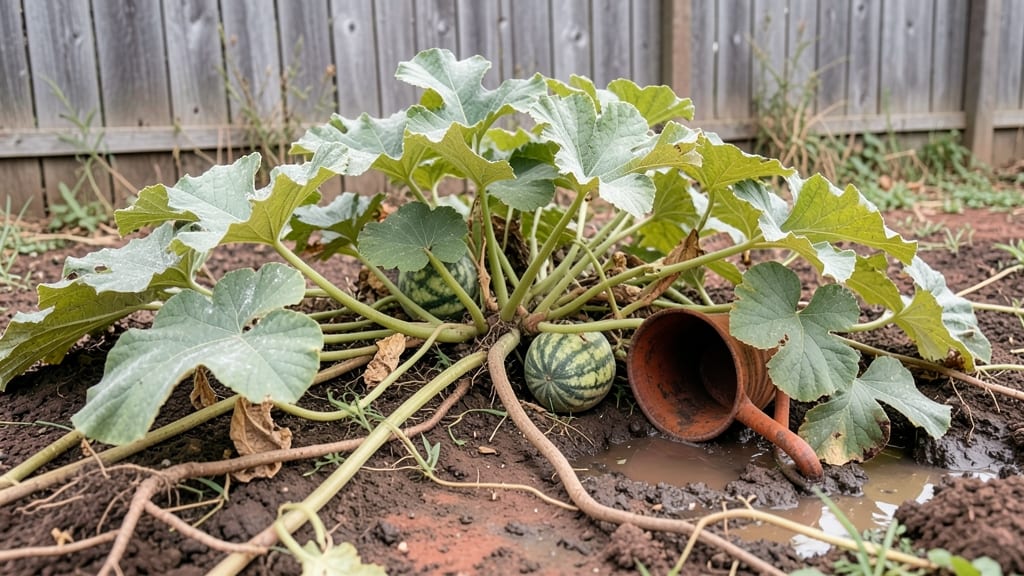
An overwatered watermelon plant doesn’t need a funeral—just a little TLC. 🌱 I’ve turned soggy, wilted vines back to thriving with just three targeted fixes, and you can too. The telltale signs—yellowing leaves, mushy stems, or that musty smell—mean your plant’s drowning, not wilting from thirst.
Here’s the thing—watermelons hate wet feet. Too much water crowds out oxygen, inviting root rot and fungal infections. My first mistake was watering on a schedule, but these plants need a moisture check: stick your finger 2 inches deep—if it’s damp, wait.
Proper drainage is non-negotiable; raised beds or containers with holes save the day.
You’ll see improvement within days: leaves perk up, new growth emerges, and those vines start climbing again. The key is balancing soil moisture—never soggy, never bone-dry—and adjusting your watering rhythm based on weather. A healthy plant rewards you with sweet, crisp fruit by midsummer.
Works for both in-ground and container plants, and the same rules apply to cucumbers and squash. Let’s get those roots breathing again—your watermelon’s future depends on it.
Root Causes Of Overwatering
When your watermelon plant starts looking more like a soggy sponge than a thriving vine, the issue often traces back to a few key factors. Understanding why this happens helps you adjust care routines before the plant’s health spirals.
Let’s break down the science behind the soggy soil and wilting leaves.
Watermelon plants hate sitting in waterlogged soil because their roots need oxygen to absorb nutrients efficiently. If your garden bed or container lacks proper drainage, excess water pools around the roots instead of draining away. Over time, this creates an anaerobic (oxygen-deprived) environment, where:
- Root rot sets in: Fungal pathogens like Phytophthora and Pythium thrive in soggy conditions, attacking root tissues.
- Nutrient uptake stalls: Roots suffocate, unable to absorb water or minerals, even if the soil looks moist.
- Toxins build up: Excess moisture leaches essential nutrients (like nitrogen) out of reach, while harmful salts accumulate.
Actionable fix: Test your soil’s drainage by digging a 6-inch hole, filling it with water, and timing how long it takes to drain. If it’s slower than 4 hours, amend with perlite, coarse sand, or compost to improve aeration.
Watermelons are heavy drinkers, but consistency matters more than volume. Common watering mistakes include:
- Ignoring soil moisture: Sticking your finger 1–2 inches into the soil is the gold standard. If it’s damp, wait.
- Watering on a schedule: Plants need water when the soil dries out—not every Monday and Thursday.
- Drenching instead of soaking: Light, frequent watering encourages shallow roots; deep, infrequent watering (1–2 inches per week) trains roots to seek moisture below the surface.
Pro tip: Use a moisture meter or the "squeeze test" (grab a handful of soil—if it crumbles easily, it’s dry enough). Early morning watering (before 10 AM) reduces evaporation and fungal risks.
Not all growing spaces are created equal. Watermelons in containers or compacted garden beds face unique challenges:
| Issue | Why It Happens | Solution |
|---|---|---|
| Small pots | Roots outgrow the container, leading to root-bound stress and poor water control. | Upgrade to at least a 15-gallon pot with drainage holes. |
| Clay or hardpan soil | Compacted layers act like a water trap, preventing drainage. | Loosen soil with a garden fork or mix in organic matter (compost, coconut coir). |
| No mulch | Exposed soil dries unevenly, causing surface crusting that repels water. | Apply 2–3 inches of straw or wood chips to retain moisture and regulate temperature. |
Key insight: Watermelons need space. In containers, choose bush varieties (like ‘Sugar Baby’) to limit root competition.
Humidity, rainfall, and temperature throw off watering routines. For example:
- High humidity: Slows evaporation, making soil stay wet longer than expected.
- Rainy seasons: A 1-inch downpour can satisfy a watermelon’s weekly needs—overwatering afterward drowns roots.
- Cold snaps: Plants drink less when temperatures drop, but overwatering can still cause rot.
Solution: Adjust watering based on local weather forecasts and use a rain gauge to track natural precipitation. In humid climates, reduce watering by 20–30%.
Next up: How to diagnose if your plant is truly overwatered (and what to do about it!).
Fix Overwatered Watermelon Plants
Reviving an overwatered watermelon plant starts with identifying the root of the problem—literally. Too much moisture can drown roots, cause fungal diseases, or even attract pests, but the good news is that with the right steps, your plant can bounce back.
Here’s how to diagnose and fix the issue, plus tips to keep your watermelon thriving.
If your watermelon plant is already showing signs of overwatering—yellowing leaves, mushy stems, or a foul smell—halt watering right away. Let the soil dry out for at least 24–48 hours to prevent further damage. This gives the roots a chance to recover and reduces the risk of rot.
Pro Tip: 💡 If your soil feels soggy or smells like rot, it’s a clear sign to pause watering. Stick your finger 1–2 inches into the soil; if it’s damp, wait longer before watering again.
Poor drainage is often the culprit behind overwatered plants. If water pools on the surface or drains slowly, it’s time to take action.
🔧 Fixing Drainage Issues
- Amend the soil: Mix in compost, perlite, or coarse sand to improve aeration and drainage.
Aim for a well-draining potting mix (50% soil, 30% compost, 20% perlite/sand). - Repot if needed: If the plant is in a container, transfer it to a pot with drainage holes and fresh, well-draining soil. - Raised beds help: If growing in the ground, consider a raised bed with a mix of soil and organic matter to prevent waterlogging.
Pro Tip: ✨ For container plants, terracotta pots dry out faster than plastic, so they’re a great choice for watermelons.
Watermelons need consistent moisture but hate soggy roots. Follow these guidelines to avoid overwatering in the future:
- Water deeply but less often: Instead of daily shallow watering, give your plant 1–2 inches of water per week, adjusting for rain.
- Water at the base: Avoid wetting the leaves to prevent fungal diseases like powdery mildew.
- Morning watering is best: Watering in the early morning allows excess moisture to evaporate during the day.
- Mulch to retain moisture: Apply 2–3 inches of mulch (straw or wood chips) around the base to keep soil moist without drowning the roots.
Pro Tip: 🎯 Use a moisture meter or the finger test to check soil moisture before watering. If the top 1–2 inches are dry, it’s time to water.
If overwatering has led to yellow leaves, black spots, or mold, your plant may have a fungal or bacterial infection. Act fast to prevent spread:
🧴 Natural Remedies
- Neem oil spray: Mix 1 tsp neem oil + 1 tsp mild soap + 1 quart water.
Spray on leaves (avoid direct sun) to kill fungi. - Baking soda solution: For powdery mildew, spray a mix of 1 tbsp baking soda + 1 quart water + a few drops of soap weekly. - Copper fungicide: For severe infections, use an organic copper fungicide as directed.
🚫 Remove Damaged Parts
- Trim yellow, mushy, or blackened leaves with sterilized scissors to prevent the infection from spreading.
- Dispose of infected plant debris far from your garden to avoid reinfection.
Pro Tip: 🌡️ Improve airflow by pruning nearby plants or spacing vines properly—fungi thrive in humid, stagnant conditions.
Once your watermelon plant is on the mend, keep these preventive measures in mind:
| Problem | Solution | Prevention Tip |
|---|---|---|
| Compacted soil | Add perlite or sand to soil | Test soil drainage before planting |
| No drainage holes | Repot in containers with holes | Always use pots with drainage |
| Inconsistent watering | Stick to a schedule | Use a smart watering timer for containers |
| Heavy rainfall | Adjust watering frequency | Plant in slightly elevated areas |
| Poor mulching | Apply 2–3 inches of mulch | Use straw or wood chips for best results |
Pro Tip: 💡 Drip irrigation is a game-changer—it delivers water directly to the roots without wetting leaves, reducing overwatering risks.
With proper care, most watermelon plants show signs of improvement in 1–2 weeks. Focus on:
- New growth (healthy green leaves)
- Firm stems (no more mushiness)
- Stable soil moisture (not soggy or bone-dry)
If your plant is severely damaged (rotting stems, no new leaves), it may not recover—but don’t give up! Sometimes cutting back healthy vines and letting the plant regrow from the base works wonders.
Final Thought: 🌿 Overwatering is fixable, but the key is consistency. Adjust your watering habits, improve drainage, and keep an eye out for infections. With these steps, your watermelon plant will be back to thriving—and you’ll be enjoying juicy, homegrown fruit in no time!
Frequently asked questions
How can I tell if my watermelon plant is overwatered vs. underwatered?
Check the soil first—stick your finger 1-2 inches deep. If it's damp, you're likely overwatering. Look for yellowing leaves, mushy stems, or a foul smell from the soil. Underwatered plants have crispy brown edges on leaves and dry, pulling soil. The key difference: overwatered plants feel soggy, while underwatered ones feel bone-dry.
Can I save a watermelon plant with root rot from overwatering?
It depends on how severe it is. If only the outer roots are affected, trim away the rotten parts with clean scissors and repot in fresh, well-draining soil. For advanced rot, you may need to cut back healthy vines and let the plant regrow from the base. Always use a pot with drainage holes and avoid watering until the soil is completely dry. Recovery takes 2-3 weeks if caught early.
What’s the best way to fix poor drainage in my garden bed?
Loosen compacted soil with a garden fork, then mix in compost, perlite, or coarse sand to improve aeration. For severe cases, create a raised bed with a mix of 50% soil, 30% compost, and 20% perlite. If planting in containers, choose terracotta pots (they dry faster than plastic) and never skip drainage holes. Test drainage by filling a hole with water—it should drain within 4 hours.
Will mulch help prevent overwatering in watermelon plants?
Yes, but it’s about balance. Apply 2-3 inches of straw or wood chips around the base to retain moisture and regulate soil temperature. The key is to keep mulch 2 inches away from the stem to prevent rot. Mulch helps by reducing evaporation, so you’ll water 20-30% less while keeping roots consistently moist—not soggy. It’s especially useful in hot climates where soil dries out quickly.
How often should I water watermelon plants after fixing overwatering?
Wait until the soil is completely dry to 1-2 inches deep, then water deeply to 1-2 inches per week, adjusting for rain. Use the finger test: if the topsoil feels dry, it’s time. Water in the early morning to reduce evaporation and fungal risks. Avoid light, frequent watering—it encourages shallow roots that can’t handle drought. For containers, check soil moisture daily in extreme heat.