
Watering
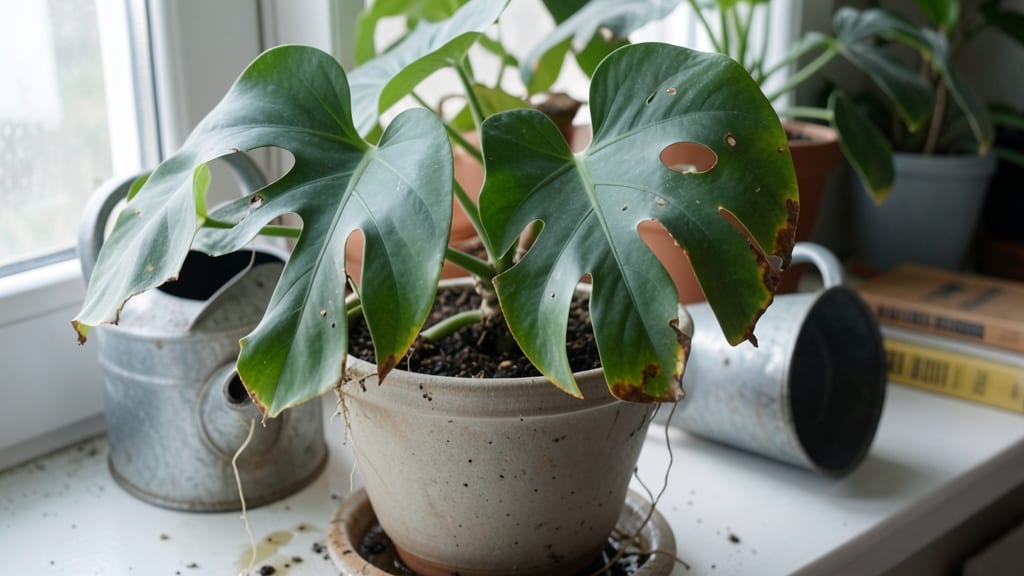
That overwatered indoor plant, once lush and vibrant, now droops pitifully—and root rot is the likely culprit. I’ve nursed more overwatered plants back to health than I can count, and the first step is always the same: stop watering like it’s a cactus in the desert.
The good news? Most plants bounce back faster than you’d expect once you catch it early.
Root rot starts when soil stays soggy for days, cutting off oxygen to the roots. You’ll see yellowing leaves, a foul smell from the pot, and stems that feel mushy when you gently squeeze them.
The fix isn’t complicated—just 3 simple steps—but it does require acting fast. Even my black thumb can save a plant if we tackle this right away, and I’ll show you exactly how.
By the time you’re done, your plant will be back on track with fresh, vibrant growth in just a few weeks. You’ll learn to spot the early warning signs—like leaves that feel limp but don’t wilt completely—and adjust your watering routine so this never happens again.
Trust me, your green thumb is about to get a major confidence boost.
This works for everything from fussy ferns to tough-as-nails snake plants. Let’s turn that sad, soggy mess into a thriving showstopper before it’s too late—your plant’s survival depends on it.
Why It Happens
Overwatering your indoor plants might seem like a harmless habit, but it can quickly turn into a silent killer—especially when root rot creeps in. Understanding the root causes (pun intended) helps you avoid this common pitfall. Let’s break down why it happens so you can keep your green friends thriving.
Even the most well-meaning plant parent can fall into the trap of assuming their pot has adequate drainage. But here’s the science: waterlogged soil cuts off oxygen supply to roots, suffocating them over time. This happens when:
- Pots lack drainage holes – Without exits for excess water, moisture pools at the bottom, creating a soggy, anaerobic environment where harmful bacteria and fungi thrive. - Soil compacts over time – Dense or clay-heavy soils hold water like a sponge, slowing drainage.
Even "well-draining" mixes can compact if not amended with perlite, vermiculite, or orchid bark. - Root-bound plants – When roots fill the pot completely, they can’t spread efficiently, leading to congestion and poor water absorption.
Actionable fix: Always use pots with drainage holes and mix in 20-30% organic matter (like coconut coir or compost) to improve aeration.
Plants don’t need water every time the topsoil feels dry—they need it when the root zone is actually thirsty. Common mistakes include:
- Watering on a fixed schedule – Ignoring seasonal changes (e.g., winter dormancy) or humidity levels means you might drown roots when they’re already hydrated. - Using the "finger test" incorrectly – Sticking your finger 1-2 inches deep (not just the surface) tells you the real story.
If it’s damp, wait. - Mistaking thirst for wilting – Some plants (like succulents) shrivel after they’ve dried out completely. Others (like ferns) thrive in consistently moist—but not soggy—conditions.
Pro tip: 🌡️ Weigh your pot—if it’s lighter than usual, it’s time to water. If it’s still heavy, hold off!
Your home’s environment plays a bigger role than you think. High humidity + cool temps = slower evaporation, meaning water lingers in the soil longer. This is especially risky for:
- Bathrooms or kitchens – Steam and moisture create a greenhouse effect, trapping water in pots.
- North-facing windows – Less sunlight means slower transpiration (the plant’s natural water release process).
- Grouped plants – Clusters of pots increase ambient moisture, mimicking a jungle—great for tropical plants, disastrous for drought-tolerant ones.
Solution: 💡 Space plants apart and use a hygrometer to monitor humidity. Aim for 40-60% humidity for most houseplants.
Not all plants have the same tolerance for moisture. Matching a thirsty plant to a dry climate (or vice versa) is a recipe for root rot. For example:
- Tropical plants (e.g., Monsteras, Calatheas) need consistent moisture but hate waterlogged roots.
- Succulents (e.g., Snake Plants, ZZ Plants) store water in their leaves and drown in soggy soil within days.
- Bulbous plants (e.g., Peace Lilies, Amaryllis) need dry periods between waterings to prevent rot.
Quick check: 📊 Research your plant’s native habitat—if it grows in swamps, it can handle more water; if it’s from deserts, treat it like a cactus.
Root rot doesn’t happen overnight—it’s a slow, silent process. By the time you see:
- Yellowing leaves (chlorosis from oxygen deprivation)
- Mushy, black stems (fungal growth)
- Stunted growth or wilting (roots can’t absorb nutrients)
…it’s often too late for a full recovery. Prevention is key! Check soil moisture weekly and never let a pot sit in saucers of standing water.
Key takeaway: Overwatering is rarely about how much you water—it’s about how often, how well your pot drains, and whether your plant’s needs align with your care routine. Adjust one (or all) of these factors, and you’ll keep root rot at bay! 🌱
Fixing Overwatered Plants Fast
Now that you know the signs and causes of overwatering, let’s roll up our sleeves and get your leafy friend back to health! The good news? Root rot isn’t always a death sentence—with the right steps, you can nurse your plant back to life.
Below, we’ll map out practical fixes for each common cause, plus prevention tips to keep your green buddy thriving long-term.
Cause: Excessive or frequent watering without drying periods. Fix: Hit the pause button on your watering schedule. Let the soil dry out completely before touching it again. This gives roots a chance to recover and prevents further suffocation.
How to do it:
- 🚰 Skip watering for 1–2 weeks (yes, really!). Most plants can survive this if they’re not severely rotted.
- Check soil moisture with your finger—if the top 1–2 inches feel damp, wait longer.
- Move to a drier spot (like a windowsill away from humid bathrooms) to speed up evaporation.
💡 Pro Tip: If your plant is in a saucer or cache pot, empty excess water immediately after watering. Stagnant water is a root rot magnet!
Cause: Soft, mushy roots or blackened stems from fungal/bacterial rot. Fix: Prune away the worst of it before repotting. Think of this as a spa day for your plant—rough at first, but necessary for renewal.
How to do it:
- 🔪 Sterilize your tools: Wipe scissors or pruners with rubbing alcohol to avoid spreading infection.
- 🌿 Snip dead leaves/stems: Remove any yellow, brown, or mushy growth. Cut back to healthy green tissue.
- 👀 Inspect the roots: If repotting, rinse roots gently under lukewarm water. Trim black, slimy, or mushy roots with clean scissors. Keep only firm, white or tan roots.
- 🌳 Let it air-dry: Place the trimmed plant in a shady spot for 24–48 hours to prevent further rot.
⚠️ Warning: If 90%+ of roots are rotted, your plant may not recover. Consider propagating healthy cuttings (like pothos or snake plants) instead.
Cause: Compacted, waterlogged soil or poor drainage trapping moisture. Fix: Give your plant a fresh start with well-draining soil and a pot that won’t hold onto water like a sponge.
How to do it:
- 🛒 Choose the right pot:
- Size: Go 1–2 inches larger than the current pot (not much bigger—this encourages overwatering).
- Material: Terracotta or ceramic (breathable) > plastic (traps moisture). Add drainage holes if none exist!
- 🌿 Use lightweight, chunky soil:
- Mix 50% potting soil + 50% perlite, orchid bark, or coco coir for better aeration.
- Avoid garden soil—it compacts and holds too much water.
- 🪴 Plant it right:
- Loosen roots before repotting to encourage new growth.
- Place a 1-inch layer of gravel or perlite at the bottom for extra drainage.
- Water lightly only after repotting (no soaking!).
🌡️ Pro Tip: If your plant is very stressed, mist it lightly with a fungicide spray (like neem oil) to fight off fungal infections.
Cause: Ignoring plant needs or watering on a rigid schedule. Fix: Water only when the soil is truly dry, and use the "finger test" to avoid guesswork.
How to do it:
- 👆 Stick your finger 1–2 inches into the soil. If it’s dry, water; if damp, wait.
- 💧 Water deeply but infrequently: Soak the soil until water runs out the drainage holes, then stop. No soggy bottoms!
- 🕒 Time it right: Water in the morning so excess moisture evaporates during the day.
- 🌦️ Adjust for humidity: Plants in humid rooms (like bathrooms) need less water than those in dry air.
🎯 Prevention Checklist: ✅ Know your plant’s needs—succulents (like snake plants) hate moisture; ferns love it. ✅ Use moisture meters for peace of mind (they’re cheap and foolproof!). ✅ Group plants together—they create a microclimate with balanced humidity. ✅ Rotate pots occasionally to ensure even light exposure (which affects water needs).
You’re doing great!
Here’s how to tell if your rescue mission is working: - New growth at the tips of stems or leaves. - Firmer stems (no more squishy or hollow feeling). - Healthy roots when you check them again in 2–3 weeks (white, firm, and smelling fresh). - Drooping leaves perking up (though some may stay yellow—don’t worry, they’ll fall off naturally).
💡 Final Reminder: Patience is key! Some plants bounce back in 2–4 weeks, while others take longer.
If you’ve followed these steps and your plant still isn’t improving, it might be time to propagate cuttings or accept that some plants are beyond saving—but you’ve learned for next time! 🌱✨
Frequently asked questions
How do I know if my plant is overwatered vs. underwatered?
Check the soil first—if it’s damp 1-2 inches deep, you’re likely overwatering. Overwatered plants show yellowing leaves, mushy stems, and roots that smell foul. Underwatered plants have crispy brown edges, dry soil pulling away from the pot, and leaves that droop but feel dry to the touch. The key difference? Overwatered plants stay limp even when soil is wet.
Can I save a plant with root rot?
It depends! If more than 50% of roots are healthy (firm, white/tan), prune the bad ones, repot with fresh soil, and let it dry out. For severe cases (90%+ rot), propagation from healthy cuttings is often the best option. Never give up—even "dead" plants can surprise you with new growth in 2-4 weeks if you act fast.
Why does my plant keep getting root rot even when I water less?
Poor drainage is the #1 culprit! Plastic pots without holes, compacted soil, or no saucer drainage all trap excess water. Try these fixes: Add perlite or orchid bark to soil, switch to terracotta pots, and always empty saucers after watering. Also check your plant’s native habitat—some tropical plants need moisture but hate soggy roots!
Is it better to underwater than overwater plants?
Not exactly! While underwatering is less deadly, it causes stress that makes plants vulnerable to pests. The goal is balanced moisture—water when the top 1-2 inches of soil are dry, then soak thoroughly. Most houseplants prefer slightly dry soil between waterings. Use a moisture meter for peace of mind!
How often should I check my plant's soil moisture?
Weekly checks are ideal, but adjust based on your plant type and environment. For tropical plants (like ferns), check every 3-4 days. Succulents (like snake plants) only need checking every 2-3 weeks. Always use the finger test—stick your finger 1-2 inches deep. If it feels damp, wait. If dry, water until it runs out the drainage holes.