Watering
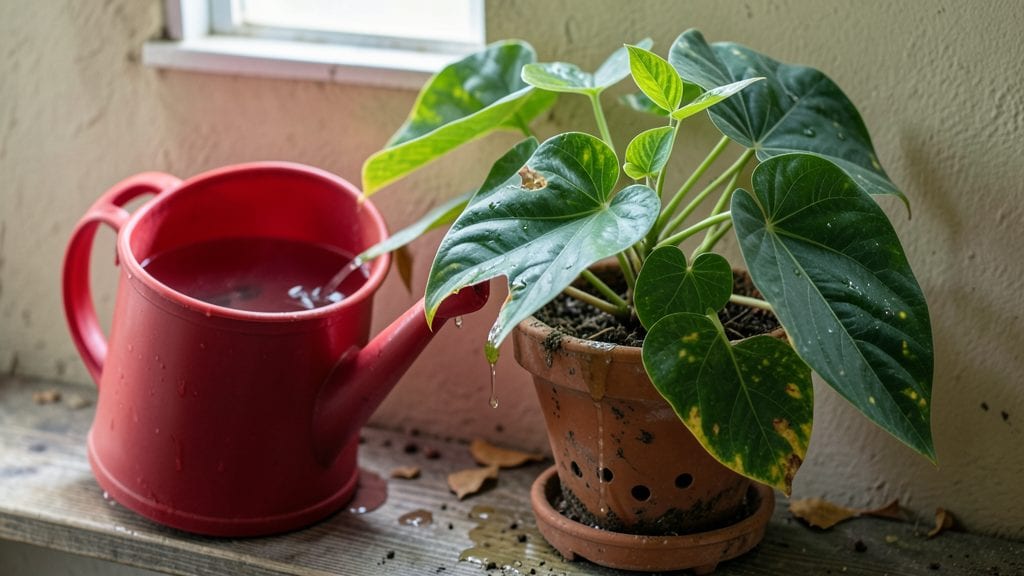
Overwatered arrowhead plants look like they’re drowning—not thriving. 🌱 I’ve seen this happen more than I’d like to admit, especially with new growers who think "more water = happier plant."
The truth? Syngoniums hate soggy roots, and once root rot sets in, it’s a race to save those arrow-shaped leaves before they turn to mush.
Here’s the thing—arrowheads need consistent moisture, not constant wetness. Most people overcorrect by watering every few days, but the fix isn’t about frequency—it’s about drainage and recovery.
Start by letting the top 1-2 inches of soil dry out completely before watering again. If your plant’s pot lacks drainage holes, it’s time to repot into something breathable.
Within 2-3 weeks of adjusting care, you’ll see new growth pushing through. The yellow leaves will drop (that’s normal!), and fresh, vibrant foliage will emerge. Prune any blackened stems at the base, and avoid fertilizing until the roots rebound—you’re not feeding a plant, you’re healing one.
Once you’ve got the watering rhythm down, keep a finger test routine: stick your finger in the soil before watering. If it’s damp below the top inch, wait.
This method works for both container plants and those in the ground—just adjust for your climate’s humidity. Trust me, your arrowhead will thank you.
Root Causes Of Overwatering
Understanding why your arrowhead plant (Syngonium podophyllum) is suffering from excess moisture is the first step to saving it. Let’s break down the key reasons—each with a scientific twist and actionable insights to help you avoid repeating the same mistakes.
Arrowhead plants thrive in well-draining soil, but when planted in containers without proper drainage or in heavy, compacted soil, water pools at the roots instead of draining away. Here’s why this happens:
- Clogged Drainage Holes: If your pot lacks holes or they’re blocked by soil, roots sit in stagnant water, suffocating from a lack of oxygen.
- Heavy Soil Mix: Clay-heavy or peat-based soils retain moisture like a sponge, preventing excess water from escaping.
- No Grit or Perlite: Soil without amendments (like perlite, sand, or orchid bark) compacts easily, trapping water.
Actionable Fix: Repot your arrowhead in a well-draining mix (50% potting soil, 30% perlite, 20% orchid bark) and ensure the container has multiple drainage holes. If repotting isn’t an option, add a layer of gravel at the bottom of the pot to improve airflow.
Arrowhead plants are tropical but hate soggy roots.
Common watering mistakes include: - Watering on a Schedule: Plants don’t need water every 2–3 days—they need it when the top 1–2 inches of soil are dry. - Ignoring Seasonal Needs: In winter, growth slows, so watering should decrease by 30–50% compared to spring/summer. - Using Ice Cubes or Cold Water: Sudden temperature shocks can stress roots, making them more susceptible to rot.
Actionable Fix: Stick your finger in the soil before watering—if it’s damp, wait. Use room-temperature water and water thoroughly but less frequently. A moisture meter can help track soil conditions accurately.
While arrowhead plants love humidity, excess moisture in the air + poor airflow = a recipe for rot.
Here’s how it happens: - High Humidity + Low Light: In dim conditions, plants transpire less, so excess water lingers in the soil. - No Air Circulation: Stagnant air around the plant traps moisture, creating a greenhouse effect that encourages fungal growth. - Overcrowded Pots: Too many plants in one container block airflow, increasing humidity around roots.
Actionable Fix: Improve airflow with a small fan (set to low) near the plant. If humidity is too high (above 60%), reduce watering slightly and consider a dehumidifier or spacer between plants. In low-light areas, move the plant closer to a bright, indirect source.
If your arrowhead’s roots are mushy, black, or smell foul, pathogens may be at play.
Overwatering creates the perfect breeding ground for: - Pythium or Phytophthora: Water-loving fungi that thrive in anaerobic (oxygen-deprived) soil. - Bacterial Soft Rot: Causes roots to turn brown and ooze, often from contaminated water or tools. - Root-Knot Nematodes: Microscopic pests that weaken roots in waterlogged conditions.
Actionable Fix:
- Disinfect tools with rubbing alcohol before pruning.
- Remove infected roots (healthy roots are firm and white; rotten ones are slimy and dark).
- Repot in sterile soil and avoid watering for 3–5 days to let wounds heal.
Not all pots are created equal—some materials retain moisture longer than others:
- Terracotta vs. Plastic: Terracotta breathes (evaporates moisture), while plastic locks in humidity.
- Glazed Pots: The glossy finish prevents water from escaping, keeping roots damp.
- Self-Watering Containers: Designed for convenience, but they over-saturate soil if not monitored.
Actionable Fix: Switch to a terracotta or fabric pot if using plastic. For self-watering containers, empty the reservoir when the soil is moist and limit water additions to every 7–10 days.
Many plant owners wait until yellow leaves, wilting, or rot appear before acting. Early signs of overwatering include:
- Drooping leaves (even when soil is wet).
- Slow growth or stunted new leaves.
- Musty odor from the soil.
Actionable Fix: Check soil moisture daily and adjust watering immediately if you spot these signs. A lightweight pot (like coconut fiber) can help you gauge weight—lift it to test dryness!
Overwatering isn’t just about how much you water—it’s about drainage, soil health, airflow, and plant needs. By addressing these root causes (pun intended), you’ll give your arrowhead plant the dry-but-not-drought-stricken conditions it craves. 🌱
Fixing Overwatered Arrowhead Plants
Now that you’ve identified the signs of an overwatered arrowhead plant (yellowing leaves, mushy stems, or foul smells), it’s time to take action. The good news? With the right steps, your plant can bounce back—sometimes even stronger than before!
Below are targeted solutions based on the root cause of the problem, along with prevention tips to keep your arrowhead plant thriving long-term.
Cause: Excess moisture suffocates roots, leading to rot. Fix:
- Pause watering for at least 3–5 days to allow the soil to dry out.
- If the pot has drainage holes, place it in a shallow tray to catch excess water while still allowing airflow.
- Pro Tip: 💡 If your plant is severely affected, extend the drying period to 7–10 days—roots need time to recover.
Cause: Compacted or waterlogged soil traps moisture, worsening rot. Fix:
- Gently remove the plant from its pot and inspect the roots.
- Trim away black, mushy roots (use sterilized scissors) to prevent further spread.
- Repot in fresh, well-draining soil—mix 50% potting mix with 50% perlite or orchid bark to improve aeration.
- Table: Ideal Soil Mix for Arrowhead Plants
| Ingredient | Ratio | Purpose |
|---|---|---|
| Potting Soil | 50% | Nutrient base |
| Perlite | 30% | Prevents compaction |
| Orchid Bark | 20% | Enhances drainage & airflow |
- Water lightly only after the top 1–2 inches of soil feel dry to the touch.
Cause: Poor drainage or non-breathable pots trap excess water. Fix:
- Upgrade to a pot with drainage holes (if not already present).
- Choose terracotta or fabric pots—they wick away moisture better than plastic.
- Add a layer of gravel or charcoal at the bottom of the pot to create a drainage barrier.
- Prevention Tip: ✨ Never let the plant sit in saucers of water—empty excess within 10 minutes of watering.
Cause: Weakened plants struggle in low light or extreme humidity. Fix:
- Move to bright, indirect light (e.g., near an east or north-facing window).
- Increase airflow by placing a small fan nearby (but avoid direct drafts).
- Mist leaves lightly (if humidity is low) or use a pebble tray for moisture control.
- Avoid fertilizing until new growth appears—roots need time to heal.
Cause: Repeated overwatering leads to chronic rot. Fix:
- Stick your finger 1–2 inches into the soil before watering—if it’s damp, wait.
- Water only when the topsoil is dry (typically every 7–10 days for arrowheads).
- Use the "soak-and-dry" method: Water thoroughly, then let the plant drink up moisture before the next watering.
- Pro Tip: 🌡️ Adjust watering in winter—plants need less as growth slows.
Final Thought: With these steps, your arrowhead plant should show signs of recovery in 2–4 weeks (new leaves, firmer stems). Stay patient—reviving a soggy plant takes time, but the results are worth it! 🌿✨
Frequently asked questions
How can I tell if my arrowhead plant is overwatered vs. underwatered?
Check the soil first—if it’s damp below the top 1-2 inches, you’re likely overwatering. Overwatered plants show yellowing leaves, mushy stems, and may have a foul smell from the soil. Underwatered plants have crispy brown edges and dry, pulling soil. The key difference? Overwatered plants wilt even when the soil is wet, while underwatered ones stay upright but feel dry.
Can I save an arrowhead plant with root rot?
Yes, but act fast! First, remove the plant from its pot and trim away all black, mushy roots with sterilized scissors. Repot in fresh, well-draining soil (50% potting mix + 50% perlite) and avoid watering for 3-5 days2-4 weeks.
Why does my arrowhead plant keep getting overwatered even when I stop?
This usually happens because the pot lacks drainage or the soil doesn’t dry out fast enough. Check if your container has drainage holes—if not, repot immediately. Also, heavy soils (like clay) hold moisture too long. Swap for a terracotta pot with a 50/50 mix of potting soil and perlite. Pro tip: Use the finger test—stick your finger 1-2 inches deep before watering.
Is it better to underwater than overwater arrowhead plants?
While underwatering is less damaging, it’s still stressful for arrowheads. The goal is consistent moisture, not drought. Water when the top 1-2 inches of soil are dry (usually every 7-10 days), and always use pots with drainage. A moisture meter helps track soil conditions accurately. Arrowheads are resilient—just avoid extremes on both ends!