
Companion Plants
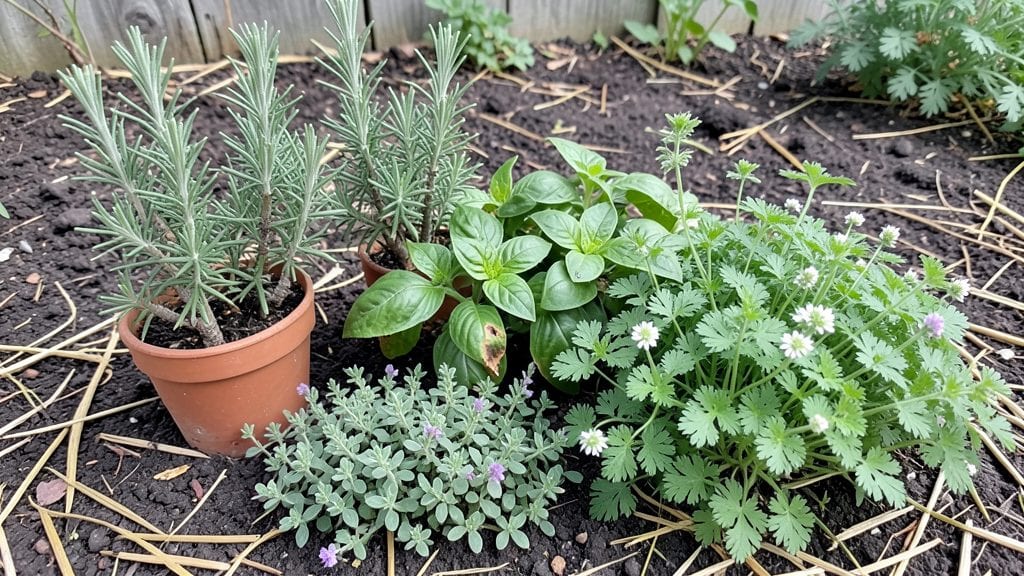
Identifying herb plants can feel like solving a puzzle—until you learn the telltale clues in leaf shape, scent, and growth. 🌿 I’ve spent years sorting through garden confusion, and these 20 common herbs each have distinct traits that make them easy to spot once you know what to look for.
The key is matching leaf textures, smells, and whether they grow upright like rosemary or sprawl like mint. Basil’s broad, glossy leaves and peppery scent give it away, while parsley’s fern-like fronds and mild flavor set it apart from dill.
Even tricky lookalikes—like wild mint vs. spearmint—reveal themselves with close inspection.
By the end, you’ll confidently tell your cilantro from your coriander, your thyme from your oregano, and know exactly where each thrives in your garden. No more guessing which plant belongs where—just quick, reliable ID for a lush, functional herb patch.
Works for container gardens, kitchen windowsills, or full sunbeds—herbs adapt easily once you recognize their needs. Ready to master the basics? Let’s dive into the visual cues that make identification effortless.
Mistakes That Confuse Herb ID
Mistaking one herb for another can happen to even the most seasoned gardeners—but why does this confusion persist? Misidentification often stems from a mix of visual similarities, growth habits, and environmental factors.
Below, we break down the most common reasons why herb plants get mixed up, along with science-backed explanations to help you spot the differences like a pro.
Many herbs share serrated, lobed, or rounded leaves, making them look nearly identical at first glance.
For example: - Basil vs. Wild Gilroy (Cilantro’s Weedy Relative) – Both have serrated leaves, but basil’s are smooth-edged and aromatic, while wild gilroy has a stronger, more bitter scent and grows in a bushier, less uniform shape. - Parsley vs. Cilantro – Both have finely divided leaves, but parsley’s are lacy and flat, while cilantro’s are curled and fern-like when young.
Why it happens: Herbs from the Apiaceae (carrot) and Lamiaceae (mint) families often evolve similar leaf structures to maximize sunlight absorption in dense growing conditions. Without close inspection, their subtle differences—like leaf texture, vein pattern, or stem hairiness—can go unnoticed.
Actionable fix:
- Crush a leaf – Many herbs release distinct scents when bruised (e.g., basil smells sweet, while mint has a sharp, peppery aroma).
- Check the base – Some herbs (like dill) have hollow stems, while others (like rosemary) are woody and rigid.
Herbs often look completely different when they flower. A plant you thought was sage might suddenly reveal tiny purple flowers, revealing it’s actually blue chives (which are in the onion family!). Flowering triggers hormonal shifts that alter leaf shape, growth pattern, and even scent.
Why it happens:
- Pollination drives – Many herbs flower to attract bees, and their reproductive structures (like umbels in dill or spikes in lavender) can dominate the plant’s appearance.
- Biennial vs. perennial cycles – Some herbs (like parsley) store energy in their roots the first year, only producing leaves, while others (like thyme) flower aggressively in their first season.
Actionable fix:
- Snip flowers early – If you’re growing herbs for foliage (like cilantro), prune blooms to redirect energy to leaf production.
- Learn flower shapes – A flat-topped cluster (like in chives) vs. a spike (like in lavender) can be a dead giveaway.
Herbs under stress (from heat, drought, or poor soil) can alter their growth patterns, making them look like entirely different plants.
For example: - Dill under drought may develop narrower, more feathery leaves, mimicking fennel. - Mint in shady conditions grows taller and leggier, losing its classic bushy shape.
Why it happens:
- Water scarcity triggers xerophytic adaptations (thicker leaves, reduced surface area) to conserve moisture.
- Nutrient deficiencies (like lack of nitrogen) cause stunted growth and pale leaves, making herbs resemble weaker cousins (e.g., weak basil might look like wild basil).
Actionable fix:
- Monitor soil moisture – Most herbs prefer consistently moist (not soggy) soil.
- Fertilize lightly – A balanced 10-10-10 fertilizer (or compost) keeps herbs lush and true to form.
Young herb seedlings can be almost indistinguishable until they develop mature leaves.
For instance: - Young oregano vs. pennyroyal – Both start with round, opposite leaves, but pennyroyal has a stronger, medicinal scent and grows faster. - Chives vs. garlic chives – Both have thin, grass-like blades, but garlic chives have a mild onion-garlic scent, while chives smell purely oniony.
Why it happens:
- Slow early differentiation – Many herbs rely on secondary compounds (like essential oils) for identification, which only develop as the plant matures.
- True leaves vs. cotyledons – The first leaves (cotyledons) are often simple and similar, while later leaves carry the plant’s distinctive traits.
Actionable fix:
- Label seedlings immediately – Use toothpicks with plant names to avoid mix-ups.
- Wait for the "tell" leaves – Most herbs develop characteristic shapes by the 3rd-4th leaf stage.
Herbs adapt to local climates, leading to wild-type variations that don’t match seed catalog descriptions.
For example: - Southernwood (Artemisia abrotanum) in humid climates may look less woody than its Mediterranean cousins. - Hybrid basil varieties (like Genovese vs. Thai basil) can have different leaf shapes and scents, even within the same species.
Why it happens:
- Genetic drift – Over generations, herbs develop local traits (e.g., heat-resistant rosemary in desert regions).
- Cross-pollination – Wind or insects can blend traits, creating unpredictable hybrids (e.g., cilantro-mint crosses).
Actionable fix:
- Buy from reputable nurseries – They often specify regional adaptations.
- Grow from cuttings – If you love a specific herb, propagate it vegetatively to maintain its traits.
To avoid confusion, use this quick verification method:
- Leaf shape & arrangement (opposite vs. alternate, serrated vs. smooth).
- Scent test (crush a leaf—does it smell sweet, peppery, or medicinal?).
- Growth habit (woody like rosemary, trailing like oregano, or upright like dill?).
By understanding why herbs look alike—and what makes them unique—you’ll never mistake mint for oregano again! 🌿✨
Quick Fixes for Mistakenly Confusing Herbs
Misidentifying herbs can happen to even the most seasoned gardeners—whether it’s swapping basil for mint or mistaking dill for parsley. But don’t worry! With the right strategies, you can turn confusion into confidence.
Below are practical solutions tailored to common causes, along with prevention tips to keep your herb garden thriving.
Cause: Herbs like cilantro and parsley share similar leaf structures, making them easy to mix up. Fix:
- 📏 Measure the leaves: Cilantro leaves are lacy and fern-like, while parsley has broader, flat, or curly segments. Hold them up to light—cilantro’s leaves are almost translucent when young.
- 👃 Smell test: Crush a leaf—parsley smells fresh and slightly earthy, while cilantro has a bright, citrusy aroma.
- 🌱 Check the stems: Cilantro stems are hollow and brittle; parsley stems are thicker and woody.
Prevention Tip: 💡 Label plants at the base with small stakes or plant markers immediately after transplanting. Use color-coded tags (e.g., green for culinary herbs, red for medicinal) to avoid mix-ups.
Cause: Some herbs, like sage and oregano, have similar green foliage but distinct scents. Fix:
- 👃 The sniff test is your best friend:
- Sage smells earthy, piney, and slightly peppery.
- Oregano has a strong, warm, slightly bitter aroma (almost like marjoram).
- Thyme is minty and lemony, while rosemary is needle-like with a woody, camphor scent.
- 🌱 Examine the flowers (if present): Oregano and thyme produce tiny purple or white blooms; sage has blue-purple spikes.
Prevention Tip: ✨ Grow herbs in separate pots if space allows—this prevents cross-pollination and makes identification easier. If planting in the ground, space them 12+ inches apart for better visibility.
Cause: Baby herb plants (like chives or chervil) can look like weeds or volunteer plants (e.g., wild garlic). Fix:
- 🔍 Dig up a small section of the root:
- Chives have thin, grass-like roots with a mild onion scent.
- Wild garlic has broad, flat leaves and a stronger garlic odor when crushed.
- 📸 Take a photo and compare to a herb identification app (like PlantNet or PictureThis) for instant verification.
Prevention Tip: 🌡️ Start herbs from seeds indoors under grow lights—this gives you full control over their growth and prevents accidental weed confusion.
Cause: Some herbs (like dill and fennel) look drastically different as they mature. Fix:
- 🌿 Track growth stages:
- Young dill has feathery, lacy leaves; mature plants develop yellow flowers and flat seeds.
- Fennel starts with frilly leaves but grows a bulbous base and yellow umbel flowers.
- 📅 Harvest early for the best flavor and identification—most herbs are most recognizable in their early growth stages.
Prevention Tip: 🎯 Set reminders to prune and inspect your herbs weekly. Snip off flowers or seeds if you don’t plan to save them—this encourages leafy growth and keeps plants looking true to form.
Cause: Accidentally using the wrong herb (e.g., mint instead of basil) can ruin a dish. Fix:
- 🍽️ Know the flavor profiles:
- Basil = sweet, slightly peppery (pesto, tomatoes).
- Mint = cool, sharp, refreshing (mojitos, lamb).
- Cilantro = citrusy, soapy (to some) (tacos, Thai dishes).
- 🔄 If you’ve already used the wrong herb:
- Adjust with complementary flavors (e.g., if you used mint instead of basil, add a pinch of red pepper flakes for heat).
- Start over if the dish is small—herbs can overpower flavors quickly.
Prevention Tip: 💡 Store herbs in small, labeled jars in your fridge. Write the name and best uses on the lid (e.g., “Basil – Pesto, Caprese”).
Keep a quick-reference guide in your garden or kitchen with: ✅ Photos of each herb ✅ Key identification traits (leaf shape, scent, growth habit) ✅ Common mistakes (e.g., “Mint ≠ Basil—don’t swap!”)
With these simple fixes and prevention strategies, you’ll never second-guess your herbs again—and your garden (and meals) will thank you! 🌿✨
Frequently asked questions
How can I tell the difference between basil and cilantro?
Basil leaves are broad, glossy, and smooth-edged with a sweet, peppery scent, while cilantro has lacy, fern-like leaves that smell bright and citrusy. Crush a leaf—basil releases an anise-like aroma, while cilantro smells distinctly lemony. Basil also grows in a bushier shape, while cilantro tends to be more upright.
What's the easiest way to identify mint vs. oregano?
Mint has square stems and opposite leaves with a cool, sharp scent, while oregano features small, oval leaves arranged alternately with a warm, earthy aroma. Run your fingers along the stem—mint’s square shape is a dead giveaway. Also, oregano often has tiny purple flowers in late summer, while mint blooms in whorls of white or pink.
Can I use a plant identification app to confirm my herbs?
Apps like PictureThis or PlantNet work well for herbs—just snap a clear photo of the leaves, stems, and flowers (if present). For best results, include a coin or ruler for scale and focus on the leaf arrangement and texture. Pro tip: Take photos on a sunny day to highlight details like vein patterns and leaf edges.
Why does my parsley look like cilantro?
Young parsley and cilantro can resemble each other, but parsley has broader, flatter leaf segments that grow in a more uniform pattern, while cilantro’s leaves are curled and fern-like. The key difference? Parsley smells mildly earthy, while cilantro has a bright, citrusy aroma. Also, parsley stems are thicker and woody, whereas cilantro’s are hollow and brittle.
How do I know if my herb plant is healthy?
A healthy herb plant has vibrant green leaves, no yellowing or browning edges, and no signs of pests. Check the undersides of leaves for aphids or spider mites, and ensure the soil stays moist but not soggy. If leaves are wilting or dropping, it may need more water or better drainage. Most herbs thrive in well-draining soil with 6-8 hours of sunlight daily.