
Aphids
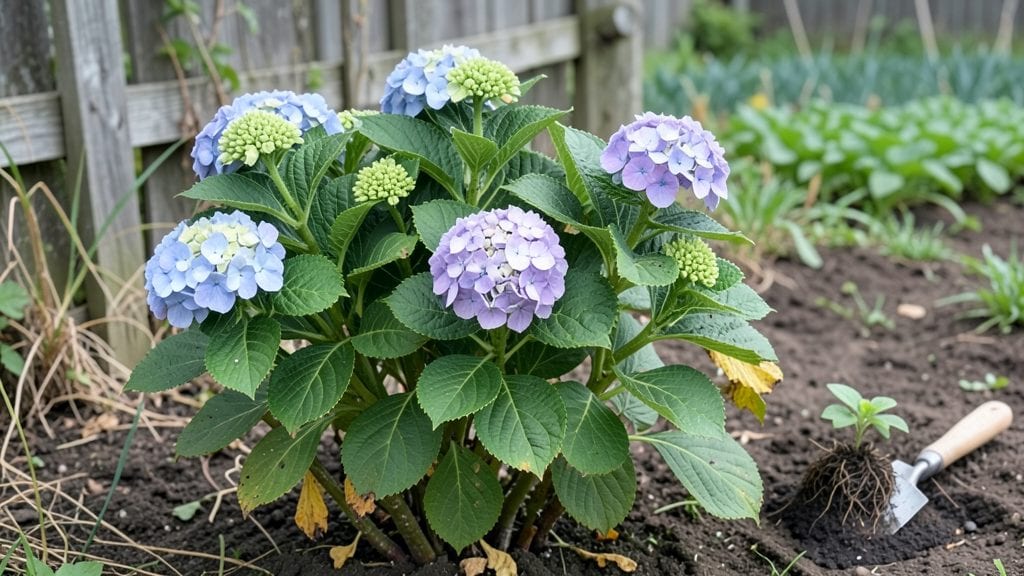
Mastering the hydrangea planting conditions—sunlight, soil, and spacing—transformed my floppy stems into bold, bushy blooms that last all summer. 🌿 I learned the hard way—my first hydrangea spent two years growing leaves but never blooming until I adjusted its... spot and soil.
The secret isn’t complicated: morning sun, afternoon shade, and soil that drains well but holds moisture like a sponge.
Start with soil that’s 60% organic matter—think composted leaves or aged manure mixed with garden soil. The pH matters too: blue hydrangeas need acidic soil (5.2-5.5), while pink varieties thrive in slightly alkaline (6.0-6.2).
Space plants 3-5 feet apart in-ground or 18-24 inches in containers, and mulch heavily to keep roots cool and moist. Container growers, use pots with drainage holes and 1-2 gallons of space per year of plant maturity.
Timing is everything: plant in early spring or fall when temperatures are mild, and avoid frost—hydrangeas hate it. Overwatering is the #1 killer, so check soil moisture before watering; it should feel damp but not soggy.
In-ground plants need 1-1.5 inches of water per week, while containers dry out faster and may need daily checks in hot weather. The payoff? Clusters of blooms so dense they look like they’re fighting for space.
Containers let you move plants to follow the sun, while in-ground hydrangeas stay put for years. Prune spent blooms in late winter, and feed with a balanced fertilizer (10-10-10) in early spring.
The first year is about roots; by year two, you’ll see the blooms you planted for. Here’s how to get it right the first time.
📚 In This Guide
- What you need
- Instructions
- Tips and common mistakes
- Wrapping up and next steps
What you need
- ● Hydrangea plants: Choose between bare-root (dormant season) or container-grown (year-round). For optimal blooms, pick varieties like Endless Summer, Nikko Blue, or Limelight.
- ● Well-draining potting mix or garden soil: Aim for 6.0–6.5 pH (acidic for blue blooms) or 5.5–6.0 pH (neutral for pink/purple). Use 2–3 parts compost + 1 part perlite for DIY mixes.
- ● Organic mulch: 2–3 inches of shredded bark, pine needles, or straw to retain moisture and regulate soil temp.
- ● Slow-release fertilizer: 10–10–10 NPK ratio (follow package rates, typically 1–2 lbs per 100 sq ft). Hydrangeas love a balanced diet!
- ● Watering can or hose with adjustable nozzle: Aim for 1–1.5 gallons per plant during dry spells (deep watering = happier roots!).
- ● Garden trowel or spade: For digging holes 2x wider and slightly deeper than the root ball.
- ● Pruning shears: Sterilized (rubbing alcohol wipe) for trimming dead wood or shaping after planting.
- ● Garden gloves: Protect your hands from thorns (especially on Oakleaf or Panicle varieties).
- ○ pH testing kit: Optional but highly recommended to tweak soil acidity (use aluminum sulfate for bluer blooms or lime for pink).
- ● Stakes or plant supports: 5–6 ft tall for tall varieties like Grandiflora to prevent flopping.
- ● Sunlight assessment: Test your spot for 6+ hours of morning sun (partial shade for Bigleaf hydrangeas; full sun for Panicle types).
- ● Soil test: Confirm drainage—hydrangeas hate soggy roots! Amend clay soil with sand or coconut coir.
- ● Spacing plan: VarietySpacing (ft) Bigleaf (e.g., Nikko Blue)3–5 ft apart Panicle (e.g., Limelight)4–6 ft apart Oakleaf (e.g., Snow Queen)5–8 ft apart
- ● Timing: Plant bare-root in early spring or fall; container-grown anytime (avoid frost or extreme heat).
Step-by-step guide to perfect hydrangea planting conditions
Big, showy blooms start with the right placement and care—here's how to set your hydrangeas up for success.
☀️ Step 1: Choose the Right Sunlight Spot
Hydrangeas thrive in morning sun with afternoon shade—think dappled light or 4-6 hours of direct sunlight daily. Too much harsh afternoon sun scorches leaves, while too little light weakens blooms. I plant mine where the morning sun warms the soil but afternoon shade keeps them cool.
Observe your yard first: if leaves crisp by midday, move the plant to a shadier location. For container hydrangeas, rotate pots quarter-turn weekly so all sides get even light exposure. You'll notice stronger stems and bigger blooms when plants receive balanced light.
🌱 Step 2: Prepare Soil for Optimal Drainage and Moisture
Hydrangeas demand rich, acidic soil with a pH between 5.2 and 6.0—test your soil first with a kit. Amend heavy clay with 2-3 inches of compost and 1 part perlite per 3 parts soil to improve drainage. I mix in slow-release organic fertilizer (like 10-10-10) at planting time for a nutrient boost.
Dig a hole twice as wide as the root ball but only as deep—planting too deep suffocates roots. Loosen the edges of the root ball before placing it in the hole to encourage outward growth. Water deeply before backfilling to eliminate air pockets.
🪴 Step 3: Space Plants for Airflow and Future Growth
Give mature hydrangeas 4-6 feet of space between plants—crowding invites fungal diseases like powdery mildew. For smaller varieties, 3-4 feet is plenty. I stake taller varieties at planting to prevent flopping later, using 5-foot bamboo stakes tied loosely with soft twine.
Dig a small trench around each plant at the drip line to direct water away from the base. Mulch with 3 inches of pine bark or shredded leaves (never wood chips—hydrangeas hate nitrogen-robbing mulch). Keep mulch 6 inches away from stems to prevent rot.
💧 Step 4: Water Deeply and Maintain Consistent Moisture
Hydrangeas hate dry soil—water deeply 2-3 times per week until the top 6 inches of soil feel moist. Use a soaker hose or drip irrigation to deliver water at the base, avoiding wetting leaves (which spreads disease). I water in the early morning so foliage dries quickly.
Yellowing leaves? You're overwatering. Brown, crispy edges? Underwatering. Adjust based on rainfall—1-1.5 inches of water weekly is ideal. For container hydrangeas, check soil moisture daily in summer—pots dry out faster.
✂️ Step 5: Prune Strategically for Season-Long Blooms
Timing matters: Prune bigleaf hydrangeas right after flowering (late summer) to shape for next season. For panicle or smooth hydrangeas, prune in late winter or early spring before new growth starts. I cut back 1/3 of the oldest stems each year to encourage fresh blooms.
Remove dead, crossing, or weak stems first. Then trim back the remaining stems to just above a set of buds. Avoid heavy pruning in fall—new growth won't harden off before winter. You'll see fuller blooms and stronger stems with proper pruning.
Tips & tricks for perfect hydrangea planting
Here's what I've learned after years of trial and error with these showstoppers—small details make a huge difference for those dramatic blooms.
Light Exposure Secret: The 4-6 hours of morning sun isn't just about quantity—it's about timing. I've found that hydrangeas planted on the east side of buildings or under deciduous trees (like oaks or maples) get perfect natural shade filtering in summer. If you must plant in full sun, use shade cloth (30-50%) during peak afternoon hours to prevent leaf scorch. The key is keeping those leaves cool while still getting enough morning light for photosynthesis.
Soil Science: That pH range of 5.2-6.0 isn't arbitrary—it's where hydrangeas can access the most iron and manganese for vibrant blooms. I've had the best results using sulfur-based amendments to lower pH in alkaline soils. For a quick test, try adding cottonseed meal (which breaks down into nitrogen and acidifies soil) at planting time. And remember: those 2-3 inches of compost aren't just for drainage—they provide essential microbes that help break down nutrients for your plants.
Spacing Strategy: The 4-6 feet spacing recommendation isn't just about airflow—it's about creating an ecosystem. When hydrangeas are properly spaced, their roots actually help each other by sharing beneficial fungi through mycorrhizal networks. For container hydrangeas, I've found that using 12-inch pots gives them enough room to establish before transplanting, and rotating them weekly ensures even growth. The trench you dig at the drip line isn't just for drainage—it creates a natural barrier that prevents soil-borne diseases from spreading between plants.
Watering Wisdom: Those 2-3 waterings per week need to be strategic. I've learned to water most deeply in the morning, then give a second watering in the late afternoon during extreme heat. The goal is to keep the top 6 inches consistently moist—this is where most roots absorb water. For container hydrangeas, I've found that adding expanded clay pellets to the bottom of pots helps regulate moisture levels and prevents root rot. And that 1-1.5 inches of water weekly? Think of it as a rainfall equivalent—most standard rain gauges measure this perfectly.
Pro Tips for Hydrangea Planting Conditions
- Here's what I've learned after years of trial and error with these showstoppers—small details make a huge difference for those dramatic blooms.
- Light Exposure Secret: The 4-6 hours of morning sun isn't just about quantity—it's about timing.
- Soil Science: That pH range of 5.2-6.0 isn't arbitrary—it's where hydrangeas can access the most iron and manganese for vibrant blooms.
Frequently asked questions
Got questions about hydrangea planting?
You’re not alone! Here are answers to the most common concerns—from sunlight struggles to soil secrets—to help you grow lush, blooming bushes with confidence.
How much sunlight do hydrangeas really need?
Most hydrangeas thrive in partial shade (4–6 hours of sunlight daily), especially in hot climates. Bigleaf and oakleaf varieties love morning sun + afternoon shade, while panicle hydrangeas tolerate full sun. Too much sun? Leaves may scorch; too little? Fewer blooms. Test your spot—if it’s bright but not baking, you’re golden!
Can I plant hydrangeas in pots or do they need ground space?
Potted hydrangeas are perfect for patios or small yards—just use a container at least 12–15 inches deep with drainage holes. Opt for mounding varieties like ‘Limelight’ or ‘Endless Summer.’ Pro tip: Repot every 2–3 years and fertilize monthly in spring/summer. Warning: Containers dry out faster; water deeply 2–3x weekly!
What’s the best time of year to plant hydrangeas?
Spring (after last frost) or early fall (6–8 weeks before frost) are ideal. Avoid summer heatwaves or winter’s chill—both stress young roots. Bare-root plants? Soak roots for 2–4 hours before planting. For container-grown hydrangeas, plant anytime the ground isn’t frozen. Bonus: Fall planting gives roots time to establish before winter!
Why are my hydrangea leaves turning yellow or brown?
Yellow leaves often signal overwatering or poor drainage, while brown edges may mean underwatering or sunburn. Check soil moisture (stick your finger 1–2 inches deep—dry? Water!), and ensure pots/containers have drainage. Pests like aphids or spider mites? Spray with soapy water or neem oil. Prevent tip: Mulch around the base to retain moisture and regulate temps!
Do hydrangeas need acidic soil? What if my soil isn’t?
Most hydrangeas prefer slightly acidic soil (pH 5.5–6.2), especially bigleaf types (blue/pink blooms depend on pH!). Test your soil with a kit ($10 at garden centers). Not acidic? Amend with sulfur, peat moss, or coffee grounds. For panicle hydrangeas, neutral soil (pH 6.0–7.0) is fine. Quick fix: Use hydrangea-specific fertilizer to adjust pH gradually!
Wrapping up and next steps
With the right hydrangea planting conditions—balancing sunlight, well-draining soil, and proper spacing—you’re well on your way to nurturing stunning blooms that’ll steal the show in your garden! 🌸 Remember, these plants are forgiving but thrive when their needs are met, so don’t hesitate to tweak your approach based on your local climate or variety.
Ready to roll up your sleeves? Start digging, planting, and watching your garden transform—your future floral masterpiece is just a few shovels away!