
Pruning
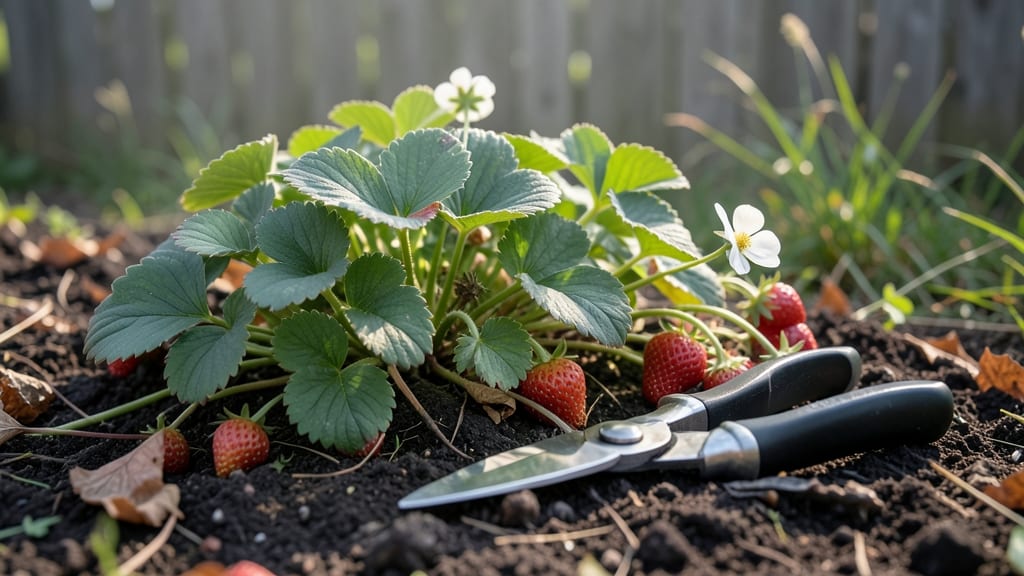
Pruning strawberry plants isn't just about tidying up—it’s the secret to year-round harvests and plants that keep producing for years. I learned this the hard way after my first strawberry patch declined after just two seasons, until I finally understood the three seasonal trims that keep plants vigorous.
The right cuts at the right time mean more berries, fewer diseases, and plants that don’t burn out by summer’s end.
You’ll need just three tools: sharp pruning shears, a pair of gloves, and a bucket for trimmings. The process takes about 20 minutes per plant, and the best part? You can do it in your backyard, raised beds, or even containers.
We’ve pruned strawberries in every zone from 3 to 9—just adjust timing for your first frost. The key is cutting back old leaves in early spring, managing runners in summer, and cleaning up after harvest to prep for next year.
What you’ll end up with is a thriving strawberry plant that produces heavier, sweeter berries all season long. No more patchy harvests or plants that peter out by July—just consistent, lush growth and fruit until frost.
The first time you taste berries from a properly pruned plant, you’ll wonder why you didn’t start sooner. Let’s get those shears ready!
This method works for June-bearing, everbearing, and day-neutral varieties, so whether you’re growing in rows or hanging baskets, the same principles apply. The only difference? Everbearing types need lighter trims to encourage multiple harvests. Here’s how to do it right—no guesswork, just results.
📚 In This Guide
- What you need
- Instructions
- Tips and common mistakes
- Wrapping up and next steps
What you need
- ● Pruning shears or sharp bypass pruners – Choose sterilized, bypass-style shears (avoid anvil pruners—they crush stems). A 5-inch blade works best for strawberries.
- ● Gloves – Garden or nitrile gloves (thorn-resistant if your plants have runners). Size medium or large for comfort.
- ● Disinfectant (70% isopropyl alcohol or bleach solution) – 1 part bleach to 9 parts water to sterilize tools between cuts and prevent disease.
- ● Compost or mulch – 2–3 inches of organic matter (e.g., straw, wood chips, or shredded leaves) to protect pruned areas and retain moisture.
- ● Watering can or hose with a gentle nozzle – For post-pruning hydration.
- ● Hand pruners or small scissors – For delicate trims on runners or small stems.
- ● Garden kneeler/pad – To protect your knees during close-up work.
- ● Labeling tags or markers – If you’re pruning different varieties or tracking growth stages.
- ● Plant food (balanced 10-10-10 or compost tea) – Apply after pruning to encourage new growth.
Step-by-step guide to pruning strawberry plants for continuous production
Master these three seasonal trims to keep your strawberry patch productive and healthy year after year.
Early Spring Pruning to Stimulate New Growth
Begin in late February or early March when the ground is workable but before new growth appears. Remove all dead or brown leaves and runners from last season—they drain energy from the plant. I use clean, sharp pruning shears to make clean cuts just above the crown, avoiding any green tissue that might still be alive.
Next, trim back any old, woody stems that produced fruit last year to 2-3 inches above the soil line. These stems are called "crowns" and should be strong and green. If you see any moldy or blackened tissue, snip it away immediately—this prevents fungal diseases from spreading. After pruning, apply a 1-inch layer of mulch around the plants to retain moisture and protect the crowns from temperature swings.
Mid-Season Maintenance After Harvest
Once the first flush of berries finishes—typically 6-8 weeks after flowering—focus on removing spent blossoms and excess foliage. Pinch off any flower clusters that develop on the first-year crowns (the ones that emerged last spring) to redirect energy into the second-year crowns, which will produce the bulk of your harvest. This ensures stronger plants for next year’s yield.
Next, trim back any overly dense or crowded leaves to improve air circulation. I aim to keep the center of the plant open, which reduces humidity and fungal risks like gray mold. If runners begin to form, decide whether to leave them for propagation or remove them entirely—too many runners weaken the mother plant. For a year-round harvest, leave just 1-2 strong runners per plant to balance reproduction and fruit production.
Late Summer to Early Fall Cleanup for Winter Hardiness
In late August or early September, prepare the plants for dormancy by removing all remaining blossoms and fruit. This might seem counterintuitive, but it prevents the plant from expending energy on late-season fruit that won’t ripen before frost. Use your shears to trim back any leggy or weak growth, cutting just above a healthy leaf node to encourage bushier regrowth.
Finally, thin out the oldest crowns—those that are 3-4 years old—by cutting them at the base. These crowns produce fewer berries and are more susceptible to disease. Replace them with the newer, more vigorous crowns that formed this spring. After pruning, apply a 2-3 inch layer of straw mulch to insulate the crowns and protect them from freezing temperatures. This step is critical for winter survival and next year’s productivity.
Bonus: Year-Round Check-In for Everbearing Varieties
If you’re growing everbearing strawberries, add a fourth trim in late fall (November) to remove any remaining foliage that might harbor pests or diseases over winter. Cut back to 1 inch above the soil line, leaving the crowns exposed but protected by mulch. This final cleanup ensures a clean slate for spring regrowth and minimizes spring pests like slugs and aphids.
Throughout the year, always prune on a dry, overcast day to reduce stress on the plant. Avoid pruning when the plants are wet or in direct sunlight, as this can shock the system. With these three seasonal trims, your strawberry patch will stay vigorous, productive, and disease-resistant for years to come.
Tips & tricks for perfect strawberry pruning
A few strategic adjustments can transform your strawberry plants from struggling survivors to thriving producers. These insights come from years of watching what works—and what doesn't—in our own gardens.
Timing is Everything: The window between late February and early March for your first pruning is narrower than it seems. If you prune too early, the plants remain vulnerable to late frosts; too late, and you miss the opportunity to stimulate new growth before the season kicks in. I've learned to check the ground temperature—it should be consistently above 40°F at night before starting. This timing also prevents fungal spores from lingering on old foliage through the winter months.
Precision Cuts Prevent Problems: When trimming back old, woody stems to 2-3 inches above the soil line, resist the urge to cut too aggressively. The remaining stem should be strong and green, not just a stub. I use a clean, sharp pair of pruning shears—never dull or rusty tools—and make cuts at a slight angle just above a leaf node. This technique promotes better regrowth and minimizes entry points for disease. For moldy tissue, make your cut at least 1/4 inch below the affected area to ensure complete removal.
Mulch Matters More Than You Think: That 1-inch layer of mulch after your early spring pruning isn't just decorative—it's a protective barrier. Organic mulches like straw or shredded leaves break down slowly, improving soil structure over time while maintaining consistent moisture levels. In late summer, when you increase to 2-3 inches, you're essentially creating insulation that helps the crowns survive winter temperature fluctuations. Pro tip: Refresh the mulch layer annually to maintain its effectiveness.
Seasonal Adjustments for Everbearing Varieties: The fourth trim in November for everbearing varieties might seem counterintuitive, but it's essential for breaking the plant's dormancy cycle. Cutting back to just 1 inch above the soil line removes any weakened foliage that could harbor pests over winter. This aggressive approach might seem harsh, but it ensures your plants start spring with maximum energy. The exposed crowns will benefit from winter sunlight while remaining protected by the mulch layer.
Pro Tips for Prune Strawberry Plants
- A few strategic adjustments can transform your strawberry plants from struggling survivors to thriving producers.
- Timing is Everything: The window between late February and early March for your first pruning is narrower than it seems.
- Precision Cuts Prevent Problems: When trimming back old, woody stems to 2-3 inches above the soil line, resist the urge to cut too aggressively.
Frequently asked questions
Got questions about pruning strawberries? You’re not alone! Here are answers to the most common concerns—because even expert gardeners need a little extra guidance.
When is the best time to prune strawberry plants?
Timing depends on your climate and strawberry type. For June-bearing varieties, prune after harvest (late summer) to remove old leaves and runners. Ever-bearing and day-neutral plants can be pruned in early spring (before new growth) and fall (after fruiting). Always avoid pruning during frost or extreme heat.
Do I really need to prune strawberries?
Yes! Pruning boosts fruit production, improves air circulation (reducing disease), and redirects energy to healthier growth. Skipping it can lead to overcrowding, smaller berries, and pests hiding in thick foliage. Think of it as a spa day for your plants—they’ll thank you with bigger, sweeter berries!
What if I accidentally cut off flower buds?
Don’t panic! If you snip a few buds by mistake, your plant will likely produce new ones within a few weeks. Focus on removing only old leaves, runners (if desired), and dead growth. For June-bearing types, prioritize keeping next year’s flower buds (they form at the base of leaves).
Can I prune strawberries in winter?
Winter pruning is tricky—avoid it in freezing temps (below 40°F/4°C). However, in mild winters, you can do a light cleanup in late winter to remove dead leaves and debris. Wait until spring (when new growth appears) for a full prune. Always check your local frost dates!
What’s the difference between pruning and pinching runners?
| Pruning | Pinching Runners |
|---|---|
| Removes old leaves, dead growth, or overcrowded foliage to improve plant health. | Stops runners (long stems) from spreading to focus energy on fruit production. |
| Done year-round (seasonally). | Best in early spring or after harvest for June-bearing types. |
Pro tip: If you want more plants, keep runners and replant them! Otherwise, snip them at the base with clean shears.
My strawberries aren’t fruiting after pruning—what went wrong?
Several factors could be at play:
- Over-pruned: Too many cuts remove energy sources. Leave healthy leaves (especially for photosynthesis).
- Wrong season: June-bearing varieties need cold exposure to fruit—prune too early, and buds may not form.
- Nutrient deficiency: Feed plants with balanced fertilizer (10-10-10) after pruning.
- Pests/disease: Check for aphids, slugs, or fungal spots. Prune infected leaves immediately.
Give it time—some varieties take 2–3 weeks to bounce back!
Wrapping up and next steps
Pruning your strawberry plants might seem like a small task, but it’s the secret to a bountiful, year-round harvest! 🌱 By following the three seasonal trims—early spring, late spring, and fall—you’ll encourage stronger growth, bigger berries, and fewer pests.
Remember, the key is timing and clean cuts, so don’t overthink it—just stay consistent, and your plants will thank you with delicious fruit.
Now that you’re armed with the know-how, grab those shears and get pruning! 🌟 Check your plants weekly for new runners or overgrowth, and soon, you’ll be enjoying homegrown strawberries like never before. Happy gardening!