
Propagation
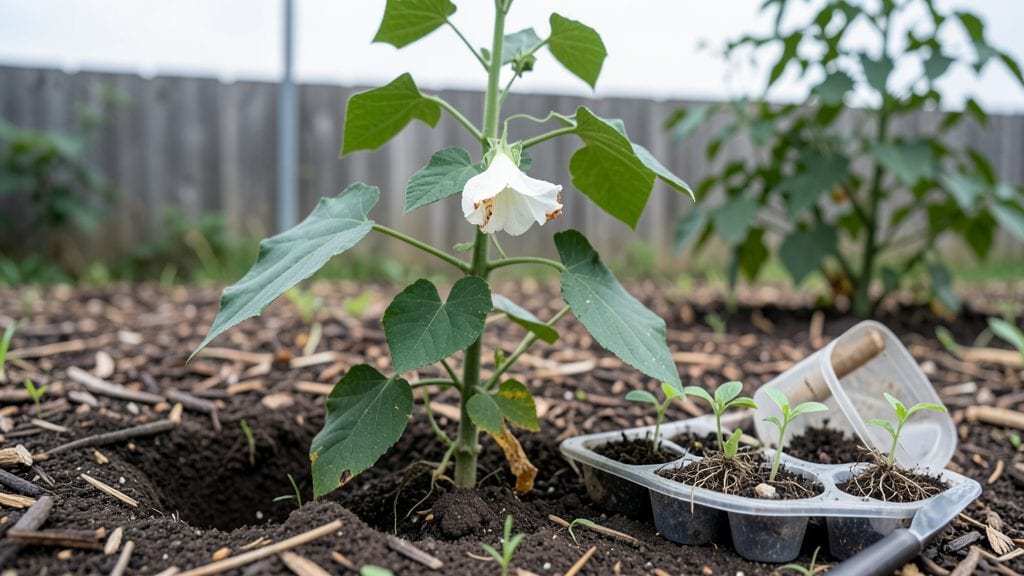
To plant pole beans from seed, start by soaking them overnight for faster germination—this simple step cuts your wait time in half and gives you a head start on the 6-foot vines you’ll need by July.
Pole beans are one of the fastest-growing, most productive vegetables in your garden—but only if you master their spacing and climbing needs. Skip these critical steps, and you’ll end up with tangled vines, poor yields, and frustrated plants.
Most gardeners assume they can just toss seeds in the dirt and hope for the best, but pole beans need the right conditions to thrive: 3-4 inches of space between each seed, a sturdy trellis within weeks of sprouting, and soil that drains well enough to avoid root rot.
In this guide, I’ll walk you through the exact timing, depth, and support setup for maximum production—plus how to troubleshoot common mistakes like slow starts or leggy growth before they become problems.
Perfect pole bean planting spacing for maximum yield and airflow
Pole beans thrive when given the right spacing and airflow, but many gardeners struggle with crowded vines that lead to disease and poor harvests. The key lies in balancing plant density with vertical support—whether you're using a raised bed, in-ground plot, or container garden.
Proper spacing ensures strong stems, better airflow, and easier harvesting. Let’s break down the ideal setup for your garden type.
First, understand that pole beans need 3-4 inches between seeds but will eventually spread 12-18 inches apart as they mature. However, this changes dramatically based on your trellis height and garden layout.
A 6-foot trellis requires different spacing than a 10-foot cattle panel. Below, we’ll compare the best spacing for common setups to maximize your yield while keeping vines healthy.
Pro Tip: Always plant seeds near a trellis or support structure—even if it’s temporary. Pole beans climb aggressively and will twist around each other if left unsupported, leading to broken stems and tangled messes. Install supports before planting to avoid disturbing roots later.
For raised beds, aim for 3-4 seeds per foot along the bed’s length, leaving 18-24 inches between rows. This setup works perfectly with a 6-foot trellis placed at the bed’s end.
If your bed is wider than 4 feet, install a second trellis in the middle to prevent vines from flopping over.
In in-ground gardens, 4-inch seed spacing is ideal, but widen to 15-18 inches between mature plants to avoid shading and disease. Use a cattle panel or T-post trellis for taller varieties like 'Kentucky Wonder' or 'Blue Lake'.
Plant in blocks (not straight rows) to make harvesting easier and improve airflow.
Container growers have the most flexibility but must limit plant numbers. A 5-gallon container can hold 1-2 pole bean plants with a 4-foot trellis.
Space seeds 2-3 inches apart and use a small cage or stake for support. Avoid overcrowding—root competition leads to weak vines and fewer beans.
Adjust spacing based on your trellis height. Taller trellises (10+ feet) need wider seed spacing (4-5 inches) to prevent vines from shading each other.
Shorter trellises (3-5 feet) can handle closer spacing (3 inches)overcrowding as vines mature. Always thin seedlings to the strongest 2-3 plants per foot.
Poor airflow is the #1 enemy of pole beans. Crowded vines trap <
Step-by-step seed planting guide: when, where, and how deep
Planting pole beans from seed is simple, but timing and technique make all the difference. These fast-growing vines need warm soil and support early to thrive. Wait too long, and you’ll miss the 60-day harvest window—or worse, deal with weak stems that can’t climb.
Let’s break it down so your beans grow strong and productive from day one.
Start by checking your last frost date—typically mid-April in USDA Zone 6a. Pole beans thrive in 60-80°F soil, so wait until the ground warms to at least 60°F (use a soil thermometer if unsure).
Planting too early in cool soil delays germination and invites rot. Aim for April to early May in most regions for best results.
Step-by-Step: Planting Pole Beans From Seed
-
Step 1: Prep the Soil
Test your soil’s pH (6.0-7.0 ideal) and amend with compost or aged manure for nutrients. Pole beans prefer loamy, well-draining soil. Mix in a 1-inch layer of compost to the top 6 inches of soil.
-
Step 2: Choose the Right Spot
Select a sunny location with at least 6-8 hours of direct sunlight. Avoid low spots where cold air pools or areas with poor drainage. If growing in containers, use pots at least 12 inches deep and wide.
-
Step 3: Plant Seeds at the Right Depth
Plant seeds 1 inch deep and 3-4 inches apart in rows spaced 18-24 inches apart. If using a trellis or cage, place seeds near the support for easy climbing. Press seeds gently into soil to ensure good seed-to-soil contact.
-
Step 4: Water Gently
Water the soil thoroughly after planting to a depth of 1 inch. Keep the soil consistently moist (not soggy) until germination, which takes 7-14 days. Use a fine spray nozzle to avoid displacing seeds.
-
Step 5: Add Support Early
Install a trellis, fence, or sturdy cage as soon as seedlings emerge (about 2 inches tall). Pole beans need support to grow vertically and avoid soil-borne diseases. Use cattle panels or netting for heavy vines.
-
Step 6: Thin Seedlings (If Needed)
If seedlings grow too close (less than 3 inches apart), thin to the strongest 3-4 inches apart to prevent competition. Snip weak seedlings at the base with clean scissors to avoid disturbing roots.
Common mistakes like planting too shallow (less than ½ inch) or in cold soil can stall germination. If seeds don’t sprout in 2 weeks, recheck soil moisture and temperature.
Overcrowding leads to weak vines and fewer pods, so stick to the 3-4 inch spacing rule. Mulch with straw or grass clippings to retain moisture and suppress weeds.
Once your pole beans reach 6 inches tall, they’ll start climbing. Train vines gently onto the trellis to encourage upward growth. Harvest pods when they’re 4-6 inches long for the best flavor, and pick regularly to keep production steady.
With the right start, you’ll enjoy a bountiful harvest in just 60 days! 🌱