
Fertilization
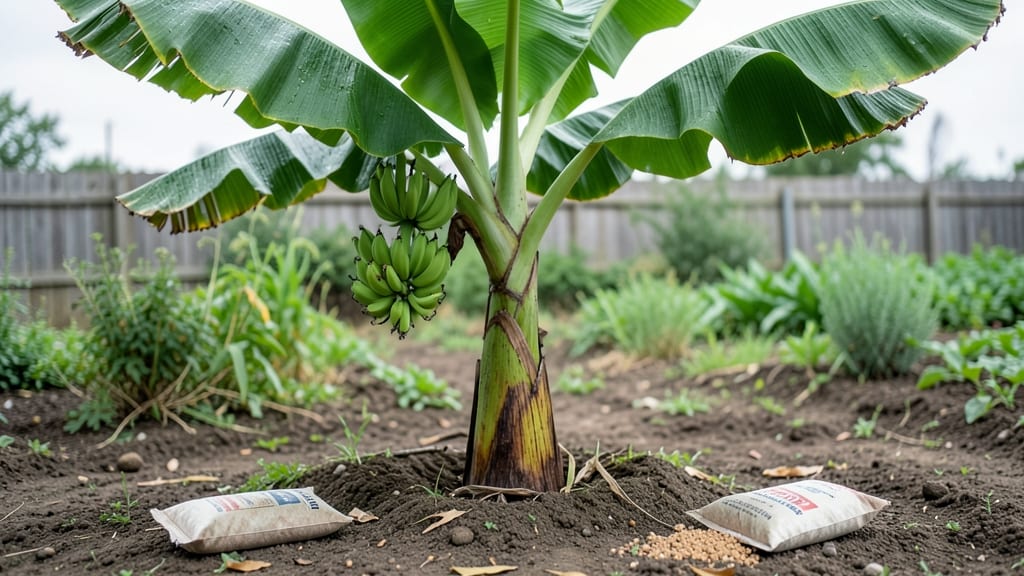
Fertilizing banana plants 🍌 is the secret to turning those towering leaves into heavy, sweet fruit—if you do it right.
Banana plants grow fast—but without the right nutrients, your fruit will stay small, sparse, or never even form. I’ve watched mine put all their energy into giant leaves while the bunches stayed puny, and it’s a heartbreaker.
Here’s the good news: with the right fertilizer schedule, soil prep, and a few pro tips, you can go from leafy giants to fruit-bearing powerhouses in just one growing season.
Whether you’re growing in tropical heat or a sunny container on your patio, I’ll show you exactly how to feed your banana for maximum harvests.
We’ll cover the best organic and synthetic fertilizers, when to apply them, and how to spot the signs of over- or under-feeding—so you never waste another dollar on empty growth.
Best fertilizer types for banana plants and when to apply them
Banana plants thrive on rich, nutrient-dense soil, but their heavy fruit production demands precise fertilizer timing and balanced nutrition. Unlike many plants, bananas need a shift in focus from leaf growth (nitrogen) to fruiting (potassium) as they mature.
Choosing the wrong fertilizer—or applying it at the wrong time—can lead to stunted growth, poor fruit quality, or even plant decline. The key lies in understanding organic vs. synthetic options and aligning your feeding schedule with the plant’s growth stages.
For example, a 10-10-10 NPK ratio is a safe starting point for young banana plants, but as your plant flowers, you’ll want to increase potassium to a 6-12-12 or 8-8-16 blend. Micronutrients like magnesium and calcium also play critical roles—deficiencies here can cause yellowing leaves or blossom-end rot in fruit.
Below, we break down the best fertilizers for each stage, including seasonal application timelines and soil testing tips to ensure your banana plant gets exactly what it needs.
🌱 Pro Tip: Always water your banana plant thoroughly before fertilizing to prevent root burn. These tropical giants hate dry roots, and fertilizer salts can scorch them if applied to thirsty soil.
When selecting a fertilizer type, consider your banana plant’s growth stage and environmental conditions. For instance, container-grown bananas benefit from slow-release granules because their roots are confined and need consistent nutrition without frequent top-ups.
Meanwhile, outdoor tropical plants can handle more frequent feedings with liquid organic fertilizers like fish emulsion, which also improve soil microbial activity.
One of the most common mistakes is over-fertilizing with nitrogen during the fruiting stage. Too much nitrogen will result in lush leaves but small, underdeveloped fruit. Always switch to a potassium-rich fertilizer once you see the flower spike (inflorescence) emerge.
Look for signs like yellowing leaf margins or weak stems, which may indicate a potassium deficiency—a critical issue for fruit development.
For soil testing, use a home pH kit or send a sample to your local cooperative
Step-by-step guide to fertilizing banana plants for maximum fruit growth
Banana plants thrive on a steady supply of nutrients, but their needs change dramatically from leaf growth to flowering and fruiting stages. A balanced fertilizer with the right NPK ratio (like 10-10-10 or 6-6-6) ensures your plant produces large, sweet bananas instead of sparse or stunted fruit.
Whether you're growing dessert bananas, cooking varieties, or ornamental types, timing and application matter more than just throwing fertilizer at the base.
Before you begin, test your soil pH—bananas prefer slightly acidic to neutral soil (pH 5.5-7.0). If your soil is too alkaline, the plant can't absorb nutrients like magnesium or potassium, even if you fertilize heavily.
Adjust with sulfur or peat moss if needed. For container-grown bananas, use a well-draining potting mix with added compost or worm castings to mimic tropical soil conditions.
🌱 Step-by-Step Fertilizing Guide for Banana Plants
Mix 2-3 cups of compost or balanced organic fertilizer (5-5-5) into the planting hole. For container plants, blend fertilizer into the potting mix at a rate of 1 cup per 5 gallons of soil. This kickstarts root growth and leaf development.
Apply a nitrogen-rich fertilizer (e.g., 10-5-5) every 4-6 weeks to encourage leaf expansion. Use 1 cup per plant (or half for dwarf varieties). Water thoroughly after applying to prevent root burn.
Switch to a potassium-heavy fertilizer (e.g., 5-10-10 or 6-12-12) to support flower development and fruit set. Apply every 3-4 weeks at half the recommended dose to avoid overfeeding. For cooking bananas, increase potassium slightly for starch development.
Continue with high-potassium fertilizer (e.g., 3-6-9) every 6 weeks to maximize fruit size and sweetness. Add magnesium sulfate (Epsom salt) monthly to prevent yellowing leaves. For ornamental bananas, reduce nitrogen to prioritize foliage color over fruit.
After harvesting, apply a light feeding of compost tea or balanced fertilizer (5-5-5) to replenish nutrients. In cooler zones, reduce fertilizing in fall/winter to let the plant rest. For container plants, flush soil with water every 3 months to remove excess salts.
💡 Pro Tip: Always water before fertilizing to help nutrients absorb into the soil. Avoid fertilizing in direct sunlight to prevent leaf burn.
Adjust your fertilizer schedule based on your banana variety. Dessert bananas (like Cavendish) need more frequent feeding for sweet, plump fruit, while cooking bananas (like Plantain) benefit from higher potassium to develop starch. Ornamental bananas (e.g., Musa basjoo) should receive less nitrogen to maintain vibrant foliage without excessive fruit production.
Watch for signs of over-fertilization, such as crispy leaf edges or stunted growth, which mean you're feeding too much. If this happens, flush the soil with water and reduce future applications by half.
For under-fertilized plants, yellowing leaves or slow growth signal the need for more nutrients—switch to a balanced fertilizer and feed every 3-4 weeks until symptoms improve.
With the right fertilizing routine, your banana plant will reward you with larger bunches, sweeter fruit, and healthier foliage. Remember, bananas are heavy feeders, so consistency is key—don’t skip steps, and always tailor your approach to your plant’s current stage of growth.