
Watering
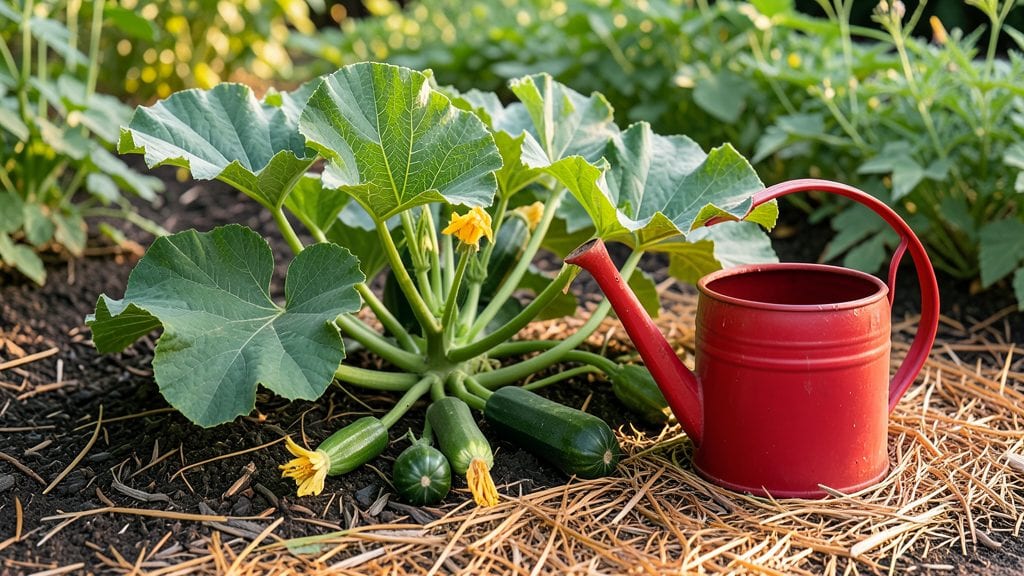
Watering squash plants in the morning isn't just a habit—it's the secret to bursting vines and heavy fruit set. I learned this after my zucchini plants produced tiny, bitter fruit because they were stressed from afternoon watering. The right routine turns floppy vines into productive powerhouses within weeks.
Start with deep, slow watering at the base of the plant—never overhead—using a soaker hose or drip system to keep leaves dry. Aim for 1-1.5 inches of water per week, adjusting for heat waves.
Squash roots run deep, so shallow puddles fool them into thinking they're thirsty, leading to weak growth. A simple moisture meter helps track soil conditions without guesswork.
You'll know you're doing it right when vines stay firm and upright, flowers bloom consistently, and fruit swells quickly after pollination. Overwatering causes blossom-end rot or powdery mildew, while underwatering leads to bitter fruit and stunted growth.
The morning routine prevents both by letting foliage dry before evening humidity sets in.
For container-grown squash, check soil moisture daily—small pots dry out fast. Mulch heavily with straw to lock in moisture and keep roots cool. This method works for all summer squash varieties, from zucchini to pattypan, and even winter squash like butternut when young.
Stick with it, and your harvest will thank you.
📚 In This Guide
- What you need
- Instructions
- Tips and common mistakes
- Wrapping up and next steps
What you need
- ● Water source: Hose with adjustable nozzle (or a watering can with a long spout for precision).
- ○ Watering schedule: Timer or phone reminder (optional but helpful for consistency).
- ● Mulch: Straw, grass clippings, or shredded leaves (2–3 inches thick) to retain moisture.
- ○ Drip irrigation system (optional but recommended): Soaker hoses or micro-sprinklers for deep, even watering.
- ● Well-draining soil (squash hates soggy roots!). Test soil moisture by sticking your finger 1–2 inches deep.
- ● Access to early-morning sunlight (6–9 AM) for watering.
- ● Knowledge of your squash variety’s water needs (e.g., summer squash vs. winter squash).
- ● 💡 Rain gauge: Track natural rainfall to avoid overwatering.
- ● 🌡️ Thermometer: Water when temps are below 85°F to reduce evaporation.
- ● 🎯 pH test kit: Ensure soil pH is 6.0–6.8 for optimal nutrient uptake.
Instructions for watering squash plants to boost fruit production
Here's the precise morning routine I use to keep squash vines thriving and loaded with fruit.
Check Soil Moisture Before Watering
First thing in the morning, reach down and feel the top 2-3 inches of soil around the base of the plant. Squash roots need consistent moisture but hate soggy conditions. If the soil feels cool and damp ½ inch down, hold off on watering—overwatering stresses vines and leads to blossom-end rot. The ideal moisture level is like a wrung-out sponge: damp but not dripping.
If the soil feels dry at the surface but still moist deeper down, that's your cue to water. Squash plants are heavy drinkers, especially when flowering and fruiting, so don't wait until the soil is bone-dry. Morning watering also prevents fungal diseases by allowing foliage to dry quickly during the day.
Water Deeply at the Base
Use a soaker hose or drip irrigation to deliver water slowly at the plant's base, avoiding the leaves. Aim for 1-1½ gallons per plant per watering, depending on soil type and heat. Sandy soil drains faster, so you may need to water more frequently, while clay holds moisture longer. Water until you see moisture seeping out of the drainage holes if your container has them.
This deep watering encourages roots to grow downward rather than staying shallow. Shallow roots mean weaker plants that can't support heavy fruit loads. I always water in the morning so the vines have all day to photosynthesize and recover from the moisture boost before evening heat sets in.
Monitor for Signs of Stress
After watering, check the plant's leaves for signs of proper hydration. Healthy squash leaves should be deep green and slightly crisp to the touch. If leaves feel limp or wilted even after watering, the roots may be struggling—this could mean compacted soil or root-bound conditions. Yellowing leaves often signal overwatering, while crispy edges point to underwatering.
Pay special attention to the first true leaves that form near the stem. These are the most sensitive to moisture fluctuations. If they start curling or drooping, adjust your watering schedule immediately. Squash plants are resilient, but they won't produce fruit if they're constantly stressed from inconsistent watering.
Adjust for Weather and Growth Stages
During hot, dry spells, you may need to water every morning, while cooler weather might only require watering every 2-3 days. When flowers appear, increase water slightly—this helps pollination by keeping nectar-producing flowers hydrated. Once fruit sets, maintain steady moisture to prevent cracking, which happens when soil dries out unevenly.
I also watch the growth rate of the vines. Rapid new growth means the plant is thirsty and needs more frequent watering. Slower growth during hot days might just mean the plant is conserving water—don't overreact. The key is consistency: squash plants thrive on predictable moisture levels more than any other condition.
Prevent Common Watering Mistakes
One of the biggest mistakes is watering the leaves instead of the soil. Wet foliage invites powdery mildew, a fungal disease that can devastate a squash plant in weeks. Always direct water to the base and avoid overhead sprinkling. Another common error is letting soil dry out completely between waterings—this causes blossoms to drop before fruiting.
If you notice yellowing lower leaves, it's often a sign of overwatering or poor drainage. Amend heavy clay soil with compost to improve aeration, or add a layer of mulch to keep roots cool and moisture levels stable. The goal is to mimic the even, gentle rainfall squash plants would get in their native tropical environments.
Tips & tricks for watering squash plants
A few precise techniques will transform your squash plants from struggling vines to prolific producers. The devil is in the details when it comes to moisture management.
Soil Texture Matters: The ideal moisture level described in Step 1—like a wrung-out sponge—requires understanding your soil type. In sandy soil, water penetrates quickly, so you may need to apply the full 1-1½ gallons per plant more frequently, sometimes twice daily during extreme heat. For clay-heavy soil, spread the watering across two sessions: morning and late afternoon to prevent surface crusting that blocks root absorption. I've seen squash plants double their fruit production simply by adjusting to their native soil's moisture retention characteristics.
Root Development Strategy: When you water deeply at the base as instructed in Step 2, you're not just hydrating—you're shaping your plant's future. The goal is to encourage roots to grow downward where they'll find stable moisture. To enhance this, I recommend creating a small trench around the plant's base before watering. Pour water into this trench rather than directly at the stem. This directs moisture deeper into the soil profile where roots will follow, creating a stronger structural foundation for heavy fruit loads.
Stress Signs Decoded: The leaf condition checks in Step 3 reveal more than just hydration status—they're a direct communication from your plant. For instance, crispy edges on older leaves while newer growth remains plump often indicates inconsistent watering patterns. What's happening is the plant is prioritizing new growth over maintaining older foliage. To correct this, establish a strict morning watering schedule and supplement with a light evening watering during heatwaves. The key is consistency that mimics natural rainfall patterns.
Seasonal Adjustments: The 2-3 day watering window mentioned for cooler weather can expand to 4-5 days in early spring or fall when temperatures dip below 70°F. However, during the critical flowering and fruiting stages (typically mid-summer), I've found that even a single day of missed watering can cause blossoms to drop. To prevent this, I set up a simple drip irrigation system on a timer that delivers ½ gallon per plant during these sensitive periods, ensuring no day goes without proper hydration.
Pro Tips for Watering Squash Plants
- A few precise techniques will transform your squash plants from struggling vines to prolific producers.
- Soil Texture Matters: The ideal moisture level described in Step 1—like a wrung-out sponge—requires understanding your soil type.
- Root Development Strategy: When you water deeply at the base as instructed in Step 2, you're not just hydrating—you're shaping your plant's future.
Frequently asked questions
Got questions about keeping your squash plants thriving with the perfect watering routine?
You’re not alone! Here are answers to the most common queries—so you can grow big, healthy squash without the guesswork.
How often should I water squash plants?
Water squash plants deeply 1-2 times per week, depending on your climate. Aim for 1-2 inches of water per week, ensuring the soil stays moist but not soggy. Morning watering is key—it reduces disease risk and helps roots absorb moisture efficiently. During heatwaves, you may need to water every 2-3 days.
What’s the best time of day to water squash?
Always water in the early morning (6-9 AM). This gives leaves time to dry before evening, preventing fungal diseases like powdery mildew. Avoid watering at night or during peak sun—it wastes water and stresses plants. A drip irrigation system or soaker hose works best for consistent moisture.
Can I use rainwater or tap water for squash plants?
Both work, but rainwater is ideal—it’s naturally soft and free of chlorine/fluoride that can harm plants. If using tap water, let it sit out for 24 hours to dissipate chemicals. Avoid water with high salt content (test with a soil moisture meter if unsure). Mulching helps retain rainwater and reduces evaporation.
Why are my squash leaves yellowing after watering?
Yellow leaves often signal overwatering or poor drainage. Check if the soil feels muddy or smells sour—this means roots are suffocating. Fix it by:
- Watering less frequently but deeper.
- Improving soil drainage with compost or perlite.
- Avoiding wet foliage (water at the base).
How do I adjust watering for extreme heat or cold?
| Condition | Watering Adjustments |
|---|---|
| Heatwaves (90°F+) | Water every 2-3 days at dawn. Use mulch to lock in moisture and shade cloth to protect leaves. |
| Cold snaps (below 50°F) | Reduce to 1x per week unless soil is bone-dry. Focus on root health—cold stress slows water uptake. |
Pro tip:
Monitor soil moisture with your finger—1-2 inches deep should feel damp, not dry or waterlogged.
Wrapping up and next steps
Mastering the art of watering squash plants in the morning isn’t just about technique—it’s about giving your garden the love it needs to thrive! 🌱 By keeping soil consistently moist, avoiding wet foliage, and adjusting for your local climate, you’ll set the stage for bountiful, healthy fruit.
Remember, consistency is key, so stick with your routine and watch your squash plants reward you with a harvest to be proud of.
Ready to take the next step? Try tracking your watering schedule for a week—note how your plants respond to morning hydration. Soon, you’ll have a foolproof system tailored just for your garden! 🌞