
Planting
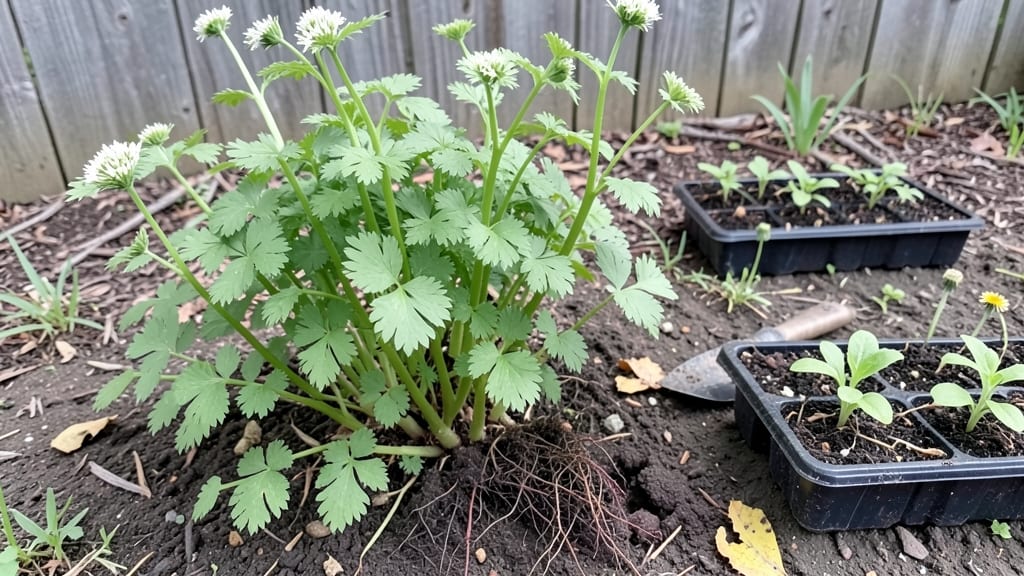
Here are some essential coriander planting tips—master them, and you’ll skip the bitter bolts and bolt straight to fragrant harvests. and moisture that never pools. Skip these, and you’ll end up with plants that either drown or taste like soap.
The secret isn’t complicated: mix in compost before planting, avoid heavy clay, and keep the soil slightly moist but never soggy. Direct-sow seeds every 2-3 weeks for a steady harvest, and pinch off flowers as soon as they appear to delay bolting.
Even in containers, coriander thrives if you give it 4-6 hours of sunlight daily and a pot with drainage holes.
📚 In This Guide
- What you need
- Instructions
- Tips and common mistakes
- Wrapping up and next steps
What you need
- ● Coriander seeds: 1–2 tbsp (or a small packet of organic seeds for ~100 plants). Choose Coriander sativum varieties like 'Santo' or 'Calypso' for best results.
- ● Containers or garden bed: For containers: 6–12-inch deep pots (1–2 plants per 6-inch pot) with drainage holes.
- ● For garden beds: Well-draining soil in a sunny spot (6+ hours of sunlight daily).
- ● Potting mix: 2–3 gallons of high-quality, well-draining soil (e.g., Miracle-Gro Potting Mix or a 50/50 blend of garden soil + compost).
- ● Watering can or hose: With a gentle spray nozzle for even moisture.
- ○ Fertilizer (optional but recommended): Balanced organic fertilizer (e.g., 10-10-10) or compost tea for a nutrient boost.
- ● Seedling trays: For starting seeds indoors 2–3 weeks before the last frost.
- ● Mulch: Straw or shredded leaves to retain moisture and suppress weeds.
- ● Plant labels: To track varieties and planting dates.
- ● Pruning shears: For harvesting leaves and encouraging bushier growth.
- ● Shade cloth: If your climate gets scorching hot (30–50% shade on peak days).
Step-by-Step coriander planting for a bountiful harvest
Here's the straightforward method I've used to grow coriander that stays fresh and flavorful for months.
Choose the Right Location and Prepare the Soil
Coriander thrives in well-draining soil with a slightly acidic to neutral pH. Pick a spot that gets full sun to partial shade—at least 6 hours of sunlight daily—but protect it from intense afternoon heat if you're in a hot climate. I always test the soil first by pressing my finger into it; it should feel loose and crumbly, not compacted or sticky.
Before planting, loosen the top 6 inches of soil with a garden fork to improve drainage. Mix in a handful of compost to enrich the soil naturally. Coriander is sensitive to heavy or clay-like soil, so if yours is dense, add a thin layer of sand or perlite to help aerate it. This step ensures your plants won’t struggle with waterlogged roots or poor nutrient uptake.
Direct Sow Seeds at the Correct Depth and Spacing
Coriander seeds should be sown directly into the ground—transplants rarely do well. Scatter the seeds ¼ inch deep and 1 inch apart in rows that are 12 inches apart. I like to use a small hand rake to create shallow furrows, which makes sowing more precise and ensures consistent depth. Press the seeds lightly into the soil but don’t cover them with too much dirt; they need light to germinate properly.
Thin the seedlings to 6 inches apart once they reach 2 inches tall. This might seem harsh, but crowded plants lead to leggy, weak stems and bitter leaves. I always pull the thinnest seedlings first, leaving the strongest ones to grow. Water gently after sowing to settle the soil around the seeds, but avoid soaking the area—coriander seeds need moisture, not saturation.
Water Consistently Without Overdoing It
Keep the soil evenly moist but never soggy. Water deeply once a week, providing about ½ inch of water per session, and adjust based on rainfall. I check moisture by sticking my finger 1 inch into the soil; if it feels dry, it’s time to water. Overwatering causes the roots to rot, while underwatering leads to bolted, bitter-tasting plants. Mulch around the base with a thin layer of straw or grass clippings to retain moisture and suppress weeds.
Coriander is drought-sensitive, so don’t let the soil dry out completely. If you notice the leaves wilting or curling, it’s a sign the plant needs water. However, avoid wetting the leaves themselves, as this can encourage fungal diseases. Water at the base in the morning so the foliage has time to dry before evening.
Harvest Regularly to Encourage Continuous Growth
Start harvesting coriander leaves when they reach 3-4 inches tall. Use clean, sharp scissors to snip the outer leaves, leaving the inner growth intact. This method encourages the plant to keep producing new foliage. I always harvest in the morning after the dew has dried, as the leaves are crispest and most flavorful then. Avoid cutting more than ⅓ of the plant at a time—this prevents stress and bolting.
If you wait too long to harvest, the plant may bolt, or send up a flower stalk, which makes the leaves bitter. To delay bolting, keep the soil consistently moist and avoid letting the plant dry out. If you notice flower buds forming, harvest the leaves immediately and save the seeds for future planting if desired. Regular harvesting not only keeps your coriander productive but also ensures the best flavor.
Protect Plants from Pests and Bolting
Coriander is susceptible to aphids, spider mites, and leaf miners. Inspect the plants weekly for signs of pests, such as yellowing leaves, webbing, or tiny holes. If you spot aphids, blast them off with a strong stream of water or spray the plant with neem oil. I also use floating row covers early in the season to deter pests before they become a problem.
Bolting is the biggest challenge with coriander. To prevent it, avoid planting in hot weather—opt for early spring or late summer instead. If your climate is warm year-round, grow coriander in partial shade and keep the soil cool with mulch. If bolting does occur, harvest the leaves immediately and save the seeds for next season’s planting.
Tips & tricks for perfect coriander planting
These three soil secrets will transform your coriander from struggling to thriving—no green thumb required.
Soil Preparation Secret: When loosening the top 6 inches of soil in Step 1, don't just break it up—create a fluffy texture. I use a garden fork to create small air pockets, which helps coriander's shallow roots breathe. If your soil is particularly dense, mix in a thin layer of coarse sand or perlite right below the planting line. This prevents waterlogging, which is coriander's biggest enemy after heat.
Seed Sowing Precision: In Step 2, those ¼-inch deep seeds need perfect conditions to germinate. I make shallow furrows with a small hand rake first, then scatter seeds along them. Press them lightly with your fingers—just enough to make contact with soil, but not so much that you bury them. Coriander seeds need light to sprout, so keep them uncovered after planting. A gentle mist with a spray bottle helps settle them without disturbing their position.
Watering Wisdom: The once-weekly watering in Step 3 works best when you check moisture properly. Stick your finger 1 inch deep—if it feels dry at that depth, water until moisture reaches 2 inches down. I always water at the base using a watering can with a narrow spout to avoid wetting the leaves. This prevents fungal diseases while keeping roots consistently moist. Morning watering gives leaves time to dry completely before evening, which is crucial for preventing mildew.
Harvesting Technique: When harvesting those 3-4 inch leaves in Step 4, use clean scissors and cut just above a leaf node. This encourages new growth from that point. I harvest every 2-3 weeks, never taking more than ⅓ of the plant at once. The key is consistency—regular harvesting prevents bolting by keeping the plant focused on leaf production rather than flowering. Always harvest in the morning when leaves are at their crispest and most flavorful.
Pro Tips for Coriander Planting Tips
- These three soil secrets will transform your coriander from struggling to thriving—no green thumb required.
- Soil Preparation Secret: When loosening the top 6 inches of soil in Step 1, don't just break it up—create a fluffy texture.
- Seed Sowing Precision: In Step 2, those ¼-inch deep seeds need perfect conditions to germinate.
Frequently asked questions
Got questions about growing coriander? You’re not alone!
Here are answers to the most common queries—from timing to troubleshooting—to help you cultivate a thriving herb garden with confidence.
When is the best time to plant coriander?
Coriander thrives in cool weather, so aim to plant seeds in early spring or late summer/fall (after the last frost). Avoid hot summers—it bolts quickly when temperatures rise above 80°F (27°C). For year-round harvests, try succession planting every 2–3 weeks.
Why does my coriander bolt so fast?
Bolting (premature flowering) happens when coriander senses heat or long daylight. To delay it:
- Plant in partial shade during peak summer.
- Use shade cloth (30–50%) if growing in hot climates.
- Choose bolting-resistant varieties like ‘Calypso’ or ‘Santo.’
Can I grow coriander indoors?
Use a sunny windowsill (6+ hours of light) or a grow light for 12–14 hours/day. A 6-inch pot with well-draining soil works—just keep it consistently moist (not soggy). Indoors, it’s less prone to bolting, so you’ll get more harvests!
What can I do if my coriander leaves taste bitter?
Bitter flavor usually means the plant is stressed or flowering. Fix it by:
- Harvesting young leaves (before seed heads form).
- Avoiding overcrowding—thin seedlings to 6 inches apart.
- Using compost-rich soil (poor soil = bitter herbs).
What’s a good alternative if coriander won’t grow in my climate?
Try these similar herbs for fresh flavor:
- Cilantro (coriander) substitutes: Parsley (milder), dill (anise-like), or basil (for Mediterranean dishes).
- For Asian dishes: Vietnamese coriander (rau răm) or Chinese parsley.
- For Indian cooking: Fresh mint or curry leaves (if you’re adventurous!).
Wrapping up and next steps
Growing coriander is easier than you think—just remember these 3 soil secrets: well-draining soil, balanced pH, and rich organic matter. With the right conditions, you’ll enjoy fresh, vibrant leaves in no time! 🌱
Now that you’re armed with pro tips, roll up your sleeves and get planting. Start small—try a few seeds in a pot or a dedicated garden bed—and watch your coriander thrive. Before you know it, you’ll be harvesting fresh herbs for your favorite dishes. Happy gardening! 🌿