Planting
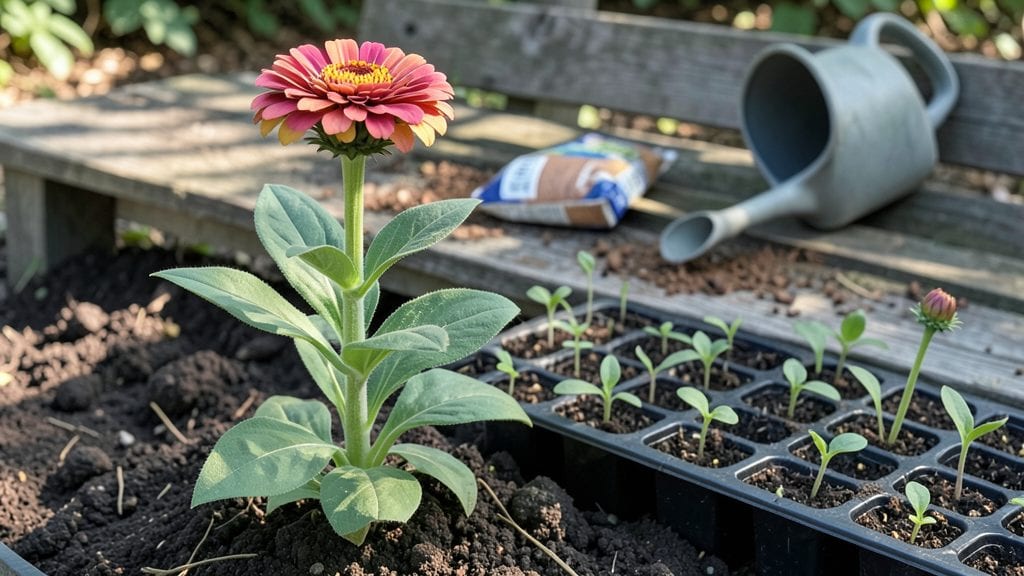
Here are the best zinnia planting tips to turn your garden into a summer-long burst of color—from sun-kissed petals to frost—without the guesswork. I made as a beginner.
The difference between a few sad stems and a towering display of cut flowers is in the details, and I’ll show you exactly how to nail them.
Zinnias thrive in full sun, so pick the brightest spot you’ve got—at least 6 hours of direct sunlight daily.
The soil should drain well (they hate soggy feet), and planting depth matters: press seeds just ¼ inch deep, about 12 inches apart for varieties like ‘Benary’s Giant’ or 6 inches apart for smaller types.
Water gently after planting, keeping the soil moist but never soggy until those first green leaves appear.
📚 In This Guide
- What you need
- Instructions
- Tips and common mistakes
- Wrapping up and next steps
What you need
- ● Zinnia seeds: Choose heirloom or hybrid varieties (e.g., 'Benary’s Giant,' 'Profusion'). Plant 3–5 seeds per hole (thin later) or 1 seed every 6–12 inches for direct sowing.
- ● Well-draining potting mix or garden soil: 6–8 inches deep for containers; amend garden beds with compost (2–3 inches) for fertility.
- ● Balanced fertilizer (10-10-10 or 5-10-10): 1 tbsp per plant at planting and again when flowers appear.
- ● Watering can or hose with a gentle spray nozzle: Zinnias hate soggy roots—aim for 1 inch of water per week.
- ○ Stakes or cages (optional but helpful): Tall varieties (like 'State Fair') may need 6-inch stakes for support.
- ● Hand trowel or transplanting spade: For digging holes ¼-inch deep (seeds are tiny!).
- ● Garden gloves: Protect your hands from thorny stems (some varieties!) and dirt.
- ● Pruning shears: For deadheading spent blooms to encourage longer stems and more flowers.
- ● Mulch (straw or shredded leaves): 2-inch layer to retain moisture and suppress weeds.
- ● Full sun (6+ hours daily): Zinnias thrive in hot, sunny spots—partial shade = fewer blooms.
- ● Warm soil (60°F+): Wait until after the last frost (or start indoors 4–6 weeks before transplanting).
- ● Spacing: 12–18 inches apart for bushy varieties; 6–12 inches for dwarf types.
Step-by-step instructions for planting zinnias
These sun-loving annuals thrive with the right timing and placement—here's how to unlock their full potential.
Choose the Perfect Planting Location
Zinnias demand full sun exposure—at least 6-8 hours of direct sunlight daily—to produce those iconic long-stemmed blooms. I always scout locations with southern or western exposure first, as these areas receive the most intense afternoon light. Avoid spots where trees or buildings cast long shadows, as even partial shade can lead to leggy growth and fewer flowers.
Test your site by observing how much sunlight it gets over a week. Mark the area with a small stake or flag once you confirm it meets the light requirements. Zinnias also need well-draining soil—if your garden retains water, amend the area with 2-3 inches of coarse sand or perlite mixed into the top 12 inches of soil. This prevents root rot, which can quickly kill seedlings.
Prepare the Soil for Optimal Growth
Before planting, loosen the soil to a depth of 12 inches using a garden fork or tiller. This breaks up compacted layers and encourages root penetration. Work in 2-3 inches of compost or well-rotted manure to enrich the soil with organic matter. Zinnias are not heavy feeders, but they do appreciate fertile ground for strong stems and vibrant blooms.
For container planting, fill pots with a lightweight potting mix blended with 20% perlite or vermiculite to ensure drainage. I like to add a slow-release granular fertilizer at planting time—just follow the package rate for annual flowers. Avoid fresh manure, as it can burn tender roots and delay flowering.
Plant Seeds at the Right Depth and Spacing
Sow seeds ¼ inch deep, pressing them lightly into the soil but not covering them with more than a thin layer of mix. Zinnia seeds germinate best in warm soil (70-80°F), so wait until all danger of frost has passed in your area. I plant mine 2-3 weeks after the last frost date for the best results. Space seeds 12-18 inches apart in rows 18-24 inches apart—this gives flowers room to grow without overcrowding, which reduces air circulation and invites disease.
Thin seedlings to the strongest 3-4 per square foot once they develop 2-3 true leaves. Use scissors to snip unwanted seedlings at soil level—this prevents disturbing the roots of nearby plants. Water gently after thinning to help the remaining seedlings establish quickly.
Water and Maintain for Long-Stemmed Blooms
Keep the soil evenly moist but never soggy during germination and the first 4-6 weeks of growth. Water at the base of plants in the early morning to allow foliage to dry quickly, reducing the risk of fungal diseases. Once established, zinnias are drought-tolerant, but consistent moisture encourages stronger stems and larger blooms. Let the top 1-2 inches of soil dry out between waterings to prevent root rot.
Deadhead spent blooms regularly by pinching off faded flowers just above the next set of leaves. This redirects the plant’s energy into producing more blooms instead of setting seed. I also remove any yellowing or diseased leaves immediately—this prevents the spread of powdery mildew, a common issue in humid climates. A light application of neem oil every 2-3 weeks acts as a preventative measure against pests and diseases.
Support Tall Varieties for Sturdier Stems
Taller zinnia varieties, like 'Benary’s Giant' or 'Profusion,' often need support to prevent flopping in wind or rain. Install bamboo stakes or tomato cages at planting time, gently weaving stems through the supports as they grow. For a more natural look, I weave 3-4 stakes around the plant in a loose circle, tying them together at the top with soft twine. This allows the plant to grow upright while still having room to sway slightly.
If you’re growing zinnias for cutting, harvest stems in the early morning when moisture levels are highest. Cut just above a set of leaves or a side shoot to encourage branching. Bring stems indoors immediately and recut the ends under water to extend vase life. With proper care, zinnias will continue blooming until the first hard frost, providing 8-10 weeks of vibrant color.
Tips & tricks for perfect zinnia planting
Here's what I've learned from years of growing zinnias—these secrets make all the difference between average blooms and showstopping stems.
Location Intelligence: That 6-8 hours of sunlight is non-negotiable for zinnias, but here's the real trick: focus on the afternoon sun. Southern or western exposures get the most intense light, which is what pushes those stems to grow tall and strong. I've seen zinnias in northern exposures struggle—even if they get morning sun, the afternoon shade weakens stems and reduces blooms. Mark your spot with a stake after observing sunlight patterns for a full week.
Soil Science: When amending your soil with 2-3 inches of compost, don't just dump it on top. Work it into the first 12 inches of soil to create a loose, crumbly texture that roots can penetrate easily. For container planting, that 20% perlite isn't optional—it's what prevents the dreaded root rot that kills seedlings before they even get going. I've lost entire batches when I skipped this step in my early attempts.
Timing is Everything: The 2-3 weeks after last frost is your planting window, but don't rush it. Soil needs to reach at least 70°F for those zinnia seeds to germinate properly. I check soil temperature with a thermometer—anything below 70°F and germination slows dramatically. Also, those ¼-inch deep seeds need consistent moisture to sprout, so water gently but thoroughly after planting, keeping the soil evenly moist during those first critical 4-6 weeks.
Support System: For tall varieties, don't wait until they're flopping to add support. Install those bamboo stakes or tomato cages at planting time—it's much easier to weave stems through supports when they're young. I use 3-4 stakes arranged in a loose circle for a natural look, tying them with soft twine at the top. This gives the plant room to sway slightly while still maintaining upright growth, which is crucial for those long-stemmed blooms you're after.
Pro Tips for Zinnia Planting Tips
- Here's what I've learned from years of growing zinnias—these secrets make all the difference between average blooms and showstopping stems.
- Location Intelligence: That 6-8 hours of sunlight is non-negotiable for zinnias, but here's the real trick: focus on the afternoon sun.
- Soil Science: When amending your soil with 2-3 inches of compost, don't just dump it on top.
Frequently asked questions
Got questions about growing zinnias? You’re not alone! Here are answers to the most common queries to help you cultivate stunning blooms with confidence.
When is the best time to plant zinnias?
Zinnias thrive in warm soil, so plant them after the last frost when nighttime temperatures stay above 50°F (10°C). For a longer bloom season, start seeds indoors 4–6 weeks before your last frost date or sow directly in spring. In warm climates, you can also plant in early fall for winter color!
How long does it take for zinnias to flower?
With proper care, zinnias typically bloom 6–10 weeks after planting. Early varieties may flower sooner, while taller types take a bit longer. Pinch back young plants to encourage bushier growth and more flowers—it’s like giving them a little "haircut" for better blooms!
What pests or diseases should I watch for?
Zinnias are generally pest-resistant, but keep an eye out for aphids, spider mites, and Japanese beetles. For diseases, powdery mildew can be a issue in humid conditions—improve airflow and avoid overhead watering. Remove affected leaves promptly and treat with neem oil if needed.
Can I grow zinnias in containers or small spaces?
Dwarf zinnias (like ‘Thumbelina’ or ‘Crystal’) are perfect for containers, window boxes, or small gardens. Use a 5–6 inch pot per plant and ensure it has drainage. Place containers in full sun (6+ hours daily) and deadhead regularly to keep blooms coming.
Why aren’t my zinnias blooming?
Lack of blooms often means your plant is putting energy into foliage instead. Check these fixes:
Too much shade? Move to full sun (6+ hours daily).
Over-fertilizing? Zinnias prefer lean soil—cut back on high-nitrogen fertilizer.
Not deadheading? Snip spent blooms to encourage new flowers.
Stressed roots? Ensure consistent watering (1 inch per week) but avoid soggy soil.
Give it time—some varieties need 2–3 months to reach peak bloom!Wrapping up and next steps
Planting zinnias is a rewarding way to bring vibrant color and cheerful blooms to your garden! 🌸 With the right sunlight, soil prep, and care, these sun-loving flowers will thrive and reward you with stunning long-stemmed blooms.
Whether you're a beginner or a seasoned gardener, follow these tips to create a thriving zinnia patch that brightens up your outdoor space.
Now that you’re equipped with the know-how, it’s time to roll up your sleeves and get planting! Start by choosing a sunny spot, preparing the soil, and selecting your favorite varieties.
Before you know it, your garden will be bursting with color—so grab your gloves and enjoy the process! 🌞🌱