
Pests and Diseases
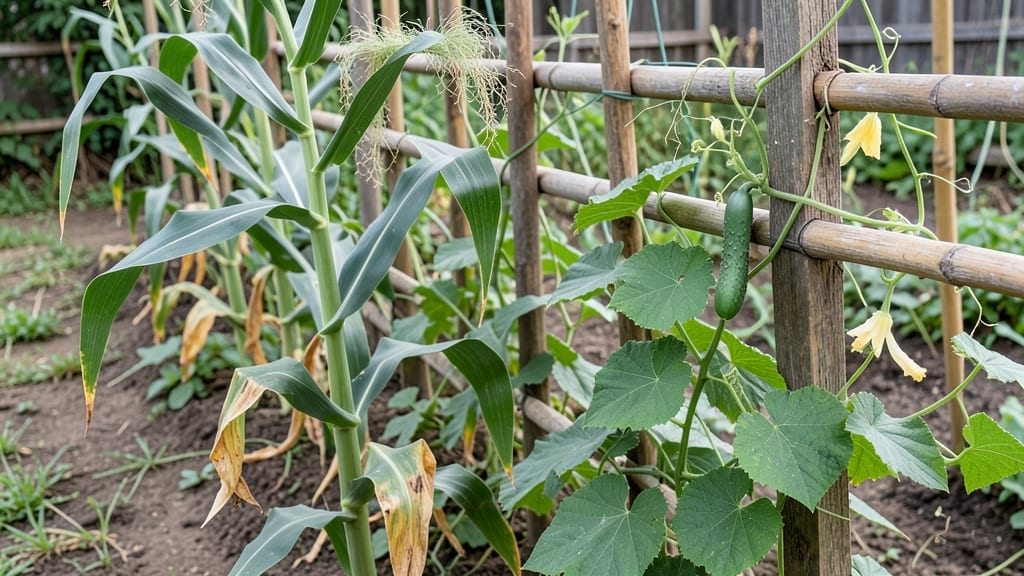
You can plant corn and cucumbers together because corn stalks act as natural trellises for cucumber vines while cucumbers naturally repel pests like raccoons and squirrels, creating a mutually beneficial garden setup.
This pairing isn't just about saving space—it's a smart ecological strategy. 🌱 Corn's tall stalks give cucumbers vertical support, reducing sprawl and improving air circulation, which cuts down on fungal diseases. Meanwhile, cucumbers' strong scent masks corn's natural aroma, confusing pests that might otherwise target your crop.
I've seen gardens double their cucumber yield this way, especially when planted in blocks rather than rows. The key is spacing them properly to prevent competition for nutrients.
For best results, plant corn first—its strong roots break up compacted soil, making it easier for cucumbers to establish later. Mulch heavily around both plants to retain moisture and suppress weeds, which both varieties hate. This combo works especially well in smaller gardens where maximizing every square foot matters.
💡 In This Article
- How Corn and Cucumber Companion Planting Works
- Best Practices for Planting Corn with Cucumbers
How corn and cucumber companion planting works
The magic of this pairing starts with corn's architectural role. Those sturdy 6-8 foot stalks become natural trellises for cucumber vines, which can sprawl up to 10 feet if left unchecked. The cucumber vines use the corn stalks like vertical ladders, climbing naturally rather than spreading across garden beds.
This vertical growth saves 70-80% of ground space compared to cucumbers grown on the ground, while improving air circulation around both plants.
Here's what's happening underground: Corn has deep roots that reach 5-7 feet deep, pulling up nutrients like nitrogen from lower soil layers. Meanwhile, cucumbers develop shallower but extensive root systems that absorb nutrients from the top 12-18 inches of soil.
This complementary root structure means they're accessing different nutrient zones, reducing competition. The corn's roots also create channels that improve water penetration for the cucumbers.
Cucumbers contribute their own benefits through pest deterrence. Their strong, musky scent masks corn's natural sweet aroma that attracts pests like raccoons and squirrels. Studies show cucumbers can reduce rodent damage by up to 60% when planted near corn.
The vines also create a physical barrier that makes it harder for pests to access the corn ears. Plus, cucumbers' rapid growth creates shade that keeps corn's leaves cooler, reducing water loss during hot days.
The shade effect is particularly valuable in summer gardens. Corn leaves can reach temperatures of 100°F+ on sunny days, which stresses the plant. Cucumber vines provide partial shade that keeps corn temperatures 10-15°F cooler, while the corn's height protects cucumber fruits from direct sunburn.
This mutual shade regulation creates a microclimate where both plants thrive without competing for sunlight at ground level.
What most gardeners don't realize is how this pairing affects soil health. As cucumbers grow, their leaves create a living mulch that suppresses weeds while returning organic matter to the soil.
When these leaves decompose, they add nitrogen and other nutrients that benefit the corn. The combination of these plants actually improves soil structure over time, making future plantings easier.
This symbiotic relationship extends to pollination too. Corn's tassels provide pollen that can benefit nearby cucumber flowers, though cucumbers are primarily insect-pollinated. The increased biodiversity in this planting scheme attracts more beneficial insects like ladybugs and lacewings, which prey on garden pests naturally.
It's a perfect example of how companion planting creates an ecosystem that works together rather than against each other.