
Pests and Diseases
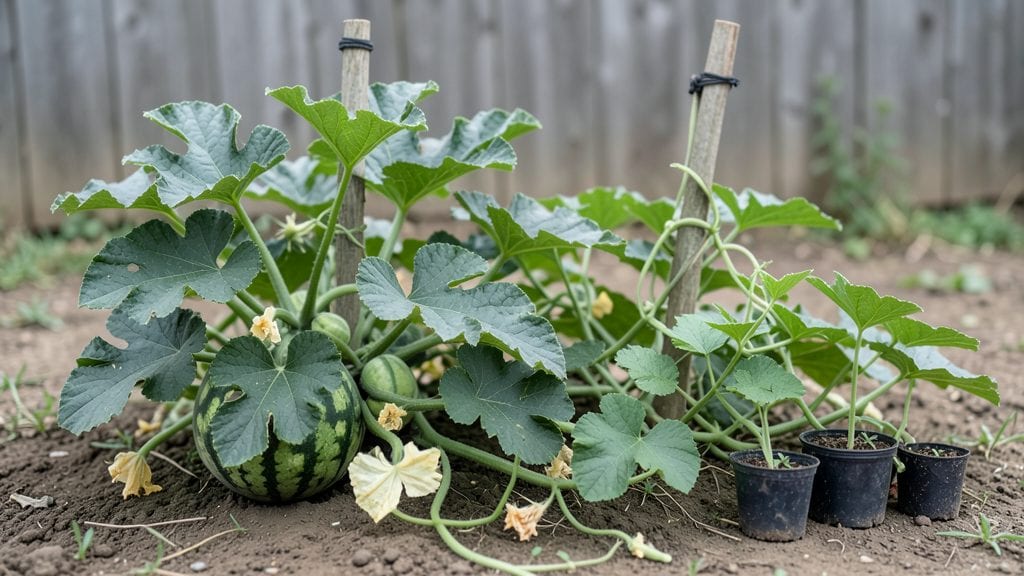
Yes, watermelon and cucumber can be planted together since they share similar growing needs, but proper spacing and companion planting techniques are essential to optimize growth and minimize disease risks. Both plants thrive in warm climates with full sun and well-draining soil, though cucumbers require more consistent moisture.
These two vining plants actually complement each other beautifully when planted strategically. Watermelons benefit from cucumbers' shade during peak summer heat, while cucumbers appreciate the watermelons' deep roots that help break up compacted soil.
The key is spacing them properly—watermelons need 3-6 feet between plants, while cucumbers can be placed 1-2 feet apart in between.
I've found that using raised beds or trellises helps maximize vertical space and improves airflow, which is crucial for preventing fungal diseases like powdery mildew that both plants are susceptible to. 💫
One common mistake is letting cucumbers climb directly onto watermelon vines, as this can spread diseases between the plants. Instead, I recommend installing separate trellises or allowing cucumbers to vine along the ground while keeping watermelons in their own designated space.
This separation also helps manage watering needs—cucumbers typically require daily watering while watermelons prefer deeper but less frequent watering.
💡 In This Article
- Growing Conditions for Watermelon and Cucumber Companion Planting
- Best Practices for Maximizing Yield in Mixed Plantings
Growing conditions for watermelon and cucumber companion planting
Both watermelon and cucumber thrive in the same warm climate conditions, requiring full sun exposure (6-8 hours daily) and well-draining soil with a slightly acidic to neutral pH range of 6.0-6.8.
Their root systems differ significantly—watermelons develop deep taproots that can reach 3-4 feet underground, while cucumbers have fibrous roots that spread horizontally within the top 12 inches of soil.
This difference allows them to share space without directly competing for nutrients, but proper spacing is still critical to prevent overcrowding and disease spread.
The key to successful companion planting lies in understanding their watering needs. Cucumbers require consistent moisture, often needing watering every 1-2 days to maintain soil humidity, while watermelons prefer deep but less frequent watering (every 3-5 days) to encourage root development.
The solution? Use drip irrigation or soaker hoses to deliver water directly to the root zones—cucumbers at the surface and watermelons deeper—while avoiding overhead watering that can spread fungal spores like powdery mildew. 💧
Temperature preferences also overlap perfectly, with both plants requiring soil temperatures above 70°F to germinate and grow. Watermelons tolerate slightly higher heat (up to 95°F) better than cucumbers, which may develop bitter flavors or blossom-end rot in extreme heat.
Planting cucumbers on the north side of watermelon hills provides shade during peak afternoon sun, reducing stress on both plants while maintaining optimal growing conditions.
Nutrient competition becomes a concern when planting these vining plants too closely. Both are heavy feeders, requiring high levels of nitrogen, phosphorus, and potassium.
To prevent depletion, amend the soil with compost or well-rotted manure before planting and consider side-dressing with organic fertilizer (like fish emulsion) every 4-6 weeks.
Watermelons benefit from additional phosphorus for root development, while cucumbers need more potassium for fruit production—this makes them complementary in mixed beds when spaced properly.
Here's what actually happens when spacing is ignored: Cucumber vines sprawling over watermelon leaves create humid microclimates that perfect for fungal diseases like powdery mildew, while crowded roots compete for moisture and nutrients. I've seen yields drop by 30-40% in tight plantings due to these issues.
The ideal solution is to plant watermelons in hills 5-6 feet apart with cucumbers in between, creating a natural buffer zone that improves airflow and reduces disease pressure.
One advanced technique I've used successfully is the "three sisters" adaptation for these plants: plant watermelons in the center of raised beds, cucumbers along the edges, and fast-growing radishes or lettuce in the spaces between.
This creates a living mulch that suppresses weeds while maintaining optimal growing conditions for both vining plants. The radishes also help break up compacted soil, improving root penetration for both watermelons and cucumbers. 🌱