
Pests
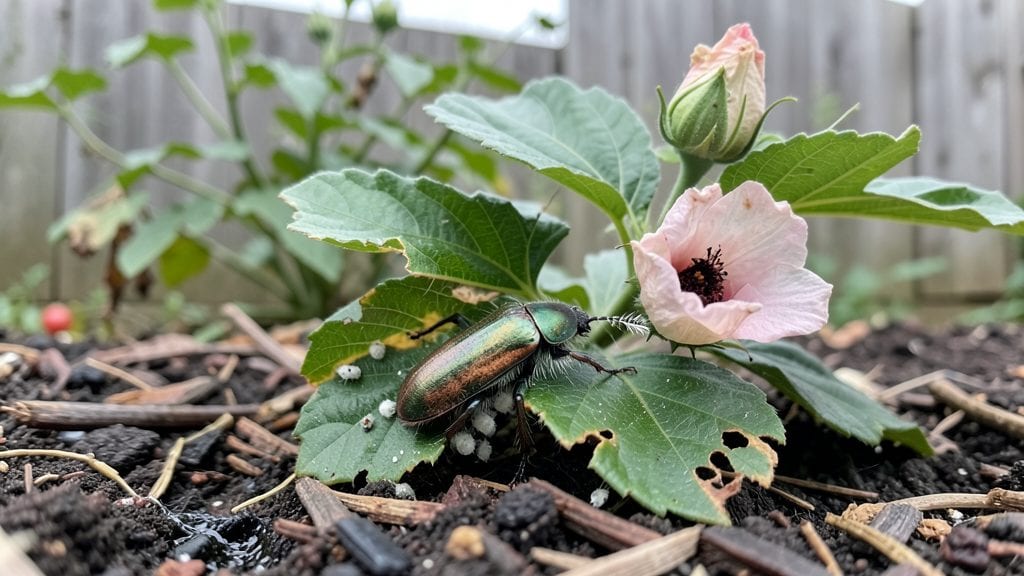
Hibiscus plants are commonly eaten by deer, rabbits, aphids, spider mites, and caterpillars like the hibiscus looper. Deer and rabbits target leaves and stems, while insects feed on foliage, flowers, and buds, often causing wilting or defoliation if left unchecked.
Hibiscus plants face threats from both large mammals and tiny insects, each leaving distinct signs of damage. 🌿 Deer and rabbits typically chew leaves and stems, creating jagged edges, while caterpillars like the hibiscus looper skeletonize foliage, leaving behind a lacy pattern.
Insects such as aphids and spider mites cluster on undersides of leaves, causing yellowing and stunted growth. These pests are most active during warm months, with outbreaks peaking in late spring and summer when hibiscus plants are most vulnerable.
Understanding the feeding patterns helps you spot early signs of trouble.
For example, aphids leave behind sticky residue called honeydew, while spider mites create fine webbing between leaves. 🔥 The key to protecting your hibiscus lies in identifying these pests early—before they cause irreversible damage to your plant's health and appearance.
💡 In This Article
- Identifying Common Pests and Herbivores Attacking Hibiscus
- Organic Pest Control Methods for Protecting Hibiscus
Identifying common pests and herbivores attacking hibiscus
Deer are the most destructive large herbivores for hibiscus, particularly in suburban and rural areas. They use their sharp incisors to create ragged, uneven edges on leaves, often targeting younger, more tender foliage first.
A single deer can consume up to 2 pounds of plant material per day, and their feeding activity peaks at dawn and dusk when they're most active.
In regions like the southeastern U.S., where hibiscus thrives, deer populations have surged by 30% in the last decade, making them a persistent threat.
Rabbits, on the other hand, take smaller, more precise bites that leave clean, straight-edged holes along leaf margins. Their feeding patterns are more scattered, often creating a "windowpane" effect where entire sections of leaves are removed.
Unlike deer, rabbits are active throughout the day but prefer early morning hours when humidity is highest. In cooler climates like the Pacific Northwest, rabbit damage can be severe during late winter and early spring when other food sources are scarce, leading to complete defoliation if unchecked.
Insect pests like the hibiscus looper caterpillar cause distinctive damage by skeletonizing leaves—they eat all the soft tissue between veins, leaving only the leaf veins intact. These caterpillars are most active during late spring and summer, with populations exploding in humid, tropical regions like Florida and Hawaii.
Aphids, another common pest, cluster on the undersides of leaves and excrete sticky honeydew, which attracts ants and promotes sooty mold growth. Spider mites, tiny arachnids visible only under magnification, create fine webbing between leaves and cause yellow stippling on foliage.
Seasonal variations play a critical role in pest prevalence. For example, aphid infestations often peak in early summer when hibiscus is actively growing, while spider mites thrive in hot, dry conditions—making them more common in arid regions like Arizona or California.
The hibiscus looper's lifecycle is tied to temperature, with larvae hatching most rapidly when daytime temperatures exceed 80°F. Understanding these patterns helps gardeners time their interventions effectively, whether through preventive measures or targeted treatments.
Regional differences also influence which pests pose the greatest threat. In the southeastern U.S., deer and rabbits are the primary concerns, while in coastal areas, salt-tolerant hibiscus varieties may attract different herbivores like palmetto bugs or armadillos.
Meanwhile, aphids and whiteflies are more prevalent in greenhouse-grown hibiscus due to controlled, humid environments. These variations mean that a one-size-fits-all approach to pest management rarely works—local knowledge and observation are key to protecting hibiscus effectively.
One often-overlooked detail is how pests target specific parts of the hibiscus plant. Deer and rabbits focus on leaves and stems, while insects like aphids and spider mites often attack new growth, buds, and flowers.
This selective feeding can weaken the plant's overall health, making it more susceptible to disease. For instance, heavy aphid feeding on hibiscus buds can lead to blossom drop, reducing the plant's ability to reproduce.
Recognizing these patterns allows gardeners to monitor vulnerable areas closely and intervene before significant damage occurs.