
Watering
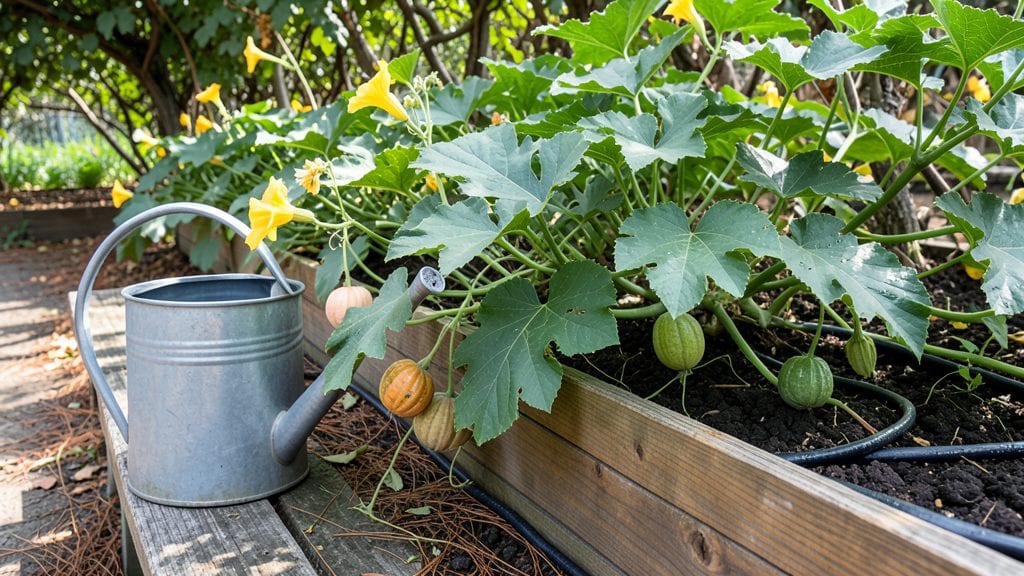
Watering pumpkin plants correctly is the difference between a bountiful harvest and a sad, wilted vine 🎃.
Pumpkin plants are thirsty giants—get the watering wrong, and your vines might sprawl without fruit, or your pumpkins could rot before harvest. Mastering soil moisture is the secret to growing healthy vines and plump, prize-winning pumpkins.
In Zone 6a, late spring planting means you’ll need to balance deep watering with avoiding soggy soil, especially as vines spread and fruit develops. Too little, and flowers drop; too much, and roots suffocate.
Below, I break down the exact schedule for each growth stage, how to check soil moisture like a pro, and the best times to water so your pumpkins thrive from seedling to harvest.


How much water do pumpkin plants need for optimal growth?
Pumpkins thrive when their roots stay consistently moist, but overwatering can drown them just as fast as underwatering stunts growth. The key is understanding their water needs by growth stage and adjusting for your local climate conditions.
Too little water means bitter fruit, while too much invites fungal diseases like powdery mildew. Let’s break down the science-backed approach to keeping your pumpkins hydrated without wasting a drop.
Pumpkin plants go through four critical stages—seedling, vine spread, flowering, and fruiting—each demanding different moisture levels. For example, seedlings need barely damp soil, while fruiting plants require 1-2 inches of water per week during peak summer heat.
Humidity also plays a role: in dry climates, you’ll water more frequently than in coastal areas with natural fog. Let’s explore the exact targets for each stage.
During the seedling stage, your pumpkin plants are fragile and only need light watering to prevent rot. I recommend using a spray bottle or gentle watering can to keep the top 1-2 inches of soil damp.
Overwatering at this stage can lead to damping-off disease, which kills seedlings before they sprout. Instead, aim for 2-3 waterings per week and monitor soil moisture with your finger—it should feel slightly damp but not soggy.
As your pumpkins enter the vine spread stage (around 3-6 weeks), their roots grow deeper, and they’ll need more water to support rapid vine growth. At this point, focus on deep watering every 3-4 days, ensuring the top 3-4 inches of soil stay moist.
A simple trick I use is the "knuckle test": push your finger 2 inches into the soil. If it feels dry, it’s time to water. This stage is also when mulching becomes essential to retain moisture and regulate soil temperature.
The flowering stage is where pumpkins need the most attention. Flowers require consistent moisture to open properly and facilitate pollination. During this 6-8 week mark, water every 2-3 days, aiming for the top 4-5 inches of soil to stay wet.
Lack of water here can cause flowers to drop before pollination, reducing your yield. Early morning watering is ideal to give foliage time to dry, preventing fungal infections like powdery mildew.
Once your pumpkins start forming, the fruiting stage demands the most water—often daily or every other day during hot weather. The goal is to keep the top 6+ inches of soil deeply moist to support rapid fruit growth.
Uneven watering can lead to cracked pumpkins or poor flavor. I’ve found that drip irrigation works best here, delivering water directly to the roots without wetting the leaves, which helps prevent diseases.
Environmental factors like heat, drought, and humidity will dictate how often you need to water. In hot, dry climates, pumpkin plants may need watering twice daily during peak summer months, while in humid coastal areas, you might reduce frequency to every 4-5 days.
Always adjust based on rainfall—check your soil moisture before watering to avoid overdoing it. A rain gauge or simple trowel can help you track soil conditions accurately.
One common mistake I see is surface-level watering, which only wets the top layer of soil and encourages shallow roots. Instead, use a soaker hose or watering wand to deliver water slowly and deeply. This encourages roots to grow downward, making your pumpkins more resilient to drought.
Another tip: water at the base of the plant rather than overhead to minimize disease risk. Consistency is key—pumpkins hate moisture fluctuations, so stick to a schedule once you’ve established their needs.
To maximize efficiency, consider mulching with straw or wood chips after watering. Mulch locks in moisture, reduces evaporation, and keeps soil temperatures stable—critical for pumpkins, which thrive in warm soil (70-90°F). I’ve seen mulched pumpkin patches retain moisture 30% longer than unmulched ones.
Just be sure to keep mulch 3-4 inches away from plant stems to prevent rot. For large gardens, a drip irrigation system can automate watering and ensure even distribution, saving you time and effort.
Finally, watch for signs of stress like wilted leaves or yellowing vines, which often indicate underwatering. Conversely, mushy stems or leaf spots suggest overwatering. Adjust your schedule based on these cues, and don’t forget that container-grown pumpkins dry out faster than in-ground plants. They
Common pumpkin watering mistakes that kill yields (and how to fix them)
Pumpkins are heavy drinkers—too little water stunts growth, but too much drowns roots and invites fungal diseases. I’ve seen wilted vines from drought and rotting pumpkins from soggy soil. The key is consistency and technique. Let’s fix these 5 deadly watering mistakes before they ruin your harvest.
First, most gardeners make the mistake of watering too shallowly. A quick sprinkle wets only the top inch of soil, leaving roots thirsty. Pumpkin vines need deep watering—aim for 6-8 inches down to reach their sprawling roots.
Use a soil probe or your finger to check moisture levels; if it’s dry below 2 inches, it’s time to water again.
⚠️
Signs: Yellowing leaves, mushy stems, white mold on soil.
Fix: Water only when top 2" of soil is dry. Improve drainage with gravel or sand in heavy clay soil. Space plants 4-6 feet apart for airflow.
Inconsistent watering schedules are another culprit. Pumpkins hate boom-and-bust cycles—alternating between drought and floods stresses plants. Stick to a regular schedule: deep watering every 2-3 days in summer, adjusting for rain. Use a moisture meter to track soil conditions; aim for 60-70% moisture in the root zone.
Poor drainage is a sneaky problem, especially in containers or clay-heavy gardens. If water pools around your pumpkin plants, roots suffocate and rot sets in. Test your soil: dig a hole, fill it with water, and time how long it takes to drain.
If it sits for more than 6 hours, amend with compost or perlite. Raised beds with gravel layers solve this instantly.
Surface-level watering—like a sprinkler’s light mist—leads to uneven growth and weak stems. Pumpkins need targeted deep watering at the base of the plant. Use a soaker hose or drip irrigation to deliver water slowly, encouraging roots to grow deeper.
Avoid overhead watering, especially in the evening, to prevent powdery mildew.
Finally, many gardeners forget that water needs change with growth stages. Seedlings need light, frequent watering, while flowering plants require deep, consistent moisture. During fruiting, increase water slightly—pumpkins need 1-2 inches of water weekly.
Mulch with straw or leaves to retain moisture and keep roots cool. Watch for drooping vines or yellowing leaves; these are your cues to adjust.