How To
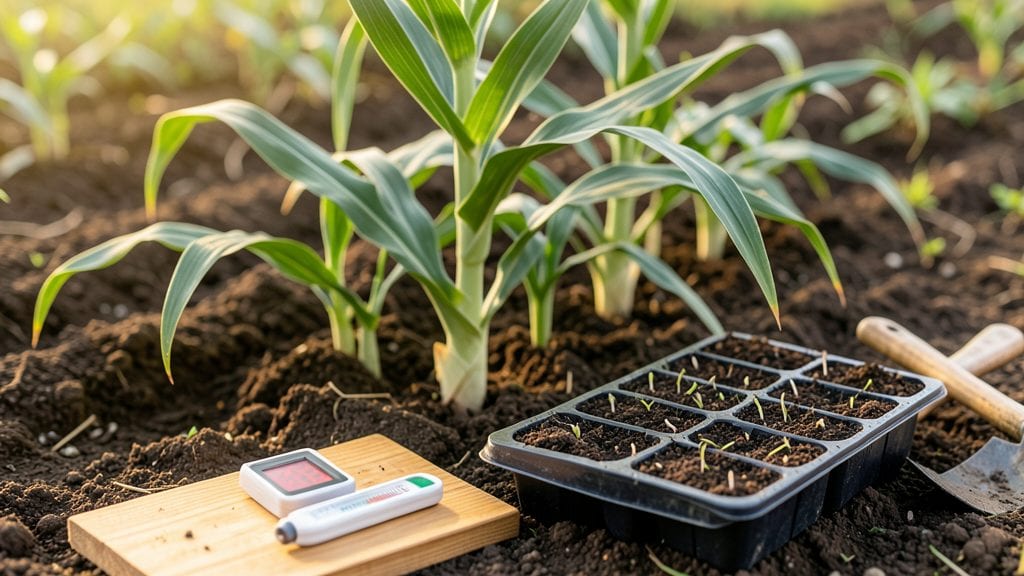
Before you even think about planting corn, check the soil temperature for planting corn—it must hit at least 50°F, or your seeds will rot instead of sprouting. I’ve learned the hard way that rushing planting because the calendar says "spring" leads to patchy germination, if anything grows at all.
The difference between a thriving stand of corn and a sad, sparse row comes down to waiting for that warm-up.
Testing soil temperature is easier than you’d think—just grab a soil thermometer (they’re cheap) and check it in the morning when the ground’s coolest. Most garden centers carry them, or you can use a meat thermometer in a pinch.
In warmer climates like Zone 8, you can plant as early as March, while cooler areas like Zone 5 might need to wait until late May—frost dates are your first clue, but soil temp is the final word.
Once the ground hits that sweet spot, germination happens in 5-10 days, and you’ll see those first pale shoots pushing through. The key is consistency: keep the soil warm and moist until the plants are 3-4 inches tall, then let nature take over.
If you’re in a hurry, black plastic mulch can add 5-10°F to the soil, speeding things up without risking damage.
Regional tweaks matter—southern gardeners might plant in February, while northerners should mark June 1 as their deadline. Even a week’s delay can mean the difference between a full harvest and a half-hearted attempt.
Trust the thermometer, not the calendar, and your corn will thank you with tall, sturdy stalks come summer.
📚 In This Guide
- What you need
- Instructions
- Tips and common mistakes
- Wrapping up and next steps
What you need
- ● Soil thermometer: A digital or analog soil-specific thermometer (measures 0–120°F/0–50°C). Pro tip: Look for one with a long probe (6–12 inches) for accurate deep readings. 🌡️
- ● Corn seeds: Choose heirloom or hybrid varieties suited to your climate zone (e.g., Golden Bantam for short seasons or Pioneer 33T07 for high yield). Quantity: 12–15 seeds per foot of row (adjust based on spacing).
- ● Garden trowel or transplanter: A 5–6 inch stainless-steel trowel for digging precise holes (1–2 inches deep).
- ○ Planting marker flags: Biodegradable or wooden stakes to label rows (optional but helpful for organization!).
- ● Seedling heat mat: For starting seeds indoors if your soil is too cold (set to 70–85°F).
- ● Row cover or black plastic mulch: To warm soil faster (especially in cooler climates).
- ● Moisture meter: Ensures soil isn’t too dry before planting (aim for 1 inch of water per week).
- ● Corn planting guide or app: Tools like Old Farmer’s Almanac or PlantSnap for regional soil temp data.
Instructions for planting corn when soil reaches ideal warmth
Timing your corn planting around soil temperature ensures vigorous germination and strong stands—here's how to nail it.
Test Soil Temperature Before Planting
Corn seeds won't germinate well until the soil reaches at least 60°F, but 65-75°F is ideal for fastest sprouting. Use a soil thermometer inserted 2 inches deep—this is where seeds will be planted. Check temperatures in the morning and evening for consistency, as afternoon heat can give false readings.
I always test for three consecutive days at the same time each morning. If temperatures dip below 60°F, wait—cold soil slows germination and invites rot. Corn planted in 50°F soil may take three weeks to emerge, while warm soil gets seedlings up in 5-7 days. That's the difference between a thriving crop and wasted seeds.
Prepare the Planting Zone When Warmth Arrives
Once soil hits 65°F, clear the planting area of debris and loosen the top 6 inches with a broadfork or tiller. Corn roots need air and moisture, so avoid compacting the soil. Work the area only when the ground is dry enough to crumble—wet soil sticks to tools and creates clods that block root growth.
Rake the surface smooth and create 1-inch-deep furrows spaced 12-15 inches apart for single-row planting or 30 inches apart for double rows. The key is uniform depth—uneven planting leads to uneven germination. I like to snap a 1-inch-deep ruler into the soil along the furrow to ensure consistency.
Plant Seeds at the Right Depth for Fast Germination
Drop 4-5 corn seeds per hill at a depth of 1-1.5 inches, spacing hills 8-12 inches apart in the row. Planting too shallow risks drying out seeds, while burying too deep forces seedlings to struggle upward. I use my knuckle as a guide—when the first joint aligns with the soil line, I know I'm at the perfect depth.
Cover seeds lightly with soil and firm gently with the back of a rake. Water immediately with ½ inch of warm water to settle the soil around seeds. Avoid heavy watering—it can wash seeds deeper or create crusts that block emergence. A fine mist from a hose nozzle works best for even moisture without disturbance.
Monitor Soil Moisture and Warmth After Planting
Keep the soil surface evenly moist (not soggy) until germination. Check daily by pressing a finger 1 inch deep—it should feel like a wrung-out sponge. If the top inch dries out, water gently to maintain moisture without disturbing seeds. Corn seeds need consistent warmth and moisture to germinate; fluctuations slow or stop sprouting.
Watch for 3-5 days of warm, stable temperatures before expecting sprouts. If nighttime temps drop below 55°F, cover the row with row fabric until soil warms again. You'll see first true leaves (not the initial seed leaves) emerge when conditions are right—this is your signal that germination is complete and roots are establishing.
Thin Seedlings for Strong Stands
Once seedlings reach 3-4 inches tall, thin to 2-3 plants per hill, keeping the strongest, most vigorous sprout. Use scissors to snip unwanted seedlings at soil level—pulling risks uprooting neighbors. Thin in the morning when plants are turgid and less stressed. The goal is 12-15 inches between plants in the row for optimal sunlight and air circulation.
After thinning, water deeply to 1 inch to help remaining plants recover. You'll notice a darker green color and sturdier stems within a week—this confirms the plants are adapting well. Avoid fertilizing at this stage; young corn roots need time to establish before taking up nutrients. Focus instead on keeping soil warm and moist for the next 2-3 weeks as seedlings grow roots.
Tips & tricks for perfect corn germination timing
Mastering these soil temperature secrets will transform your corn planting from hit-or-miss to consistently fast, vigorous growth.
Soil Thermometer Precision: The 60°F minimum isn't just a number—it's the biological threshold where corn seeds activate their germination enzymes. I've seen seeds planted at 55°F take twice as long to emerge, and at 50°F, they often rot before sprouting. Invest in a quality soil thermometer with a 2-inch probe—this is where your seeds will be, and surface temps can be misleading by 10°F or more. Take readings at the same time each morning for three days to establish a pattern.
Morning Consistency Matters: That three-day testing period in Step 1 isn't arbitrary—it accounts for natural temperature fluctuations. I've planted corn when afternoon temps hit 75°F but morning temps stayed below 60°F, and the seeds failed to germinate. Always prioritize morning readings since that's when seeds need consistent warmth to begin the germination process. If you see 55°F mornings, wait—those chilly nights can stall germination even if afternoons warm up.
Furrow Depth Technique: Creating those 1-inch-deep furrows in Step 2 requires more precision than most gardeners realize. The depth should be measured from the soil surface to the bottom of the furrow where seeds will sit. I use a simple trick: press a 1-inch-deep ruler into the soil along the furrow line before planting. This ensures every seed gets planted at the optimal 1-1.5 inches depth. Too shallow and seeds dry out; too deep and seedlings struggle to reach the surface.
Post-Planting Moisture Strategy: The ½ inch of warm water immediately after planting isn't just about hydration—it's about creating the perfect seedbed environment. Warm water helps maintain that critical 65-75°F soil temperature zone around the seeds. I've found that using a fine mist from a hose nozzle prevents seed displacement while keeping moisture even. After planting, I always check soil moisture by pressing my finger 1 inch deep—it should feel like a damp sponge, not a soggy rag or dry powder.
Pro Tips for Soil Temperature For Planting Corn
- Mastering these soil temperature secrets will transform your corn planting from hit-or-miss to consistently fast, vigorous growth.
- Soil Thermometer Precision: The 60°F minimum isn't just a number—it's the biological threshold where corn seeds activate their germination enzymes.
- Morning Consistency Matters: That three-day testing period in Step 1 isn't arbitrary—it accounts for natural temperature fluctuations.
Frequently asked questions
Got questions about getting your corn off to the right start? Here are some common ones—and their answers—to help you plant with confidence!
What’s the ideal soil temperature for planting corn?
The sweet spot for corn germination is 50–60°F (10–15°C). Below 50°F, seeds may rot; above 60°F, they’ll sprout faster but risk drying out. Use a soil thermometer to check depth (2–4 inches) before planting.
How do I know if my soil is too cold for corn?
If your soil is below 50°F (10°C), germination slows or stops. Look for slow seedling growth, off-colored sprouts, or seed rot. Wait 1–2 weeks or use a seed warmer (like black plastic mulch) to raise temps naturally.
Can I plant corn early if I use row covers?
Yes! Row covers or plastic mulch can raise soil temps by 5–10°F (3–6°C), letting you plant 1–2 weeks earlier. Just remove covers after sprouts emerge to avoid overheating. Monitor for condensation buildup or pests.
What if my soil stays too cold even after waiting?
If temps stay stubbornly low, try these fixes:
- Warm the soil: Lay down black plastic 1–2 weeks before planting.
- Choose faster varieties: Early-maturing hybrids (e.g., ‘Early Sunglow’) germinate better in cool soil.
- Adjust planting depth: Plant 1 inch deeper in cold soil for moisture and warmth.
Does soil temperature affect corn yield later?
Optimal temps (60–85°F / 15–29°C) during pollination boost ear development. If early-season temps are too cold, plants may bolt prematurely or produce smaller ears. Monitor weather trends and use shade cloth if heatwaves strike.
Wrapping up and next steps
Mastering the soil temperature for planting corn is your secret weapon for a thriving crop! 🌱 The ideal range of 50–60°F (10–15°C) ensures faster germination and stronger seedlings, while monitoring moisture and soil health keeps your plants on track.
With the right tools—like a soil thermometer and patience—you’re already ahead of the game.
Now that you’re armed with these warmth secrets, it’s time to roll up your sleeves! Start by testing your soil’s readiness, then plant with confidence. Happy growing—your cornfield awaits! 🌽✨