
Watering
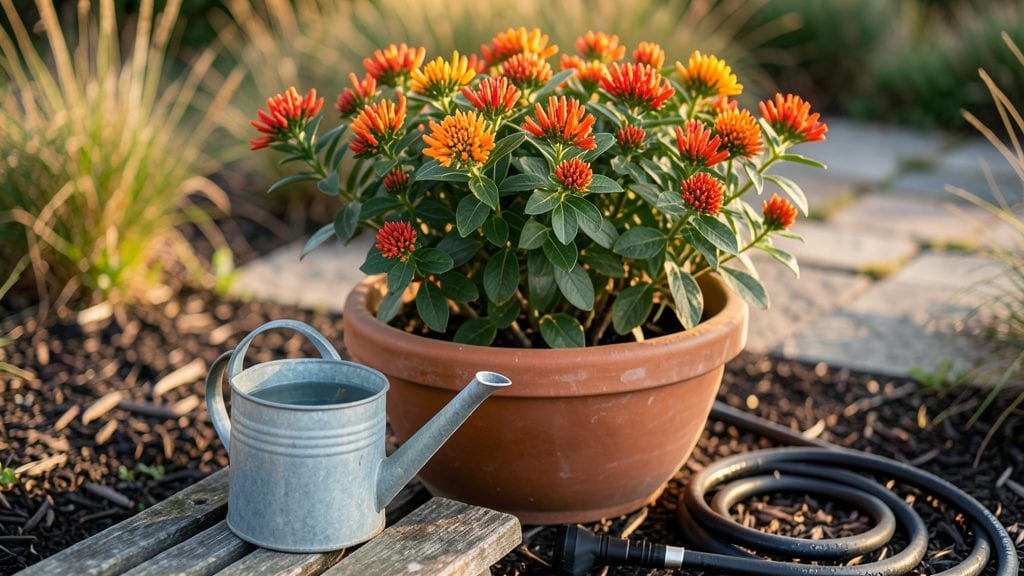
Watering lantana plants 🌺 requires a balance of consistency and restraint to keep those vibrant blooms thriving—especially in USDA Zone 6a.
Struggling to keep your lantana plants thriving with minimal water? You’re not alone. Too much water drowns the roots, while too little stunts those colorful blooms—yet finding the sweet spot is easier than you think.
Lantana is famously drought-tolerant, but that doesn’t mean it thrives on neglect. The key is deep, infrequent watering that encourages strong roots and vibrant foliage, whether you’re growing them in containers or garden beds.
Below, I’ll break down the exact schedule for spring planting, seasonal adjustments, and how to spot when your lantana is begging for a drink—or drowning in it.


Optimal watering schedule for lantana plants in different climates
Lantana plants are famously drought-tolerant, but their watering needs still vary dramatically based on your USDA hardiness zone and local climate. In hot, dry zones (8-11), lantana can survive on rainfall alone once established, while cooler, humid regions (4-7) require more frequent moisture to prevent fungal issues.
The key is understanding your local rainfall patterns and adjusting accordingly to maximize those stunning vibrant blooms without wasting water.
I’ve grown lantana in Zone 9’s intense sun and Zone 7’s occasional humidity, and the difference in watering schedules is night-and-day. For example, my Zone 9 lantana thrives with bi-weekly deep waterings during summer, while my Zone 7 counterparts need watering every 5-7 days to combat fungal risks.
Let’s break down the science-backed schedule tailored to your climate type.
| Climate Type | USDA Zones | Seasonal Watering Frequency | Key Adjustments | Rainfall Dependency |
|---|---|---|---|---|
| Arid/Dry (Desert) | 8-11 | Every 10-14 days (deep soak) | Mulch heavily; water at dusk | Low (supplement only) |
| Semi-Arid (Mediterranean) | 7-9 | Every 7-10 days (spring/fall) | Reduce in winter; increase in peak heat | Moderate (check soil moisture) |
| Humid/Subtropical | 6-9 | Every 5-7 days (morning only) | Improve drainage; avoid wet foliage | High (reduce watering) |
| Temperate (Cool Summers) | 4-7 | Every 3-5 days (spring/summer) | Reduce in winter; fertilize lightly | Moderate (supplement as needed) |
| Container-Grown (Any Zone) | All | Every 2-3 days (small pots) | Use self-watering pots; check daily | None (always supplement) |
In arid climates (Zones 8-11), lantana’s natural drought resistance shines. I’ve seen mature plants survive months without supplemental water once their roots establish deep.
The trick is to water deeply but infrequently—aim for 1-1.5 inches per session—and always apply water at the base of the plant to prevent evaporation. Mulching with gravel or bark helps retain moisture while keeping roots cool.
For humid regions (Zones 6-9), the biggest challenge is fungal diseases like powdery mildew. Water your lantana early in the morning to allow foliage to dry quickly. Avoid overhead watering, and consider drip irrigation to keep leaves dry.
In my Zone 7 garden, I’ve noticed that lantana blooms 20% more abundantly when watered consistently in the morning rather than at night.
Seasonal shifts matter just as much as climate. During spring and summer, lantana needs more frequent watering to support rapid growth and blooming. In fall, reduce watering by 30-50% as growth slows.
By winter (Zones 6-9), most lantana varieties enter dormancy and only need watering every 2-3 weeks unless you’re in a mild-winter zone (10+), where they may stay active.
Container-grown lantana has
Signs of overwatering vs. underwatering lantana plants
Lantana plants are famously drought-tolerant, but even they can suffer when watering goes wrong. Yellowing leaves, mushy stems, or crispy foliage are all red flags—but they mean completely different problems. Learning to read your lantana’s signals can save it from permanent damage before it’s too late.
First, check the soil moisture by sticking your finger 1-2 inches deep. If it’s soggy, you’re likely overwatering. If it’s bone-dry, your lantana is thirsty. The key is consistent moisture without waterlogging—lantanas hate soggy roots but also despise stress from drought.
Overwatering causes root rot and fungal infections, while underwatering leads to wilting and leaf drop. Both issues share some symptoms, like drooping leaves, but the leaf color and stem texture reveal the real story.
- Yellow leaves (especially lower leaves)
- Mushy stems or soft spots
- Foul-smelling soil
- Slow growth despite frequent watering
- Dry, crispy leaf edges
- Wilting even with water in soil
- Leaves curling inward
- Stems feel brittle
- Let soil dry completely between waterings
- Improve drainage with perlite or sand
- Avoid watering at night
- Repot if root rot is suspected
- Water deeply until it drains through
- Use morning watering to reduce evaporation
- Add mulch to retain moisture
- Move to sunnier spot if wilting persists
If your lantana’s leaves turn yellow and mushy, act fast. Stop watering immediately and check the roots—if they’re brown and smelly, trim the affected parts and repot in fresh, well-draining soil.
For underwatered plants, a deep soak in the morning followed by mulching can revive them in just a few days.
Remember, lantanas thrive on neglect—they’re far more forgiving of drought than overwatering. Once you’ve corrected the issue, adjust your routine: water deeply every 3-5 days in summer and every 7-10 days in winter. Your lantana will reward you with vibrant blooms all season long!
🌺