
Watering
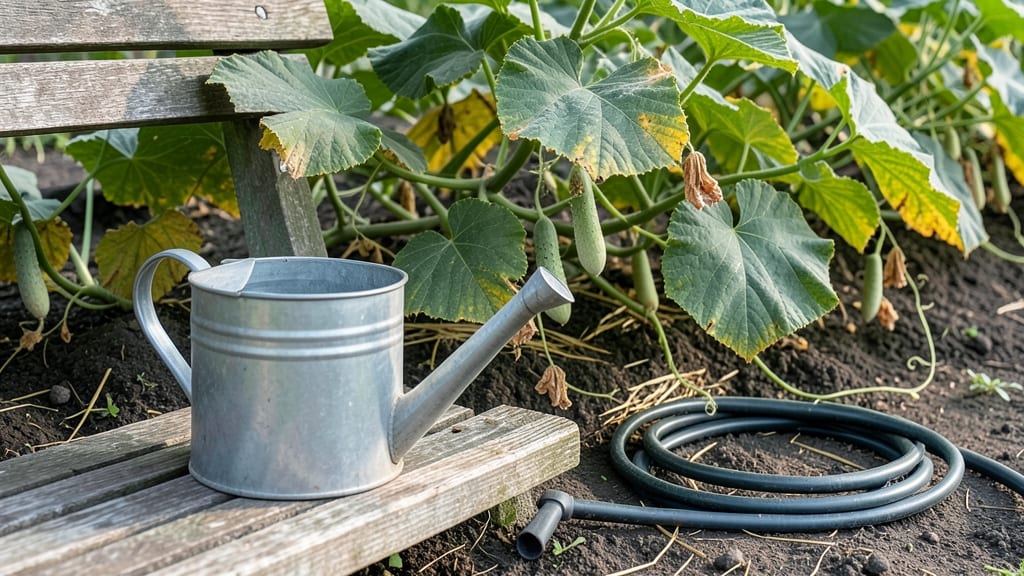
An underwatered cucumber plant can snap back to life with surprising speed—just three simple tweaks will have those vines thriving again in no time. 🌱 The key is acting fast before those crisp tendrils turn permanently sad.
The first clue? Leaves that droop by noon or soil that’s dry an inch down. Most gardeners water when the top feels dry, but cucumbers need moisture deeper. A simple probe with your finger tells the real story—if it’s bone-dry past the surface, your plant’s already panicking.
The fix starts with deep watering until it runs out the bottom of the pot.
Within 24 hours, you’ll see those limp leaves perk up like they’re on a caffeine high. The real magic happens when you mulch around the base to lock in moisture and water consistently—think 1-2 inches every other day in heatwaves, less in cooler weather.
Your vines will reward you with glossy leaves and that signature cucumber smell within a week.
This works for both container-grown plants and in-ground vines, though containers dry faster. The secret? Don’t let the soil flake like dust between waterings. Once you’ve got the rhythm down, your cucumbers will stay hydrated and productive all season long.
Root Causes Of Thirsty Plants
Underwatered cucumber plants don’t just happen by accident—they’re usually the result of specific, often overlooked factors. Understanding these causes is the first step to reviving your plants and preventing future stress. Let’s break down the most common reasons your cucumbers might be crying out for hydration.
Cucumbers have shallow, fibrous root systems that absorb water quickly, especially in warm conditions. If you’re not watering them deeply and frequently enough, their roots won’t reach moisture where they need it.
- Surface watering (light sprinkles) only wets the topsoil, leaving deeper roots parched.
- Infrequent watering (e.g., every 3–4 days in heat) causes roots to dry out before they can replenish moisture reserves.
- Morning vs. evening watering: Watering in the late afternoon or evening reduces evaporation, while midday watering can lead to rapid loss.
💡 Pro Tip: Cucumbers need 1–2 inches of water per week, but more in extreme heat (up to 2 inches per day in 90°F+ temps). Use a moisture meter or the "finger test" (stick your finger 1–2 inches into soil—if dry, water immediately).
Not all soil is created equal. Heavy, compacted, or sandy soils retain or release water too quickly, leaving roots high and dry.
- Clay-heavy soil holds water but drains poorly, leading to root suffocation and uneven moisture distribution.
- Sandy soil drains too fast, making it nearly impossible for roots to absorb water before it runs off.
- Lack of organic matter (like compost) reduces soil’s ability to hold moisture and nutrients.
🌱 Fix It: Amend soil with 2–3 inches of compost or aged manure before planting. For containers, use a well-draining potting mix (50% peat/compost, 30% perlite, 20% vermiculite).
Heat, wind, and even container size can accelerate water loss, forcing plants to drink faster than you’re supplying it.
- High temperatures (above 85°F) increase transpiration (water loss through leaves) by 20–30%.
- Strong winds dry out leaves and soil surface, mimicking drought conditions.
- Small or shallow containers limit root growth, so plants can’t access enough water reserves.
🔥 Quick Fix: Move potted cucumbers to shaded spots during peak heat. Use mulch (straw or wood chips) to retain soil moisture and reduce evaporation.
When cucumber plants compete for space, their roots struggle to spread, limiting water absorption.
- Planting too close together (less than 12–24 inches apart) forces roots to compete.
- Weak or stunted growth (from poor light, pests, or disease) means fewer roots to absorb water.
- Root-bound containers (roots circling the pot) restrict water uptake.
✂️ Solution: Thin seedlings to 12–24 inches apart in gardens. For containers, upgrade to a 5-gallon pot minimum and repot if roots are circling.
Sometimes, hidden threats prevent roots from functioning properly.
- Root rot (from overwatering) can kill roots, making absorption impossible.
- Nematodes or grubs damage roots, reducing their ability to take up water.
- Fungal infections (like powdery mildew) stress plants, increasing water needs.
🛡️ Prevent It: Inspect roots during transplanting. Use neem oil for fungal issues or beneficial nematodes for soil pests.
Many gardeners miss the warning signs until it’s too late.
- Wilting leaves (even in the morning) signal overnight dehydration.
- Yellowing lower leaves can mean root stress from inconsistent watering.
- Dry, crispy leaf edges indicate chronic underwatering.
👀 Watch For: If leaves droop but perk up after watering, it’s a thirst signal—not a disease. Act fast before the plant collapses.
Revive Your Cucumber Plant Fast
Now that you know the signs and causes of an underwatered cucumber plant, it’s time to take action! 🌱💦 With the right steps, you can bring your plant back to life and even prevent future stress.
Below are practical, step-by-step solutions tailored to the most common causes—plus pro tips to keep your cucumbers thriving.
Cause: Shallow watering or infrequent hydration leads to dry soil and stressed roots.
How to Fix It:
- 💦 Step 1: Soak the Soil Thoroughly Use your fingers to check the top 2–3 inches of soil. If it’s dry, grab a watering can or hose with a gentle spray nozzle. Water until moisture seeps 6–8 inches deep—you should see water draining from the bottom of the pot or garden bed. Pro tip: For container plants, let excess water drain completely to avoid root rot.
- 🌱 Step 2: Water at the Base (Not the Leaves) Pour water directly at the soil level to prevent fungal diseases (like powdery mildew) and ensure roots absorb moisture efficiently. Avoid overhead watering, especially in hot weather.
- ⏰ Step 3: Establish a Consistent Schedule Cucumbers love 1–2 inches of water per week, depending on your climate. In extreme heat, increase to 1.5–2 inches. Use a moisture meter or the "squeeze test" (gently press soil—if it crumbles, it’s dry) to track needs.
Prevention Tip: 💡 Mulch around your plants with straw or shredded leaves to retain moisture and reduce evaporation. This cuts down on daily watering by 30–50%!
Cause: Overwatering or uneven moisture distribution can mimic underwatering by suffocating roots.
How to Fix It:
- 👨🍳 Step 1: Check Drainage If your pot lacks drainage holes or your garden bed has compacted soil, roots can’t breathe. Fix it now:
- For pots: Repot into a container with drainage holes or add perlite to improve airflow.
- For gardens: Amend soil with compost or sand to loosen it up.
- 🥘 Step 2: Water in the Morning Morning watering (between 6–10 AM) gives plants time to absorb moisture before the heat of the day. Evening watering can lead to fungal issues.
- 🔪 Step 3: Avoid "Pulse" Watering Dribbling small amounts of water daily tricks plants into thinking they’re getting enough—but it actually encourages shallow roots. Instead: Water deeply 2–3 times per week (adjust for climate).
Prevention Tip: ✨ Group plants with similar water needs (like cucumbers and peppers) to streamline care. This makes it easier to monitor and adjust hydration.
Cause: Dry air or scorching sun accelerates moisture loss, making underwatering worse.
How to Fix It:
- 💦 Step 1: Increase Air Humidity Cucumbers thrive in 40–70% humidity. If your area is arid:
- For containers: Place a tray of water near the plant or mist leaves early in the morning (avoid evening misting to prevent disease).
- For gardens: Use a shade cloth (30–50%) to block intense midday sun while allowing light to filter through.
- 🍃 Step 2: Trim Damaged Leaves Yellow or crispy leaves waste energy. Snip them off with clean scissors to redirect nutrients to healthy growth. Focus on leaves closest to the soil first.
- 🎯 Step 3: Shield from Heat Stress If temperatures exceed 90°F (32°C), cucumbers suffer. Quick fixes:
- Move pots to a shadier spot (east or north side of the house).
- Use reflective mulch (like white plastic sheeting) to bounce heat away from roots.
Prevention Tip: 🔥 Plant cucumbers near tall crops (like corn or sunflowers) to create natural shade. This mimics their tropical origins and reduces water stress.
If your cucumber plant is severely wilted or stunted, it may need a nutrient boost after rehydration. Use a balanced liquid fertilizer (10-10-10) diluted to half-strength and apply it 2 weeks after deep watering. Avoid fertilizing until the plant shows signs of recovery—overfeeding stressed plants can burn roots.
Remember: Patience is key! A reviving cucumber plant may take 3–7 days to perk up. Monitor progress and adjust watering as needed. With these fixes, your plant will be back to producing crisp, vine-ripened cucumbers in no time. 🥒🌿
Frequently asked questions
How do I know if my cucumber plant is truly underwatered?
Check for wilting leaves that don't spring back when touched, dry soil 1-2 inches deep, and yellowing lower leaves. If the soil crumbles when you squeeze it, that's a clear sign it's time to water. Unlike overwatering, underwatered plants often recover quickly after a good soak.
Can I revive a cucumber plant that's been underwatered for over a week?
Yes, but act fast! Start with deep watering every 2-3 days until the soil is consistently moist. Trim any severely damaged leaves and move the plant to partial shade. Most plants show improvement within 3-5 days of proper care, though severely stressed plants may take longer to fully recover.
What's the best time of day to water cucumber plants?
Water in the early morning (6-9 AM) to give roots time to absorb moisture before evaporation. Evening watering can lead to fungal issues, while midday watering causes rapid evaporation. The key is keeping the soil consistently moist without creating soggy conditions.
How often should I mulch my cucumber plants?
Apply a 2-3 inch layer of mulch around the base immediately after planting, then refresh it every 4-6 weeks as it breaks down. Straw or wood chips work best—they retain moisture, suppress weeds, and keep roots cool. This reduces watering needs by up to 50% during hot weather.
Can I use bottled water for my underwatered cucumber plant?
While bottled water is safe, it's not ideal long-term. Tap water is perfectly fine and contains beneficial minerals. If you must use bottled water, let it sit out for 24 hours to release chlorine. The key is consistent moisture—focus on proper watering techniques rather than water source for revival.