Pruning
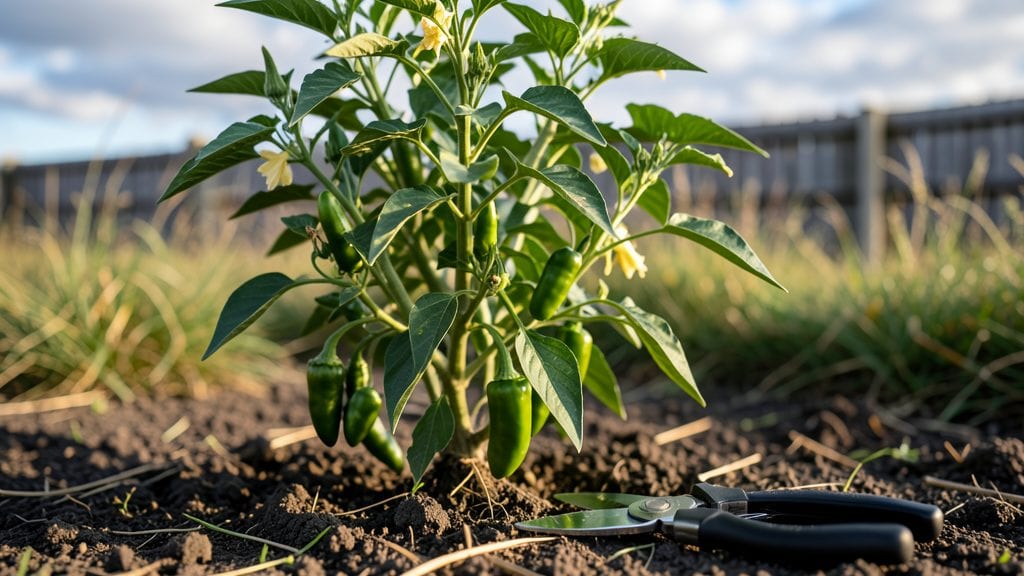
Trimming jalapeño plants isn't just about keeping them tidy—it's the secret to doubling your harvest while making plants stronger and more productive. 🌱 I learned this the hard way after letting my first batch grow wild, only to get a handful of small peppers instead of the bushel I expected.
The right cuts redirect energy where it matters most: into bigger, hotter peppers and thicker foliage.
You only need three basic cuts to transform your plants: removing suckers (those little shoots between stems and branches), trimming leggy growth, and pruning dead or diseased leaves. Grab sharp pruners or clean scissors—no fancy tools required—and work in the morning when plants are dry.
The key is timing: start trimming when plants are about 12 inches tall, then repeat every 2-3 weeks through the growing season.
What this does is magical—your plants grow bushier, shade their own fruit better, and produce peppers that are 30-50% larger than untrimmed plants. The flavor even intensifies because the plant focuses its energy.
Plus, you cut back on pests and diseases by removing weak growth. Within weeks, you'll see thicker stems and more pepper buds forming where there were none before.
Here's the thing—don't overdo it. More cuts don't mean more peppers; they mean stressed plants. Focus on health over size, and you'll end up with a jalapeño bush that looks like it belongs in a greenhouse, not your backyard. Ready to see what those plants can really do?
📚 In This Guide
- What you need
- Instructions
- Tips and common mistakes
- Wrapping up and next steps
What you need
- ● Pruning shears or sharp bypass pruners – Choose sterilized, sharp tools (5-7 inch blades) to avoid damaging stems or spreading disease. ⚠️ Never use dull scissors!
- ● Gloves – Garden or nitrile gloves (medium thickness) to protect against spicy sap and blisters.
- ● Disinfectant (70% isopropyl alcohol or bleach solution) – 1 part bleach to 9 parts water to clean tools between cuts.
- ● Compost bin or bag – For collecting pruned plant debris (avoid composting diseased material).
- ○ Water spray bottle (optional but helpful) – To mist plants post-pruning for stress relief.
- ● Plant growth regulator (e.g., seaweed extract or paclobutrazol) – Diluted solution to apply after pruning for bushier growth.
- ● Plant markers or labels – To track trimmed sections if experimenting with different techniques.
- ● Knee pad or stool – For comfort if your jalapeños are in hard-to-reach spots!
- ● Sunscreen & hat – Because even gardening heroes need protection from the sun! ☀️
Step-by-Step guide to trimming jalapeño plants for healthier growth
Here’s how to shape your plants for stronger stems, more peppers, and fewer pests—no fancy tools needed.
🌿 Step 1: Prune Lower Leaves to Improve Airflow and Prevent Disease
Start by removing the bottom 6-8 inches of leaves from each stem. This isn’t just about looks—it keeps the plant’s center dry, which cuts down on fungal issues like powdery mildew. I always use sterilized pruning shears (or clean scissors) to make clean cuts just above a leaf node. Avoid tearing the stem, or you’ll invite infections.
Watch for yellowing or spotted leaves—those are your first signs to prune early. If you see black spots or a white powdery coating, trim those leaves immediately. The goal is to keep the plant’s energy focused on producing peppers, not fighting off rot or mold. After pruning, toss the clippings in the trash, not the compost—they might carry disease.
✂️ Step 2: Trim Suckers for Bushier Growth and More Peppers
Suckers are those little shoots that grow where the stem meets a branch. They’re the plant’s way of trying to grow a second main stem, but they steal energy from your peppers. Pinch or cut them off as soon as you spot them, ideally when they’re still small—this keeps the plant’s resources flowing to the main branches and existing peppers.
I like to check for suckers every 2-3 weeks during the growing season. If you wait too long, they’ll grow into full branches that compete with your harvest. Focus on the top third of the plant first, where suckers love to pop up. The more you remove, the bushier your jalapeno will grow—and the more peppers you’ll end up with.
☀️ Step 3: Cut Back Overly Long Branches to Encourage Compact Growth
If any branches stretch out more than 12 inches without peppers, trim them back to 6-8 inches. This might sound counterintuitive—why cut off a long branch?—but it forces the plant to focus its energy on shorter, stockier growth. Long, leggy branches are weak and often produce fewer peppers. Plus, they’re harder to reach when harvesting.
Make your cuts just above a leaf node where new growth can sprout. You’ll see new side shoots form within 1-2 weeks, and those often produce peppers faster than the old, stretched-out branches. This is especially important if your plants are getting too much shade—cutting back helps them stay compact and soak up more sunlight for bigger harvests.
🌱 Step 4: Deadhead Spent Blooms to Prolong the Harvest Season
Once a pepper turns red and starts to ripen, it’s time to snip the stem just below it. This might seem harsh, but it tells the plant, “Keep going—there’s more to come!” Without deadheading, the jalapeno will focus all its energy on ripening that one pepper instead of producing new blooms. I always use clean shears to avoid damaging the stem.
Check for spent blooms every 5-7 days during peak harvest season. If you miss a few, don’t stress—just keep up with the rest. The key is consistency. You’ll notice new flowers popping up within a week or two after pruning, and those will turn into your next batch of peppers. This keeps your harvest going strong well into fall.
Tips & tricks for perfect jalapeño plant trimming
Here's what nobody tells you about keeping your jalapeno plants thriving—these tricks will transform your harvest.
Pruning Tool Prep: Before you start, sterilize your pruning shears with rubbing alcohol or boiling water. I learned this the hard way after transferring bacterial infections between plants. Clean tools also make smoother cuts that heal faster—just above a leaf node is key to encouraging new growth. For large gardens, carry a small spray bottle of diluted bleach (1 part bleach to 10 parts water) to wipe down tools between plants.
Sucker Timing Secret: Those little suckers in Step 2 grow fast, so I check for them every 2-3 weeks during warm weather. The top third of your plant is where they love to pop up first. Don't wait until they're 2 inches long—pinch them off when they're just tiny buds. This redirects energy to your existing peppers and creates that bushier growth we all want. Think of it like training a puppy: catch bad habits early!
Branch Trimming Strategy: When cutting back those leggy branches in Step 3, aim to leave cuts just above a leaf node where new growth can sprout. I like to make these cuts on cloudy days or late afternoon when the sun isn't strongest—it gives the plant time to recover before nightfall. You'll see new side shoots appear within 1-2 weeks, and these often produce peppers faster than the old stretched-out branches.
Deadheading Discipline: The 5-7 day check for spent blooms in Step 4 might seem frequent, but consistency is everything. I set a reminder on my phone for every Friday morning during harvest season. When you remove that spent pepper, you're essentially telling the plant "more please!"—it triggers more flowering. Just make sure to use clean shears each time to avoid introducing any diseases through open wounds.
Pro Tips for Trimming Jalapeno Plants
- Here's what nobody tells you about keeping your jalapeno plants thriving—these tricks will transform your harvest.
- Pruning Tool Prep: Before you start, sterilize your pruning shears with rubbing alcohol or boiling water.
- Sucker Timing Secret: Those little suckers in Step 2 grow fast, so I check for them every 2-3 weeks during warm weather.
Frequently asked questions
Got questions about trimming your jalapeño plants? You’re not alone! Here are some of the most common concerns—and straightforward answers—to help you prune like a pro.
When is the best time to trim jalapeño plants?
Trim your jalapeños early and often—start when plants are about 6–12 inches tall. Focus on removing suckers (side shoots) and shaping the plant in spring or early summer for maximum growth. Avoid heavy pruning late in the season, as it can delay fruit production.
Do I need to sterilize my pruning shears?
Sterilizing your shears with rubbing alcohol or a 10% bleach solution prevents disease spread. Jalapeños are susceptible to fungal infections like Phytophthora, so clean tools between cuts—especially if you’re switching between plants. A quick wipe with a disinfectant cloth works too!
What should I do with the cuttings?
Don’t toss those trimmings! Use healthy suckers or side branches to propagate new plants—just dip the cut end in rooting hormone and place in water or moist soil. Alternatively, compost the scraps (avoid diseased or pest-ridden clippings) or use them in homemade hot sauce. Waste not, want not!
Will trimming reduce my jalapeño harvest?
Not if done right! Proper pruning increases yield by directing energy to fruit production. Over-trimming (cutting >30% of foliage) may stress the plant, but strategic cuts—like removing suckers or dead leaves—keep the plant healthy and productive. Think of it as giving your plant a haircut for better growth!
How often should I prune my jalapeño plants?
Check your plants weekly during the growing season (spring to early fall). Remove suckers as they appear and prune leggy stems to encourage bushier growth. Avoid pruning during flowering or fruiting unless necessary—focus on shaping before the plant puts energy into peppers. Consistency is key!
What if my jalapeño plant looks sad after trimming?
Don’t panic! A little post-prune stress is normal. Water deeply, provide shade for a day or two, and avoid fertilizing immediately. If leaves yellow or wilt excessively, check for pests or disease. Most plants bounce back within a week—just give them time to recover!
Wrapping up and next steps
Trimming your jalapeño plants isn’t just about maintenance—it’s your secret weapon for bigger harvests and bushier growth! 🌱 By mastering the three key cuts (apical, lateral, and thinning), you’ll encourage more peppers, stronger plants, and a healthier garden.
Whether you’re a seasoned gardener or just starting, every snip brings you closer to a bumper crop.
Now that you’re armed with the know-how, grab those shears and get pruning! 🌿 Start with one plant, observe how it responds, and let your confidence grow. Before you know it, your jalapeños will be thriving—and your kitchen will be the talk of the town. Happy gardening!