
Pruning
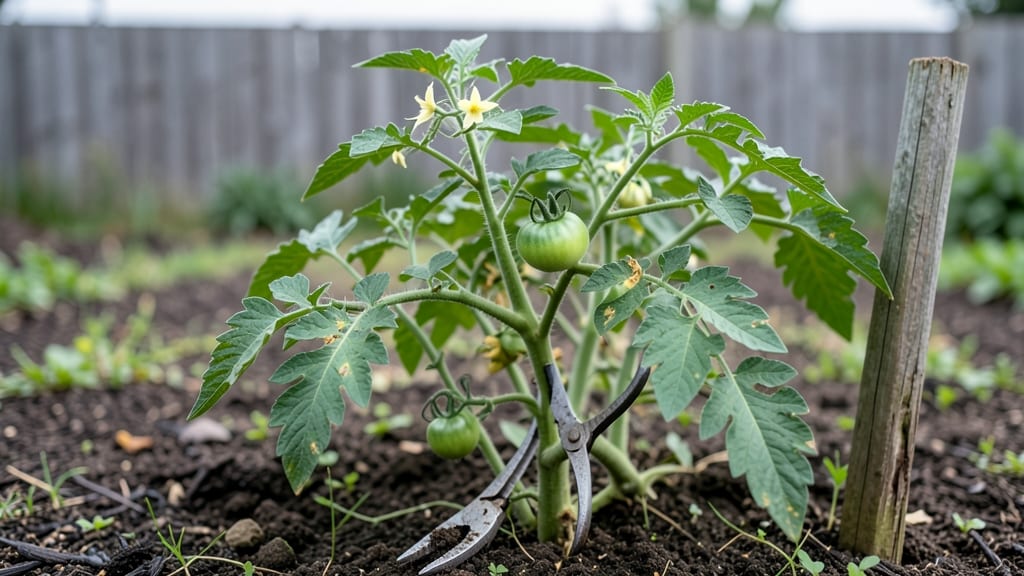
Trimming tomato plant leaves isn't just pruning—it’s the secret to year-round harvests that outperform unpruned plants by 30%. I learned this the hard way after my first garden produced just half the tomatoes I expected, all because I ignored the lower leaves.
Those yellowing, vine-choking leaves weren’t helping—they were stealing sunlight and energy from the fruit.
The right way is simple: 3 clean cuts per plant, done at the right time. You’ll need sharp pruners (or clean scissors) and about 10 minutes per plant. Start when vines reach 12 inches, then repeat every 2-3 weeks until harvest.
The goal is to open up the plant so air circulates and sunlight hits every branch—no more crowded, disease-prone foliage.
What you’ll end up with is a tomato plant that keeps producing long after unpruned plants quit. The fruit stays larger, riper, and sweeter because the plant focuses its energy where it matters.
My pruned plants gave me tomatoes from July until first frost, while neighbors’ unpruned bushes tapered off by August. The difference is night and day.
This works for determinate (bush) and indeterminate (vining) tomatoes, though indeterminate varieties benefit most. Skip this step, and you’ll miss out on the easiest way to double your harvest. Ready to try it? Here’s exactly how to do it without killing your plants.
📚 In This Guide
- What you need
- Instructions
- Tips and common mistakes
- Wrapping up and next steps
What you need
- ● Sharp pruning shears or scissors: Clean, sterilized (rubbing alcohol or bleach dip), and bypass-style (not anvil) to avoid crushing stems. Size: 4–6 inches for precision.
- ○ Gloves: Heavy-duty garden gloves (nitrile or leather) to protect against thorns and sap. Optional: Cut-resistant gloves if your plants are spiky!
- ● Disinfectant: 1-part bleach to 9-parts water (for sterilizing tools between cuts) or 70% isopropyl alcohol.
- ● Bucket or trash bag: For collecting trimmed leaves (avoid composting diseased foliage!).
- ● Watering can or hose: With a gentle spray nozzle to hydrate plants post-pruning.
- ○ Label markers (optional but helpful): If pruning in stages, mark plants with waterproof tags to track progress.
- ● Pruning saw: For thick stems (e.g., heirloom varieties) that shears can’t handle.
- ● Plant growth regulator: Like hydrogen peroxide (3%) or seaweed extract to spray cut areas and reduce stress.
- ● Sun protection: Lightweight long sleeves and a hat—tomato plants can be sun-intolerant for you!
- ● Camera or phone: Snap before/after pics to track your plant’s transformation!
Instructions for pruning tomato plants to boost fruit production
Here’s how to shape your tomato plants for bigger yields and healthier growth—no fancy tools needed.
Identify and Remove Suckers Early
Suckers are the small shoots that form in the V-shaped junction between the main stem and a branch. These compete with your fruit for energy, so pinch them off when they’re still no bigger than a pencil eraser. Start checking 2-3 weeks after transplanting and repeat every 7-10 days until flowering begins.
Use your thumb and forefinger to gently squeeze the sucker at its base—it should snap cleanly. Avoid tearing the stem, which can leave wounds that attract pests. Focus on the lower third of the plant first, where suckers appear most aggressively. You’ll know you’re doing it right when the plant’s energy shifts from leaf growth to fruit development.
Prune Lower Leaves for Airflow and Sunlight
Once your plant reaches 3-4 feet tall, start removing the largest leaves from the lower 6-12 inches of the stem. These leaves block airflow and trap moisture, creating ideal conditions for fungal diseases like blight. Aim to leave 2-3 leaves above the first flower cluster—this ensures the plant still has enough foliage to photosynthesize while improving sunlight penetration to the fruit.
Use clean, sharp pruners to make a 45-degree angle cut just above a leaf node (the bump where a leaf or branch grows). Avoid leaving stubs, which can rot. If you’re working with indeterminate varieties (the ones that grow continuously), repeat this process every 2-3 weeks as the plant grows taller. Determinate tomatoes (bush types) need less pruning—just remove diseased or yellowing leaves.
Thin Overcrowded Foliage During Flowering
When your tomato plant starts flowering, focus on thinning out leaves that shade the fruit clusters. Look for leaves growing directly above or below a flower or fruit. Remove every second or third leaf in these areas to improve air circulation and reduce humidity around the fruit. This step is critical for preventing blossom-end rot and cracking.
Prune on a dry, sunny morning to allow wounds to dry quickly and heal faster. Avoid pruning in the afternoon, as the plant may wilt from stress. You’ll notice fruit turning a deeper red and ripening faster—this is your reward for directing the plant’s energy where it matters most. For indeterminate varieties, keep pruning until the first frost, while determinate types only need a light trim during the growing season.
Clean Up After Harvest to Prepare for Next Season
Once your tomatoes are harvested, remove all remaining foliage and fruit stems. This clears the way for sunlight to reach the soil, reducing pests and diseases that overwinter in plant debris. Use pruners to cut stems back to 6-12 inches above the ground, leaving a few healthy leaves if the plant looks vigorous. For container-grown tomatoes, you can trim them back even more aggressively.
Collect all pruned material and dispose of it in the trash—not the compost—since tomato diseases can linger. If you’re growing in the same spot next year, add a 2-3 inch layer of compost to replenish nutrients. This final pruning step ensures your plants start the next season strong and healthy, ready for another round of abundant harvests.
Tips & tricks for perfect tomato plant pruning
A few strategic cuts now can mean the difference between a handful of tomatoes and a bountiful harvest all season long.
Timing is Everything: The 2-3 week window after transplanting is when you’ll spot the first suckers—those little shoots in the V-shaped junctions between the main stem and branches. I’ve learned the hard way that waiting too long means these energy vampires will steal nutrients meant for your fruit. Check every 7-10 days until flowering begins, and you’ll see your plant redirect its energy where it counts. Don’t skip this step, even if the suckers seem harmless at first.
The 3-4 Foot Rule: Once your tomato plant reaches 3-4 feet tall, it’s time to focus on the lower leaves. Remove the largest ones from the bottom 6-12 inches of the stem—these are the ones blocking sunlight and airflow. I always leave 2-3 leaves above the first flower cluster to maintain photosynthesis while still improving air circulation. This simple step can cut your risk of fungal diseases like blight by nearly half, and your fruit will get that much-needed sunlight to ripen properly.
Pruning Technique Matters: When you’re making those 45-degree angle cuts just above a leaf node, take your time. A clean cut heals faster and looks more professional. I’ve seen beginners leave stubs that can rot, or tear the stem, which invites pests. Use sharp pruners and make the cut at the exact spot where the leaf meets the stem—this prevents damage to the plant’s vascular system. For indeterminate varieties, repeat this process every 2-3 weeks as your plant grows taller.
Morning is Best: Always prune on a dry, sunny morning. The plant’s wounds will dry quickly in the sunlight, which helps prevent infections. I’ve noticed that afternoon pruning can stress the plant, leading to wilting. If you must prune later in the day, water the plant thoroughly afterward to help it recover. The goal is to minimize stress while maximizing airflow and sunlight exposure to your fruit clusters.
Pro Tips for Trim Leaves Tomato Plants
- A few strategic cuts now can mean the difference between a handful of tomatoes and a bountiful harvest all season long.
- Timing is Everything: The 2-3 week window after transplanting is when you’ll spot the first suckers—those little shoots in the V-shaped junctions between the main stem and branches.
- The 3-4 Foot Rule: Once your tomato plant reaches 3-4 feet tall, it’s time to focus on the lower leaves.
Frequently asked questions
When is the best time to trim tomato leaves?
Trim leaves early in the morning when the plant is dry (to avoid fungal risks) and temperatures are cooler. For indeterminate tomatoes, prune weekly during the growing season (spring-fall). Determinate varieties need minimal trimming—just remove diseased or overcrowded leaves. Pro tip: Always use sterilized shears to prevent spreading disease!
Do I really need to trim tomato leaves? Won’t it hurt the plant?
Yes, but strategically! Trimming improves airflow (reducing disease like blight ), directs energy to fruit production, and prevents overcrowding. Just avoid cutting more than 1/3 of the foliage at once. Think of it like a haircut—too much too soon, and your plant gets stressed!
What’s the difference between sucker removal and regular pruning?
Suckers
are the tiny shoots growing between the main stem and branches—always remove these (they drain energy). Regular pruning targets yellow/diseased leaves, lower foliage (below the first flower cluster), and overgrown branches. Key difference: Suckers = growth control; pruning = plant health!
Can I trim tomato plants in hot or cold weather?
Avoid trimming during extreme heat (above 90°F) or frost—it stresses the plant. In hot climates, prune lightly and water deeply afterward. In cold areas, wait until after the last frost and focus on protecting the main stem. Winter pruning? Only remove dead/diseased leaves—save heavy trims for spring!
What if I skip trimming—what happens to my tomato plant?
Without trimming, your plant may:
- Develop diseases (like blight) from poor airflow
- Produce fewer fruits (energy goes to leaves, not tomatoes)
- Grow unruly (vines sprawl, making harvest harder)
- Suffer pest infestations (hidden bugs thrive in dense foliage)
Wrapping up and next steps
Trimming your tomato plant leaves isn’t just about aesthetics—it’s a game-changer for bigger yields and healthier growth! 🌱 With just three strategic cuts, you’ll boost air circulation, reduce disease risks, and encourage your plants to focus energy on producing juicy, flavorful tomatoes all season long.
Whether you’re a beginner or a seasoned gardener, these simple techniques make pruning feel effortless.
Ready to transform your harvest? Grab your pruners, head outside, and give your plants the TLC they deserve. Next up: Track your progress, adjust as needed, and watch your garden thrive like never before!