
Pruning
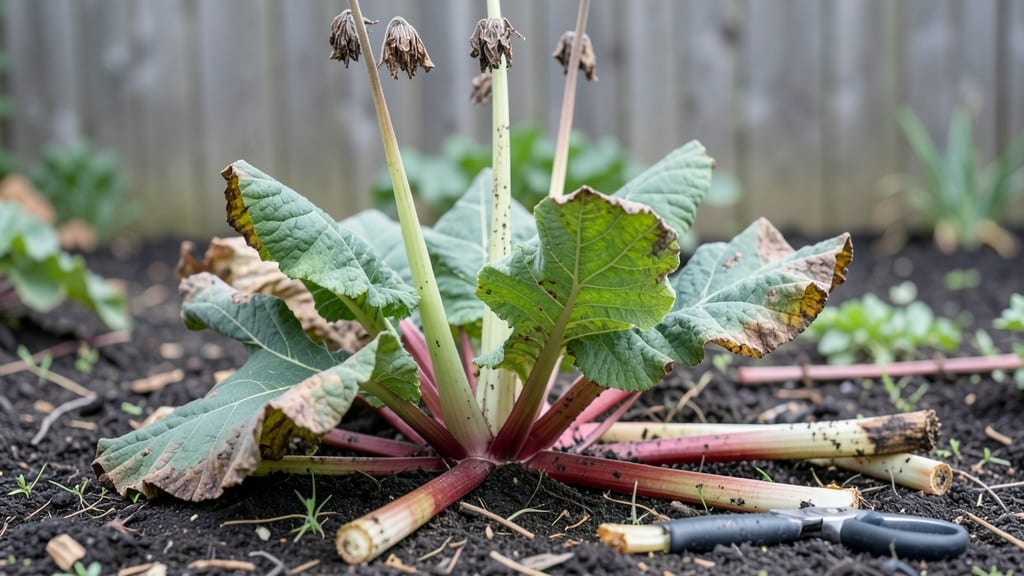
Cut back rhubarb plants in late fall after the first frost, when leaves turn yellowish-brown 🍃—this is the one-time cut that sets up next year’s harvest.
Struggling to decide when to cut back your rhubarb plants? Timing this task wrong can mean weaker growth next season—and nobody wants a less bountiful harvest. The secret to reviving your rhubarb’s vigor lies in understanding the exact late fall window that maximizes next year’s yield.
In Zone 6, where I garden, the ideal time is after the first hard frost when the foliage dies back naturally. This signals the plant to enter dormancy, protecting it from winter’s chill. Cutting too early can stress the plant, while waiting too long risks exposing the crown to rot.
Here’s how to do it right: trim the stalks down to 2 inches above the ground, remove any dead leaves, and avoid disturbing the roots. This simple step keeps your rhubarb healthy and ready to burst into growth come spring.
The ideal late fall timeline for cutting back rhubarb plants
Cutting back rhubarb at the right time in late fall is crucial for next year’s vigorous growth. If you prune too early, your plant may enter premature dormancy, while waiting too long risks winter damage or fungal issues.
The key is understanding your local frost zone and soil conditions to time this task perfectly. In most regions, the ideal window falls between mid-October and early November, but this shifts based on your climate.
Rhubarb’s dormancy cycle begins when daytime temperatures consistently drop below 50°F (10°C). At this point, the plant stops producing new growth and redirects energy to strengthening its root crown. Cutting back too soon disrupts this process, while waiting until after a hard frost can stress the plant unnecessarily.
The goal is to remove dead foliage while leaving the crown intact and protected for winter.
Soil conditions play a surprising role in timing. Well-drained soil allows rhubarb to handle cooler temperatures better, extending your pruning window by 1-2 weeks. In contrast, heavy clay soil stays colder longer, requiring earlier pruning to prevent waterlogged roots.
Always check your soil’s moisture level—damp but not soggy is ideal before cutting back.
Here’s how your USDA frost zone affects timing:
| Frost Zone | Ideal Pruning Window | Key Temperature Cues | Soil Prep Tip |
|---|---|---|---|
| Zones 3-5 | Late September to mid-October | First frost after 45°F (7°C) | Add 3 inches mulch after pruning |
| Zones 6-7 | Mid-October to early November | Night temps below 50°F (10°C) for 3+ days | Use straw mulch for insulation |
| Zones 8-10 | Late November to December | No frost; prune after leaf yellowing | Reduce watering to 50% in fall |
The science behind rhubarb’s dormancy involves a hormone called abscisic acid, which signals the plant to stop growing when days shorten. This process is triggered by cooler temperatures and shorter daylight.
Cutting back too early can interfere with this natural cycle, leading to weak stalks next season. Conversely, leaving dead foliage too long invites fungal spores and pests to overwinter in your garden.
One common mistake is pruning based on calendar dates rather than weather cues. For example, in Zone 6, waiting until November 1st might be too late if a hard frost hits in late October.
Instead, watch for leaf browning or stalks turning woody—these are clearer signals than dates. Use a soil thermometer to confirm temps are consistently below 50°F (10°C) before cutting.
If you’re in a warmer microclimate (like near a building or in a low-lying area), your rhubarb may stay active longer. In these cases, delay pruning until you see 50% leaf yellowing or until your neighbors’ rhubarb plants have already been cut back.
This ensures you’re not the last garden in the area to prune, which can attract pests seeking shelter.
After pruning, focus on protecting the crown. Apply a 3-inch layer of mulch (straw or shredded leaves work best) to insulate the roots. In Zones 3-5, consider adding a lightweight row cover if winters are harsh.
Avoid heavy mulch, which can smother the plant or trap too much moisture, leading to root rot.
Timing your cutbacks correctly isn’t just about aesthetics—it’s about next year’s harvest potential. Rhubarb plants that enter dormancy at the right time store more energy in their roots, resulting in thicker stalks and earlier growth in spring.
By following your frost zone’s guidelines and soil conditions, you’ll set your rhubarb up for a bountiful 2025 harvest.
Pro tip: Mark your pruning date on a garden journal or calendar so you can adjust next year based on your local weather patterns. Over time, you’ll refine your timing to match your garden’s unique conditions—leading to healthier plants and better yields year after year. 🌱
How to prune rhubarb correctly: step-by-step guide for healthy regrowth
Pruning rhubarb correctly is the difference between a vigorous plant next spring and one struggling to recover. The key lies in timing, technique, and protecting the rhubarb crown—the heart of your plant. If you cut too early, you risk exposing the crown to frost damage.
Cut too late, and you may encourage disease or pests to overwinter in your garden. Let’s break down the exact steps to prune your rhubarb for maximum regrowth.
Before you grab your pruners, gather the right tools: sharp bypass pruners, a garden fork, and a disposable bag for debris. Avoid dull tools—they can crush stalks and spread bacterial infections.
Work on a dry day when temperatures are above 40°F to prevent stress on the plant. Now, let’s dive into the step-by-step process to ensure your rhubarb thrives.
Step-by-Step Pruning Guide for Rhubarb
-
Step 1: Wait for the Right Time
Prune rhubarb 4-6 weeks after your first frost when leaves turn yellow-brown and stalks die back. In Zone 6, this is typically late October to early November. Avoid pruning before frost, as the plant needs time to harden off.
-
Step 2: Cut Stalks at the Base
Use clean pruners to sever stalks 1 inch above the soil line. Avoid tearing stalks—this can damage the crown and invite rot. Discard stalks in the trash (not compost) to prevent disease spread.
-
Step 3: Remove Dead or Diseased Leaves
Pull or cut off any yellowed, brown, or moldy leaves at the base. These harbor fungal spores like rhubarb rust. Bag and dispose of them immediately to sterilize your garden.
-
Step 4: Protect the Crown
Gently loosen soil around the crown with a fork to prevent compaction over winter. Add a 2-3 inch layer of mulch (straw or shredded leaves) to insulate the crown and preserve moisture.
-
Step 5: Avoid Common Mistakes
Never prune green stalks—this signals the plant to stop growing prematurely. Also, avoid cutting into the crown itself, as this can kill the plant. If you accidentally damage the crown, trim only the outer leaves to protect the center.
One of the biggest mistakes gardeners make is pruning rhubarb too aggressively. Over-trimming can stress the plant and reduce next year’s harvest yield. Always leave at least half the stalks intact to ensure the crown has energy reserves for regrowth.
If your rhubarb looks weak or stunted after pruning, it may need a light spring fertilizer to bounce back.
After pruning, monitor your rhubarb for signs of stress or disease. If you notice black spots on leaves or mushy stalks, act fast by removing affected parts and treating with copper fungicide.
Proper pruning sets the stage for a healthier, more productive plant come spring—so take your time and follow these steps carefully.
Remember, rhubarb is a perennial, meaning it comes back year after year with the right care. By pruning at the correct time and using the right techniques, you’ll ensure your rhubarb plants thrive for decades. Happy pruning—and here’s to a bountiful harvest next season! 🌱