Planting
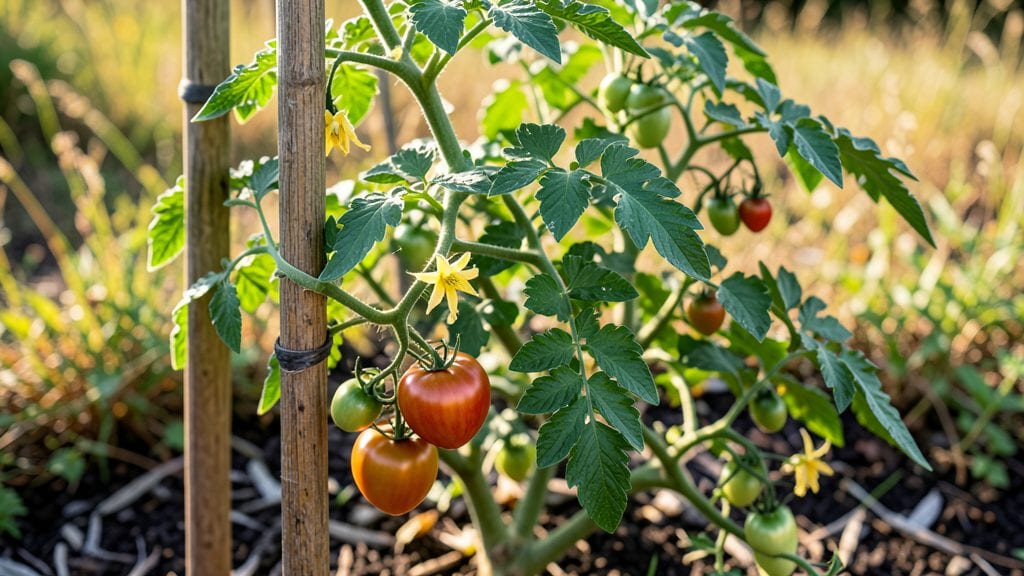
My tomato plant twist turned a 4-foot balcony into a vertical harvest factory. 🌱 Instead of sprawling vines, I trained my plants upward using simple materials—no fancy trellises required.
The results? More sun exposure, better airflow, and a garden that looks like a living sculpture while producing twice as many tomatoes.
Here’s the secret: start with a sturdy post or even a repurposed ladder, then weave twine or old t-shirts through the stems as they grow. Prune strategically—cut back suckers but leave the main stem strong—and watch the plant climb like a natural vine.
My cherry tomatoes now cascade in a dramatic curtain, while beefsteaks grow upward in neat spirals.
You’ll end up with healthier plants that resist disease better and bigger yields from the same footprint. The twist also makes harvesting easier—no more bending over—and turns your garden into a conversation piece. Plus, the vertical growth keeps fruits cleaner and less prone to rot.
Works for any tomato variety, from bush types to indeterminate giants, and adapts to containers or in-ground beds. Whether you’re cramped in a city apartment or just want a showstopper garden, this hack transforms how you grow. Let’s get those vines climbing!
Root Causes Of Twisted Tomato Stems
When your tomato plants start twisting like a pretzel, it’s usually their way of signaling stress or an unmet need. Understanding the why behind this quirky growth pattern helps you fix it fast and keep your plants thriving.
Below, we break down the most common culprits—each with a science-backed explanation and actionable fixes.
Tomatoes are heavy—a single plant can produce pounds of fruit, and without proper support, stems naturally twist as they struggle to bear the weight. This isn’t just a cosmetic issue; twisted stems can snap under pressure, leading to lost harvests.
- Why it happens: Vines grow toward sunlight and gravity, but when unsupported, they coil to redistribute weight. Think of it like a dancer balancing a tray of drinks—without a pole, they’d twist to stay upright.
- Science angle: Auxin, a plant hormone, regulates growth direction. Without support, auxin distribution becomes uneven, causing thigmomorphogenesis (growth changes due to mechanical stress).
- Fix it:
- Install a cage, trellis, or stake early (before vines get heavy). Use flexible materials like bamboo or soft plastic to avoid damaging stems.
- Weave vines gently through supports—don’t force them. Twisting them tightly can restrict sap flow.
- For indeterminate varieties (like ‘Sungold’), add tie-downs every 6–12 inches as they grow.
Water is the lifeblood of tomato plants, but too much or too little throws their growth off balance. Twisting can be a desperate survival tactic when roots struggle to absorb moisture evenly.
- Why it happens:
- Underwatering: Roots dry out unevenly, causing stems to twist toward moisture (a behavior called hydropatterning).
- Overwatering: Soggy soil suffocates roots, leading to anaerobic conditions (lack of oxygen). Plants grow erratically to escape the waterlogged zone.
- Science angle: Water stress triggers ethylene gas production, a hormone that accelerates abnormal growth patterns, including twisting.
- Fix it:
- Water deeply but infrequently—aim for 1–1.5 inches per week (more in heatwaves). Use a moisture meter to check soil depth.
- Improve drainage with organic mulch (straw or shredded leaves) to retain moisture without drowning roots.
- If overwatered, let soil dry slightly between waterings and avoid compacting soil around the base.
A tomato plant’s twist can also scream, “Feed me properly!” Too much or too little of certain nutrients throws off cell growth, leading to uneven stem development.
- Why it happens:
- Nitrogen deficiency: Leads to weak, spindly stems that twist as they stretch for sunlight (a sign of etiolation).
- Potassium deficiency: Causes poor cell wall strength, making stems prone to twisting under stress.
- Calcium deficiency (blossom-end rot’s cousin): Weakens cell structure, leading to brittle, twisted growth.
- Science angle: Nutrients like calcium and boron are critical for cell wall synthesis. Without them, cells grow irregularly, causing physical deformities.
- Fix it:
- Test soil with a DIY kit or lab test to identify deficiencies.
- Add balanced fertilizer (like 10-10-10) at planting, then switch to low-nitrogen, high-phosphorus (5-10-10) during fruiting.
- For calcium, use crushed eggshells or lime worked into the soil.
- Avoid synthetic fertilizers high in salt, which can burn roots and worsen twisting.
Tomatoes are warm-weather lovers, and when temperatures fluctuate wildly, their growth patterns go haywire. Twisting is often a response to thermal stress.
- Why it happens:
- Cold snaps: Slow down metabolic processes, causing stunted, twisted growth as cells struggle to divide normally.
- Heat stress (above 90°F/32°C): Disrupts photosynthesis, leading to abnormal auxin distribution and twisted stems.
- Frost damage: Can kill meristem tissue (growth points), forcing the plant to grow sideways or twist to escape damage.
- Science angle: Temperature extremes alter enzyme activity in plant cells, particularly those involved in cellulose synthesis (the “glue” holding stems together).
- Fix it:
- Use row covers or cloches for young plants in cold climates.
- Provide shade cloth (30–50%) during heatwaves to keep temps below 85°F (29°C).
- Mulch with straw or black plastic to regulate soil temperature.
- Avoid planting tomatoes too early in spring—wait until soil is at least 60°F (15°C).
Hidden attackers can silently twist your tomato stems, sapping energy and distorting growth. Don’t ignore these sneaky saboteurs!
- Why it happens:
- Sap-sucking pests (aphids, spider mites): Inject toxins that disrupt auxin transport, causing corkscrew-like twists.
- Fungal infections (e.g., verticillium wilt): Clog xylem vessels (water highways), leading to stunted, twisted growth as the plant struggles to circulate nutrients.
- Root-knot nematodes: Feed on roots, starving the plant and causing abnormal above-ground growth patterns.
- Science angle: Pests and pathogens trigger systemic acquired resistance (SAR), which can redirect growth hormones to prioritize survival over normal development.
- Fix it:
- Inspect leaves and stems for sticky residue (honeydew), webbing,
Fixing Your Tomato Plant Twist
Got a tomato plant spiraling out of control? Don’t worry—this quirky growth habit can be managed (and even turned into an advantage!). Below, we’ll tackle the most common causes of tomato plant twist and show you how to straighten things out—plus keep your vines thriving.
Think of it as a quick guide to untangling your garden’s most dramatic vine.
When roots get cramped, they compete for nutrients, leading to weak stems that twist as they stretch for space.
How to Fix It: ✅ 🔥 Repot or Transplant (If Needed)
- If your tomato is in a small container, move it to a larger pot (at least 5 gallons) with fresh potting mix. Gently loosen the roots before replanting to encourage spreading.
- Pro Tip: Mix in compost or worm castings for extra nutrients—roots will thank you!
✅ 👨🍳 Prune Aggressively (But Strategically)
- Trim lower leaves touching the soil to improve airflow and reduce root competition.
- Cut back suckers (those little shoots between the stem and branches) to redirect energy to stronger growth.
✅ 🌡️ Boost Soil Health
- Amend the soil with aged manure or balanced fertilizer (10-10-10) to give roots a nutrient boost.
- Prevention Tip: Start with well-draining soil and avoid overwatering—soggy roots = weak stems.
Tomatoes are top-heavy! A gust of wind or even a curious pet can bend stems into wild spirals.
How to Fix It: ✅ 🔪 Stake or Cage It Properly
- Install a strong bamboo stake or tomato cage early (before twisting starts). Gently tie the main stem to the support with soft plant ties (no wire—it cuts!).
- Pro Tip: Use two stakes on opposite sides for extra stability if your plant is already lopsided.
✅ 🏗️ Build a Windbreak
- If your garden is exposed, set up a temporary windbreak (like a mesh fence or even a row of cornstalks) to shield delicate vines.
- Quick Fix: Wrap the stem in cardboard or a spiral of newspaper for temporary support while it recovers.
✅ ⏰ Straighten Gently (But Don’t Force It!)
- If the twist is minor, untwist the stem slowly by hand (like untangling a headphone cord). Secure it with a tie immediately to prevent it from coiling back.
- Warning: Never bend the stem sharply—you could snap it!
Too much nitrogen or not enough potassium can lead to floppy, twisted stems that spiral as they search for stability.
How to Fix It: ✅ 📊 Adjust Your Fertilizer Game
- Too much nitrogen? Switch to a low-N, high-P (phosphorus) fertilizer (like 5-10-10) to strengthen roots.
- Not enough potassium? Add wood ash or a banana peel tea (yes, really!) for a potassium boost.
✅ 🥗 Feed the Soil, Not Just the Leaves
- Side-dress with compost or a balanced organic fertilizer (like fish emulsion) every 3–4 weeks.
- Prevention Tip: Mulch heavily (with straw or grass clippings) to retain moisture and nutrients.
✅ 💡 Prune for Balance
- Remove excess foliage to reduce the plant’s workload. Aim for 3–4 main stems with 6–8 leaves per stem for optimal fruit production.
Once you’ve got your tomato plant back on track, lock in these habits to avoid future spirals:
- Start with the right support: Use cages or stakes from day one—retrofitting is harder!
- Water deeply but infrequently: 💧 1–2 inches per week (deep soak, not daily sprinkles) to encourage strong roots.
- Harvest regularly: 🍅 Overloaded branches = more twisting. Pick tomatoes as they ripen to lighten the load.
- Watch the weather: 🌪️ After storms, check for bent stems and retie them ASAP.
Final Thought: A twisted tomato plant might look like a garden gone rogue, but with a little TLC, you can turn that spiral into a thriving vertical vine—and maybe even a conversation starter at your next BBQ! 🍔😉
Frequently asked questions
Can I train my tomato plants vertically using the "twist" technique for small spaces?
The "twist" method works perfectly for vertical growth. Use a sturdy post or trellis and weave the main stem upward in a spiral pattern as it grows. This creates a natural, decorative vine while maximizing space. Just ensure you prune suckers to maintain a single strong stem.
What materials work best for supporting twisted tomato vines?
For lightweight support, try bamboo stakes, soft plant ties, or old t-shirts woven into the stems. For heavier varieties, use metal cages or wooden trellises. Avoid wire or anything that can cut into the stem—gentle support is key!
Will twisting my tomato stems affect fruit production?
Not if done correctly! The twist technique actually improves airflow and sunlight exposure, which can boost yields. Just avoid over-pruning—leave enough leaves to feed the plant. The spiral growth also makes harvesting easier by keeping fruits off the ground.
How often should I prune when using the twist method?
Check your plants weekly and prune suckers (side shoots) as soon as they appear. Remove any leaves touching the soil to prevent disease. For indeterminate varieties, aim to keep 3-4 main stems for optimal growth and fruit production.
Can I use this technique with container-grown tomatoes?
Yes! Container tomatoes respond beautifully to vertical training. Use a 5-gallon pot minimum and install a small trellis or stake at planting. The twist method works especially well for patio containers, saving space while creating a stunning vertical display.