
Light Requirements
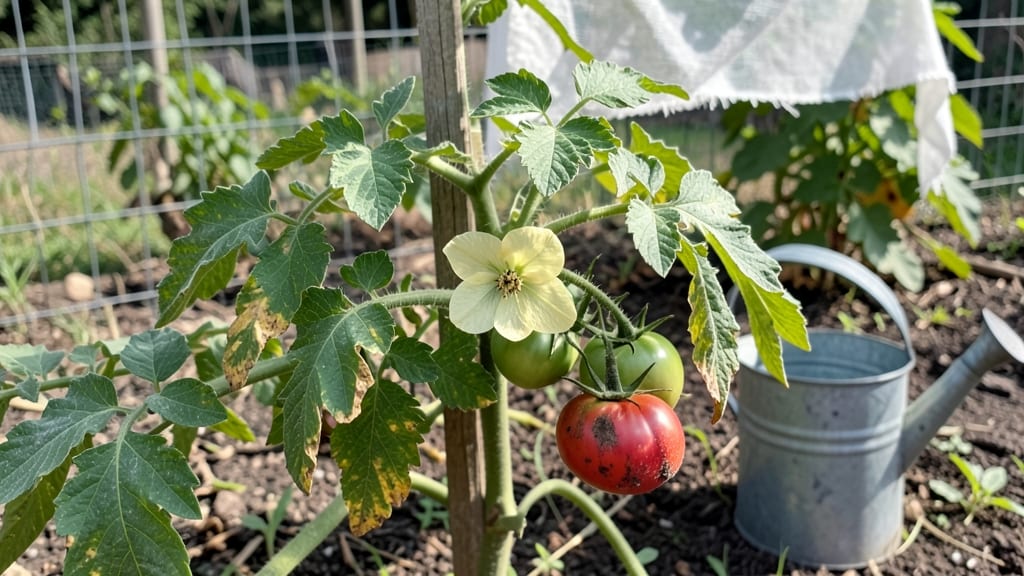
When your tomato plants are getting too much sun, the first sign is often crispy leaves and fruit that looks like it’s been sunburned. 🌿 I’ve seen this happen in my own garden—bright, blistering afternoons can turn lush plants into sad, wilted shadows overnight.
The good news? Simple adjustments can save your harvest before the damage gets worse.
Tomatoes need bright light, but they can’t handle the intense midday sun that bakes them like a summer sidewalk. Look for leaves with yellow or brown patches, or fruit that develops white, leathery spots—those are classic signs of sun stress.
Mulching helps keep roots cool, and temporary shade cloth (30-50% block) can be a game-changer during peak heat.
Once you adjust the light, your plants will bounce back faster than you think. Within a week, new leaves will unfurl, and the fruit will start filling out properly. The key is acting before the heat causes blossom end rot, which can ruin an entire season’s work.
Some varieties handle heat better than others—look for heat-tolerant types like ‘Solar Fire’ or ‘Heatmaster’ if you’re in a hot climate. But even with the toughest tomatoes, a little afternoon shade goes a long way toward keeping your plants happy and productive.
When Sunlight Overwhelms Tomatoes
Too much sun can turn your thriving tomato plants into stressed, struggling survivors—even when they seem to love warmth. The issue isn’t just about scorching leaves or wilted vines; it’s a cascade of physiological responses that disrupt growth, fruit development, and even nutrient uptake.
Understanding the root causes helps you intervene before your harvest suffers. Here’s why excessive sunlight becomes a problem for your tomato plants.
Tomatoes are warm-season plants, but they have limits. When temperatures soar—especially above 90°F (32°C)—the plant’s stomata (tiny pores on leaves) open wider to release excess heat through transpiration. While this cools the plant, it also causes:
- Rapid dehydration: The plant loses water faster than roots can absorb it, leading to wilting, even if soil moisture appears adequate.
- Cell membrane damage: High temperatures disrupt the lipid layers in plant cells, causing oxidative stress and reducing photosynthesis efficiency.
- Blossom drop: Heat stress triggers ethylene production, a hormone that causes flowers (and young fruit) to fall prematurely.
Actionable insight: Look for scorched leaf edges or a leathery, glossy texture—classic signs of heat exhaustion. Mulching with straw or shade cloth can mitigate this.
Direct, intense sunlight—especially in high-UV regions—can cause sunburn on tomato leaves. Unlike human skin, plant cells don’t tan; instead, they experience:
- Chlorophyll degradation: Excess UV light breaks down the pigments responsible for photosynthesis, turning leaves white, yellow, or brown in patches.
- Photorespiration spike: When oxygen levels rise in overheated leaves, the plant wastes energy trying to repair damaged cells instead of producing glucose.
- Necrotic spots: Dead tissue forms on exposed fruit (especially green shoulders on tomatoes), reducing marketability and nutrient storage.
Visual clue: Check for bleached or crispy areas on leaves or fruit—these are irreversible damage zones. Pruning lower leaves to improve airflow can help, but shade is the real fix.
Excessive sun doesn’t just affect leaves—it indirectly stresses roots by creating a vicious cycle:
- The surface soil dries out quickly, forming a hard crust that blocks water absorption.
- Roots near the surface (where most tomato roots grow) overheat, reducing their ability to take up water and nutrients.
- The plant overcompensates by sending more roots upward, making them even more vulnerable to desiccation.
Result? Nutrient deficiencies (especially potassium and calcium) and blossom end rot, even in well-fertilized soil. Wilting in the heat of the day but recovering at night is a red flag.
Tomatoes rely on a delicate balance of hormones to transition from flower to fruit. Too much sun throws this off by:
- Inhibiting pollination: Bees and other pollinators avoid overheated flowers, leading to empty blossoms or deformed fruit.
- Triggering ethylene overproduction: Heat stress causes the plant to release ethylene prematurely, which stops fruit development and causes premature ripening or cracking.
- Disrupting auxin flow: The growth hormone auxin, which regulates cell elongation, gets blocked in high-heat conditions, leading to small, misshapen tomatoes.
Pro tip: If you see flowers falling off without setting fruit, it’s a clear sign of hormonal chaos. Providing afternoon shade (when temps peak) can restore balance.
Each of these factors compounds over time, turning your tomato plant’s sunny spot into a stress zone. The good news? With targeted shade solutions, you can correct the damage and protect your harvest before it’s too late.
Quick Fixes for Sun-Stressed Tomatoes
When your tomato plants are basking in too much sun, they’ll show it—wilting leaves, scorched fruit, or even blossom end rot. The good news? You can turn things around with simple adjustments.
Below are practical, step-by-step solutions tailored to the root causes of sun damage, plus tips to keep your plants thriving long-term.
If your tomatoes are bleached, crispy, or dropping blossoms from intense midday rays, they need relief—fast.
🔥 Step 1: Install Temporary Shade Cloth
- Why? Lightweight shade cloth (30–50% block) filters harsh UV rays while allowing airflow.
- How?
- Stretch 30–50% shade cloth over a hoop or trellis frame above your plants.
- Secure edges with stakes or weights to prevent flapping.
- Pro Tip: 💡 Use white or silver cloth—it reflects heat better than black.
🍳 Step 2: Use Natural Barriers
- Dappled shade from nearby trees or structures works wonders.
- DIY hack: Place a straw bale or cardboard box on the sunny side to block direct light (remove after a few hours).
- For containers: Move pots to a morning sun, afternoon shade spot.
👨🍳 Step 3: Mulch Like a Pro
- Why? Mulch (straw, grass clippings, or wood chips) cools soil and retains moisture.
- How?
- Spread 2–3 inches of mulch around (but not touching) the stem.
- Bonus: Mulch suppresses weeds, reducing competition for water.
Sunburnt tomatoes often suffer from water loss—even if the soil looks moist.
🥘 Step 4: Water Deeply (But Not Too Much)
- Morning watering is key—it gives roots time to absorb moisture before evaporation.
- How?
- Drip irrigation (best) or a soaker hose at the base of plants.
- Avoid overhead sprinklers—they encourage fungal diseases.
- Test soil moisture: Stick your finger 2 inches deep; if dry, water until it’s damp.
🔪 Step 5: Prune for Better Airflow
- Why? Crowded plants trap heat and moisture, inviting pests/disease.
- How?
- Remove suckers (side shoots) and lower leaves touching the ground.
- Thin vines if they’re tangled—aim for 12–18 inches apart on trellises.
Once your tomatoes recover, lock in their success with these long-term fixes:
🎯 Choose the Right Variety
- Heat-tolerant tomatoes (e.g., ‘Solar Fire,’ ‘Heatmaster,’ ‘Cherry Tomatoes’) handle sun better.
- Avoid thin-skinned varieties (like ‘Beefsteak’) in scorching climates.
✨ Optimize Plant Placement
- Morning sun + afternoon shade is ideal for most tomatoes.
- Use reflective surfaces (light-colored mulch, white gravel) to bounce back heat.
📊 Monitor & Adjust
- Watch for signs: Yellowing leaves, sunken blotches on fruit, or curled foliage.
- Rotate containers if needed—some spots get hotter as the season progresses.
Remember: Tomatoes need 6–8 hours of sun daily, but intensity matters. With these fixes, your plants will bounce back—and you’ll avoid the dreaded blossom end rot caused by sun-stress cycles. 🍅💚
Frequently asked questions
How do I know if my tomato plant is getting too much sun?
Look for crispy, yellowing, or white patches on leaves—these are classic signs of sunburn. You may also see fruit with white, leathery spots or blossom end rot. Check for wilting during peak afternoon hours, even if soil looks moist. Prune a few leaves to test: if they crisp up within hours, your plant needs shade.
Can I use regular shade cloth or do I need special fabric?
Use 30-50% shade cloth designed for plants—it blocks harmful UV rays while allowing airflow. Avoid black fabric (it absorbs heat) and opt for white or silver instead. For containers, try a lightweight row cover or even a white bedsheet secured with clothespins as a temporary fix.
Will moving my tomato plant to full shade fix the problem?
No—tomatoes still need 6-8 hours of sunlight daily for fruiting. Instead, provide morning sun + afternoon shade (when temps peak). Move potted plants to a shaded spot only during 11 AM-3 PM on scorching days. Too little light leads to weak growth and poor fruit production.
How long does it take for tomato plants to recover from sun damage?
With proper shade and care, you’ll see improvement in 3-7 days. New leaves will emerge green and healthy, and existing damage stops spreading. For severe cases, prune damaged foliage to redirect energy to recovery. Avoid fertilizing until the plant shows active regrowth.