
Pests
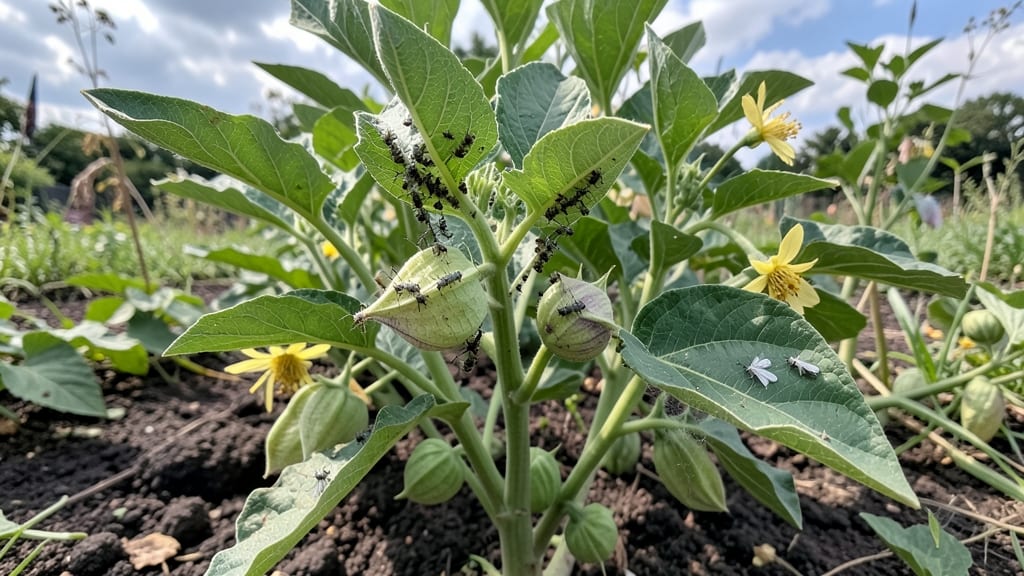
Tomatillo plant pests turn your lush green bushes into a buffet for tiny invaders—aphids, whiteflies, and fruit borers are the usual culprits. 🌿 I’ve spent three summers battling these pests, and the key to saving your harvest is catching them early before they chew through leaves or burrow into your fruit.
The moment you spot sticky residue on leaves or tiny holes in tomatillos, you know it’s time to act.
The real problem starts when pests go unnoticed. Whiteflies cluster on undersides of leaves, sucking sap and leaving a shiny film behind, while fruit borers tunnel into tomatillos, ruining them from the inside.
My first year, I lost half my crop to borers because I didn’t check the fruit until it was too late. Prevention is about vigilance—inspect plants weekly, especially after rain when pests are most active.
Neem oil and companion planting with basil or marigolds are your best organic defenses. A quick spray of neem oil disrupts pests’ life cycles, while the strong scents of basil and marigolds confuse them.
I’ve seen infestations vanish in under a week with consistent treatment. The payoff? Plump, unblemished tomatillos ready for salsa or chutney by mid-summer.
This works for container gardens, raised beds, or in-ground plots—just adjust the scale. Once you master early detection, your tomatillos will thrive without a single chemical in sight. Let’s get those pests under control before they ruin your harvest.
Root Causes Of Tomatillo Pest Attacks
Tomatillo plants, with their delicate foliage and tender fruits, are prime targets for pests due to a mix of environmental, biological, and agricultural factors. Understanding these underlying causes helps gardeners take proactive steps to protect their crops.
Below, we break down the key reasons why pests invade tomatillo plants—and how to address them at their source.
Pests thrive when plants are weakened, and environmental stress is a major culprit. Tomatillos, native to Mexico and Central America, prefer specific growing conditions. When these needs aren’t met, the plant’s defenses drop, making it an easy meal for insects and mites.
- Poor Drainage or Overwatering Tomatillos hate soggy roots. Excess moisture creates the perfect breeding ground for fungal diseases (like early blight) and attracts pests such as snails, slugs, and fungus gnats.
These pests don’t just feed on the plant—they also spread pathogens that further stress the tomatillo, creating a vicious cycle. - Why it happens: Overwatering depletes oxygen in the soil, weakening roots and making the plant more susceptible to root-feeding pests like cutworms or wireworms.
- Extreme Temperature Swings Tomatillos grow best in warm climates (60–85°F) but can struggle in sudden heatwaves or cold snaps.
Heat stress causes aphids, whiteflies, and spider mites to multiply rapidly, as these pests thrive in warm, dry conditions. - Why it happens: High temperatures increase the plant’s transpiration rate, making it more attractive to sap-sucking insects like tomato hornworms, which are drawn to the sugary exudates produced under stress.
- Nutrient Deficiencies A lack of key nutrients (especially nitrogen, phosphorus, or potassium) makes tomatillos less resilient.
Weak plants are more likely to attract thrips, leaf miners, and even deer or rabbits looking for an easy snack. - Why it happens: Deficient plants produce thinner leaves and stems, which are easier for pests like tomato fruitworms to penetrate.
A quick soil test can reveal imbalances before pests arrive.
Many pests time their attacks to coincide with the tomatillo’s life stages, exploiting its vulnerability at each phase.
- Early Season: Seedlings & Transplants Young tomatillo plants are especially vulnerable to cutworms, flea beetles, and aphids because their tender stems and leaves are easy targets.
- Why it happens: New growth is rich in water and nutrients, making it irresistible. Flea beetles, for example, lay eggs near seedlings, and the larvae burrow into stems, severing the plant at the base.
- Mid-Season: Flowering & Fruiting As tomatillos flower and set fruit, they attract hornworms, stink bugs, and fruit flies.
These pests are drawn to the plant’s sweet nectar and developing fruits. - Why it happens: Flowers and immature fruits contain high sugar levels, which attract sap-sucking insects like whiteflies. Meanwhile, hornworms (which can devour entire leaves overnight) are drawn to the plant’s strong scent.
- Late Season: Ripe Fruit & Declining Plants Overripe or damaged tomatillos become magnets for fruit flies, earwigs, and even rodents (in some regions).
As the plant senesces, its defenses weaken, making it an easy target. - Why it happens: Rotting or fermenting fruit emits volatile compounds that fruit flies detect from miles away. Meanwhile, earwigs hide in the husks, feeding on the soft fruit inside.
Even well-intentioned gardening practices can inadvertently invite pests. Poor sanitation, improper spacing, and lack of biodiversity in the garden all play a role.
- Crowded Plantings Tomatillos need 18–24 inches of space between plants.
Overcrowding reduces airflow, increasing humidity and creating ideal conditions for whiteflies, powdery mildew, and spider mites. - Why it happens: Stagnant air traps moisture, leading to fungal growth. Spider mites, for instance, thrive in dry, crowded conditions, spinning webs between leaves to feed on sap.
- Lack of Beneficial Insects & Companion Planting A monoculture garden (growing only tomatillos) has no natural predators to keep pests in check. Ladybugs, lacewings, and parasitic wasps help control aphids and caterpillars—but they won’t show up if there’s nothing else to eat.
- Why it happens: Without companion plants like basil, marigolds, or nasturtiums, beneficial insects have no alternative food sources, leaving your tomatillos defenseless.
- Improper Pruning & Debris Buildup Leaving fallen leaves, spent flowers, or volunteer plants in the garden provides hiding spots for pests and their eggs. Stink bugs, earwigs, and even rodents use this debris as shelter. - Why it happens: Organic matter on the soil surface retains moisture, creating microclimates where pests like slugs and snails can overwinter.
Pruning too late in the season can also leave wounds that attract bacterial or fungal pests.
Sometimes, pests aren’t the direct problem—they’re secondary invaders taking advantage of damage caused by soilborne diseases, nematodes, or poor water quality.
- Nematode Infestations Root-knot nematodes and lesion nematodes feed on tomatillo roots, weakening the plant and making it more susceptible to aphids, whiteflies, and fungal infections. - Why it happens: Nematodes create entry points for other pests.
Once roots are damaged, fungus gnats lay eggs in the moist soil, and their larvae further stress the plant.
- Contaminated Water or Soil Watering with untreated well water (high in salts or chemicals) or using compost with pest eggs (like from infested grass clippings) can introduce problems before they’re visible. - Why it happens: Some pests, like whiteflies, can be carried in water droplets.
Others, like cutworms, hatch from eggs in contaminated soil amendments.
- Fungal & Bacterial Infections Diseases like early blight or bacterial spot create open wounds on leaves and stems, which attract sap-sucking insects like aphids and whiteflies.
- Why it happens: Infected plant tissue emits chemical signals that some pests interpret as a sign of "easy feeding." Aphids, for example, are drawn to plants with high levels of certain sugars produced during stress.
Pests don’t attack tomatillos randomly—they’re responding to stress signals, environmental cues, and garden management mistakes. By addressing drainage, nutrition, spacing, and biodiversity, you can make your tomatillo plants far less appealing to unwanted visitors.
The next section will cover early detection signs so you can catch problems before they spiral out of control.
Quick Fixes for Tomatillo Plant Pests
When pests invade your tomatillo plants, acting fast is key to saving your harvest. Below are targeted solutions for the most common culprits—from chewers to sap-suckers—along with easy prevention tips to keep your garden thriving. 🌱🛡️
Signs: Large green caterpillars with white stripes, half-eaten leaves, and frass (poop) everywhere. How to Fix It:🔥 Handpick & Squish
Morning is the best time—hornworms slow down when it’s cool. Wear gloves, grab the wrigglers, and drop them into soapy water. Pro tip: Check the undersides of leaves where they love to hide! 🕵️♂️
🍳 Bacillus Thuringiensis (Bt)
This organic bacteria kills hornworms when ingested. Mix Bt powder with water and spray on leaves. Reapply after rain. Safety note: Harmful only to caterpillars—safe for humans and pets!
👨🍳 Encourage Natural Predators
Ladybugs, parasitic wasps, and birds adore hornworms. Plant nearby flowers like marigolds or dill to attract them. 🌼
Prevention:
- Rotate crops to disrupt their life cycle.
- Use row covers early in the season to block egg-laying moths.
Signs: Tiny green/black clusters on stems and leaves, sticky residue (honeydew), and curled leaves.
How to Fix It:
🔪 Blast Them Off
Spray plants with a strong stream of water from a hose to dislodge aphids. Repeat every few days until gone.
🥘 Neem Oil Spray
Mix 1 tbsp neem oil + 1 tsp mild soap + 1 quart water. Spray undersides of leaves where aphids hide. Reapply after rain. Pro tip: Test on a small leaf first—neem can burn sensitive plants!
🌡️ Introduce Beneficial Insects
Ladybugs and lacewings devour aphids. Buy them online or attract them with aphid-infested plants (yes, really—it’s a buffet for predators!).
Prevention:
- Plant garlic or chives nearby—their scent repels aphids.
- Avoid over-fertilizing with nitrogen, which attracts them.
Signs: Tiny white moths swarming when you disturb plants, sticky honeydew, and yellowing leaves.
How to Fix It:
🕯️ Yellow Sticky Traps
Hang yellow cards coated in petroleum jelly near plants. Whiteflies are drawn to the color and get stuck. Replace traps weekly.
💡 Reflective Mulch
Lay aluminum foil or reflective mulch around the base of plants. The glare confuses whiteflies and deters them from landing.
🎯 Soap Spray
Mix 1 tbsp castile soap with 1 quart water. Spray directly on infested areas. Reapply every 3–5 days.
Prevention:
- Inspect new plants before bringing them indoors.
- Space plants widely to improve airflow (whiteflies love crowded, humid spots).
Signs: Fine webbing on leaves, tiny moving dots, and stippled (speckled) foliage.
How to Fix It:
🌧️ Water Blast
Spider mites hate humidity. Hose down plants daily during dry spells to wash them off. Use a gentle spray to avoid damaging leaves.
🔥 Diatomaceous Earth (DE)
Sprinkle food-grade DE on soil and under leaves. It dehydrates mites but is safe for plants. Reapply after watering.
✨ Predatory Mites
Release Phytoseiulus persimilis (a beneficial mite) to hunt spider mites. Order online or from garden centers.
Prevention:
- Mulch heavily to retain soil moisture.
- Avoid broad-spectrum pesticides—they kill natural predators like ladybugs.
Signs: Notched leaves at night, plants suddenly wilting or falling over, and small brown caterpillars hiding at the base.
How to Fix It:
🌙 Flashlight Patrol
Shine a flashlight at dusk to spot cutworms. Pick them off by hand and drop them in soapy water.
🥘 Collar Barrier
Wrap the base of young plants with cardboard collars (cut from a toilet paper roll) to block cutworms from chewing stems.
🌱 Beer Trap
Bury a small cup filled with beer near plants. Cutworms are attracted to the yeast and drown. Refresh every few days. 🍺
Prevention:
- Water in the morning so soil dries by evening (cutworms are nocturnal).
- Use reflective mulch to deter them from crawling up plants.
Final Tip: The key to pest control is consistency. Combine these methods, monitor your plants weekly, and soon your tomatillos will be thriving—pest-free and ready for harvest! 🍅✨
Frequently asked questions about tomatillo plant pests
What are the most common pests that attack tomatillo plants?
The top culprits include aphids (tiny green/black clusters), whiteflies (tiny white moths), hornworms (large green caterpillars), cutworms (nocturnal stem chewers), and spider mites (fine webbing). Each leaves distinct damage—aphids cause sticky honeydew, while hornworms devour leaves overnight.
How do I know if my tomatillos are infested before the damage is severe?
Check the undersides of leaves for tiny eggs or webbing, and look for sticky residue (honeydew) on lower foliage. Whiteflies will flutter away when disturbed, and hornworms hide along stems. Inspect weekly—early detection saves your harvest!
Can I use neem oil on tomatillo plants, and how often should I apply it?
Yes! Mix 1 tablespoon neem oil with 1 teaspoon mild soap and 1 quart water, then spray on leaves. Apply every 7-10 days or after rain. Always test on a small leaf first—neem can burn sensitive plants if overused.
Are there natural predators that can help control tomatillo pests?
Ladybugs and lacewings devour aphids, while parasitic wasps target hornworms. Plant marigolds, basil, or dill nearby to attract them. Even birds and spiders help—just avoid pesticides that kill these allies.
What’s the best way to prevent pests from ruining my tomatillo crop next season?
Start with healthy soil (test for nematodes), proper spacing (18–24 inches apart), and companion planting (basil or garlic repel pests). Use row covers early to block moths, and rotate crops annually to disrupt pest life cycles. Consistency is key!