
Pests
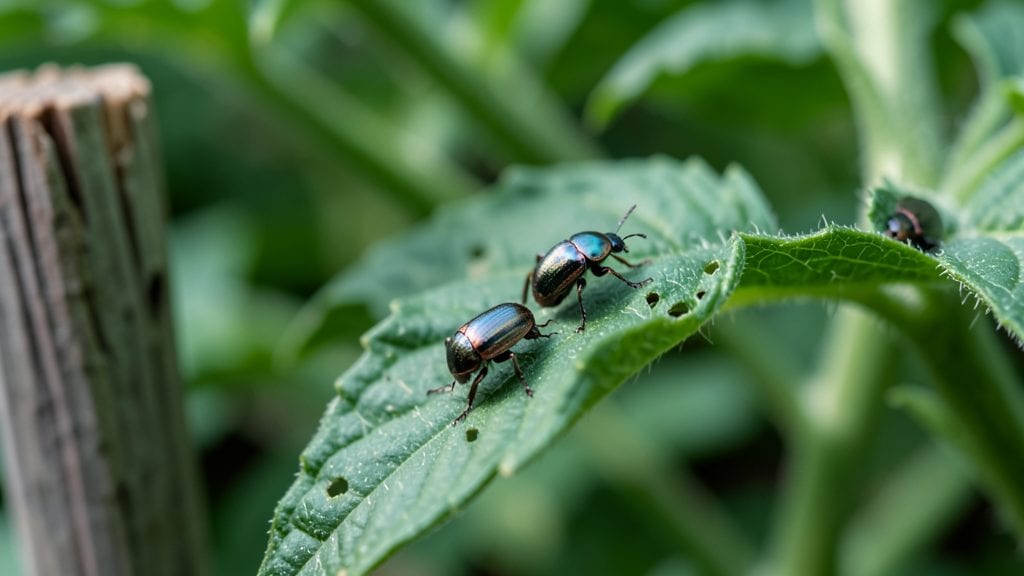
Flea beetles on tomato plants can turn vibrant leaves into Swiss cheese overnight—here’s how to stop them fast. 🌱 I’ve battled these tiny pests for years, and the key is acting before they skeletonize your plants. The good news? You don’t need harsh chemicals to win this fight.
Start with row covers—lightweight fabric stretched over young plants blocks beetles entirely while letting sunlight and water through. For existing damage, neem oil (mixed with a drop of dish soap) disrupts their life cycle when sprayed in the evening.
Planting basil or nasturtiums nearby also confuses them with their preferred hosts.
Within 3-5 days of consistent treatment, you’ll see new growth pushing through untouched. The plants recover faster than you’d expect, and the beetles move on to easier targets. This method works for both containers and in-ground gardens—no fancy equipment needed.
Fair warning: If your plants look like lace by morning, act immediately. The longer you wait, the harder they fight back. But with these steps, your tomatoes will be thriving in no time—no chemical residue, just healthy foliage and bigger harvests ahead.
Root Causes of Flea Beetle Attacks
Flea beetles aren’t just random pests—they’re drawn to your tomato plants for specific reasons tied to biology, environment, and even your garden’s health. Understanding these triggers is the first step to stopping them before they take over.
Let’s break down the science behind why these tiny jumpers show up at your doorstep.
Flea beetles have a menu, and young tomato plants are at the top. Here’s why:
- Soft, Tender Leaves: New tomato seedlings and young plants have delicate foliage that’s easy for beetles to chew through.
Their mouthparts are designed to pierce and feed on soft plant tissue, leaving behind the telltale "shotgun" holes. - High Water Content: Healthy, water-rich plants are more appealing to flea beetles.
They prefer plants that are actively growing, as the sap is sweeter and more nutritious. - Volatile Compounds: Tomato plants release chemical signals (like green leaf volatiles) when stressed or damaged. These compounds act like an all-you-can-eat buffet sign for flea beetles, drawing them in swarms.
Pro Tip: 💡 If you’re planting tomatoes in early spring, consider starting them indoors or using floating row covers until they’re at least 4-6 inches tall. This gives them a fighting chance before the beetles arrive.
Flea beetles are cold-blooded insects, meaning their activity levels skyrocket when temperatures rise. Here’s how climate plays a role:
- Ideal Temperature Range: Flea beetles thrive in warm (70–85°F) and dry conditions. When daytime temps hit the mid-70s, they become hyperactive, mating, and feeding nonstop. - Drought Stress: Tomato plants under water stress (even slightly) produce more sugars in their leaves to survive.
This makes them more attractive to flea beetles, which are essentially looking for a sugar rush. - Sun Exposure: Beetles prefer open, sunny areas where they can easily spot and jump onto plants. Shady or densely planted gardens are less appealing to them.
Pro Tip: 🌡️ If you’re in a hot, dry climate, mulch around your tomato plants to retain moisture and reduce stress. This can make them less inviting to flea beetles.
A struggling tomato plant is like a neon sign for flea beetles. Here’s why:
- Competition for Resources: When tomato plants are too close together, they compete for sunlight, water, and nutrients.
Weakened plants produce less chlorophyll, making their leaves less resilient to beetle attacks. - Previous Pest Damage: If your plants have already been chewed by other pests (like aphids or caterpillars), the damage releases attractant pheromones that signal flea beetles to move in. - Poor Soil Health: Flea beetles are also drawn to plants growing in nutrient-poor or compacted soil.
Healthy soil with compost or organic matter helps plants develop stronger defenses.
Pro Tip: ✨ Rotate crops annually and avoid planting tomatoes in the same spot where you’ve had flea beetle issues before. This disrupts their life cycle and reduces their numbers over time.
Flea beetles don’t just target tomatoes—they have a broader diet that includes other plants in the nightshade family (like peppers, eggplants, and potatoes). If these plants are nearby, they can act as a beetle buffet, spilling over onto your tomatoes.
- Wild Hosts: Weeds like purslane, pigweed, and lambsquarters are also favorite flea beetle snacks.
If these grow near your garden, they provide a constant food source, reducing the pressure on your tomatoes—but only if managed. - Nearby Gardens: Commercial farms or neighboring gardens with untreated tomato or pepper plants can overflow with flea beetles, increasing the risk for your home garden.
Pro Tip: 🎯 Remove wild hosts from your garden borders and inspect nearby areas for infestations. Sometimes, the solution starts beyond your tomato patch!
In a balanced ecosystem, flea beetles have many natural enemies that keep their populations in check. But if these predators are missing, beetles multiply unchecked:
- Birds: Many bird species (like sparrows and robins) feast on flea beetles. If your garden lacks birdhouses or feeders, these helpful allies might be scarce. - Ground Beetles & Spiders: These predators hunt flea beetles as part of their diet.
Chemical pesticides can wipe them out, leaving beetles to thrive. - Parasitic Wasps: Some wasp species lay eggs inside flea beetle larvae, killing them from within. Reducing pesticide use can help these wasps thrive.
Pro Tip: 🔥 Encourage biodiversity in your garden by planting native flowers (like dill, fennel, or yarrow) to attract beneficial insects. Even a small patch of wildflowers can make a difference!
Timing matters more than you think. Flea beetles emerge in sync with tomato planting seasons, making early spring a high-risk period:
- Early Spring Planting: If you plant tomatoes too early (before the last frost but when soil is still cool), the beetles may not yet be active—but they’ll arrive as soon as temps rise. - Overwintering Adults: Flea beetles survive winter in leaf litter, mulch, or garden debris.
If you don’t clean up these hiding spots, they’ll emerge faster and hungrier in spring.
Pro Tip: ⏰ Delay planting until 2–3 weeks after the last frost when soil temps are consistently above 60°F. This gives you a head start on the beetles’ arrival.
Natural Fixes for Flea Beetle Problems
Now that you understand why flea beetles are attacking your tomato plants, it’s time to take action! These pests are relentless, but with the right strategies, you can eliminate them fast and protect your harvest.
Below are practical, effective solutions tailored to the root causes—whether it’s heavy infestations, early-season damage, or organic garden constraints.
Flea beetles multiply quickly, so act fast to prevent further damage.
🍳 Handpick & Trap Them
- Morning patrol: Flea beetles are sluggish in cool temperatures. Check your plants early in the day (before 9 AM) and drop them into soapy water (1 tbsp dish soap + 1 gallon water).
A quick swat with a damp cloth works too! - Yellow sticky traps: Place yellow cards or traps near tomato plants. Flea beetles are attracted to yellow and will get stuck. Pro tip: 💡 Refresh traps every 3–4 days for maximum effectiveness.
👨🍳 Row Covers for Protection
- Floating row covers (lightweight fabric) create a physical barrier that blocks beetles from reaching leaves.
- How to use: Drape the cover over seedlings or young plants before beetles arrive (early spring).
Secure edges with soil or bricks to prevent gaps. - Bonus: 🌡️ Row covers also warm the soil, speeding up germination and growth!
Chemical pesticides can harm beneficial insects, so opt for natural sprays that disrupt flea beetle life cycles.
🔪 Neem Oil Spray (Best for All Stages)
Neem oil disrupts feeding, mating, and egg-laying—perfect for heavy infestations. DIY Recipe:
- 1 tbsp neem oil
- 1 tsp mild liquid soap (as an emulsifier)
- 1 quart water
- Spray evenly on top and bottom of leaves (especially new growth).
- Reapply every 5–7 days or after rain.
✨ Pro tip: For extra potency, add 1 tsp garlic oil (garlic repels pests naturally).
🌿 Diatomaceous Earth (DE) for Long-Term Control
Food-grade diatomaceous earth is a non-toxic powder that dehydrates flea beetles on contact. How to apply:
- Lightly dust the soil around plants and under leaves (avoid direct contact with stems to prevent harming plants).
- Reapply after rain or watering (DE loses effectiveness when wet).
- Best for: Prevention—apply before beetles appear.
🍋 Homemade Spray: Soap & Water Blast
A simple soap spray can knock beetles off plants and suffocate eggs. DIY Recipe:
- 1 tbsp castile soap or mild dish soap
- 1 quart water
- Spray directly on beetles (they’ll drop off).
- Repeat every 2–3 days for severe infestations.
The best defense? Stop them before they start!
🎯 Plant Smart: Choose Resistant Varieties
Some tomato varieties naturally repel flea beetles or recover faster from damage:
- ‘Cherokee Purple’
- ‘Mountain Merit’ (disease-resistant + beetle-tolerant)
- ‘Stupice’ (small but productive, less appealing to beetles)
🌿 Companion Planting Tricks
Flea beetles hate certain smells—use these natural repellents near tomatoes:
- Basil (confuses beetles with its strong scent)
- Marigolds (emit a smell beetles avoid)
- Nasturtiums (act as a trap crop, luring beetles away)
- Onions & Garlic (their pungent aroma deters pests)
🔄 Crop Rotation & Garden Hygiene
- Rotate crops: Flea beetles overwinter in garden soil.
Plant tomatoes in a different spot each year to break their life cycle. - Remove debris: Clear old plant matter, weeds, and mulch where beetles hide. - Early planting: Start seeds indoors and transplant after the last frost (beetles are less active in cooler soil).
- Early season (seedlings): Use row covers + neem oil.
- Mid-season (active feeding): Handpick + sticky traps + DE.
- Late season (harvest time): Soap sprays + companion plants to protect ripe tomatoes.
Final Thought: Flea beetles are annoying, but with consistent action, you can save your tomato plants—and your sanity! Start with prevention, then attack with organic sprays and physical barriers for the best results. 🍅💪
(Need a quick reference? Bookmark this guide for your next garden battle!)
Frequently asked questions
How do I know if my tomato plants have flea beetles?
Look for tiny, irregular holes (like shotgun blasts) in leaves—especially on young plants. The beetles themselves are 1/8-inch long, black with jumping legs. Check undersides of leaves where they hide during the day.
Will flea beetles kill my tomato plants?
While they won't kill mature plants, severe damage can stunt growth and reduce yields. Seedlings are most vulnerable—skeletonized leaves can't photosynthesize properly. Act fast with row covers or neem oil to protect young plants.
Can I use chemical pesticides for flea beetles?
Yes, but organic options work just as well. Pyrethrin-based sprays (derived from chrysanthemums) are effective, but they also harm beneficial insects. For chemical-free control, neem oil or kaolin clay are safer long-term solutions.
How long does it take to see results from treatments?
With consistent application, you'll notice fewer beetles within 3-5 days. New growth should appear within 1-2 weeks if the plants aren't severely damaged. For heavy infestations, combine row covers + neem oil for fastest results.
What's the best time of day to treat flea beetles?
Apply sprays in the evening when beetles are most active but before nighttime cooling. Morning handpicking works best because beetles are sluggish then. Avoid treating during peak sun hours to prevent plant stress.