Plants
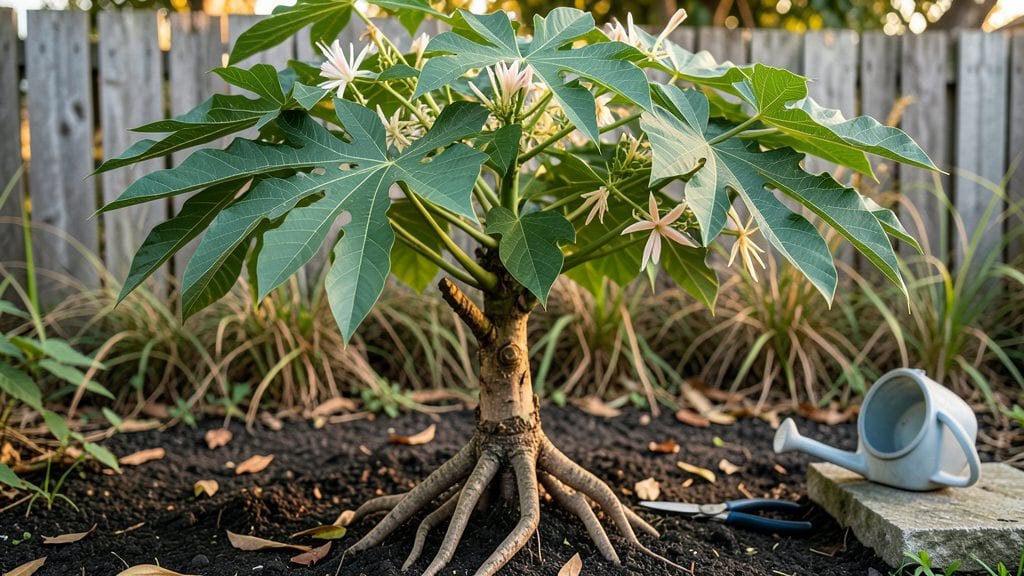
Growing tapioca cassava plants from cuttings is one of the fastest ways to fill your garden with a hardy, low-maintenance crop. I’ve watched mine shoot up 12 inches in just 30 days—no fuss, no drama, just steady growth that outpaces most vegetables.
The key is getting started right: warm soil, bright light, and a little patience while roots establish.
This plant thrives in tropical or subtropical climates but can handle heat waves and brief dry spells once established. My first batch survived a 10-day drought with zero wilting, though young plants appreciate consistent moisture until their roots take hold.
The soil doesn’t need to be fancy—just well-draining and slightly acidic, which means even rocky or sandy spots work.
By harvest time, you’ll have thick, starchy roots ready for storage or propagation. The plants themselves grow so aggressively they’ll fill gaps in your garden faster than weeds can take over. Plus, they’re practically pest-proof—slugs and deer leave them alone, which is more than I can say for my tomatoes.
Whether you’re a backyard gardener or a small-scale farmer, cassava delivers reliable yields with almost no effort. The real magic? You can replant cuttings indefinitely, turning a single plant into a renewable crop source. Let’s get those roots growing.
Root Issues Behind Cassava Struggles
Cassava plants, while resilient, can still face challenges that stunt growth or reduce yields—especially when it comes to their roots. Understanding the why behind these problems is key to keeping your crop thriving. Let’s break down the most common culprits and their scientific roots (pun intended).
The cassava plant is a heavy feeder, meaning it demands nutrients and well-draining soil to flourish. When soil falls short, roots struggle to develop properly. Here’s why:
- Compacted or Clay-Heavy Soil: Cassava roots need oxygen to grow. Compacted or waterlogged soil suffocates them, leading to stunted, knotty, or rotting roots. Science note: Poor aeration disrupts root respiration, causing anaerobic stress.
- Low Organic Matter: Cassava thrives in soil rich in organic material (like compost or decomposed leaves). Without it, roots lack the energy to expand. Actionable fix: Amend soil with well-rotted manure or coconut coir before planting.
- Nutrient Deficiencies:
Nutrient Symptom Solution Nitrogen (N) Pale, slow-growing leaves Apply blood meal or compost tea Phosphorus (P) Purple-tinged stems, weak roots Use bone meal or rock phosphate Potassium (K) Yellow leaf edges, brittle roots Add wood ash or banana peel compost
Cassava is drought-tolerant but not drought-proof. Too much or too little water throws off root development:
- Overwatering: Excess moisture triggers phytoftora root rot, a fungal disease that turns roots mushy and brown. Why it happens: Waterlogged soil cuts off oxygen, inviting pathogens like Phytophthora palmivora.
- Drought Stress: While cassava survives dry spells, severe drought causes roots to become woody and bitter. Science note: The plant shifts energy to survival mode, reducing starch storage.
- Irregular Watering: Fluctuating moisture levels stress the plant, leading to cracked or forked roots. Pro tip: Mulch with straw to retain even moisture.
Cassava roots are a buffet for pests and pathogens. Here’s how they sabotage growth:
- Root-Knot Nematodes (Meloidogyne): These microscopic worms burrow into roots, forming galls that distort and weaken them. Why it happens: Warm, sandy soils are their favorite breeding ground.
- Cassava Mosaic Virus (CMV): Spread by aphids, this virus causes yellowing leaves and stunted root growth. Science note: It disrupts photosynthesis, starving the plant of energy.
- Bacterial Blight (Xanthomonas): Leads to black, water-soaked lesions on stems and roots. Actionable fix: Rotate crops and use copper-based sprays.
Cassava loves heat but wilts under stress:
- Cold Snaps: Temperatures below 60°F (15°C) slow growth and can kill young plants. Why it happens: Cold disrupts enzyme activity, halting root expansion.
- Heat Stress: While cassava tolerates heat, consistent temps above 95°F (35°C) can cause bitter, fibrous roots due to accelerated starch breakdown.
💡 Takeaway: Most cassava root problems boil down to soil health, water balance, and pest prevention. By addressing these three pillars, you’ll give your crop the best shot at plump, starchy roots—no guesswork needed!
Fixing Common Cassava Plant Issues
Cassava plants are resilient, but even the hardiest crops face challenges. Whether it’s pests, diseases, or environmental stress, knowing how to address these problems quickly can save your harvest.
Below, we’ve mapped out practical, step-by-step solutions for the most common issues—plus prevention tips to keep your tapioca plants thriving with minimal fuss.
If you spot cassava mealybugs, aphids, or mites, act fast before they spread.
🔥 Identify the Pest
- Mealybugs: White, cottony clusters on stems/leaves.
- Aphids: Tiny green/black bugs clustering on new growth.
- Mites: Fine webbing or speckled leaves.
🍳 Natural Sprays (Safe & Effective)
- Neem Oil Solution 🌿
- Mix 1 tsp neem oil + 1 tsp mild soap + 1 quart water.
- Spray early morning or late evening (avoid direct sun).
- Reapply every 5–7 days until pests vanish.
- Garlic Pepper Spray 🧄
- Blend 4 garlic cloves + 1 tsp cayenne pepper + 1L water.
- Strain, add 1 tsp soap, and spray directly on pests.
- Pro Tip: Works best on soft-bodied insects like aphids.
- Handpick Severe Infestations 👨🍳
- For mealybugs, use a soft cloth dipped in rubbing alcohol to wipe them off.
- Drop pests in soapy water to kill them instantly.
🌡️ Prevention Tips
- Rotate crops to avoid pest buildup.
- Encourage natural predators like ladybugs by planting marigolds or basil nearby.
- Inspect new plants before bringing them home (quarantine for 2 weeks if needed).
If your cassava leaves yellow, wilt, or smell foul, overwatering or poor drainage may be the culprit.
⏰ Drainage Fix (Do This First!)
- Check the Soil 🏞️ - Dig a 6-inch hole near the plant. If water pools after 30 mins, drainage is poor.
- Amend the Soil 🪓 - Mix in sand, perlite, or coconut coir (20–30%) to improve aeration. - For clay-heavy soil, add compost + coarse sand in a 50/50 ratio.
- Raise Planting Beds (If Needed) - Elevate the plant on mounds or containers with drainage holes.
💧 Watering Adjustments
- Water deeply but infrequently—cassava hates soggy roots.
- Use drip irrigation (not overhead watering) to keep foliage dry.
- Mulch with straw to retain moisture without suffocating roots.
🎯 Prevention Tips
- Plant cassava in well-draining soil (sandy loam is ideal).
- Avoid planting in low-lying areas where water pools.
- Space plants 3–4 feet apart for airflow (reduces humidity-related rot).
Brown spots, yellowing, or mushy stems? Fungal or bacterial infections can ruin your crop.
🔪 Cleanup & Treatment 1. Remove Infected Leaves 🗑️
- Prune diseased foliage with sterilized scissors (wipe with rubbing alcohol).
- Do not compost—dispose of infected plant matter in a sealed bag.
- Fungicide Spray 🛡️ - Use copper fungicide (follow label instructions) or a baking soda mix: - 1 tsp baking soda + 1 quart water + 1 tsp oil (to help it stick). - Spray every 7–10 days during wet seasons.
- Improve Air Circulation 🌬️ - Thin out overcrowded plants and prune dense branches.
💡 Prevention Tips
- Water at the base (avoid wetting leaves).
- Rotate crops—don’t plant cassava in the same spot yearly.
- Choose disease-resistant varieties (e.g., Manihot esculenta ‘M Col 1505’).
Cassava needs balanced nutrients, especially potassium and nitrogen.
📊 Soil Test & Fix 1. Test Your Soil 🧪
- Use a home soil test kit or send a sample to a lab.
- Common deficiencies:
- Yellow lower leaves = Nitrogen (N) deficiency.
- Purple stems/leaves = Phosphorus (P) deficiency.
- Weak, brittle growth = Potassium (K) or magnesium (Mg) deficiency.
- Apply Fertilizer 🌱 - For Nitrogen: Use blood meal or compost tea. - For Potassium: Banana peel tea (soak peels in water for 2 weeks) or wood ash (sprinkle lightly). - For Magnesium: Epsom salt spray (1 tbsp per gallon of water, spray foliage).
🌿 Organic Boosts
- Compost tea (brew 1 part compost + 5 parts water for 24 hours, strain, and use as a foliar spray).
- Fish emulsion (diluted to 1 tbsp per gallon) for a quick nitrogen fix.
✨ Prevention Tips
- Mulch with well-rotted manure before planting.
- Avoid over-fertilizing—cassava prefers low to moderate nutrients.
- Monitor pH (ideal range: 5.5–6.5); adjust with lime (to raise pH) or sulfur (to lower pH).
Cassava thrives in tropical climates but can suffer in extreme conditions.
🏜️ Adjusting to Climate
- Too Hot/Dry? 🔥
- Mulch heavily with straw to retain moisture.
- Shade cloth (30–50%) if temps exceed 95°F (35°C).
- Too Cold? ❄️
- Cassava dies in frost—grow in containers and move indoors if temps drop below 50°F (10°C).
- Wind Damage? 🌬️
- Stake tall plants or use windbreaks (e.g., bamboo screens).
🎯 Prevention Tips
- Plant in spring/summer (avoid early fall if frost is possible).
- Choose a sheltered spot (e.g., near a fence or building).
- Drip irrigation helps regulate soil temperature in extreme heat.
Frequently asked questions about growing tapioca cassava
Can I grow tapioca cassava in containers?
Cassava thrives in 5-gallon or larger containers with drainage holes. Use a well-draining potting mix with added perlite or sand. Containers let you move plants indoors if frost threatens, but ensure they get 6+ hours of sunlight daily—south-facing windows or grow lights work well.
How long does it take for cassava roots to mature?
Most cassava varieties take 8–12 months to reach full root maturity, though some dwarf types mature in as little as 6 months. Harvest when leaves yellow naturally—roots will be 2–3 inches thick and firm. Younger roots are sweeter but less starchy.
Why are my cassava leaves turning yellow?
Yellowing leaves usually signal overwatering or nutrient deficiency. Check soil moisture—cassava prefers dry spells between waterings. For nitrogen deficiency, add compost tea or blood meal. If lower leaves yellow first, it's normal aging, but upper leaves turning yellow means stress.
Can I regrow cassava from store-bought roots?
Yes! Cut a 6-inch stem with at least 3 nodes from a store-bought root, let it dry for 1–2 days, then plant in moist soil. The key is using fresh, disease-free roots—avoid pre-sprouted or shriveled ones. Store-bought roots often contain preservatives that may inhibit growth.
What's the best way to store harvested cassava roots?
Clean roots thoroughly, then store in a cool (55–60°F), dry place with good airflow. Wrap individually in newspaper or place in sand-filled crates to prevent rotting. Properly stored roots last 3–6 months. Never refrigerate—cold turns starch to sugar, making them sweet and unideal for storage.