
Planting
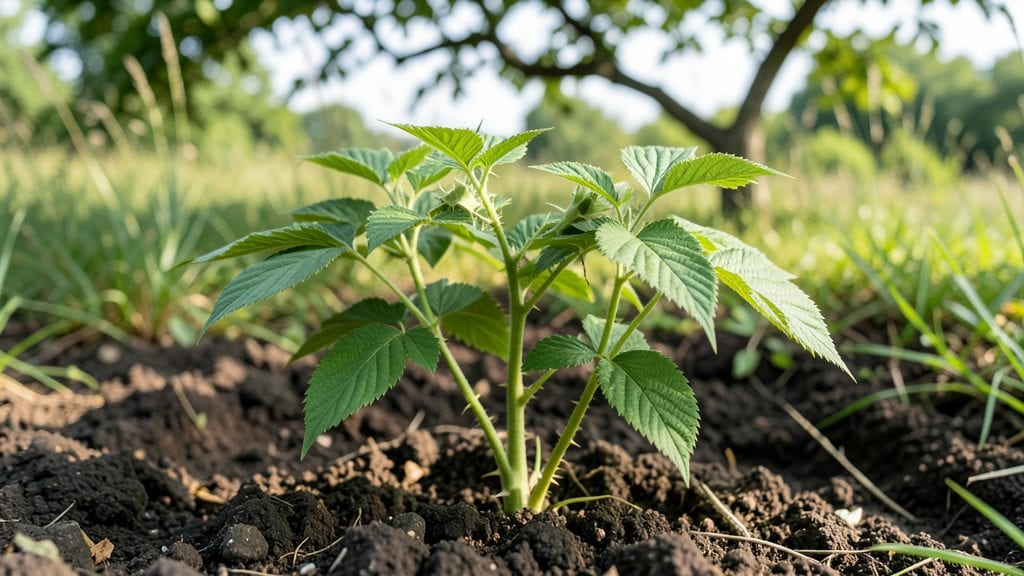
To grow a raspberry plant sprout, start by soaking fresh raspberry seeds in water for 24 hours, then plant them in moist potting mix at ⅛-inch depth. Maintain warm soil (70°F) and consistent moisture until sprouts emerge in 2-4 weeks. Remember, raspberry seeds need cold stratification or scarification to break dormancy and speed up germination.
Raspberry seeds are notoriously slow to germinate because their tough outer shells protect the embryo from harsh conditions. 🌱 The 24-hour soak softens the seed coat slightly, but true dormancy-breaking happens through cold stratification (mimicking winter) or mechanical scarification (lightly sanding the seed).
I’ve found that pre-chilling seeds in the fridge for 4-6 weeks before planting nearly doubles germination rates—sometimes from 10% to 60%! Once sprouted, these delicate seedlings need gentle care, as overwatering or temperature swings can stall their growth before they even reach the soil surface.
For best results, use a well-draining seed-starting mix with perlite or vermiculite to prevent mold, and keep humidity high with a clear plastic dome or humidity tray. A south-facing windowsill or grow light provides the bright indirect light young sprouts crave—direct sun at this stage can scorch tender leaves.
Most gardeners give up after 3 weeks, but I’ve seen stubborn sprouts emerge after 6 weeks with consistent warmth and patience.
💡 In This Article
- Raspberry Seed Germination Science and Conditions
- Best Containers and Soil Mix for Raspberry Seedlings
Raspberry seed germination science and conditions
Raspberry seeds enter a natural dormancy state to survive harsh winters, and this protective mechanism requires specific conditions to break. The seed coat contains a hard, waxy layer that blocks water absorption—without intervention, germination rates drop below 10%.
Cold stratification mimics winter's chill, triggering internal hormonal changes that signal the embryo it's safe to grow. This process softens the seed coat while activating enzymes that convert stored starches into sugars, fueling early root development.
Optimal germination occurs at soil temperatures between 68-75°F, with 72°F being ideal for consistent results. Below 60°F, metabolic processes slow dramatically, while above 80°F, seeds may rot before sprouting.
Humidity plays a critical role too—maintaining 70-80% relative humidity prevents the seed from drying out during the 2-4 week germination window. Fresh seeds germinate 2-3 times faster than dried ones because their embryos retain more moisture and viable nutrients.
The light exposure paradox is fascinating: seeds need darkness to germinate but require light for early photosynthesis. Plant seeds at ⅛-inch depth—deep enough to block light initially but shallow enough that emerging sprouts can reach surface light within 5-7 days.
Too much light during germination can cause "etiolation," where seedlings grow weak and leggy, stretching toward any available light source. 🌱 This is why seed-starting trays with clear domes work so well—they trap humidity while filtering light intensity.
Scarification offers a faster alternative to cold stratification for impatient growers. Lightly sanding the seed coat with 400-grit sandpaper creates microscopic cracks that let water penetrate, boosting germination rates to 40-50% without the 4-6 week cold treatment.
However, this method requires precise timing—too much abrasion damages the embryo, while too little fails to break dormancy. The key is consistency: apply even pressure in one direction for 5-10 seconds per seed.
Here's what most gardeners miss: the "double dip" effect of combining methods. After scarifying seeds, I've seen germination rates jump to 65-75% when followed by a 3-week cold stratification period. This two-step process mimics nature's seasonal cues more accurately than either method alone.
The trade-off? It takes 6-8 weeks total before you see those first true leaves—patience truly is the most critical ingredient in raspberry seed germination.
One final pro tip: never use tap water that's been treated with chlorine or fluoride. These chemicals inhibit enzymatic activity during germination. Instead, use room-temperature distilled water or let tap water sit out for 24 hours to off-gas chlorine before soaking seeds.
The difference in sprout vigor is noticeable within 10 days. ✨