Diseases
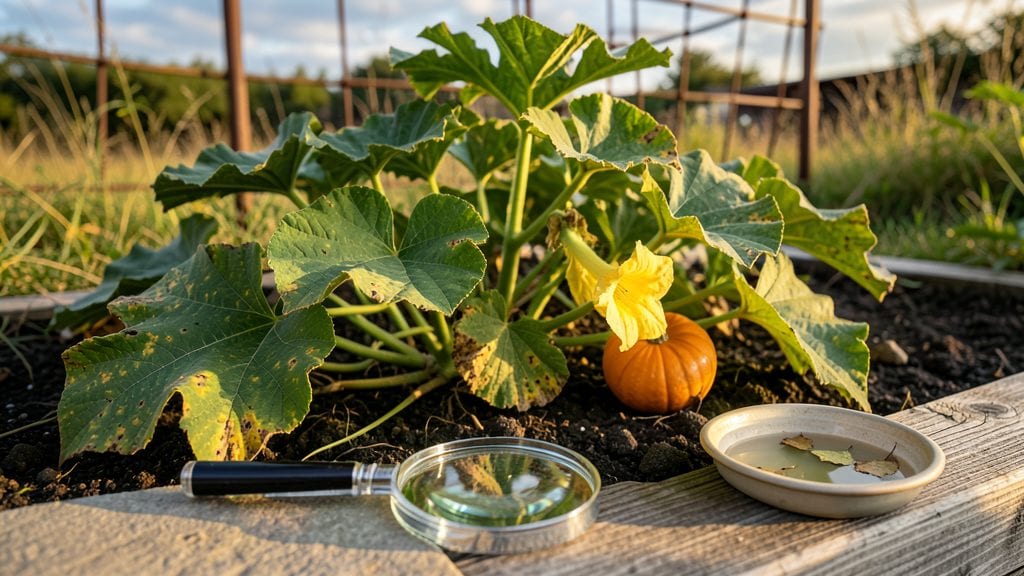
Pumpkin plant diseases can turn your thriving vines into a sad, yellowing mess if you don’t catch them early. 🌱 I’ve lost entire patches to powdery mildew and bacterial wilt, but I’ve also saved crops by spotting symptoms fast—white fuzz, wilting, or weird spots on leaves.
The key is knowing what to look for and acting before the problem spreads.
Most diseases start with too much moisture or crowded plants. Powdery mildew thrives in humid air, while bacterial wilt spreads through contaminated soil or tools. Proper spacing (3–4 feet between plants) and watering at the base (not overhead) cuts down on these issues.
Crop rotation keeps soil-borne diseases from coming back year after year.
Once you spot trouble, organic fixes like neem oil or copper spray can stop fungal spread. For bacterial wilt, pull infected plants immediately and disinfect your garden tools. Prevention is easier than cleanup—healthy soil, clean tools, and good airflow keep your pumpkins strong and disease-free.
Even experienced growers miss early signs, so don’t wait until the vines look terrible. Check leaves weekly, especially after rain or heatwaves. With the right watch, your pumpkins will stay lush and productive all season.
Root Causes Behind Plant Struggles
Pumpkin plants, like all living organisms, are vulnerable to diseases when their balance is disrupted. Understanding the why behind these issues is the first step to prevention—and recovery.
Below, we break down the most common triggers, from environmental stressors to microbial invaders, with clear explanations of how they weaken your gourds.
Pumpkins thrive in warm, humid climates with well-drained soil, but even slight deviations can invite trouble. Here’s how environmental factors create the perfect storm for disease:
- Excess Moisture 💦 Overwatering or poor drainage creates soggy soil, which suffocates roots and promotes fungal growth (like Phytophthora or Pythium).
Fungal spores thrive in wet conditions, leading to root rot or damping-off in seedlings. Actionable fix: Use raised beds or containers with drainage holes, and avoid watering late in the day.
- Extreme Temperature Swings ❄️☀️ Pumpkins need consistent warmth (70–90°F). Sudden cold snaps or late-season frosts weaken plants, making them susceptible to bacterial infections (e.g., Erwinia soft rot) or powdery mildew. Cold stress also slows nutrient uptake, leaving plants malnourished and defenseless.
- Low Humidity or Stagnant Air 🌬️ While pumpkins need airflow, stagnant, dry air (common in greenhouses or dense plantings) creates ideal conditions for powdery mildew (Erysiphe cichoracearum). The fungus spreads via windborne spores, coating leaves in a white, powdery film that blocks sunlight and stunts growth.
Diseases aren’t just caused by environmental stress—they’re often hitchhikers from soil, tools, or neighboring plants. Here’s how pathogens exploit weaknesses:
- Fungal Spores in Soil 🍄 Fungi like Fusarium or Rhizoctonia lurk in contaminated soil, waiting for the right conditions to attack.
These pathogens enter through root wounds (from rough handling or poor transplanting) or leaf cuts (from hail or pests). Pro tip: Solarize soil in spring (cover with clear plastic for 4–6 weeks) to kill dormant spores.
- Bacterial Hitchhikers 🦠 Bacteria like Pseudomonas or Xanthomonas spread via water splashes, infected seeds, or contaminated pruning tools. They thrive in wet foliage, entering plants through stomata (tiny leaf pores) or wounds. Key sign: Water-soaked lesions that ooze when pressed.
- Viral Spread via Vectors 🐛 Viruses (e.g., cucumber mosaic virus) don’t spread on their own—they need insect vectors like aphids or beetles. These pests feed on infected plants, then transmit viruses to healthy ones via their saliva. Solution: Use row covers early in the season to block aphids.
A pumpkin plant’s defense system relies on balanced nutrition. When key nutrients are missing, diseases move in like vultures at a buffet.
- Nitrogen (N) Deficiency 🌱➡️💀 Nitrogen fuels leafy growth and disease resistance. Without enough (yellowing lower leaves), plants produce thin, weak tissue—perfect for fungal infections. Fix: Side-dress with compost or a balanced organic fertilizer (10-10-10).
- Phosphorus (P) Shortage 🪴🔄 Phosphorus boosts root development and stress tolerance. Deficient plants (purple stems/leaves) struggle to recover from disease, leading to chronic infections. Boost it: Add bone meal or rock phosphate at planting.
- Potassium (K) Deficit ⚡🛡️ Potassium strengthens cell walls, acting like armor against pathogens. Low levels (brown leaf edges) make plants prone to bacterial and fungal attacks. Quick fix: Use greensand or wood ash for a potassium kick.
Even the best gardeners make moves that invite disease. Here’s how poor practices set the stage for trouble:
- Overcrowded Plantings 🏡🚫 Pumpkins need space (3–4 feet apart) for airflow. Crowded vines trap moisture, creating humidity hotspots that fuel powdery mildew and botrytis. Rule of thumb: Thin seedlings early to avoid competition.
- Contaminated Tools or Seeds 🔪🌱 Pruners, gloves, or seeds carrying pathogens can introduce diseases to a clean patch. Sanitize tools with a 10% bleach solution (1 part bleach to 9 parts water) between uses.
- Ignoring Crop Rotation 🔄🚫 Planting pumpkins (or other cucurbits) in the same spot yearly lets soil-borne diseases build up. Solution: Rotate with non-cucurbit crops (like beans or grasses) every 2–3 years.
Pests don’t just eat your pumpkins—they deliver diseases like unwanted packages. Here’s how:
- Aphids & Whiteflies 🐛💦 These sap-suckers inject toxins and spread viruses (e.g., zucchini yellow mosaic). Their sticky honeydew also attracts sooty mold, a secondary fungal infection.
- Squash Bugs & Cucumber Beetles 🐞💀 They chew leaves, creating entry points for bacteria (Erwinia) and fungi. Beetles also transmit wilt diseases like Fusarium.
- Nematodes in Soil 🐛🌱 Microscopic root-feeding nematodes weaken roots, making plants vulnerable to root rot. Test soil for nematodes if plants suddenly wilt despite good care.
Quick Fixes for Pumpkin Plant Woes
Pumpkin plants can fall victim to a variety of diseases, but the good news is that many issues have simple, organic solutions. Whether you're battling fungal infections, pests, or nutrient deficiencies, these targeted fixes will help your pumpkins bounce back—without harsh chemicals.
Below, we’ve mapped the most common problems to their fixes, along with prevention tips to keep your garden thriving.
Fungal infections like powdery mildew, downy mildew, and Alternaria leaf spot thrive in damp conditions. Here’s how to tackle them:
🔥 Remove and Replace Infected Leaves
- How to do it: Snip off yellowing or spotted leaves with clean scissors or pruners. Dispose of them in the trash (not your compost pile).
- Why it works: Removing infected foliage prevents spores from spreading to healthy parts of the plant.
🍳 Spray with Baking Soda or Neem Oil - How to do it: Mix 1 teaspoon of baking soda + 1 tablespoon of vegetable oil + 1 teaspoon of mild soap per quart of water.
Spray the undersides of leaves (where fungi often hide) every 7–10 days for powdery mildew. For neem oil, follow the label instructions for a 1–2% solution. - Why it works: Baking soda raises the leaf pH, making it inhospitable for fungi, while neem oil disrupts fungal growth.
🌡️ Improve Airflow and Watering Habits
- How to do it:
- Space plants 3–4 feet apart to reduce humidity.
- Water early in the day (before 10 AM) to let foliage dry quickly.
- Avoid overhead watering—use drip irrigation or soaker hoses instead.
- Why it works: Fungi love moisture.
Cutting off their favorite conditions stops outbreaks fast.
💡 Pro Tip: Mulch with straw or grass clippings (not wood chips) to keep soil dry and prevent splashing spores onto leaves.
Cucumber beetles, aphids, and squash bugs can devastate pumpkin plants. Here’s how to evict them:
👨🍳 Handpick and Drop in Soapy Water - How to do it: Early in the morning, check leaves for yellow beetles or tiny green bugs.
Drop them into a bucket of soapy water (1 tablespoon dish soap per gallon). - Why it works: Manual removal is the fastest way to reduce pest populations.
🥘 Use Row Covers or Yellow Sticky Traps - How to do it: - Row covers: Drape floating row fabric over young plants to block beetles.
Remove when flowers appear for pollination. - Sticky traps: Hang yellow sticky cards near plants to catch flying pests. - Why it works: Physical barriers and traps disrupt pest life cycles before they multiply.
🔪 Introduce Beneficial Insects
- How to do it: Release ladybugs, lacewings, or parasitic wasps (available at garden centers). They feast on aphids and other soft-bodied pests.
- Why it works: Nature’s pest control is chemical-free and sustainable.
✨ Pro Tip: Plant marigolds or nasturtiums nearby—their strong scent repels pests and attracts pollinators.
Yellowing leaves, stunted growth, or weak vines? Your pumpkins might be hungry. Here’s how to fix common deficiencies:
| Symptom | Likely Cause | Solution |
|---|---|---|
| Yellow lower leaves | Nitrogen deficiency | Side-dress with compost or fish emulsion (follow package rates). |
| Purple stems/leaves | Phosphorus deficiency | Mix bone meal or rock phosphate into the soil at planting. |
| Weak, leggy growth | Potassium deficiency | Apply wood ash or banana peel tea (steep peels in water for 24 hours). |
| Small, pale leaves | Magnesium deficiency | Spray with Epsom salt solution (1 tablespoon per gallon of water). |
💡 Pro Tip: Test your soil before planting—many deficiencies can be prevented with a balanced organic fertilizer (like 5-5-5).
The best cure is a healthy, resilient plant. Follow these habits to minimize future issues:
- ⏰ Rotate crops: Don’t plant pumpkins (or other squash family members) in the same spot two years in a row—this prevents soil-borne diseases from building up.
- 🌱 Start strong: Use disease-resistant varieties (e.g., ‘Howden’ or ‘Jackpot’) and sterilize tools between plants with rubbing alcohol.
- 🌡️ Monitor weather: After heavy rain, inspect plants daily and treat early signs of mildew before they spread.
- 🌿 Boost soil health: Add compost and mycorrhizal fungi to improve root strength and disease resistance.
Final Thought: Most pumpkin plant diseases are manageable with quick action and organic care. Stay vigilant, and your vines will reward you with bountiful, healthy pumpkins all season long! 🎃🌱
Frequently asked questions
What are the first signs of powdery mildew on pumpkin leaves?
Look for white, powdery spots on the upper leaf surfaces, especially on younger leaves. As it spreads, the spots grow larger and turn grayish, eventually covering entire leaves. Check undersides too—fuzzy white growth there confirms the infection. Act fast by removing infected leaves and spraying with a baking soda solution.
Can I still save my pumpkins if they have bacterial wilt?
Unfortunately, no. Bacterial wilt (Erwinia tracheiphila) spreads rapidly and has no cure. Once you see sudden wilting, yellowing leaves, or oozing stems, remove the entire plant immediately to prevent spread. Sterilize your tools with rubbing alcohol and avoid planting cucurbits in that spot for at least 2 years.
How often should I spray neem oil to prevent fungal diseases?
Apply neem oil every 7–10 days during humid weather or after rain. Mix a 1–2% solution (follow label instructions) and spray early in the morning when leaves are dry. Avoid spraying in direct sunlight, as it can burn foliage. Neem oil disrupts fungal spores but works best as a preventive measure.
Why do my pumpkin plants get diseases even with good care?
Diseases often spread through contaminated soil, tools, or seeds, or via insect vectors like cucumber beetles. Even with perfect conditions, spores can linger in soil for years. Always rotate crops, sterilize tools, and use disease-resistant varieties. Test your soil for nematodes or fungal pathogens if problems persist.
What’s the best organic treatment for downy mildew?
For downy mildew, use a copper fungicide spray (like copper sulfate) or a milk spray (1 part milk to 9 parts water). Apply every 5–7 days at dawn to keep leaves wet. Improve airflow by spacing plants 3–4 feet apart and avoid overhead watering. Remove all infected leaves immediately to stop spore spread.